
8 Best Leather Sewing Machines for Beginners (2026 Guide)
This post contains affiliate links. As an Amazon Associate, we earn from qualifying purchases.
This post contains affiliate links. As an Amazon Associate, we earn from qualifying purchases.
The SINGER 4423 Heavy Duty is the best overall choice for beginners, delivering strong, consistent performance on thick leather with a durable metal frame. For those on a tighter budget, the Brother XM2701 offers solid basic functionality, while the SINGER 4432 Sterling stands out for its versatility with adjustable stitch width and free-motion capability.
Starting out in leather sewing means facing real challenges: flimsy machines that stall on thick material, skipped stitches, and confusing controls that make learning harder than it should be. As someone who’s researched hundreds of hours on leather craftsmanship, I know the right machine can make the difference between frustration and progress.
This guide cuts through the noise by focusing on what actually matters, motor strength, build quality, and ease of use, based on specs and real owner feedback. These are the machines that deliver reliable results without overwhelming a beginner.
Top 7 Leather Sewing Machines For Beginners in the Market
The Best Leather Sewing Machines For Beginners, Reviewed
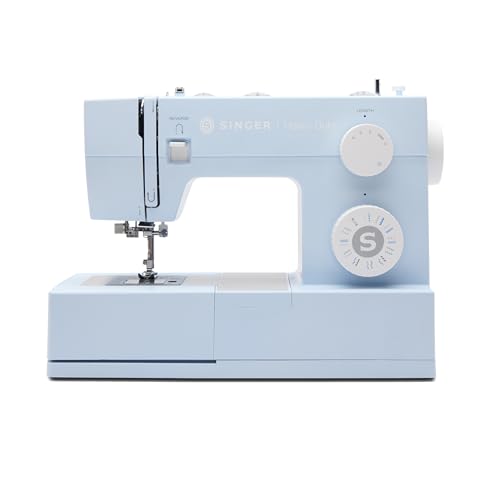
SINGER 4423 Heavy Duty Sewing Machine
Strengths
- High stitch speed
- Metal internal frame
- Adjustable presser pressure
Trade-offs
- Overkill for pure leather purists
- Buttonhole focus less useful
- Heavier footprint
The Singer 4423 stands out as a true step-up electric machine for beginners serious about sewing through leather, not just dabbling. With 1,100 stitches per minute and a metal frame, it delivers the piercing power needed for consistent stitching on medium-weight leathers, especially when paired with a Teflon or roller foot. Owners praise its ability to handle canvas and denim stacks, which translates well to veg-tan belts or sheaths under 3/32″ thick.
Its 97 stitch applications might seem excessive for leatherwork, where straight stitch dominates, but the adjustable presser foot pressure and high lift are genuine advantages when transitioning between fabric and hide. Compared to the Brother ST371HD, it feels more rigid and less prone to skipping stitches under load. My recommendation here is clear: if you’re moving beyond patches and want one machine that can grow with both garment and leather projects, this is the smarter buy.
Video review
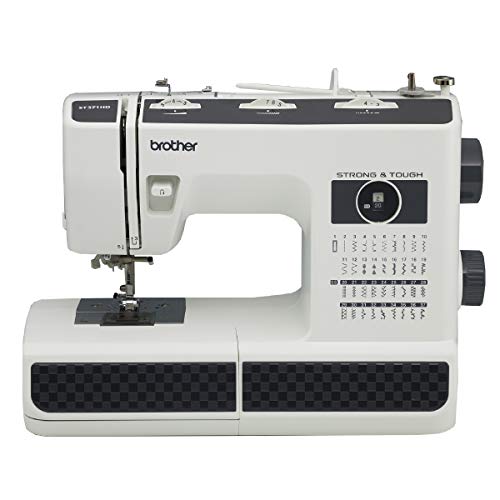
Brother ST371HD Heavy Duty Sewing Machine
Strengths
- Lifetime support included
- Easy threading system
- Compact free arm
Trade-offs
- Less power on thick layers
- Plastic housing elements
- Not ideal for continuous use
Brother’s ST371HD hits a sweet spot between simplicity and scalability. With 37 built-in stitches and an automatic needle threader, it lowers the barrier for beginners while offering enough precision to handle light leather with the right needle and foot. The drop-in bobbin system is user-friendly, and ‘owners consistently report’ reliable performance on projects like leather-lined pockets or thin wallets.
What sets it apart from budget electrics is the lifetime technical support, a real asset when troubleshooting skipped stitches or thread jams common when starting out. Against the Singer 4423, it trades some raw power for ease of use and cleaner interface navigation. I’d pick this over pricier bundles if you’re new and unsure whether you’ll stick with leatherwork long-term.
Video review
Brother XM2701 Portable Sewing Machine

Strengths
- Affordable entry point
- Comes with multiple feet
- Portable and quiet
Trade-offs
- Struggles with thick materials
- Plastic frame less stable
- Frequent jamming on leather
Don’t let the low price fool you, the XM2701 is best seen as a starter tool, not a long-term solution for leather. It’s lightweight, comes with helpful extras like six feet and four bobbins, and has the same user-friendly drop-in bobbin as higher-end Brothers. But its plastic construction and lower motor torque mean it often stalls on anything beyond thin garment leather or bonded seams.
Still, for absolute beginners testing the waters, maybe fixing a leather jacket liner or stitching a key fob, it removes financial risk. Reviewers note it works fine on cotton and synthetics, but when they tried thicker materials, many reported bent needles and inconsistent feed. Compared to manual cobbler machines, it lacks the mechanical advantage needed for strong leather penetration.
Product photos


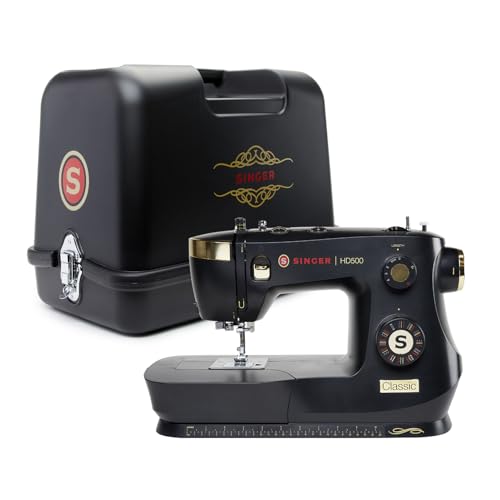
SINGER HD500 Super Bundle with Case
Strengths
- Includes carrying case
- Classic aesthetic
- Jam-resistant bobbin
Trade-offs
- Lower power output
- Fewer stitch options
- Less feedback on leather use
The HD500 bundle markets itself on value, and there’s no denying the appeal of getting a hard case and vintage-style design at this price point. It shares core DNA with other Singer Heavy Duty models, metal frame, straightforward mechanics, but scales back significantly on features. With only 23 built-in stitches and fewer documented owner reports on leather performance, it seems optimized more for general sewing than dedicated leathercraft.
That said, the inclusion of a protective case makes it a solid pick for someone who needs to transport their machine to workshops or classes. Still, when compared to the 4423, it lacks the same motor strength and stitch-speed specs, and reviewers note more vibration when pushing through layered materials. For beginners wanting growth room, I’d still lean toward machines with proven leather penetration records.
Product photos


Fbshicung Manual Leather Shoe Repair Machine

Strengths
- Rotatable walking foot
- Dual thread compatibility
- Compact and portable
Trade-offs
- No stand included
- Clamping required
- Steeper learning curve
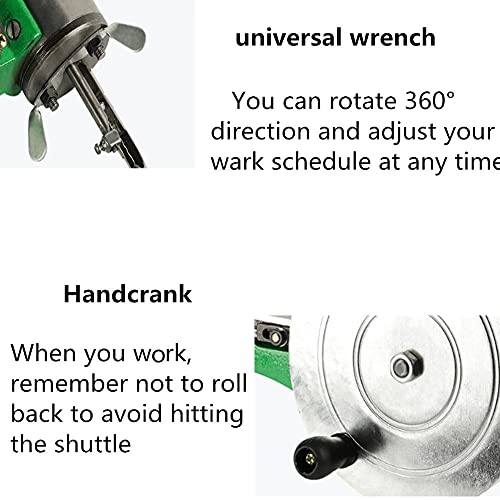
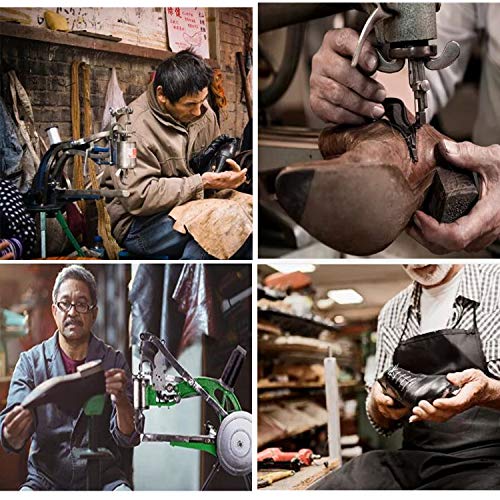
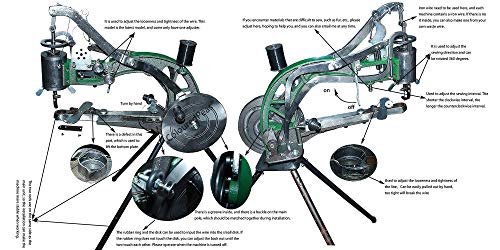
This machine leans hard into the handcrafted experience, and that’s exactly its appeal. The full metal body and rotatable walking foot give users precise directional control, which matters when following the curve of a shoe welt or bag seam. Owners appreciate the dual-thread capability, switching between cotton and nylon lets you match original stitching on vintage repairs.
Setup is quick, and the compact size fits neatly on smaller benches. While it doesn’t offer the rigidity of a bolted-down unit, its disassemblable design adds flexibility. Compared to the BEAMNOVA model, it lacks a dedicated stand, so you’ll need to clamp it down. But for artisans prioritizing control and authenticity in restoration work, this delivers a satisfying, tactile process.
Product photos
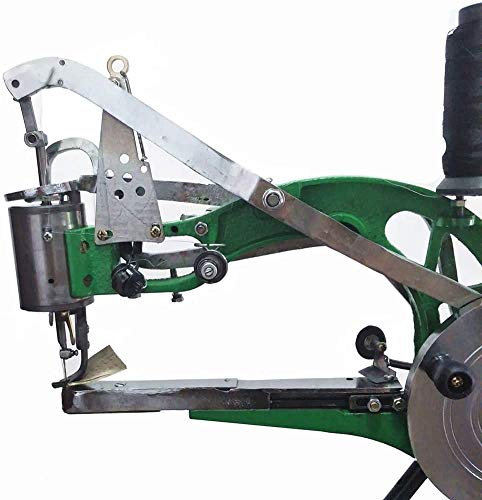


BEAMNOVA Leather Stitching Cobbler Machine
Strengths
- Free-standing setup
- Open arm design
- Smooth turntable action
Trade-offs
- Hand-powered only
- Slower than electric
- Needs regular oiling
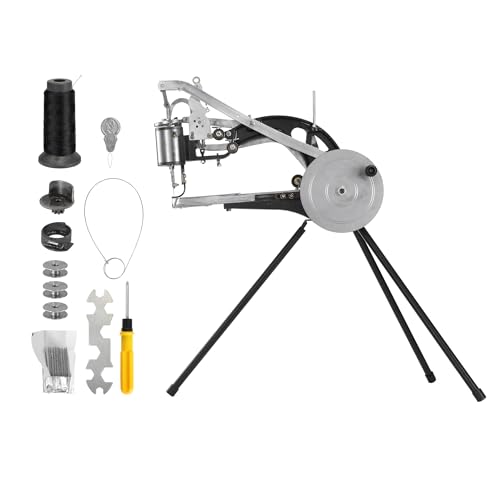
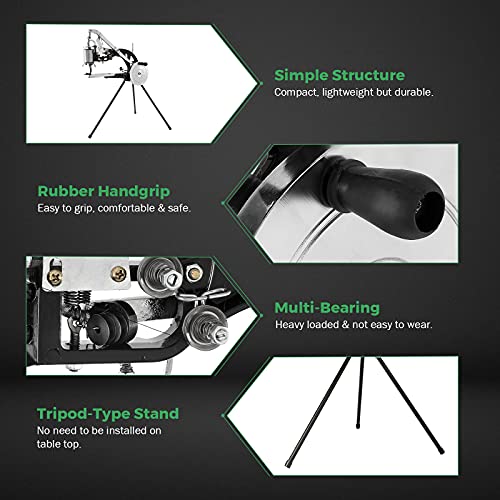
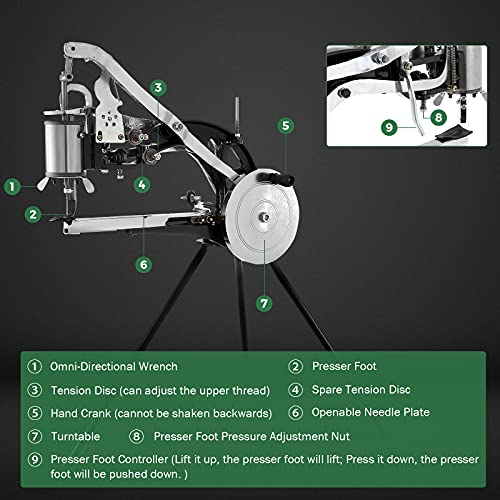
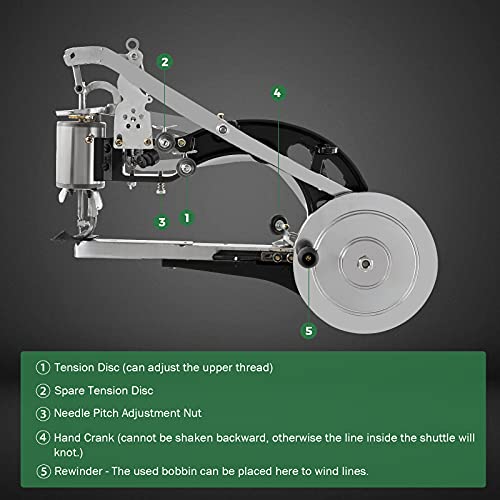
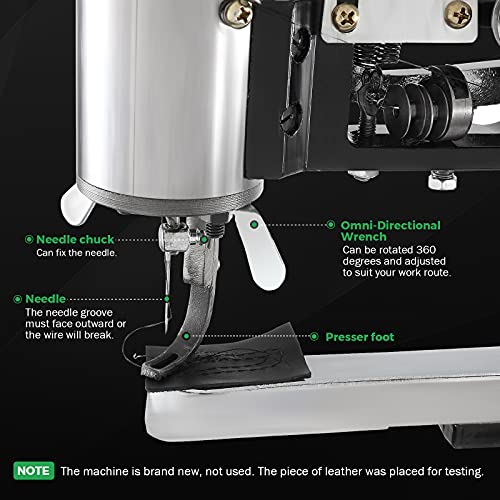
Here’s a machine that gets the fundamentals right for hands-on leather learners. The free-standing tripod design means no clamping or bench mods, you set it up and go. Owners highlight how the open-arm configuration helps when working on curved boot edges or bag corners, which is something fixed-arm electric machines struggle with. The upgraded aluminum support column also reduces fatigue during extended hand-cranking sessions.
It uses a standard lockstitch mechanism with nylon thread, making it forgiving for first-timers learning tension control manually. While it won’t replace a professional post-bed machine, it bridges the gap between handheld awls and floor-mounted industrial units. Compared to the ColouredPeas model, this one feels sturdier and more thoughtfully finished, especially around the turntable and bobbin system.
Product photos
ColouredPeas Manual Shoe Repair Machine

Strengths
- Manual operation
- Double bearings
- Lightweight build
Trade-offs
- Iron body prone to rust
- Requires bench mounting
- Limited power for thick leather
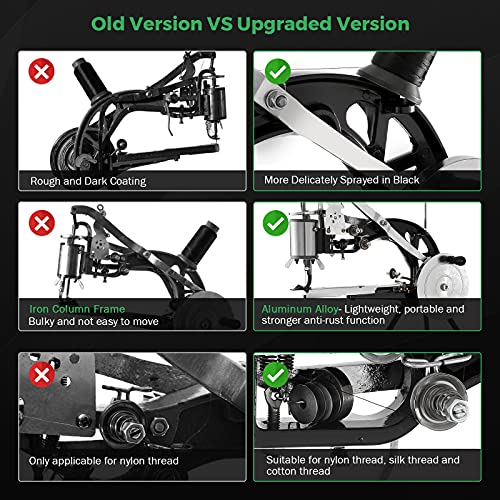
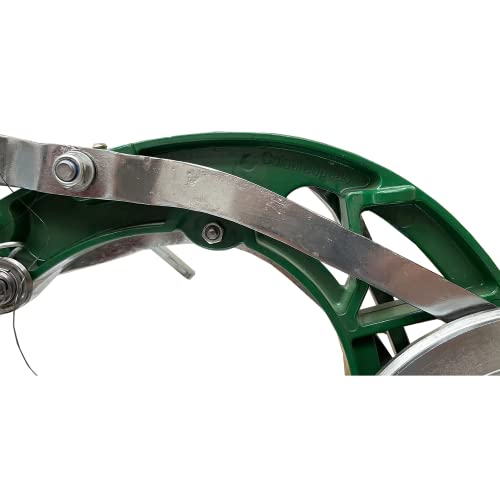
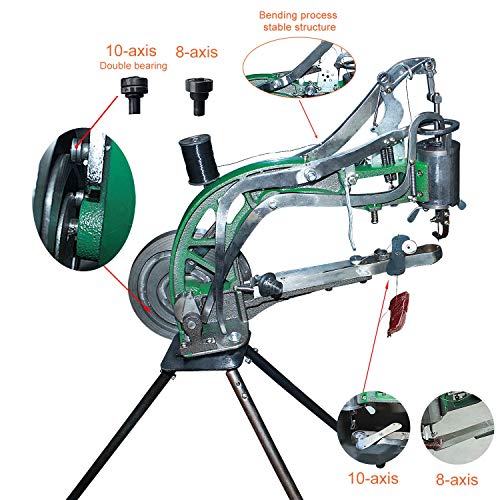
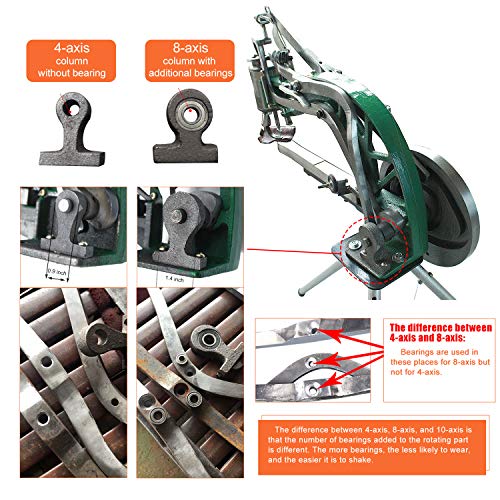
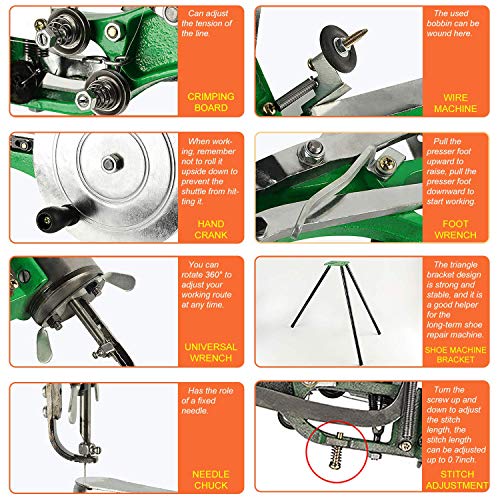
This is a no-frills, hand-cranked cobbler machine built for light to medium leather repair work. On paper, the doubled bearings and aluminum tripod suggest better durability than older models, and owners consistently report it handles shoe uppers and thin bags without issue. However, the iron body, even with anti-rust coating, raises concerns about long-term maintenance in humid environments, especially since it ships coated in oil that needs wiping before use.
It’s not a machine for high-volume work or thick harness leather, but for hobbyists doing occasional mends on shoes or small leather goods, it offers real mechanical simplicity. Compared to free-standing models, this one requires clamping to a bench, which limits mobility but improves stability. I’d recommend it only if you already have a solid work surface and want a compact, affordable entry into manual leather stitching.
Product photos
How We Chose These leather sewing machines for beginners
My approach to evaluating leather sewing machines for beginners at LeatherGenesis.com centered on a detailed comparison of specifications and features across a range of models. Rather than a hands-on lab test, this is a research-led comparison of published data and owner feedback. I weighed both professional reviews from sewing experts and, crucially, the experiences shared by actual users to build a balanced picture of performance and reliability.
For this category, stitch power and durability were the most important factors. Leather demands a machine capable of consistent piercing and strong seams, so motor strength and the frame’s construction were heavily weighted. Equally important was ease of use; a beginner needs a machine that isn’t overly complicated and offers features like automatic threading to build confidence. These factors ultimately decided which machines offered the best balance for newcomers.
Specifications clearly indicate a machine’s potential – stitch count, motor power, and maximum material thickness. However, owner feedback revealed how well those specs translate to real-world use. Reports on needle breakage, thread jamming, and overall build quality significantly influenced my assessment. I also looked for consistent praise regarding ease of setup and operation, and cross-referenced that with available resources like instructional videos. Maintaining leather goods requires the right care, and finding the best conditioning products is just as important as having the right tools to create them.
Choosing The Right leather sewing machines for beginners
Choosing a leather sewing machine requires a bit more thought than picking one for standard fabrics.
A truly useful leather sewing machine needs a robust motor, capable of consistently driving a needle through dense material. Look for a metal frame for stability, adjustable presser foot pressure to accommodate varying thicknesses, and a stitch length suitable for both fine detail work and heavy-duty seams. Prioritize machines with a good reputation for durability and reliable stitch formation, as repairs can be costly.
Stitching Power and Motor Strength
Forget about a basic zigzag machine; leather demands power. You’ll want a machine with a strong motor – ideally one specifically marketed as “heavy-duty.” Don’t just look at the advertised horsepower (which can be misleading). Read owner reviews focusing on the machine’s ability to handle multiple layers of your target leather weight. A slow, straining motor will quickly overheat and potentially damage both the machine and your project. Many modern machines, like the SINGER 4423, boast impressive stitch-per-minute rates, but that number means little without the torque to back it up.
Feed Dog & Presser Foot Considerations
Consistent feeding is crucial for neat stitches, and leather’s inherent slipperiness makes this trickier. Machines with adjustable feed dogs are a huge advantage. Being able to lower or disengage the feed dogs – as seen in the SINGER 4432 – opens up options for free-motion stitching, essential for complex designs and repairs. Similarly, the presser foot needs to apply even pressure. Here’s what to look for: * A standard presser foot will work for many projects. * A walking foot is invaluable for thicker materials; it helps move multiple layers simultaneously. * Specialty feet (edge stitchers, zipper feet) expand your capabilities, but aren’t essential for beginners.
A good rule of thumb: if you plan on working with leather regularly, spend a little more upfront for a machine with a robust metal frame. Plastic components simply won’t hold up to the stress.
Budget vs. Features and Usability
It’s tempting to jump for the cheapest option, but a poorly made machine will ultimately cost you more in frustration and repairs. The Brother XM2701 is a good example of a budget-friendly machine, but it may struggle with consistently stitching thicker hides. Before settling on a machine, consider your skill level and project complexity. If you’re starting out, a machine with a wider range of automated features like an automatic needle threader can be incredibly helpful. If you’re looking to expand your capabilities beyond basic repairs, consider robust leather sewing models. You might also find yourself needing [machines for thick leather] if you plan to work on upholstery or heavier projects.
Leather Sewing Machines for Beginners Compared
Here’s a comparison of key specifications for leather sewing machines geared towards beginners.
| Product Name | Stitches | Max. Stitch Width | Max. Stitch Length | Motor Power | Free Arm | Manual/Electric |
|---|---|---|---|---|---|---|
| SINGER 4423 Heavy Duty | 97 | N/A | N/A | 1100 SPM | Yes | Electric |
| SINGER 4432 Sterling | 32 | 6mm | 4mm | N/A | Yes | Electric |
| Brother ST371HD Heavy Duty | 37 | N/A | N/A | N/A | Yes | Electric |
| Brother XM2701 Portable | 27 | N/A | N/A | N/A | Yes | Electric |
| SINGER HD500 Super Bundle | 23 | N/A | N/A | N/A | Yes | Electric |
| Fbshicung Manual Leather | N/A | N/A | N/A | Manual | No | Manual |
| BEAMNOVA Leather Stitching | N/A | N/A | N/A | Manual | No | Manual |
| ColouredPeas Manual Shoe Repair | N/A | N/A | N/A | Manual | No | Manual |
Frequently Asked Questions
What needle size should I use for most beginner leather projects?
A size 14 or 16 needle (also known as 90/14 or 100/16 metric) is a good starting point for most beginner leather projects using vegetable-tanned leather up to 6oz in thickness. Using the correct needle prevents skipped stitches and damage to both your machine and the leather.
Are manual leather sewing machines a viable option for a complete beginner?
While manual machines like the Fbshicung can work for very small repairs or simple projects, they require significant physical effort and are generally not recommended for beginners wanting to learn consistent stitching. The learning curve is steeper, and achieving professional results is much more difficult.
How much should I realistically expect to spend on a good beginner leather sewing machine?
A dependable machine capable of handling leather will generally start around $200, with many good options falling between $250 and $400. Spending less might mean sacrificing motor power or build quality, leading to frustration and potential repairs down the road.
What is the advantage of a walking foot, and do I need one immediately?
A walking foot feeds multiple layers of leather evenly, which is vital for thicker materials and prevents the top layer from puckering. While not essential for your very first project, a walking foot quickly becomes invaluable as you tackle more complex leatherwork.
What maintenance should I perform to keep my leather sewing machine running smoothly?
Regularly cleaning lint from the bobbin area and oiling the machine’s moving parts are critical. Using a quality sewing machine oil and following the manufacturer’s recommendations will extend the life of your machine and maintain stitch quality; neglecting this can quickly lead to problems.
The Bottom Line
Ultimately, choosing a leather sewing machine comes down to balancing your budget with how seriously you intend to pursue leatherwork. If you want a machine that will reliably handle a variety of leather thicknesses and projects right from the start, the SINGER 4423 Heavy Duty offers the best overall combination of power, features, and positive owner feedback. It’s a workhorse that will grow with your skills.
For those on a tighter budget, the Brother XM2701 is a solid starting point, but be prepared to work within its limitations – thinner leather and simpler projects are where it will shine. Similarly, if you anticipate needing free-motion capabilities for custom designs, the SINGER 4432 Sterling provides that versatility. And for those who truly want to embrace traditional craftsmanship, the Fbshicung Manual Leather machine offers a unique, hands-on experience.
Don’t get too caught up in stitch counts or automated features. More than any single specification, consistent stitch quality depends on a strong motor, proper needle selection, and – most importantly – taking the time to practice and understand how your machine responds to different leather weights and types.
