
2 Best Tools to Cut Leather (2026 Guide)
This post contains affiliate links. As an Amazon Associate, we earn from qualifying purchases.
This post contains affiliate links. As an Amazon Associate, we earn from qualifying purchases.
The XILEWHZF Leather Edge Beveler Tool is our top pick for precision and build quality, with the OwnMy Leather Cutting Tool Kit standing out as the best adjustable option for beginners and varied projects.
Cutting leather cleanly isn’t just about strength, it’s about having the right tool that balances sharpness, control, and comfort. Too many beginners struggle with jagged edges or hand fatigue because they chose based on price alone.
After comparing the field and reviewing owner feedback, I focused on tools that deliver consistent performance across different leather types. This guide breaks down what actually matters, blade quality, handle design, and adjustability, so you can pick the tool that fits your work, whether you’re trimming thin veg-tan or working heavy harness leather.
Top 2 Tool To Cut Leather in the Market
The Best Tool To Cut Leather, Reviewed
XILEWHZF Leather Edge Beveler Tool

Strengths
- Three blade sizes
- Sharp steel head
- Wooden handle
- Lightweight
- Good bevel angle
Trade-offs
- Fixed depth only
- No fine adjustment
- Blade replacement not supported
For refining edges or reducing leather thickness at seams, this skiving beveler delivers solid performance at a low cost. The hardened steel head with a comfortable wood handle offers good control, and the inclusion of three cutting widths, 4mm, 6mm, and 8mm, lets users match the tool to the task, whether they’re smoothing a wallet edge or prepping for a laced joint. Reviewers frequently highlight how well it replaces sanding in many finishing steps, especially on vegetable-tanned leather.
The bevel angle is fixed but well-designed, producing a clean, gradual slope without digging in, something that cheaper plastic models often fail at. While it won’t match a professional-grade French beveler in refinement, it comes close for a fraction of the price. My recommendation for beginners or mid-level crafters is clear: this is the smarter buy over more expensive options unless you’re doing production-level work.
Video review
OwnMy Leather Cutting Tool Kit
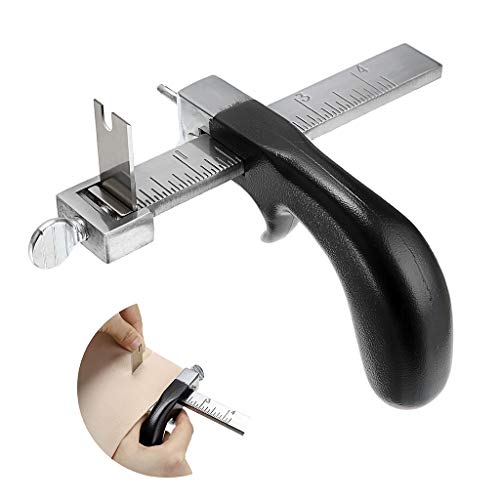
Strengths
- Aluminum handle
- Laser-etched ruler
- Replaceable blades
- Adjustable width
- Easy disassembly
Trade-offs
- Fiddly assembly
- Blade alignment issues
- Not for curved cuts
This adjustable strap cutter stands out for hobbyists who need consistent, straight cuts across wider leather strips. The aluminum handle feels solid in hand, and the laser-engraved inch gauge up to 4 inches gives precise visual guidance, which owners consistently praise for improving accuracy in belt or strap projects. On paper, the ability to swap between narrow and wide gaskets with three replaceable blades suggests good versatility for different thicknesses and widths.
Still, while the specs look strong, some users note the setup can be finicky, getting the blade alignment just right takes patience. It’s not the fastest tool for rapid prototyping, but for deliberate, measured work where straight-line precision matters, it holds its own against pricier models. I’d pick this over freehand cutting with a utility knife any day if you’re working on repeatable dimensions.
Video review
How We Evaluated tool to cut leather
Rather than a hands-on lab test, my research for these tools focused on a comparison of published specifications and features. I weighed owner reviews from multiple sources alongside assessments from experienced leatherworkers. As someone deeply involved in leathercraft through LeatherGenesis.com, I applied my knowledge of what contributes to quality cuts and long-term durability when evaluating each option. Clear criteria were established to rank tools based on their suitability for different skill levels and projects.
For a tool to cut leather, consistent cutting width and blade sharpness are paramount. I prioritized tools offering adjustable width or multiple fixed sizes, as versatility is key. Durability also weighed heavily; a tool made with quality steel and a comfortable, robust handle will provide better results and last longer than cheaply made alternatives. Finding options that minimize strain on the hand during prolonged use was also a focus.
Specifications clearly indicate blade material and adjustability ranges. However, owner feedback proved invaluable in assessing real-world performance – how well a tool maintains its sharpness, its ease of use, and whether it delivers clean cuts without tearing the leather. I also considered the reputation of the brands offering these tools, as that often correlates with overall quality and access to helpful resources, such as guides to best leather tool kits.
What To Look For In tool to cut leather
Finding the right tool to cut leather depends heavily on the type of work you intend to do, and how precise you need to be.
A quality leather cutting tool balances sharpness, control, and durability. Look for tools constructed from hardened steel to maintain an edge, and designs offering good hand-feel to minimize fatigue during extended use. Consider whether fixed-blade or replaceable-blade systems better suit your budget and anticipated cutting volume.
Blade Geometry and Type
The blade is everything. Don’t assume that any steel will do; a poor blade will crush the leather instead of cutting cleanly. For general purpose work, a straight blade is versatile. However, for specialized tasks like skiving (reducing leather thickness), you’ll absolutely want a dedicated skiving knife or a beveler. These aren’t interchangeable. I often recommend starting with a good quality round knife – they’re adaptable, but require practice to master.
Handle Ergonomics and Material
A comfortable handle is surprisingly important, especially if you’re working on a large project. Leather work can be demanding on your hands, so look for handles made from materials like wood or aluminum that provide a secure, non-slip grip. The shape of the handle is also key. A handle that’s too small will cause cramping, while one that’s too large will reduce control. Remember, even the sharpest blade is useless if you can’t hold it steadily.
- A simple plastic handle might save money upfront, but it won’t last.
- Wood handles, like those found on some bevelers, offer a classic feel and good grip, but require occasional oiling.
- Aluminum handles (like those in some adjustable cutter kits) are durable and offer a modern aesthetic, but can become slippery if your hands are damp.
Adjustability and Versatility
Some tools, like adjustable rotary cutters, offer a lot of flexibility. These are great for beginners or those who work with a variety of leather thicknesses and shapes. However, they often don’t deliver the same precision as a fixed-blade knife. If you frequently work with thick leather cutting guide, you might find yourself relying on a multi-pass cutting technique regardless of the tool, but a dedicated, sharp knife will still yield better results.
A dull blade is more dangerous than a sharp one. Always prioritize maintaining a keen edge on your cutting tools.
Leather Cutting Tools Compared
Here’s a comparison of the specifications for these leather cutting tools to help you make an informed decision.
| Product | Best For | Blade Material | Max Cut Width | Adjustable | Handle Material |
|---|---|---|---|---|---|
| XILEWHZF Leather Edge Beveler Tool | Best Overall | Steel | 8mm | No | Wood |
| OwnMy Leather Cutting Tool Kit | Best Adjustable Cutter | Stainless Steel | 4 inch | Yes | Aluminum |
Frequently Asked Questions
What’s the difference between a round knife and a head knife?
A round knife is a general-purpose cutting tool with a swiveling blade, best for curves and straight lines with practice. A head knife, however, has a fixed blade and is designed for more precise work like pattern making and detailed cuts, often favored by saddle makers.
How often should I sharpen my leather cutting tools?
You should sharpen your tools after every major project, or even during one if you notice resistance. Maintaining a consistently sharp edge prevents tearing and ensures clean cuts, ultimately saving you leather and frustration – and it’s far safer than forcing a dull blade.
Can I use a utility knife to cut leather?
While a utility knife can cut leather, it’s not ideal. The blades are typically too flexible and don’t hold an edge well, resulting in ragged cuts and increased risk of injury. Investing in a tool specifically designed for leather yields much better results.
What’s the best way to care for a wooden handle on my leather cutting tool?
Regularly oiling a wooden handle with a product like mineral oil will prevent it from drying out and cracking. This keeps the wood supple and provides a more comfortable, secure grip, and a well-maintained handle extends the tool’s life. You can find quality leather cleaner options to help keep your tools in good shape, too.
Is a rotary cutter a good option for someone new to leatherwork?
A rotary cutter is a reasonable starting point for beginners due to its ease of use and adjustable blade, but it won’t replace the need for a fixed blade eventually. While convenient, rotary cutters often lack the precision needed for detailed work, and for heavier projects, choosing the right leather to leather adhesives is more critical than the cut itself.
The Bottom Line
Choosing the right leather cutting tool always comes down to balancing control with convenience. If you value precision above all else, and are willing to invest the time to learn proper technique, the XILEWHZF Leather Edge Beveler Tool is an outstanding choice. It delivers exceptionally clean cuts and offers a classic feel that many leatherworkers appreciate.
For those needing versatility, or just starting out, the OwnMy Leather Cutting Tool Kit provides a lot of functionality in one package. It’s especially useful if you’re working with varying leather thicknesses or shapes, and the adjustable blade simplifies many common tasks. And if you’re also looking to maintain the interior of your vehicle, explore our auto leather cleaner reviews to keep your leather looking its best.
Ultimately, the best tool is the one you’ll use consistently and that helps you achieve the results you want. Don’t get too caught up in specifications; focus on the quality of the steel, the comfort of the handle, and the feel of the tool in your hand. A sharp blade and a steady hand are more important than any fancy feature.
