
How to Wear Leather Pants | The Fit That Changed My Mind
This post contains affiliate links. As an Amazon Associate, we earn from qualifying purchases.
This post contains affiliate links. As an Amazon Associate, we earn from qualifying purchases.
You wear leather pants by choosing a relaxed, straight-leg fit and pairing them with soft, contrasting textures on top, think oversized knits or simple tees, to balance the leather’s inherent edge. Avoid the head-to-toe leather look and match your footwear to the pant’s tone for a lengthening line.
The goal is to look like you’re wearing a great pair of trousers that just happen to be leather, not a costume. That shift, from statement piece to integrated wardrobe workhorse, is where the magic happens.When the leather isn’t the loudest thing in the room, it does its job perfectly.
What follows is a breakdown of the three things that actually matter: the cut that lets you move, the textures that keep it grounded, and the one styling rule everyone gets wrong.
Key Takeaways
- Pick a straight-leg or relaxed fit over skin-tight styles for comfort and a modern, less-costumey look.
- Always pair leather with a contrasting, softer fabric on top, a chunky knit or basic cotton tee, to balance the outfit.
- Never machine wash or chemically dry-clean leather pants; both methods will permanently damage the hide.
- Store leather pants on a wide, padded hanger, never folded in a drawer or sealed in plastic, to avoid permanent creases and mildew.
- Match your shoe color to your pant color to create a seamless, leg-lengthening line.
Start With the Right Cut
Forget the second-skin silhouette you remember from music videos. The first pair I bought on a whim years ago was that style. They looked incredible on the hanger. Sitting down in them was a different story, a symphony of squeaks and a waistband that dug in after twenty minutes. I sold them within a month.
A straight-leg or gently tailored fit that skims the body is the only cut that works for daily life. This is about physics, not just trendiness. Leather, especially quality vegetable-tanned hide, needs room to move with you.When it’s stretched taut, every bend and sit creates stress points that accelerate wear. A relaxed cut moves with you, not against you.
Common mistake: Buying leather pants a size too small, hoping they’ll “stretch to fit.” Non-stretch leather will give marginally, but the discomfort and risk of seam failure aren’t worth it. If they’re tight in the dressing room, they’ll be torture by day’s end.
Brands like AllSaints and Falcon Garments have mastered this. Their trousers often feature a slight taper from the thigh but keep a clean line through the knee and calf. This gives shape without constriction. Diesel often incorporates a percentage of elastane into their “leathers,” which helps, but I still advise sizing for comfort, not compression.
Real vs. Faux: Does It Change the Fit?
Here’s the thing. The “genuine leather” tag tells you almost nothing about quality, it’s a broad classification that includes lower-tier hides. For fit, the material matters more than the grade. Real leather, particularly full-grain, will mold to your body over time, developing a personal patina. It breathes.
Faux or vegan leather is a plastic laminate over fabric. It doesn’t breathe, and it won’t mold. It either fits off the rack or it doesn’t. The upside is consistency and often a lower price point; the downside is a potential for that telltale plastic squeak with every step and less long-term durability. For a first foray, a well-cut faux pair from a brand like & Other Stories is a sensible test.
The Golden Rule of Textural Contrast
Leather is a shiny, slick, and visually heavy material. The single fastest way to look like you’re trying too hard is to amplify those qualities. The fix is simple: oppose them.
Your top half should be soft, matte, and often bulky. An oversized cream cable-knit sweater over black leather pants is a fall uniform for a reason. A simple, well-fitting cotton t-shirt works just as well in spring. The contrast is what makes the look interesting and wearable, not overwhelming.
I’ve stuck with using a simple wooden slicker for years to burnish leather edges because it consistently produces a smooth, glassy finish with just water and pressure. The principle is the same here: the right counterbalance creates a better result. A soft top is the sartorial equivalent of that wooden tool, it finishes the hard edge of the leather.
This is where most guides just say “wear a sweater” and move on. Let’s be clear about this: the texture contrast rule exists because leather worn against more leather, or against other slick fabrics like satin, has no visual relief. It becomes a monolithic slab. A fluffy knit or a crisp oxford cloth shirt breaks that slab into distinct, manageable layers.
| Top Half Choice | Why It Works | What to Avoid |
|---|---|---|
| Oversized Knit | Adds soft volume that balances sleek legs; matte texture contrasts shine. | Avoid knits with metallic threads or a shiny finish. |
| Classic T-Shirt | Provides a casual, grounded base; cotton is the antithesis of leather’s formality. | Graphic tees with aggressive logos can clash. |
| Structured Blazer | Introduces a tailored, dry texture (wool, tweed) for smart-casual balance. | A black leather blazer—that’s heading into matchy-matchy territory. |
Shoes Make or Break the Line
Footwear is the anchor of your silhouette. Get it wrong, and even the perfect pants can look off. The most common error is choosing a shoe that cuts the leg line at the wrong point or clashes in weight.
Heavy, chunky shoes like platform boots or thick-soled trainers shorten the leg. They make the outfit feel bottom-heavy and awkward. What you want is a shoe that continues the line of the pant, or at least doesn’t violently interrupt it.
Pointed-toe flats, sleek ankle boots, or clean white sneakers. That’s the shortlist. A pointed toe, even on a flat, visually elongates. A sleek ankle boot that hits just above the bone creates a sharp, modern break. A crisp white sneaker keeps everything casual and grounded.
Where this goes sideways: Pairing black leather pants with brown boots and a brown belt. The broken color line chops your frame into segments. Matching your shoe tone to your pant tone is the simplest hack for a long, clean line. Brown pants, brown boots. Black pants, black shoes or crisp whites.
For sensory reality, listen to your walk. A stiff leather pant leg brushing against a bulky suede boot creates a muffled, dragging sound. The same pant leg gliding past a sleek leather Chelsea boot is almost silent. That’s the difference between an outfit that feels considered and one that feels clumsy.
The Head-to-Toe Leather Myth
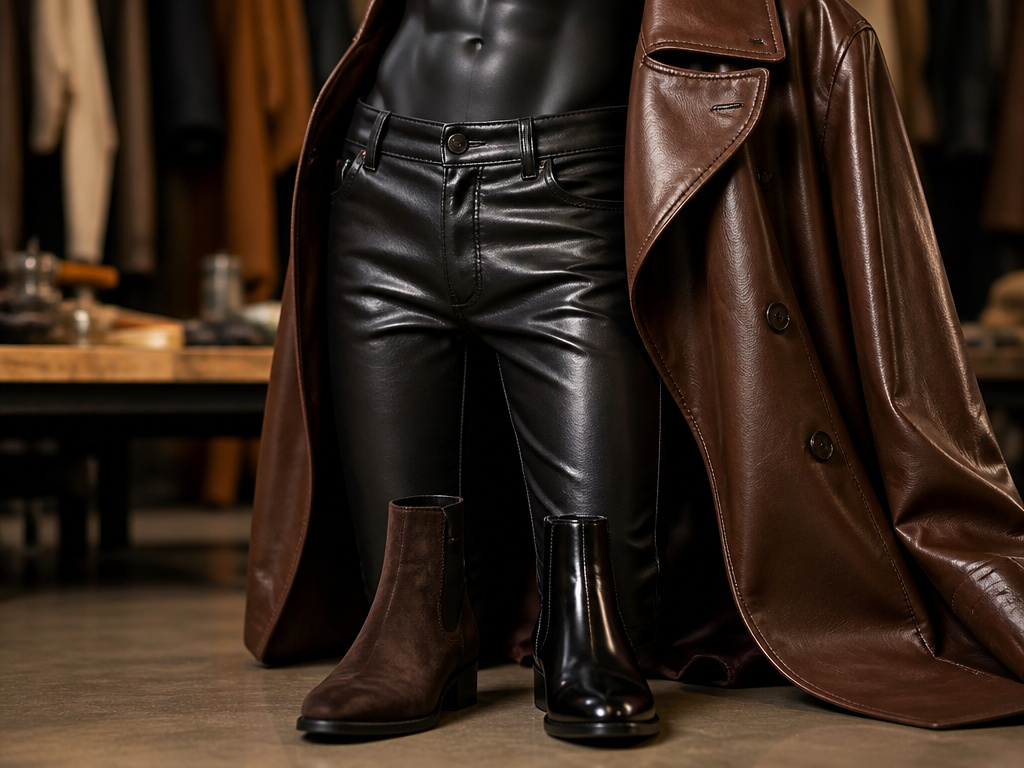 You’ve seen the look in editorials: the leather trench, leather pants, leather boots. It’s a powerful image, and it’s why many people think leather pants are unwearable. Stylist Lisa Talbot called it out directly, it can “feel heavy, dated and costumey.”
But here’s a nuance most articles miss: it’s not an absolute ban. It’s a warning about weight and monotony. If you attempt it, you must introduce deliberate contrast elsewhere. That could be through color (a chocolate brown trench over black pants), through texture (a matte suede boot instead of a shiny leather one), or through stark simplicity in your other elements (a plain white tank underneath).
Practically speaking, for 95% of situations, you’ll look cooler and feel more confident by treating your leather pants as one leather item in your outfit. Let your jacket be denim, wool, or canvas. This is the “Kate Moss cool” versus “Kim Kardashian overkill” distinction. One looks effortless, the other looks like an effort.
How to Integrate Leather Pants Into Your Actual Life
 This is where theory meets practice. You don’t need a rockstar lifestyle to wear these. You need a plan for Monday morning and Friday night.
For the office: Swap your black wool trousers for a black straight-leg leather pair. Keep the top half conservative, a silk blouse, a fine-gauge merino sweater. The leather adds a subtle texture and resilience your chinos lack. No one will call it out, but you’ll feel the difference.
For weekend casual: This is leather’s sweet spot. Your favorite vintage band tee, your leather pants, a denim jacket, and white sneakers. It’s the uniform of a thousand street-style photos because it works. The denim jacket is key, it’s the rugged, casual counterpart to the sleek pants.
For evening out: Elevate with simplicity. A sleeveless silk shell, your leather pants, and a pair of strappy heels or those pointed-toe flats. The leather pants are the foundation, so you don’t need much else. A single piece of statement jewelry is plenty.
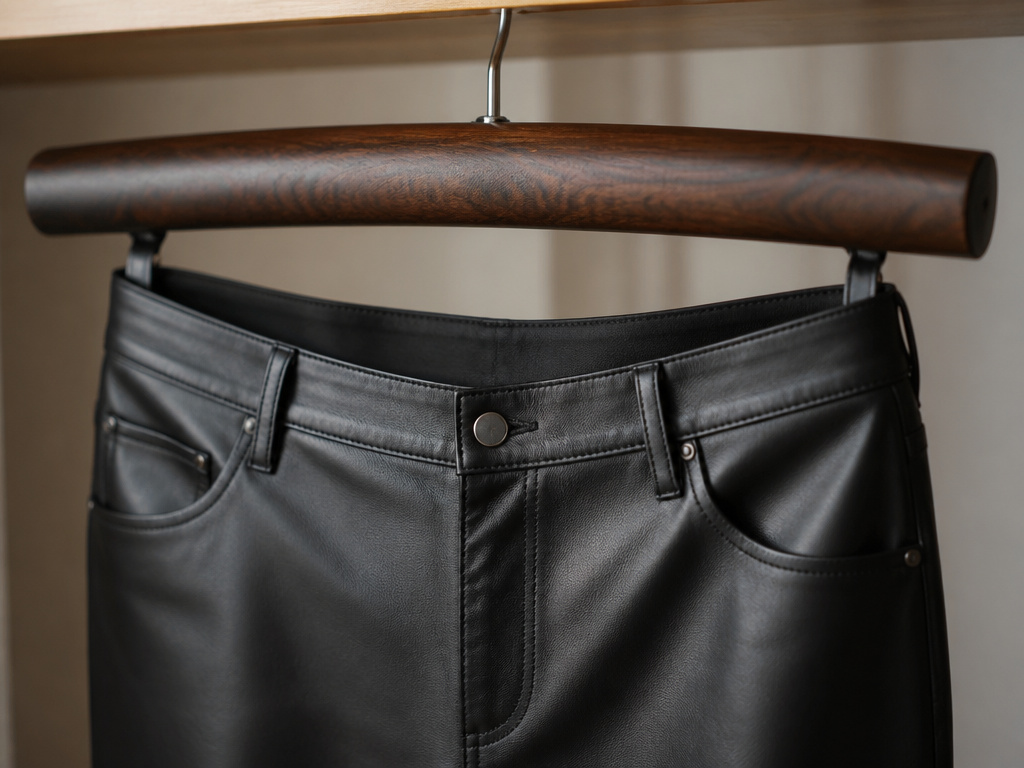
Remember the story from the FloraDress blog? A $400 pair of real leather trousers developed permanent, sharp creases after being folded in a drawer for six months. That’s a brutal lesson. Always hang leather pants on a wide, padded hanger. Folding any leather garment, especially at the same point repeatedly, trains the hide to crease. Over time, that crease becomes a crack.
Frequently Asked Questions
Can you wear leather pants in summer?
Yes, but choose your leather wisely. Lightweight lambskin or perforated styles exist. More practically, opt for a cropped length or a wider leg that allows for airflow. Pair with a linen shirt or a simple tank. The key is avoiding the combination of tight, non-breathable leather and high heat.
Are leather pants still in style?
Leather pants are less a “trend” and more a permanent wardrobe category now. The market growth data and their consistent presence on runways and street style confirm they’ve been normalized. The current style is defined by relaxed, straight-leg cuts and integration into everyday wear, not just nightlife.
What is the most versatile color for leather pants?
Black is the obvious answer for its slimming effect and ease of pairing. However, a rich brown or caramel color is surprisingly versatile, especially for fall and winter, and pairs beautifully with cream, grey, navy, and olive. Black can sometimes feel severe; brown often feels warmer and more approachable.
Can leather pants be tailored?
Yes, but with major caveats. A skilled tailor can take in side seams or shorten the hem. However, altering the waist or hips is complex because of the way leather panels are sewn, and puncture marks from original stitching are permanent. Always buy the best fit you can off the rack; consider alterations a last resort.
How do you clean leather pants?
Spot clean only. Use a slightly damp cloth with a drop of mild soap (like Castile) for stains. For overall grime, use a product specifically formulated for garment leather. Never machine wash. Never use standard dry-cleaning chemicals. Both will strip natural oils, stiffen the hide, and likely cause irreversible discoloration. For a full walkthrough, see our guide on essential leather pants care techniques.
Before You Go
The best pair of leather pants is the one you forget you’re wearing because the fit is easy and the rest of your outfit feels natural, not the loudest one. Start with a straight-leg style in black or brown.Wear it with the softest sweater you own and the cleanest shoes in your closet. Hang it up when you take it off.
That’s it. The confidence comes from knowing the rules well enough to follow them without thinking. Leather is a timeless material. Your pants should feel that way too.
