Is Vegan Leather Durable? The Facts Behind the Fad
This post contains affiliate links. As an Amazon Associate, we earn from qualifying purchases.
Vegan leather durability depends entirely on its base material and construction. The most common type, polyurethane (PU) bonded to a polyester backing, offers moderate scratch resistance for 1-3 years in daily use but will inevitably crack and peel. Emerging plant-based options like Mirum or Desserto aim for higher durability but lack long-term field data. For lasting durability, waxed canvas remains a proven vegan alternative to all leathers.
The core challenge is separating marketing from material science. A brand can call anything “vegan leather,” from a thin plastic sheet to a complex composite of mushroom roots. Each has a different breaking point, literally.
What follows is a breakdown of the three specs that matter, tensile strength, flex resistance, and abrasion tolerance, and how the major vegan leather categories stack up. We’ll name the high-performers, the ones to avoid for bags and shoes, and the one old-school material that still outlasts them all.
Key Takeaways
- Polyurethane (PU) vegan leather cracks within 2-4 years from flex fatigue; its plastic coating cannot self-heal like natural leather.
- Look for flex resistance ratings; the ISO 20942 shoe standard demands at least 80,000 cycles without visible damage, a test many cheap vegan leathers fail.
- High-tensile plant-based leathers like Desserto (cactus) or Mirum are built for durability, but their real-world lifespan against abrasion is still unproven compared to waxed canvas.
- Never condition PU or PVC vegan leather with oils or creams meant for animal leather; you’re just greasing plastic and can degrade the adhesive underneath.
- For ultimate durability in a vegan material, waxed canvas is the historical benchmark; it repairs easily and wears in instead of out.
What Makes a Material ‘Durable’?
Durability isn’t a vague compliment. It’s a set of measurable properties that predict how a material will behave under stress over time. For something that gets bent, pulled, and scuffed like a bag or jacket, three tests tell you almost everything.
First, tensile strength. This is the force needed to pull a material apart. It’s measured in megapascals (MPa) or newtons per square millimeter (N/mm²). A higher number means it’s harder to tear. For context, a natural leather with a tensile strength between 15-20 MPa might be considered suitable. Many basic polyurethane (PU) synthetic leathers test between 5-12 MPa, you can feel the difference in resistance when you try to tug a corner.
Second, flex resistance. This is how many times a material can be folded back and forth before it cracks. The standard for shoe uppers (ISO 20942) requires a minimum of 80,000 cycles without visible damage. Quality natural leathers can exceed 200,000 folds. This is where most thin, coated vegan leathers reveal their weakness. The plastic topcoat can’t stretch and recover like a fibrous hide, so repeated bending creates micro-fractures. You’ll see these as hairlines on the surface long before the material splits.
The part nobody mentions: The 80,000-flex standard is a dry test. Add moisture, heat, or UV exposure, and that number can drop by half for plastic-based materials. A vegan leather handbag that survives a winter might crack at the seams by next summer.
Third, abrasion resistance. This measures how well the surface handles rubbing and scraping. There’s no single magic number here, but a material that abrades easily will show a white, chalky base layer (the scrim) after minimal friction. This is the “shine then shred” cycle of cheap pleather.
| Property | What It Measures | Why It Matters for Durability |
|---|---|---|
| Tensile Strength | Force to pull material apart (MPa/N/mm²) | Determines resistance to tearing at seams or handles. |
| Flex Resistance | Number of folds until cracking (cycles) | Predicts cracking at stress points like bag corners or shoe creases. |
| Abrasion Resistance | Surface loss from rubbing (mass/volume loss) | Shows how quickly the material will scuff and wear through its top layer. |
When a brand claims durability, ask yourself which of these three properties they’re actually talking about. Scratch resistance isn’t flex resistance. A stiff material might have high tensile strength but fail at 10,000 flexes.
Polyurethane (PU) Vegan Leather
This is the default. Most affordable vegan leather handbags, jackets, and accessories are made from a polyester fabric base coated with a layer of polyurethane. It’s a plastic laminate. The durability story here is straightforward: the PU coating provides a smooth, scratch-resistant surface, but the second it is compromised, the whole system fails.
The coating itself is surprisingly tough against keys or pens in a bag. Where it falls apart is under tension and flexion. The PU layer is bonded to the fabric underneath with adhesive. Every time you bend the material, closing a wallet, the fold of a vegan leather jacket at the elbow, that bond is stressed. Over time, the plastic hardens and loses elasticity. Micro-cracks form, often following the grain of the fabric beneath.
Once a crack penetrates the coating, moisture and dirt get into the fabric core. The adhesive weakens. You’ll see the coating start to lift in small flakes, a process called delamination. This isn’t a repair; it’s the end of the material’s useful life. In my experience, this delamination starts showing up on daily-wear items, like a frequently used crossbody bag, anywhere from 18 months to 3 years in.
A 2023 comparative study published in the European Journal of Sustainable Development on synthetic leathers for footwear noted that while PU coatings performed well in initial scratch tests, their failure under repeated flexing was a predictable and distinct mode compared to fibrous materials.
The takeaway? PU vegan leather works for items that won’t see high stress. A decorative pillow, a laptop sleeve. For a daily driver bag or boots, you’re buying a product with a fixed, and fairly short, lifespan. Understand that, and the choice becomes clear.
Emerging Plant-Based & High-Performance Vegan Leathers
This is where the conversation gets interesting. A new generation of vegan leather materials is trying to solve the plastic problem by building durability in from the ground up, using natural or biobased polymers. They’re not just coatings; they’re monolithic materials.
Desserto, made from cactus leaves, and Mirum, a patented plant-and-mineral composite from Natural Fiber Welding, are the leaders. They’re engineered for performance. Mirum, for instance, isn’t a coated fabric; it’s a moldable material without a plastic layer. This means no delamination. Its tensile strength is engineered to meet or exceed certain grades of natural leather, aiming for that 15+ MPa range.
The promise is real, but the long-term data isn’t. These materials haven’t been on the market for a decade. We don’t know how a cactus leather boot sole will wear after 500 miles of pavement, or how Mirum’s colorfastness holds up to a decade of sun. A Materials Horizons gluten leather study on plant-based materials highlighted the challenge: emulating the complex, interlocking fiber structure of animal hide is the holy grail for both feel and longevity. We’re closer, but not there yet.
Then there’s Piñatex, made from pineapple leaf fibers. It’s a fascinating material, but its hype often outruns its specs. By itself, the pineapple fiber mesh is quite thin and lacks the tensile strength for high-stress applications. For bags or shoes, it’s almost always backed with a PLA (polylactic acid) bio-plastic or a fabric reinforcement. This makes it durable enough for many uses, but it’s not the ultra-strong, standalone material it’s sometimes portrayed as.
How Does Vegan Leather Compare to Real Leather?
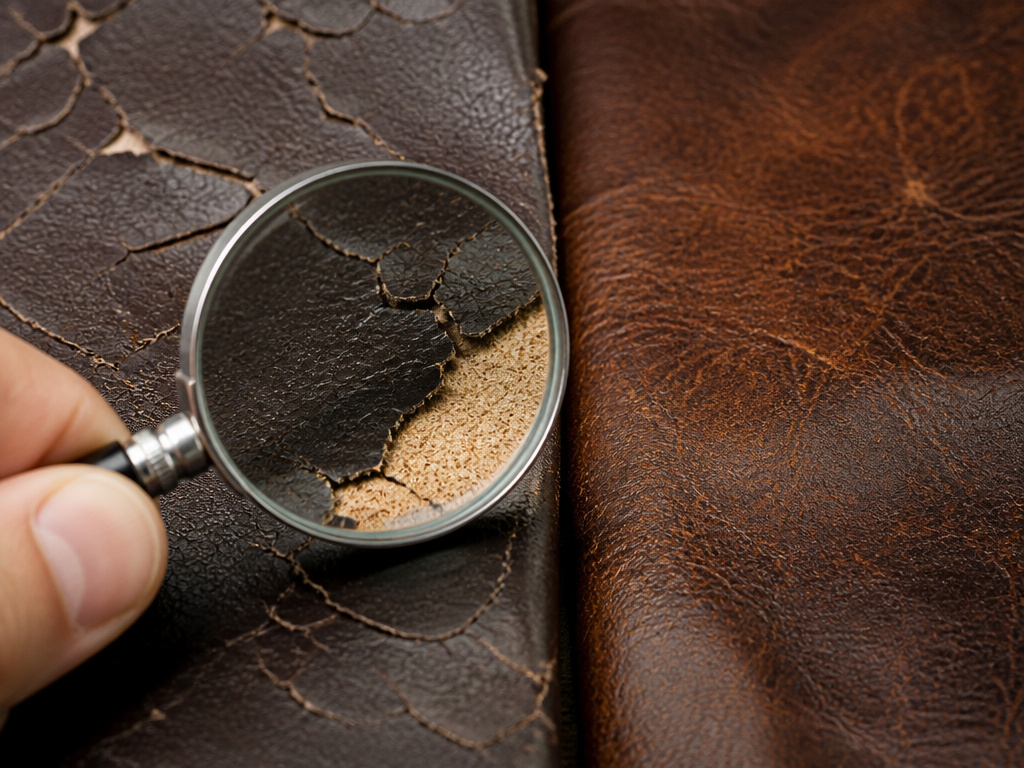
This is the question that sparks debates. Let’s be clear about one thing: we’re comparing categories, not absolutes. A premium, full-grain vegetable-tanned leather will almost always outlive a thin PU vegan leather. But a high-end Mirum jacket could easily outlast a cheap, corrected-grain leather item.
The difference is in the failure mode. Leather ages. It scuffs, develops a patina, and can dry out or tear if abused, but it rarely fails catastrophically. A stitch can break, and you can re-stitch it. The material itself can be conditioned and repaired.
Most vegan leathers, especially plastic-based ones, wear out. The coating cracks, delaminates, or the color rubs off to reveal a different-colored base. When that happens, the item is finished. You can’t sand and refinish a 0.1mm thick PU coating.
I learned this the hard way with a modern leather treatment. Standard historical advice says to use neat’s-foot oil for dry leather. On a vintage jacket, it’s perfect. On a modern, chrome-tanned jacket with a light finish, it over-saturated and left a permanent, overly greasy feel. The point is, materials matter. Applying the wrong solution, like using a leather conditioner on a plastic-coated faux leather, doesn’t just fail; it can accelerate the damage by breaking down adhesives.
| Material | Durability Strength | Durability Weakness | Typical Failure Mode |
|---|---|---|---|
| Full-Grain Animal Leather | High tensile strength, excellent flex resistance, repairable. | Can dry out, susceptible to water stains if untreated. | Wears through abrasion or tears; often repairable. |
| PU/PVC Vegan Leather | Good initial scratch and stain resistance. | Low flex resistance, cannot be effectively repaired. | Coating cracks and delaminates; irreversible. |
| Plant-Based (e.g., Mirum) | No delamination, engineered for high tensile strength. | Long-term abrasion data lacking, can be stiff. | Unknown; likely surface wear or tearing if underspec’d. |
| Waxed Canvas | Extremely high abrasion resistance, easily repairable. | Can be heavy, may require re-waxing over time. | Fabric wears thin at high-stress points over very long periods. |
For a true durability comparison, consider the entire lifecycle. A durable item isn’t just one that lasts long; it’s one that can be maintained and repaired to last even longer. By that measure, traditional materials still have an edge, but the gap is narrowing with every iteration of high-performance vegan alternatives.
The Most Durable Vegan Material Isn’t Leather at All
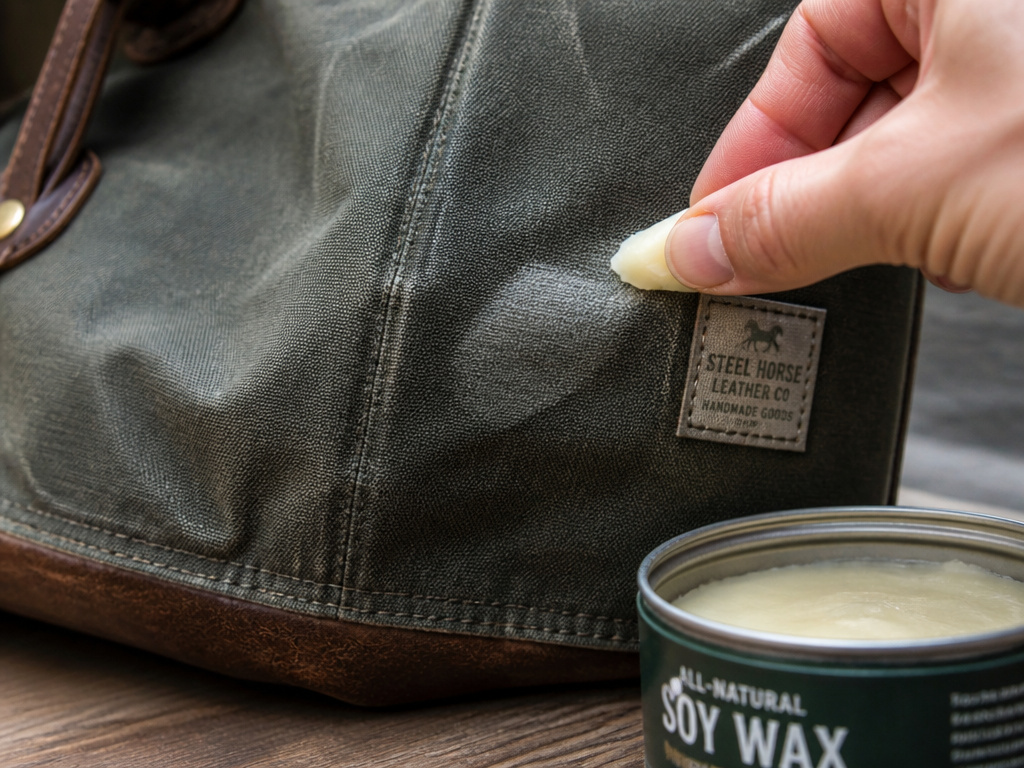
If your goal is pure, uncompromising longevity in a vegan material, you’re looking for waxed canvas. This is the historical benchmark. It’s a dense cotton or linen fabric impregnated with wax (historically paraffin or beeswax, now often soy-based alternatives).
Its durability comes from simplicity. There’s no coating to crack, no layers to delaminate. Abrasion wears down the wax coating long before it significantly damages the underlying fabric threads. When it does wear or gets a puncture, you can patch it from behind with a simple swatch and some adhesive, or re-wax the area to restore water resistance. It’s the definition of field-repairable.
Brands like Filson have built their reputation on waxed canvas bags and jackets that last for decades. It’s not as sleek as a synthetic leather, and it can be stiff and heavy. But for backpacks, travel duffels, workwear, and anything that needs to survive real abuse, it’s the uncontested champion. It’s often overlooked in the “vegan leather” conversation because it’s not trying to mimic leather, it’s offering a better solution for many of the same jobs.
Caring for Vegan Leather to Maximize Its Life
You can’t condition plastic. This is the first and most important rule of faux leather care. Applying oils, creams, or conditioners designed for animal leather will do nothing for the polyurethane or PVC coating. At best, it sits on top as a greasy smear. At worst, it seeps through seams or cracks and degrades the adhesive bonding the coating to the fabric, speeding up delamination.
So what do you do? 1. Clean with a damp cloth. Use water or a very mild soap solution. Never soak it, as water can get behind the coating through stitching holes. 2. Avoid heat and sun. UV radiation accelerates the embrittlement of plastic coatings. Don’t leave your vegan leather bag on a hot car dashboard. 3. Store it properly. Don’t cram it into a tight space where it will be permanently creased. Hang jackets, stuff bags lightly with paper to hold their shape. 4. Address scuffs gently. A white vinyl eraser can sometimes lift minor scuffs on PU. For deeper marks, there are specific vinyl protectant sprays that can add a thin protective layer and mask minor wear, but they are temporary solutions.
The goal is passive preservation. You’re slowing the inevitable hardening and cracking of the material, not nourishing it back to health. For plant-based leathers like Mirum, follow the manufacturer’s care instructions precisely, some can handle specific conditioners, others require completely different care.
Frequently Asked Questions
What is the most durable type of vegan leather?
For long-term, repairable durability, waxed canvas is the most proven vegan material. Among newer materials designed to mimic leather, Mirum and high-spec Desserto (cactus leather) are engineered for the highest tensile strength and resistance to delamination, but they lack multi-decade track records.
How long will a vegan leather bag last?
Polyurethane (PU) vegan leather bag under daily use typically shows significant wear, cracking, peeling, or color loss, within 2 to 4 years. Lifespan depends entirely on quality, thickness, and how often it’s flexed and stressed. A lightly used clutch may last longer; a heavily loaded daily tote will fail faster.
Can you fix cracked vegan leather?
No, not truly. Once the plastic coating on PU or PVC vegan leather cracks or starts to peel, the damage is irreversible. You can use vinyl repair kits or specific adhesives for a temporary cosmetic fix, but the structural integrity is compromised and the peeling will spread. This differs from real leather, where scratches and some cracks can be sanded, filled, and refinished.
Is vegan leather good for shoes?
It can be, but you must choose carefully. Shoes undergo extreme flex resistance stress. Look for brands that explicitly use high-performance vegan materials (like certain vegan leather boots lines) and check for mentions of flex testing or specific durability standards. Avoid cheap, thin PU vegan leather for shoes; it will crack across the toe box quickly.
Does vegan leather stretch?
Traditional plastic-based vegan leathers (PU/PVC) have very little stretch, which can lead to tearing at stress points if forced. Some newer plant-based and biobased vegan leather materials are engineered with more elasticity to better mimic the natural stretch of animal hide, but this varies greatly by brand and formulation.
Before You Go
Durability is a contract between you and the material. With vegan leather, you must read the fine print. “Vegan” tells you what it isn’t made from, not how long it will last.
If you need a bag or jacket for a season or two, the wide world of affordable PU vegan leather is fine. Just know what you’re buying. If you want an item to last a decade, your choices narrow dramatically. You’re looking at the upper tier of plant-based composites like Mirum, or you’re stepping outside the leather paradigm entirely to proven materials like waxed canvas.
The most durable choice is the one that matches the material’s real capabilities to your actual use. Forget the labels for a moment. Pick the thing built for the job.
