
How to Care for a Leather Coat to Extend Its Lifespan
This post contains affiliate links. As an Amazon Associate, we earn from qualifying purchases.
This post contains affiliate links. As an Amazon Associate, we earn from qualifying purchases.
To care for a leather coat, follow three core actions matched to a schedule: wipe it down weekly with a damp cloth, clean it with a pH-neutral leather cleaner monthly or after heavy soiling, and condition it with a dedicated leather conditioner every three to six months. Store it on a wide, padded hanger in a cool, dry place, never in plastic. The leather type, smooth, suede, grained, or waxed, dictates the specific products and techniques you must use.
That’s the basic sequence. But a schedule is just numbers on a page if you don’t know why each step exists or what happens when you skip it. A coat isn’t a static object; it’s a hide reacting to its environment, losing oils to the air, collecting salts and acids from your skin, and stiffening under UV light. The care routine is your counter-move.
What follows is a breakdown of that sequence, the sourced schedules that prove it, and the specific mistakes that cut a coat’s life in half. You’ll learn what to clean with, when to condition, and how to store a coat so it’s ready for next season, not stiff as a board.
Key Takeaways
- Clean with purpose: Use a pH-neutral leather cleaner only when needed, not as a weekly ritual. Over-cleaning strips natural oils faster than they can be replaced.
- Condition on a calendar, not on a whim: Apply a dedicated leather conditioner every 3–6 months. Skipping this lets the hide dry out, leading to irreversible cracking within a year or two.
- Match the product to the leather type: Using a wax-based conditioner on an aniline leather, or saddle soap on a delicate jacket, guarantees damage. The wrong product alters the leather’s chemistry.
- Storage is active care: A wide, padded hanger and a breathable cotton bag prevent permanent shoulder distortion and mildew. A wire hanger or plastic bag guarantees both.
- Let wet leather dry slowly: Never apply heat or conditioner to a soaking wet coat. Let it air-dry completely at room temperature, then condition to restore flexibility.
The Leather Care Sequence That Actually Works
The process is a direct response to what leather endures: dust that grinds into the grain, skin oils that build up and turn acidic, and moisture loss that makes the hide brittle. Ignore one part, and the others can’t compensate.
The Technical Snippet: For commercial aircraft leather, the Perrone Aerospace specification mandates cleaning and conditioning once per month or every 200 flight hours, with a weekly wipedown using a water-dampened micro-denier cloth. Refurbishment, removing the leather from the frame for deep repair, is scheduled at years 2, 4, and 6 from manufacture to maximize service life. This regimented, interval-based approach is the model for preserving high-use leather goods.
Your coat isn’t flying 200 hours a month, but the principle is identical. Dirt and oils accumulate predictably. The hide dries out on a timeline. A proactive schedule beats reactive repair.
Here’s how to translate that into a home routine.
Step 1: The Weekly Wipedown
This is damage prevention, not cleaning. Before you hang up your coat after a day out, take a soft, lint-free cloth (an old cotton t-shirt works perfectly), dampen it with cool water, and wring it out completely. Wipe down the entire exterior. This removes surface dust, pollen, and salt deposits before they have a chance to settle into the leather’s pores.
Skip this, and you’ll see a dull, greyish film develop within a month. That film isn’t just dirt; it’s an abrasive layer. Every time you move your arms, that grit grinds against the finish like fine sandpaper.
Step 2: The Monthly (or As-Needed) Clean
When the coat looks visibly soiled, or feels stiff or sticky to the touch, follow the manufacturer’s cleaning instructions for its specific fabric. This is where you need a dedicated product. My default pick is a pH-neutral leather cleaner like the one in the Dainese Protection & Cleaning Kit. Avoid household soaps, which are often alkaline and will strip the leather’s natural acidity, leaving it parched.
Apply the cleaner to a soft cloth, not directly to the coat. Work in small, circular sections, and don’t soak the leather. The goal is to lift the grime, not drown the hide. After cleaning a section, wipe it with a second cloth dampened with clean water to remove any residue. Let the coat air-dry completely, away from heat, before even thinking about the next step.
Step 3: The Quarterly Conditioning
This step is essential. Cleaning removes; conditioning replaces. Leather loses its natural oils to evaporation and friction. Without replenishment, the fibers contract, the surface tension increases, and the first micro-cracks appear. These aren’t “character.” They’re the beginning of a failure that can’t be reversed.
Condition every three to six months, without fail. Use a product formulated for your leather type, more on that in a moment. Apply a thin, even coat with a clean cloth, let it absorb for 15-20 minutes, then buff off any excess with a dry cloth. The leather should look nourished, not greasy.
The part nobody mentions: Conditioning a dry coat is useless. The oils can’t penetrate a sealed, dusty surface. You must clean first, then condition. Doing it backwards is like buttering a dusty countertop.
What Type of Leather Is Your Coat?
This is where most advice goes off the rails. Recommending “leather conditioner” is like recommending “engine oil” without asking if you drive a diesel truck or an electric car. The wrong choice ruins the system.
| Leather Type | Key Identifier | Care Priority | Product to Avoid |
|---|---|---|---|
| Smooth/Finished | Uniform surface, often glossy or semi-matte. Most common for jackets. | Condition every 3-6 months with a light, non-waxy conditioner. | Heavy waxes, mink oil (darkens leather). |
| Suede/Nubuck | Velvet-like, napped surface. | Brush regularly with a suede brush. Use a suede-specific protector spray. | Traditional conditioners, water (causes staining). |
| Aniline/Dyed | Soft, natural finish where you can see the hide’s grain. Absorbs liquids easily. | Use conditioners designed for aniline leather. Spot-clean only. | Any product not labeled for aniline use. |
| Waxed | Oily, waxy feel with a matte patina (common in Belstaff jackets). | Re-waxing is a specialist service. For cleaning, use a damp cloth only. | Standard leather conditioners (they dissolve the wax). |
If you don’t know your coat’s type, check the label or the brand’s website. If that fails, the touch test usually works: suede is fuzzy, waxed feels slightly tacky, aniline is soft and dry, and smooth finished leather feels, well, smooth.
The Tools and Products You Actually Need
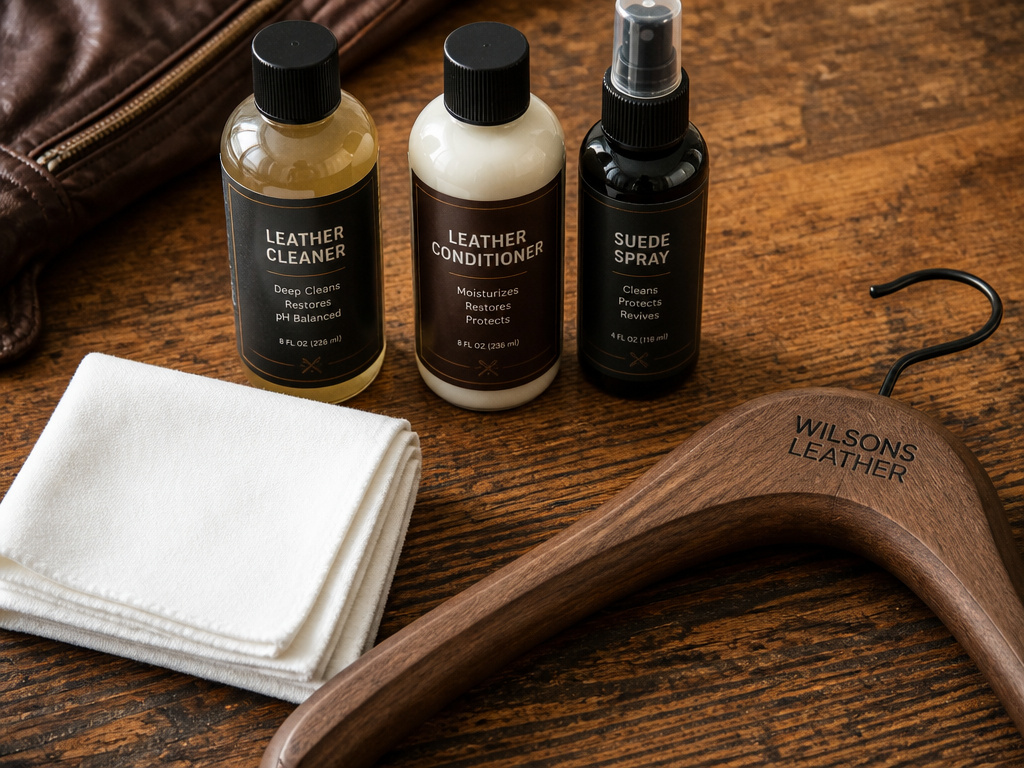
You don’t need a cabinet full of potions. You need four things, and two of them are just cloths.
- Soft, Lint-Free Cloths: A stack of clean, white cotton cloths. Use one for applying cleaner, one for rinsing, one for applying conditioner, and one for buffing. Never cross-contaminate.
- A Dedicated Leather Cleaner: A pH-neutral formula like Lexol Leather Cleaner or the cleaner from the Dainese kit. This is for the monthly deep clean.
- A Dedicated Leather Conditioner: Match this to your leather type. For most smooth coats, Bickmore Bick 4 or Leather Honey are safe, non-darkening options. For suede, a Saphir Suede Spray.
- A Wide, Padded Hanger: This is non-negotiable. A wire hanger will permanently distort the shoulders into two sharp points. A wooden hanger with rounded, padded ends supports the coat’s structure.
Where this goes sideways: Using saddle soap on a fashion jacket. Saddle soap is designed for thick, oil-tanned equestrian leather. On a thinner, garment-weight hide, it pulls far too much oil to the surface, leaving a sticky residue that attracts dirt and then dries out the leather underneath. It’s a great way to prematurely age a good coat.
Common Mistakes to Avoid When Caring for Leather
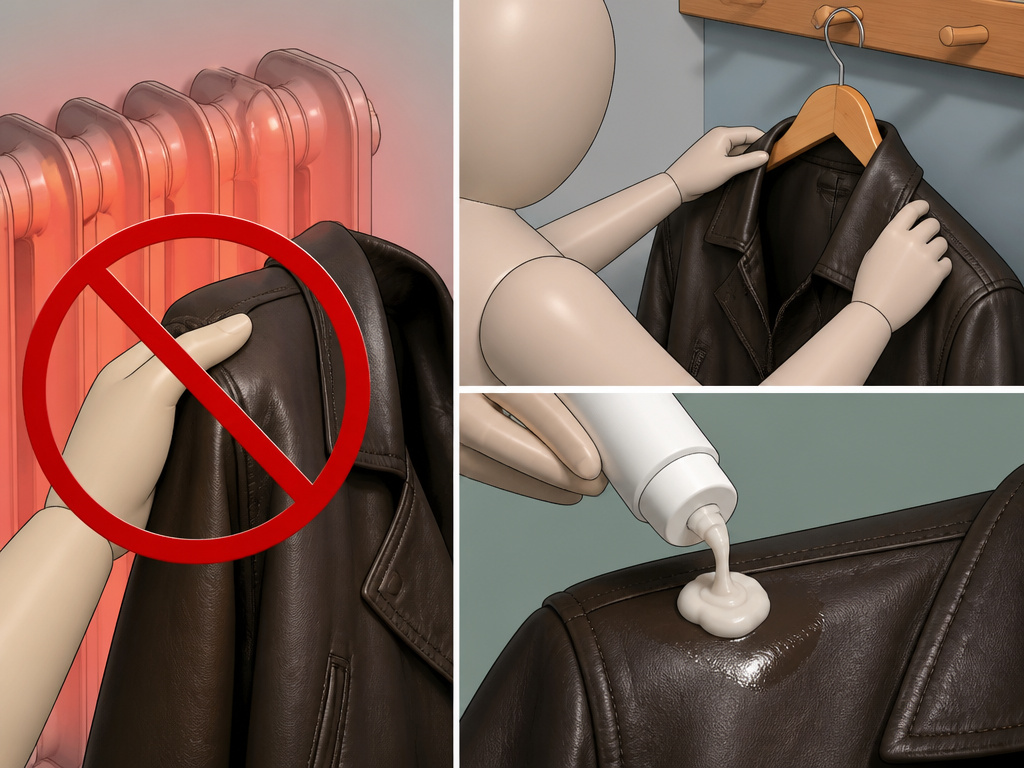
Leather is forgiving, but it has hard limits. Cross these lines, and the damage is permanent.
Mistake 1: Using Heat to Dry
Never hang a wet leather coat near a radiator, fireplace, or in direct sunlight. Heat cooks the leather, causing it to shrink, stiffen, and crack. It also sets stains permanently. Let it dry at room temperature, period.
Mistake 2: Storing in Plastic bags trap moisture. Trapped moisture leads to mildew. Mildew looks like a fuzzy, greenish-black map of continents on your coat, and it smells like a damp basement. Use a breathable cotton garment bag, or leave the coat uncovered in a well-ventilated closet.
Mistake 3: Over-Conditioning
More is not better. Leather can only absorb so much oil. Applying conditioner too often, or in too-thick a layer, creates a greasy film on the surface that attracts dirt and clogs the pores. The leather can’t breathe, and the finish turns gummy. Stick to the schedule.
Mistake 4: Using Universal “Miracle” Products that claim to clean, condition, waterproof, and shine in one step are almost always full of silicones and fillers. They create a superficial plastic-like layer that looks shiny for a week, then cracks and peels because it never nourished the leather beneath. I learned this the hard way with a dye that was incompatible with a leather’s pre-existing finish. I skipped the basic step of testing on a scrap, and the result was a peeling, ruined panel. The leather will tell you what it needs, listen to it, not the marketing copy.
How Should Leather Clothing Be Stored?
Storage is the long-term segment of the care routine. Do it wrong, and you undo all the good work of the previous season.
First, make sure the coat is clean and conditioned. Dirt left on the leather will set over months. Body oils will oxidize and stain.
Hang it on a wide, padded hanger. The shoulders should be supported along their natural curve, not pinched at a single point. Button or zip it up to maintain its shape.
If you need a dust cover, use a breathable cotton garment bag. Never use plastic. Store the coat in a cool, dry, dark place, a closet interior is better than a sunlit corner. Avoid attics (too hot) and basements (too damp).
Before you wear it again next season, give it a quick inspection. Brush off any dust with a soft cloth. Feel the leather. If it seems stiff, a very light pass with conditioner might be in order. Then you’re good to go.
Frequently Asked Questions
Can you wash a leather coat in a washing machine?
Never. The agitation, heat, and detergents in a washing machine will shrink, stiffen, and likely ruin the leather. It will also destroy any lining. Leather cleaning is always a hand process.
How do you remove a stain from a leather coat?
Act immediately. For oil or grease, blot (don’t rub) with a dry cloth to absorb excess. Then, using a cloth dampened with a tiny amount of your pH-neutral leather cleaner, dab the stain gently from the outside in. For water-based stains, a damp cloth may suffice. For stubborn or unknown stains, take it to a professional leather cleaner. Attempting aggressive home removal often sets the stain or damages the finish.
Is it okay to wear a leather coat in the rain?
Light rain is generally fine for most finished leathers, but you should not make a habit of it. If it gets wet, let it air-dry naturally away from heat. Once completely dry, condition it to restore any oils that may have washed out. For suede or unprotected aniline leathers, rain can cause permanent water spotting, so it’s best avoided.
How often should you replace the conditioner in a leather coat?
You don’t “replace” conditioner; you replenish it. The leather absorbs the oils over time. Follow the 3–6 month conditioning schedule. If the coat starts to feel dry or look dull before that, it might need it sooner, especially in very dry climates or with frequent wear.
The Bottom Line
Caring for a leather coat comes down to matching three things: the right schedule, the right products for your leather type, and the right storage. The schedule is a direct counter to the wear leather experiences. Clean when it’s dirty, condition before it’s dry, and store it with support.
Ignore the one-size-fits-all advice and the miracle products. A simple, dedicated cleaner and conditioner, used on a calendar, will do more for your coat’s lifespan than any quick fix. Understand leather better to make confident choices. A well-cared-for coat doesn’t just last for years; it evolves, developing a rich patina that tells its own story. That’s the real reward.
