
How to Care for Leather Boots & Avoid Voiding the Warranty
This post contains affiliate links. As an Amazon Associate, we earn from qualifying purchases.
Proper leather boot care is a sequence: clean with a soft brush and mild soap, condition with a product suited for your leather type (like Zamberlan Hydrobloc Cream for full-grain), and only then apply a protectant if needed. Never use direct heat to dry them, and match your conditioner to any Gore-Tex lining to avoid voiding warranties. Re-condition every 2-3 months with regular use.
That sequence sounds simple, but the devil is in the specifics. The difference between a boot that lasts a decade and one that cracks in a season often comes down to two or three missteps buried in the middle of those steps.
What follows is a breakdown of the why behind each step, the manufacturer rules that break boots, and the one common habit that guarantees you’ll need a resole much sooner than you should.
Key Takeaways
- Never dry boots with direct heat. It shrinks and cracks the leather from the inside, a damage type Zamberlan states is “incurable” and voids warranties.
- Condition before you protect. Applying a wax-based waterproofing sealant over dry or dirty leather locks in that dryness, accelerating cracking.
- For boots with a Gore-Tex liner, you must use a conditioner approved for the membrane (like Nikwax). Silicone-based products clog the pores and invalidate the Gore-Tex warranty.
- Sweat damages leather linings faster than rain. Salty moisture dries out the hide, making it brittle; condition the inside periodically if you’re a heavy sweater.
- If you ever plan to resole your boots, avoid heavy wax-based waterproofers (like Sno-Seal). The wax residue prevents new adhesive from bonding properly.
The Cardinal Rules of Boot Care (And What Breaks Them)
Most care guides are a list of things to do. Let’s start with what not to do—the actions that manufacturers like Zamberlan call “cardinal rules” and that will not only ruin your boots but also void any warranty you have.
The first and most critical is heat. Never, ever place wet leather boots near a fireplace, heater, radiator, or in direct hot sunlight. I know the temptation. You come in from a soggy hike, your feet are cold, and you want those boots dry for tomorrow. Resist it.
Zamberlan’s warranty statement is blunt: placing boots near a heat source causes the leather to dry out “to a point from which it cannot recover, causing shrinkage and wrinkling.” This leads to delamination of soles and rubber rands. The damage is permanent.
The leather doesn’t just dry on the surface; it essentially cooks. The fibers contract violently, creating deep cracks that start inside the hide. You’ll see these as permanent wrinkles and a texture like alligator skin. Once that happens, no amount of conditioner can bring it back.
The second rule involves chemistry. If your boots have a Gore-Tex or similar waterproof/breathable membrane, you cannot use just any conditioner. The membrane is a microscopic web with pores small enough to block liquid water but allow vapor (sweat) to escape.
Where this goes sideways: Using a silicone-based or non-approved conditioner. These products clog the membrane’s pores. The boot stops breathing, your feet get clammy, and the Gore-Tex warranty is void because you’ve compromised its core function.
Stick to products the bootmaker recommends (like Zamberlan Hydrobloc) or brands like Nikwax that are explicitly formulated for Gore-Tex. This isn’t marketing; it’s chemistry.
Cleaning: The Non-Negotiable First Step
You cannot condition or protect dirty leather. Grit acts like sandpaper, grinding into the finish as you work. A layer of mud seals the leather’s pores, blocking any treatment from penetrating.
Here’s the straightforward process. You’ll need a soft-bristle brush (horsehair is ideal), lukewarm water, and a mild, leather-safe soap. Remove the laces and insoles first.
- Dry Brush: Vigorously brush off all loose dirt and dried mud. This prevents you from making a slurry when you add water.
- Wash: Dampen the brush and use a small amount of soap. Work it into a lather on the boot in small circles. Focus on soiled areas, but be gentle on stitching.
- Rinse: Wipe the boots down with a cloth dampened with clean water to remove soap residue. Don’t soak them; you’re not pressure-washing a deck.
- Dry: Let them air dry at room temperature, away from heat and sun. Stuff them with newspaper or a boot tree to hold their shape and absorb internal moisture. Change the paper every few hours as it becomes damp.
This isn’t just about aesthetics. Dirt is abrasive and acidic. Letting it sit breaks down the leather’s topcoat and fibers over time. A clean boot is a receptive boot.
Conditioning vs. Waterproofing: Understanding the Goals
This is the core confusion in boot care. Conditioning and waterproofing are related but different jobs, and using one to do the other’s work backfires.
| Goal | What It Does | Example Products |
|---|---|---|
| Conditioning | Replaces natural oils lost from wear, sun, and cleaning. Keeps leather supple and prevents cracking. | Zamberlan Hydrobloc Cream, LOWA Active Cream, Obenauf’s Leather Oil |
| Waterproofing | Adds a surface barrier to repel liquid water. Often reduces breathability. | Wax-based sealants (Sno-Seal), DWR sprays (Nikwax Fabric & Leather Proof) |
| Combination | Attempts both, usually with moderate water resistance and some oil content. | Nikwax Conditioning Wax for Leather |
Conditioning is healthcare. Leather is skin. It loses oils through exposure and needs them replenished to stay flexible. A well-conditioned boot feels softer and develops a rich patina.
Waterproofing is armor. It’s a trade-off. A heavy wax sealant will keep water out brilliantly but can also seal oils in (or out) and will absolutely alter the leather’s look and breathability.
Common mistake: Applying a waterproofing wax to a dry, unconditioned boot. You’re sealing in a state of dehydration. The leather underneath continues to dry and become brittle, and the wax layer will crack because the foundation is failing.
The right sequence is always clean, condition, then protect. Decide if you need the armor based on your use. For daily wear in the city, conditioning is often enough. For week-long backpacking trips in the Pacific Northwest, a protectant is a smart next step.
How to Condition Your Boots the Right Way
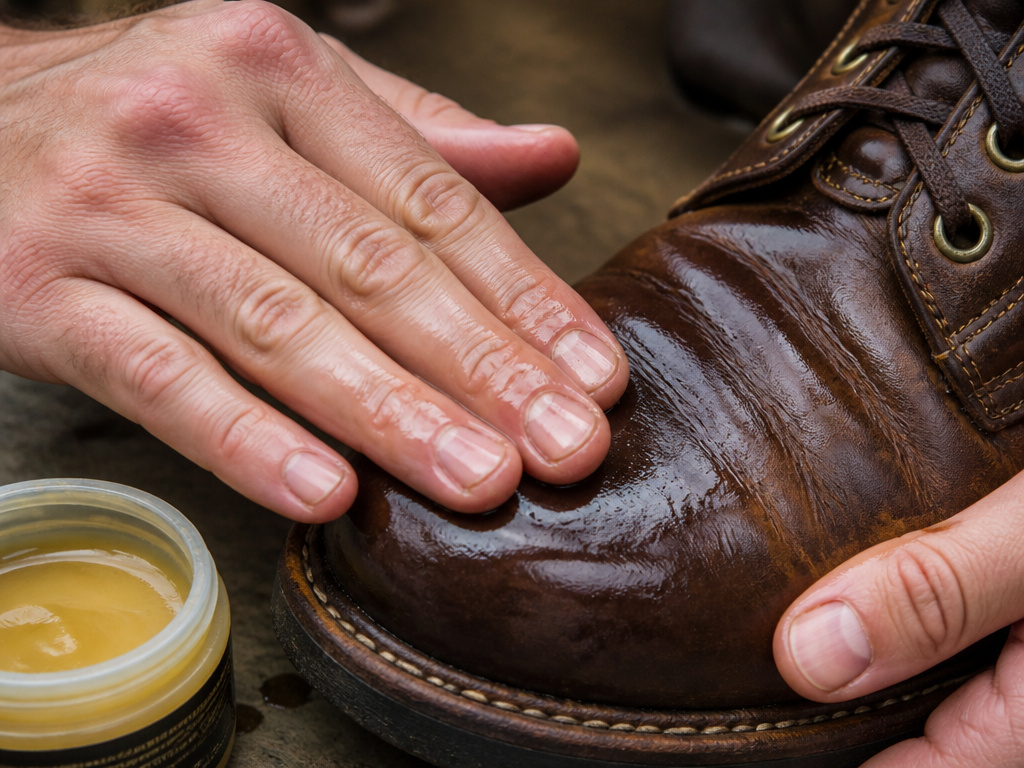
Conditioning is not a slather-it-on affair. It’s more like applying a hand-rubbed oil finish to wood—thin, even coats, fully absorbed.
Once your boots are clean and slightly damp (this helps the conditioner penetrate), apply your chosen product. For a cream like LOWA Active Cream, use a soft cloth or brush. For an oil, use your fingers in a thin layer.
Let me share what I’ve learned. I gave up on pre-mixed antique gels for leather projects because I found the results one-dimensional. Mixing my own pigments allowed for depth. The same principle applies here: mass-market, one-size-fits-all conditioners often contain fillers and silicones. A simple, quality product like Obenauf’s Leather Oil absorbs deeply because it’s not fighting a cocktail of other chemicals.
Cover the entire boot, paying extra attention to seams, welts, and flex points like the ankle and toe box. These are high-stress areas that dry out fastest.
Then, walk away. Let the boots sit for at least 12-24 hours so the conditioner can fully migrate into the leather fibers. Buff off any slight residue with a dry cloth. The boot should look nourished, not greasy.
How often? For a pair that sees weekly hikes or hard use, you might condition them monthly during peak season. You’ll know it’s time when water stops beading on the surface and the leather looks dull or feels stiff.
The Waterproofing Decision (And Its Long-Term Cost)
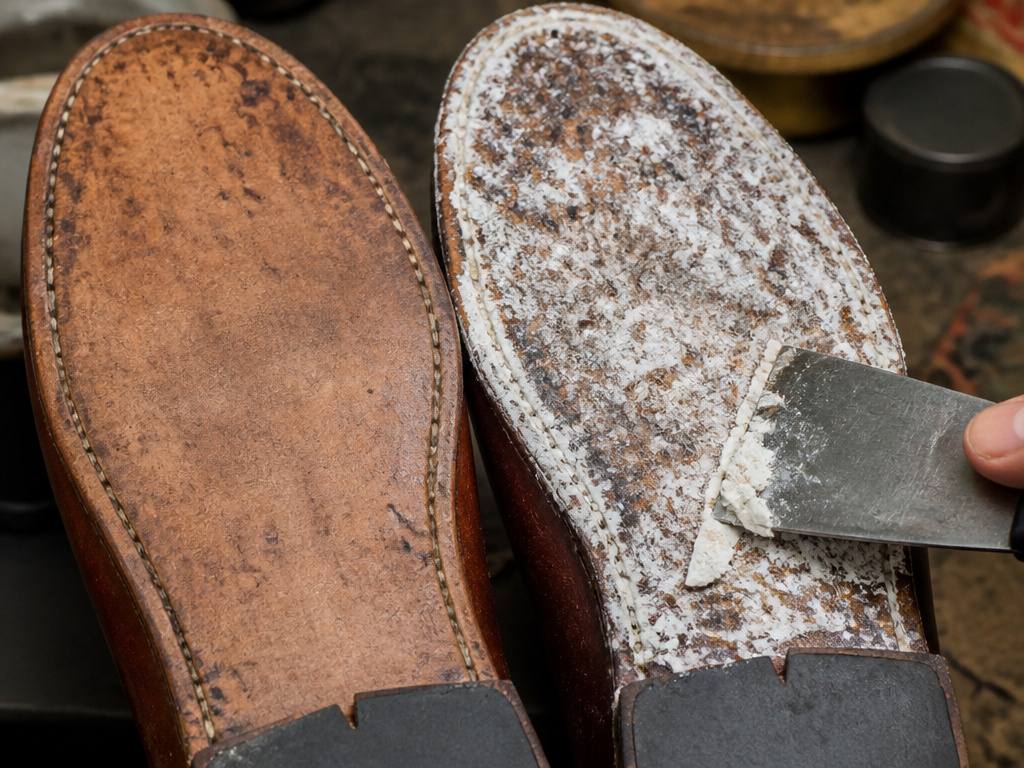
So you’ve decided you need extra protection. Here’s the critical, often-overlooked trade-off: heavy waterproofing can kill resoleability.
Boots like the Zamberlan 960 Guide GTX RR are built to be resoled. It’s a core part of their longevity promise. But if you’ve been slathering them in a thick wax sealant for years, you may have ruined that option.
REI’s expert advice notes: “Wax residue impairs the ability of a new adhesive to bond with a new sole.” The cobbler will have to spend extra time (and charge you more) to aggressively strip the wax, and the bond may never be as strong.
If you plan to resole, lean on the boot’s inherent leather quality and a breathable DWR spray like Nikwax Fabric & Leather Proof for water repellency, not a full sealant.
For extreme, wet-weather conditions where you accept the boots as consumable, a product like Sno-Seal works. Apply it sparingly to warm (not hot) boots so it melts and penetrates. It will darken the leather significantly and create a stiff, waxy shell. This is the “armor” choice.
Special Cases: Gore-Tex, Sweat, and Storage
The standard rules bend for specific scenarios. These edge cases are where most owners get caught.
Gore-Tex Liners: As stated in the rules, use compatible products. The membrane itself never needs conditioning—just keep it clean. Your target is the leather around it. A product like Nikwax is engineered for this exact job.
Sweat Damage: Rain soaks your boots from the outside. Sweat soaks them from the inside, and it’s saltier. LOWA specifically advises applying their Active Cream to leather linings if you “sweat profusely.” Salt draws moisture out of the leather, making it brittle and hard. If your boots are damp inside after a day’s wear, dry them thoroughly with a boot dryer that uses room-temperature air, like a Peet dryer.
Long-Term Storage: Before you store boots for a season, give them a full clean and condition. This protects them from drying out in static air. Store them in a cool, dry place with boot trees inside to maintain shape and absorb ambient moisture. A damp basement or hot attic is a death sentence.
Frequently Asked Questions
Can I use mink oil on my leather boots?
You can, but it’s often overkill and can overly soften some leathers. Mink oil is a heavy, greasy conditioner that also provides decent water resistance. It’s great for work boots that see constant wet conditions, but it can darken leather permanently and may not be ideal for lightweight hiking boots or dress leather. For general care, a dedicated leather conditioner is usually a better choice.
How do I know if my boots need conditioning?
Perform the touch test. Pinch a small area of leather, like on the shaft. If it feels stiff, dry, or shows tiny white stress lines when flexed, it needs conditioner. Visually, leather that looks pale, chalky, or has lost its luster is thirsty.
What’s the best way to dry leather boots quickly without heat?
The fastest safe method is a combination. Stuff them tightly with newspaper or paper towels, changing the stuffing every 2-3 hours as it becomes saturated. Place them in front of a gentle fan at room temperature. The moving air and absorbent paper will pull moisture out effectively.
Will conditioning my boots make them less waterproof?
No, proper conditioning should maintain or improve water resistance. Conditioners replace oils that help leather naturally repel water. However, if you apply too much and don’t buff off the excess, it can attract dirt and create a sticky surface. The waterproofing loss happens when the leather dries out and its fibers open up.
Can I use the same product on suede and full-grain leather?
Almost never. Full-grain leather benefits from creams and oils that absorb into the surface. Suede and nubuck have a raised nap; creams will mat and stain it. For rough-out leathers, use dedicated sprays like Zamberlan Hydrobloc Spray that protect without altering the texture. Always check the product label.
Before You Go
Leather boot care isn’t about babying an object. It’s about maintaining a tool. The goal is to keep the material functional for the job you ask it to do, whether that’s crossing a stream or walking city blocks.
The one action to take this week: pull your most-worn pair of boots. Brush off the dirt. Feel the leather. If it’s stiff or looks thirsty, block out an hour this weekend to clean and condition them. That single session will do more for their lifespan than any fancy product sitting on a shelf.
And remember the two non-negotiables: no heat, and match your potions to your boot’s construction. Everything else is a matter of frequency and preference. A well-cared-for boot doesn’t just last longer—it tells a better story with every scuff and crease.
