
How to Clean a Leather Handbag: The Pro Method Brands Miss
This post contains affiliate links. As an Amazon Associate, we earn from qualifying purchases.
To clean a leather handbag, you need a soft white cloth, lukewarm water, and patience, not a bottle of specialty cleaner. Wipe the bag with the damp cloth, let it air dry completely away from heat, then buff it with a dry cloth. Test any method on a hidden spot first, and never use saddle soap, oils, or furniture polish.
That’s the foundation. It works because leather is skin. You wouldn’t scrub your own skin with harsh chemicals; you’d use mild soap and water at most. The goal isn’t sterilization, it’s removing surface grime without stripping the hide’s natural oils.
What follows is a breakdown of that simple method, when to break it for special materials like suede, and the storage tricks that prevent 90% of cleaning needs. We’ll also look at what the luxury care guides leave out, like why their “avoid all products” warning is more honest than the conditioner aisle wants you to believe.
Key Takeaways
- The most effective cleaner for most leather is a damp white cloth with plain water or a 10:1 water-to-soap mix. Brand-name cleaners often add waxes and silicones that clog the leather. Air drying is essential.** Placing a wet bag near a radiator or using a hairdryer cooks the collagen fibers, making the leather brittle and prone to cracking.
- Storage causes more damage than use. A bag stuffed in a humid closet will grow mildew; a bag stored flat will deform. Use acid-free tissue paper and keep handles supported.
- Conditioning is preventative, not restorative. Apply a light conditioner like Saphir Médaille d’Or only to dry, thirsty leather every 6-12 months. Over-conditioning creates a greasy, dirt-trapping film.
- “Genuine leather” is a red flag for care. It’s a bottom-tier classification often coated in plastic (corrected grain). This coating cracks, and you can’t condition what’s essentially vinyl.
The 3-Step Cleaning Process (No Products Needed)
You don’t need a specialty potion. I learned this the hard way early on, reaching for a “luxury leather cleaner” on a vintage briefcase. The product left a waxy, dull film that attracted dust like a magnet. It took a gentle bath with a damp microfiber cloth to reset the piece.
The process is straightforward, but the timing matters.
1. Empty and Brush. Take everything out of the bag. Use a soft-bristled brush (a clean makeup brush works) to gently dislodge dust and grit from seams and crevices. This prevents grinding dirt into the leather during the next step.
2. The Wipe Down. Dampen a clean, white cloth, microfiber or soft cotton, with plain lukewarm water. Wring it out so it’s barely damp, not dripping. Wipe the entire exterior in smooth, overlapping strokes, following the grain of the leather. For a spot clean, Tiffany & Co. Specifies a mild solution of one part soap to ten parts water. Apply with the cloth, don’t pour it on.
Common mistake: Using a colored or rough towel. Dyes can transfer, and textured fabrics can microscopically scratch the surface, dulling the finish over time.
3. Dry and Buff. Let the bag air dry naturally, away from direct sunlight, heaters, or fans. This can take several hours. Once completely dry, buff the entire surface with a second clean, dry cloth. This raises the natural nap and brings back the sheen. If the leather feels stiff after drying, that’s normal, it will soften again with use.
| Step | Tool | The “Why” Layer | What Happens If You Skip It |
|---|---|---|---|
| Empty & Brush | Soft-bristle brush | Removes abrasive particles that act like sandpaper during wiping. | You grind dirt into the leather, creating fine scratches that dull the surface permanently. |
| Wipe Down | White cloth, lukewarm water | Hydrates and lifts surface soil without chemical interaction. A white cloth shows when it’s dirty. | Grease and dirt build up, attracting more grime and accelerating the wear on the finish. |
| Dry & Buff | Dry cloth, time | Evaporation must be even to prevent water spots. Buffing re-aligns the leather fibers. | Trapped moisture leads to mildew; uneven drying causes water rings. The bag feels rough, not smooth. |
What the Luxury Brands Actually Say (And What They Don’t)
If you read the care guides from Tiffany & Co. and Gucci, a pattern emerges. Their first line of defense is always a soft, dry cloth. Their second is a damp cloth with a tiny amount of mild soap. The list of “never use” items is long and specific: saddle soap, oils, furniture polish, varnish, ammonia, abrasive cleaners, hairdryers.
Where this goes sideways: Using a “leather protector” spray on a bag that’s never been cleaned. You’re sealing in dirt and oils, creating a permanent, cloudy barrier. Most brands’ guides telling you to “avoid protective products” is a quiet admission that most sprays do more harm than good.
They also publish specific, non-commodity handling instructions you won’t find in a generic blog post. For Gucci bags with bamboo handles, the guide says to use the provided plastic bands to maintain the handle’s curve during storage. For detachable straps, you’re instructed to roll them up and place them inside the bag, protected by tissue paper. For metal chains, bend the chain gently without forcing the links.
These are serious recommendations based on warranty claims and repair data. Ignoring them leads to broken handle shapes and creased straps that are expensive to fix.
Let’s be clear about this: a brand’s care guide is your single best source of truth for that specific bag. It accounts for the type of leather, the dye process, and the finish. A general rule is helpful, but the OEM manual is law.
Special Materials Need Special Rules
The three-step water method is for common finished leathers, your typical cowhide bag. Other materials break the rules.
- Patent Leather: Wipe with a damp cloth. Do not rest patent pieces against each other, as Tiffany & Co. warns color transfer can occur. Never use conditioners or oils; they’ll cloud the glossy finish.
- Suede & Nubuck: Water is the enemy. Use a specialized suede brush or a clean pencil eraser for dry stains. For wet stains, blot, don’t rub, with a white paper towel. For serious issues, take it to a pro. Gucci explicitly says to contact them for canvas, velvet, or suede.
- Vegetable-Tanned Leather (like Coach Original Natural): This leather is unfinished and porous. Coach states it should not be exposed to water, as colors may run, nor to direct sunlight, which causes fading. Spot cleaning is risky; prevention is everything.
- Hair Calf (like ponyhair): Wipe with the natural lay of the hair using a damp cloth, never against it. Vigorous rubbing will pull hairs out.
| Material | Cleaning Agent | Key Warning | Pro Tip |
|---|---|---|---|
| Standard Finished Leather | Damp white cloth | Avoid heat when drying. | Buffing when dry restores luster better than any spray. |
| Patent Leather | Damp cloth, mild soap | Beware color transfer between items. | A dry microfiber cloth is best for daily dusting. |
| Suede/Nubuck | Suede brush, eraser | Never introduce moisture or liquid cleaners. | Brush after every few wears to maintain the nap and prevent stains from setting. |
| Vegetable-Tanned | Dry cloth only | Sun and water cause permanent damage. | Embrace the natural patina; marks are part of its story. |
To Condition or Not to Condition?
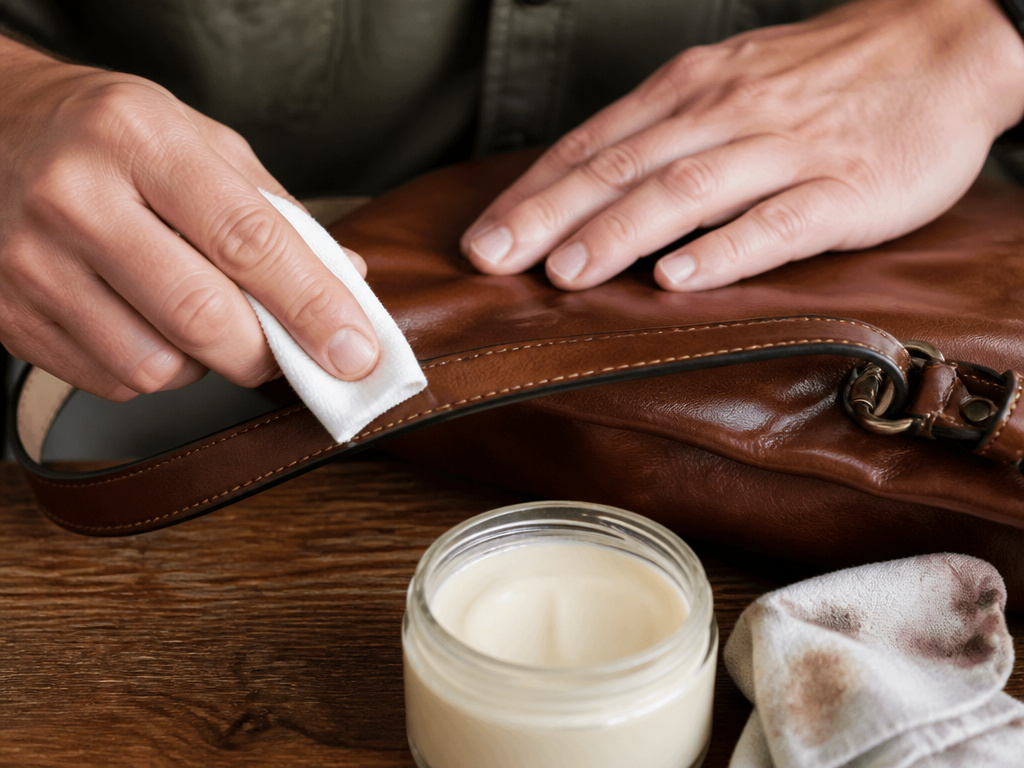
Here’s the thing. Conditioning is a separate, occasional maintenance task to prevent the leather from drying out and cracking. It’s like moisturizing your skin, you don’t do it when your skin is dirty.
You only need to condition if the leather feels dry, stiff, or looks dull after cleaning and buffing. For most bags in regular rotation, this might be once a year. For a bag in a dry climate, maybe every six months.
When you do condition: 1. Use a tiny amount of Saphir Médaille d’Or Crème Universelle.amazon.com/dp/B002Q0C9NS?linkCode=osi&th=1&psc=1&tag=test-20) or Chamberlain’s Leather Milk**. Apply it to a clean cloth, not directly to the bag. 2. Work it into the leather in a thin, even coat. 3. Let it absorb for at least an hour, then buff off any excess with a clean cloth. If it’s still greasy after buffing, you used too much.
A slathered-on conditioner won’t absorb. It sits on top, attracting dirt and creating a sticky film. That film is what people mistake for “nourished” leather.
Storage Isn’t Just a Dust Bag
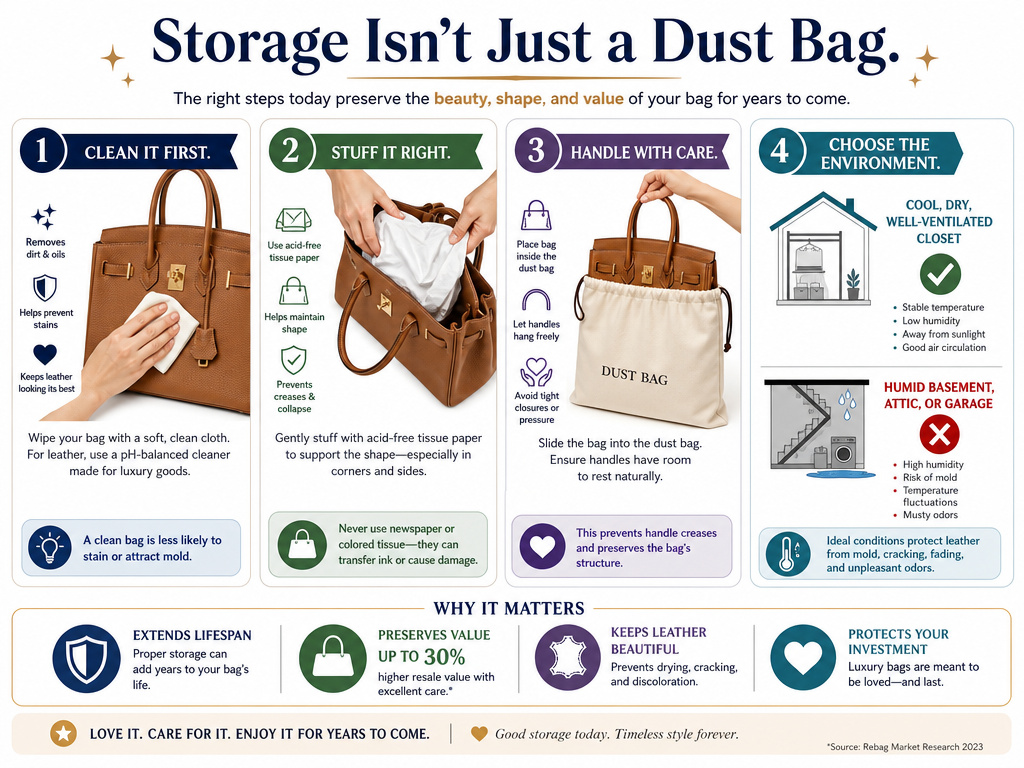
Storage is where most bags meet their slow demise. It’s not about tossing it in a closet. It’s a system.
- Clean It First. Never store a dirty bag. Ground-in dirt attracts moisture and pests.
- Stuff It Right. Use acid-free tissue paper or a breathable cotton bag to help the bag keep its shape. Never use newspaper, the ink transfers. Don’t overstuff; you’re supporting the structure, not inflating it.
- Handle with Care. Follow the brand’s rules. For double handles, let them hang down. Use the dust bag and paper to ensure they don’t touch the sides or each other. This prevents permanent creasing.
- Choose the Environment. A cool, dry, dark place is ideal. Attics, basements, and humid bathrooms are the worst possible spots. That damp, still air is a mildew incubator.
The dust bag is for protection from dust and light scratches, not a magic preservation chamber. A bag stored correctly needs far less frequent cleaning.
Frequently Asked Questions
Can I use baby wipes to clean my leather bag?
No. Most baby wipes contain alcohols, fragrances, and moisturizers that can strip leather’s natural oils or leave a residue. The safe, consistent method is a plain water-dampened white cloth.
How do I remove ink from a leather handbag?
Ink is a professional job. DIY attempts with alcohol or solvents will usually spread the stain and dissolve the dye and finish. Contact a leather repair specialist certified by the Leather Institute. The cost is less than replacing a ruined bag.
Why does my bag feel sticky after cleaning?
Stickiness almost always comes from using too much of a product, cleaner or conditioner, that wasn’t fully buffed off or absorbed. It can also be a sign of a silicone-based “protector” breaking down. Wipe the bag down with a barely damp cloth to remove surface residue and let it dry thoroughly.
Can I use this method on a colored leather bag?
Yes, but the “white cloth” rule is even more critical. Always test your damp cloth on a hidden seam or inside pocket first to check for any color bleed. If the dye transfers to the cloth, stop and consult the manufacturer.
How often should I clean my everyday leather handbag?
Quick wipe-down with a dry cloth once a week is perfect. A full damp-cloth clean is only needed every few months, or when you see visible dirt or stains. Over-cleaning is more harmful than under-cleaning.
Before You Go
The goal is a bag that ages with character, not neglect, so your first move should not be to buy a cleaner.It’s to find a soft white cloth and run it under the tap.
If you remember one rule, make it this: let the bag tell you what it needs. Dry and stiff? Consider a light conditioner. Dusty? A dry cloth. A new stain? Blot, don’t rub, with a damp one. The process is slow, simple, and physical. That’s how you build a patina worth keeping.
For daily defense, your best tool is a good handbag protection routine, keeping it stuffed, out of the sun, and away from sharp objects. And if a spill does happen, the principles for how to clean a leather purse or clean a leather briefcase are exactly the same: gentle, patient, and product-light.
