
The Ultimate Guide on How to Care for a Leather Camera Strap
This post contains affiliate links. As an Amazon Associate, we earn from qualifying purchases.
To care for a leather camera strap, follow a simple 3-step routine every 2–3 months: clean with a dry cloth, apply a thin layer of a natural wax-based conditioner like Bowman Leather Conditioner, and let it dry fully before use. Match your schedule to the leather. Horween types need care every 4–6 months. The goal is to replace lost oils without clogging the leather’s pores.
That schedule isn’t a guess. It comes straight from watch strap makers who put specific leathers through real-world wear. A strap doesn’t just get dirty; it loses the oils that keep it flexible. Applying conditioner too often or with the wrong product does more harm than good.
What follows is the practical version of that care sheet. You’ll get the three-step routine, the one product type to avoid, how to handle spills and nicks, and what to do when a strap is too far gone. By the end, you’ll know how to keep a strap supple for a decade, not just a season.
Key Takeaways
- Clean and condition vegetable-tanned leather straps every 2–3 months, but extend that to 4–6 months for Horween leathers to prevent over-conditioning.
- Use a white, natural wax-based conditioner like Bowman Leather Conditioner (beeswax, cocoa butter, sweet almond oil) to minimize darkening; avoid oil-based conditioners like neatsfoot oil.
- Inspect your strap for nicks every couple of months, a single deep cut can split under load and drop your camera.
- If the strap gets wet, let it air-dry at room temperature for at least 24 hours; heat from a dryer or radiator will stiffen and potentially crack the leather.
- Store the strap flat in a cotton bag, never in plastic, to let it breathe and prevent mold or mildew.
The 3-Step Routine for Regular Care
You don’t need a cabinet full of specialty products. A clean cloth and one good conditioner are 90% of the battle. The other 10% is timing.
The process is the same whether you’re maintaining a premium camera strap or a simple guitar strap. Here’s the sequence that works.
Clean the strap with a soft, dry cloth to remove surface dirt and skin oils. Apply a sparing amount of natural wax conditioner in small circles, let it absorb for at least 10 minutes (30 for Horween leather), then buff off any residue. Do this every 2–3 months, or 4–6 months for Horween leathers.
Step 1: The Dry Clean
Before any product touches the leather, remove what’s on top. Use a soft, dry microfiber cloth. Wipe down the entire strap, paying attention to the underside where it contacts your neck or hand.
If there’s sticky grime, slightly dampen a corner of the cloth with water, distilled is ideal to avoid mineral deposits. Wipe gently, then immediately dry the area with the dry part of the cloth. The goal is to avoid soaking the leather.
Skip the saddle soap and leather cleaners. For a camera strap, they’re overkill. They strip away natural oils along with the dirt, forcing you to condition more aggressively. That cycle dries out the leather over time.
Step 2: Condition with a Light Hand
This is where most people overdo it. Conditioner isn’t paint; you’re not coating the surface. You’re replenishing oils that have evaporated or been absorbed by your skin.
Pick a natural wax-based conditioner. The Bowman Leather Conditioner is a benchmark product, it’s white (so it won’t darken the leather noticeably) and contains beeswax, cocoa butter, and sweet almond oil. Beeswax protects, cocoa butter conditions, and the oil replaces what’s lost.
Apply a pea-sized amount to a clean section of your cloth. Work it into the leather using small, light circular motions. Cover the entire surface, but don’t slather it on. You should not see a thick, greasy layer.
If the leather feels tacky after 10 minutes, you used too much. Wipe off the excess with a clean part of your cloth. That tackiness is the conditioner sitting on top, not soaking in, and it will attract dirt.
Step 3: The Patient Dry
Walk away. Let the strap sit for at least 10 minutes at room temperature. For Horween tanned leathers, give it a full 30 minutes. This is essential.
The waxes and oils need time to migrate into the leather’s fiber structure. Rushing this step means you’ll buff away the active ingredients before they can work. When it’s ready, the strap will feel supple and cool to the touch, not waxy.
Once it’s dry, give it one final gentle buff with a clean cloth. This brings up a subtle sheen and ensures no residue remains to attract dust.
Matching Your Schedule to the Leather
Not all leathers age at the same speed. The 2–3 month rule is a safe default for most vegetable-tanned straps. But some specific tannages have their own rhythms.
| Leather Type | Recommended Care Interval | Key Characteristic to Watch |
|---|---|---|
| General Vegetable-Tanned | Every 2–3 months | Surface will look dull, feel dry |
| Horween Leather (e.g., Chromexcel) | Every 4–6 months | Rich oils mean it resists drying longer |
| Badalassi Carlo Nofin | Every 2–3 months | Will darken noticeably after first conditioning |
Horween leathers, like the Chromexcel used by many strap makers, are stuffed with oils and waxes during tanning. They’re more forgiving. Pushing the interval to 4–6 months prevents over-application, which can clog the pores and make the leather feel stiff.
Badalassi Carlo Nofin is a different story. It’s a pull-up leather, meaning it lightens where it’s bent or scratched. The anOrdain care guide states plainly that this leather will darken after the very first balsam application. That’s not a defect, it’s the character of the hide. If you own a strap made from it, expect and embrace that change.
The trigger is always visual and tactile. If the strap looks ashy or feels stiff compared to when it was new, it’s time. Don’t just mark your calendar.
The One Product to Avoid
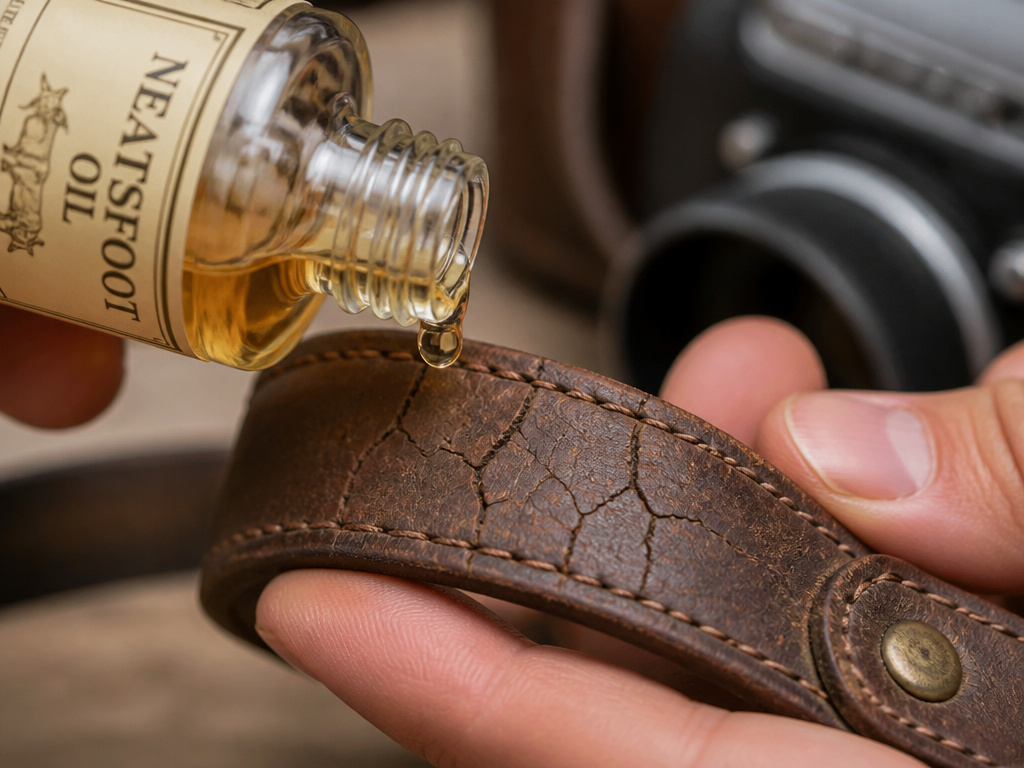 Walk down any hardware store aisle and you’ll see bottles of neatsfoot oil. It’s a traditional leather softener. For a camera strap, it’s a bad choice.
Where this goes sideways: Using oil-based conditioners like neatsfoot oil. These can draw out the leather’s natural oils over time, making the fibers brittle and prone to cracking. The strap feels soft initially, then becomes dry and weak.
Here’s the why-layer. Neatsfoot oil penetrates deeply but doesn’t form a protective barrier. It can actually displace the natural oils that give the leather its tensile strength. Over applications, the leather becomes dependent on the oil, loses its own integrity, and then cracks when the oil eventually evaporates or oxidizes.
A wax-based conditioner, like the Bowman blend, works differently. The beeswax sits on the surface in a microscopic layer, shielding the leather from moisture and abrasion. The oils beneath (cocoa butter, sweet almond) soak in to replenish without disrupting the hide’s internal structure. It’s the difference between feeding the leather and replacing its skeleton.
Stick with products that list natural waxes and butters high on the ingredient list. If the conditioner is clear and runny, it’s probably oil-based.
What to Do When Things Go Wrong
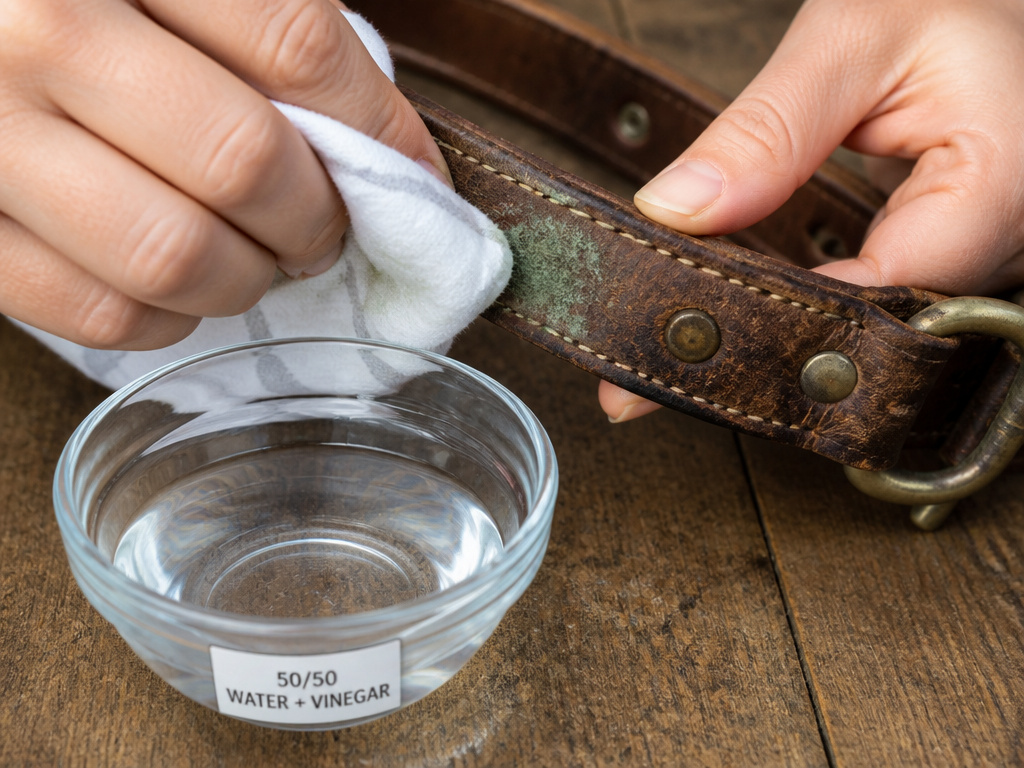 Care routines are for maintenance. Real life brings spills, nicks, and downpours. Your reaction in the first ten minutes determines whether it’s a story or a tragedy.
Water Exposure: The Slow Dry
Leather is not waterproof. If your strap gets a splash, that’s fine. If it gets soaked, your job is to dry it slowly.
Immediately pat it gently with a dry towel to soak up standing water. Then, let it air-dry at room temperature, away from direct sunlight, heaters, or radiators. This will take a full 24 hours, maybe longer.
Don’t rush the process with a heater or a blow dryer. Heat causes the leather fibers to contract rapidly as the moisture flashes off. The result is a stiff, board-like strap that’s lost its flexibility. Once that happens, it’s almost impossible to restore fully.
The Nick Inspection: Repair or Replace?
Every couple of months, run your fingernail lightly along the edges and stress points of your strap. You’re feeling for cuts, not scratches.
A scratch in the finish is cosmetic. A deep nick or cut is structural. Hawkesmill’s guide puts it bluntly: a nicked strap will soon split under the weight of your camera.
If you find a cut, stop using the strap immediately. A cobbler from a brand like The Leather Spa can often repair it by skiving the edges and adding a backing patch with new stitching. If the cut is on a fold or a high-stress area near a buckle, replacement is the safer choice. A professional repair for a simple strap can cost nearly as much as a new one, factor that in.
When Conditioner Builds Up
Over-enthusiasm leads to a sticky, clogged strap. If yours feels tacky or looks unnaturally glossy, you’ve applied too much conditioner too often.
The fix is simple but requires patience. Stop conditioning. For the next two or three care cycles, only do Step 1, the dry clean. Wipe the strap down thoroughly to remove surface oils and dirt. This lets the leather breathe and slowly metabolize the excess product. Once the tacky feeling is gone, you can reintroduce conditioner, but cut the amount in half.
Storing Your Strap for the Long Haul
A strap you don’t use for a season still needs attention. The enemy is uncontrolled humidity and stagnant air.
First, give it a clean and light conditioning session. This protects it while in storage. Then, store it flat or gently curved in the cotton dust bag it came with. If you lost the bag, any breathable cotton pouch will do.
Skip this if: You’re storing it in the original plastic shipping bag or an airtight container. Leather needs to breathe. Trapped moisture leads to mildew, and plasticizers can transfer onto the hide, causing discoloration.
The ideal spot is a drawer or closet, somewhere cool, dry, and dark. Consistent room temperature is key. Attics, basements, and cars are the worst places for leather.
Frequently Asked Questions
How often should I condition a new leather camera strap?
Don’t condition a new strap right away. Quality straps come from the maker pre-treated with oils and waxes. Wait at least 3–4 months of regular use, or until the leather starts to look dry, before the first conditioning session. Conditioning too early can oversaturate the hide.
Will conditioner change the color of my strap?
It can. Natural conditioners will darken leather slightly as they’re absorbed, enriching the color. This is usually desirable. However, using a white conditioner like the Bowman blend minimizes this effect. Badalassi Carlo Nofin leather is a known exception, it will darken noticeably after the first application.
Can I use my leather camera strap in the rain?
You can, but you shouldn’t make a habit of it. A light drizzle won’t ruin a full-grain, vegetable-tanned strap if you dry it properly afterward. For heavy rain, consider a temporary non-leather strap or protect the camera another way. No leather conditioner makes a strap truly waterproof, only water-resistant.
What’s the best way to clean stubborn stains?
For stains like grease or dirt ground into the grain, use a very small amount of white vinegar on a damp cloth. Test on an inconspicuous area first. Gently rub the stain, then immediately wipe the area with a water-dampened cloth to neutralize the vinegar. Let it dry completely before any conditioning.
How long should a leather camera strap last?
With proper care, a high-quality full-grain leather strap should last a decade or more. The stitching or hardware will often fail before the leather itself. Regular inspection and timely conditioning are what get you to that lifespan.
Before You Go
The single most common mistake is over-care. People treat leather like a houseplant that needs daily watering. It’s not. A strap needs a light touch and a long interval.
If you remember one thing, let it be this: condition only when the leather looks or feels dry, and use a product built on wax, not plain oil. That simple filter will steer you clear of most problems.
For straps you use daily, mark your calendar for a visual inspection every two months. Run your thumb over the edges. If it’s still supple and rich, leave it alone. The leather knows what it needs better than any schedule does. Your job is just to listen.
