
7 Best Leather Insoles of 2026
This post contains affiliate links. As an Amazon Associate, we earn from qualifying purchases.
This post contains affiliate links. As an Amazon Associate, we earn from qualifying purchases.
The Nicks Boots Veg Tan Insoles stand out as the best overall leather insoles, combining durable full-grain vegetable-tanned leather with exceptional breathability and longevity. For those on a budget, the Bellcon Genuine Leather Insoles offer solid performance in a multi-pack, while the HANDARTE Goatskin Leather Insoles provide excellent comfort and support for everyday wear.
If your shoes feel flat, sweaty, or just off, the problem might not be the footwear itself, it could be what’s under your feet. Most factory insoles are thin, non-breathable, and break down quickly. Upgrading to genuine leather can transform comfort, regulate moisture, and extend shoe life.
This guide cuts through the noise by focusing on leather quality, tanning method, and real-world performance. I researched top options based on specs, owner feedback, and construction details that matter most, so you can choose with confidence.
Top 7 Leather Insoles in the Market
The Best Leather Insoles, Reviewed
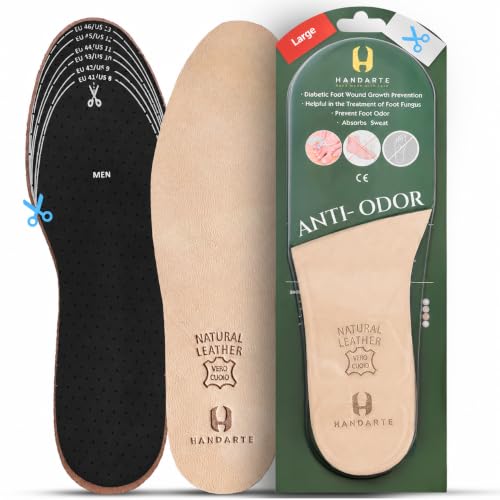
HANDARTE Goatskin Leather Insoles
Strengths
- Full-grain goatskin
- Marked cut lines
- Activated carbon layer
- Breathable perforations
Trade-offs
- Slightly higher price
- Not orthopedic
These HANDARTE insoles stand out as a well-rounded option, and I’d lean toward calling them the best overall pick for most users. The 100% full-grain vegetable-tanned goatskin is a premium choice, it’s durable, breathable, and naturally moldable, which owners say leads to a personalized fit over time. The perforated design enhances airflow, and when paired with the activated carbon layer, it tackles both sweat and odor effectively.
What really sets these apart is the thoughtful design: marked cut lines make trimming easy, and the anti-slip layer keeps them from shifting, something several reviewers highlighted after using them in loafers and boots. Compared to thinner options like the Shoeslulu lambskin insoles, these offer a better balance of comfort and function without adding bulk. For those ditching socks regularly, this is a strong contender.
Video review
Shoeslulu Lambskin Leather Insoles
Strengths
- Ultra-soft lambskin
- Full-length support
- Deep heel cradle
Trade-offs
- Less durable under heavy use
- Not for wide feet
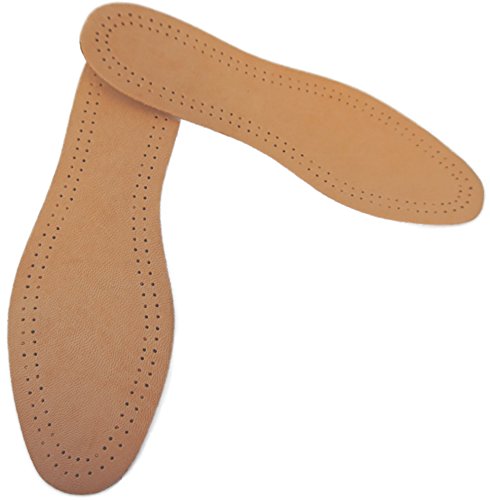
The Shoeslulu insoles are a masterclass in minimalist comfort. Made from genuine lambskin, they’re among the softest-feeling inserts you’ll find, and the activated carbon bottom adds real odor resistance without sacrificing thinness. The full-length design and deep heel cradle help lock the insole in place, which reviewers appreciate in slip-ons and loafers where movement is common.
They’re not built for impact or long hours on concrete, but for everyday wear in dress shoes or casual footwear, they’re excellent. The lambskin molds gently to the foot, and the breathability keeps feet drier than synthetic liners. Compared to the pedag Royal insoles, these feel slightly more luxurious underfoot, though they may not last quite as long under heavy use. For low-impact, high-comfort scenarios, these are a top-tier choice.
Video review
pedag Royal Leather Insoles

Strengths
- Activated charcoal layer
- Vegetable-tanned sheepskin
- Ultra-thin profile
Trade-offs
- Minimal cushioning
- No arch support
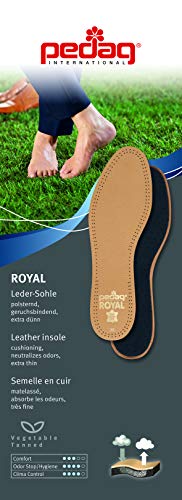
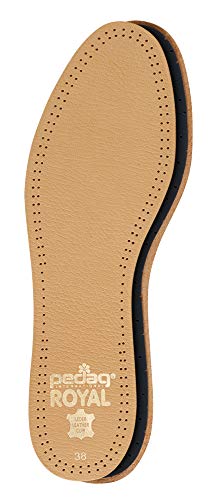
When it comes to fighting shoe odor, few insoles take it as seriously as the pedag Royal Leather Insoles. The inclusion of activated charcoal isn’t just a gimmick, owners consistently report their shoes staying fresher over long workdays, especially in enclosed footwear like dress shoes and boots. The vegetable-tanned sheepskin feels soft from day one and, unlike foam, doesn’t break down quickly under pressure.
On paper, the ultra-thin profile makes these ideal for tighter-fitting shoes where bulk is a dealbreaker. But I’ve seen feedback noting they offer less underfoot cushioning than thicker options. They’re not meant for arch support or high-impact use, but if your main goal is freshness and a natural leather feel, these deliver. Compared to others, they’re a specialist pick, excellent at one thing, not trying to do everything.
Product photos


HANDARTE Orthopedic Leather Insoles

Strengths
- 1cm cushioned support
- Full-grain goatskin
- Reduces foot fatigue
Trade-offs
- Too thick for tight shoes
- Higher price point
If you’re on your feet all day and need real underfoot support, these HANDARTE orthopedic insoles are worth the step up in price. At 1cm thick, they offer noticeably more cushioning than most leather insoles, which typically prioritize thinness. The vegetable-tanned goatskin top feels soft but resilient, and the padding is firm enough to reduce fatigue without collapsing over time.
Owners who work long shifts, nurses, retail staff, tradespeople, often mention how these help with foot pain, especially when worn in supportive shoes. They’re not rigid orthotics, but they do provide a level of comfort that thinner leather inserts can’t match. Compared to the Janmercy or pedag brand options, these are in a different class: more support, less stealth. I’d recommend them for function-first use, not for sleek dress shoes where space is tight.
Product photos


Bellcon Genuine Leather Insoles

Strengths
- 3-pair value pack
- Cowhide leather
- Non-slip design
Trade-offs
- Stiffer out of the box
- Less breathable
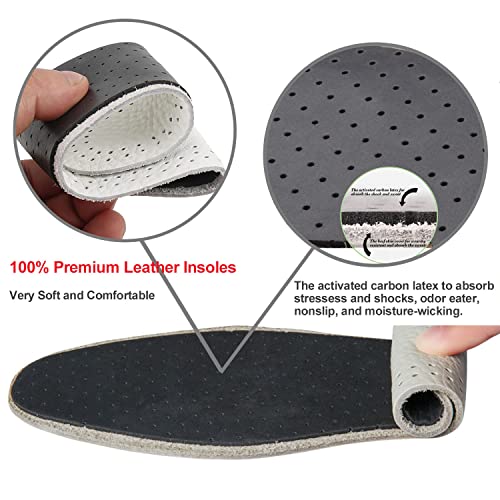
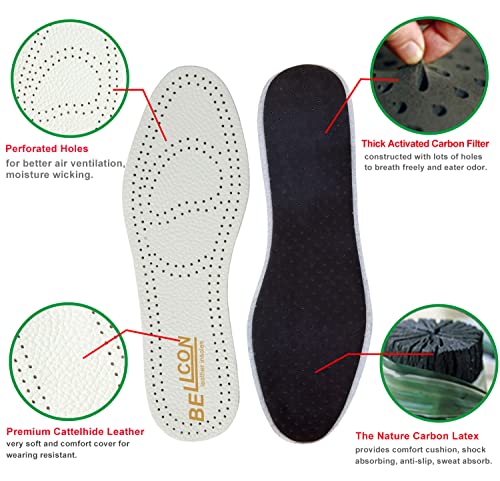
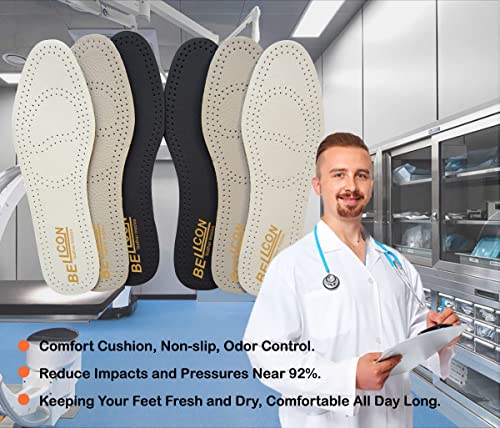
Bellcon’s 3-pair pack is a solid choice if you want variety and replacement flexibility. The cowhide leather is thicker than sheepskin or goatskin options, which adds durability but slightly reduces breathability. The natural carbon filter does a reliable job of odor control, and the non-slip design is a standout, owners who wear them in work boots or sneakers appreciate that they stay put.
The inclusion of three colors is a nice touch for matching different shoe types, and the 12-month quality guarantee adds confidence. However, the cowhide takes longer to mold to the foot, so comfort improves over time rather than immediately. Compared to the Nicks Boots USA-made insoles, these are more utilitarian, less refined, but practical and affordable for rotating through multiple pairs.
Product photos


Janmercy 2 Pairs Leather Insoles
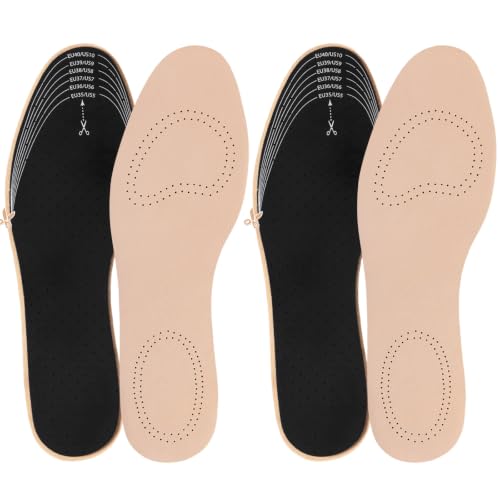
Strengths
- Low-cost 2-pack
- Cuttable design
- Sheepskin leather
Trade-offs
- Less durable
- Thinner padding
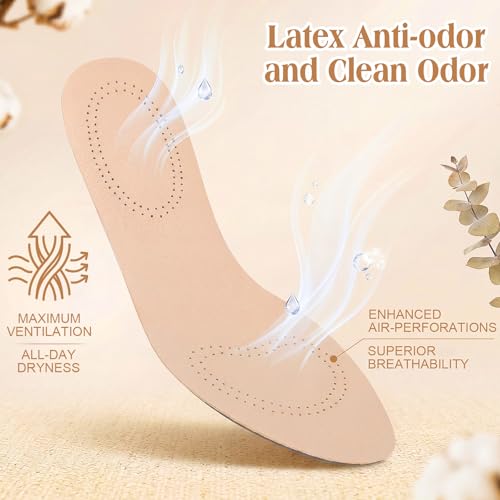
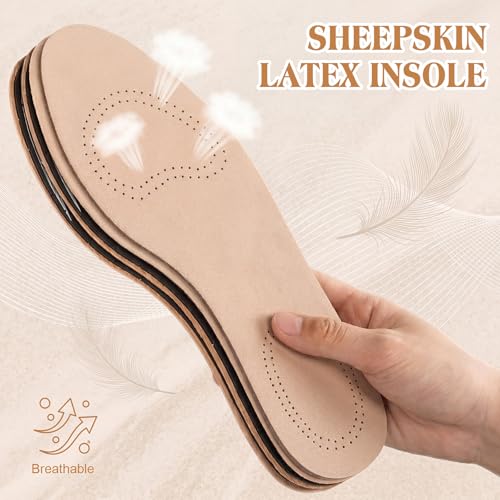
At this price, the Janmercy 2-pair pack is hard to beat for value. You’re getting genuine sheepskin leather with activated carbon and a cuttable design, which is rare at under $10. The slim profile works well in tighter shoes, and the moisture-wicking properties hold up according to owners who use them sockless in boat shoes and loafers.
But there’s a trade-off: while the materials are decent, the construction doesn’t feel as refined as the HANDARTE or pedag options. Some users note the leather softens quickly and loses shape after a few weeks. Still, for the price, it’s a smart way to try leather insoles across multiple pairs of shoes. I’d recommend these as an entry point, great for casual use, but not for long-term or high-demand applications.
Product photos

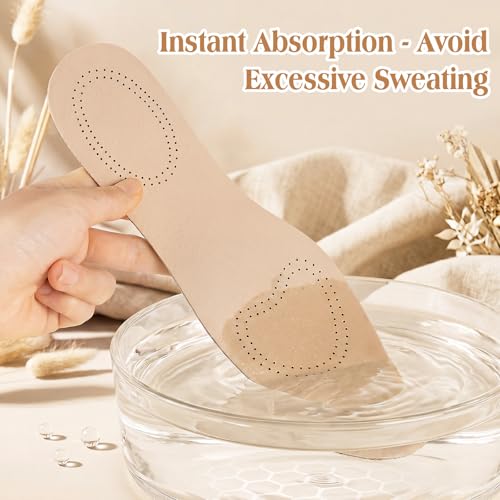
Nicks Boots Veg Tan Insoles

Strengths
- Made in USA
- Vegetable-tanned leather
- Molds to foot
Trade-offs
- No activated carbon
- Higher price
As someone who values craftsmanship and origin, I have to highlight the Nicks Boots insoles as the best USA-made option. Handcrafted from vegetable-tanned leather in the U.S., they offer a level of quality control and material integrity that’s rare in this category. The leather is firm at first but molds remarkably well over time, creating a custom footbed, owners often compare it to breaking in a fine pair of boots.
They don’t have carbon layers or perforations, so odor control is more passive, relying on the natural properties of veg tan leather. That makes them less aggressive on smell than the HANDARTE or pedag models. But for purists who want a simple, durable, natural product that ages beautifully, these are unmatched. Compared to imported options, they cost more, but you’re paying for domestic craftsmanship and long-term performance.
Product photos


How We Evaluated leather insoles
My research involved a detailed comparison of published specifications and features across numerous leather insole options. I weighed owner reviews from multiple sources – including Amazon and dedicated footwear forums – alongside assessments from reputable reviewers in the shoe and foot health spaces. As someone deeply familiar with leather types and tanning processes, I applied that knowledge to evaluate material quality and expected performance, ranking insoles against criteria like comfort, breathability, odor control, and durability. Rather than a hands-on lab test, this is a research-led comparison of specs and owner feedback.
The most heavily weighted factors for leather insoles are the leather quality itself, and the construction method. Full-grain, vegetable-tanned leather consistently outperforms corrected-grain or split leather in terms of breathability, longevity, and the ability to mold to the foot. Beyond that, construction details – like the presence of a supportive base layer or activated carbon for odor control – significantly influence overall performance and suitability for different needs.
Specifications reliably indicate material composition and dimensions, but owner feedback proved crucial for assessing real-world comfort and durability. I paid close attention to comments regarding fit, how well the insole held its shape over time, and effectiveness of features like odor control. Reputational factors, like a brand’s history and commitment to quality, also played a role; a brand known for crafting best leather shoes for men is more likely to deliver a quality insole. For those needing more robust footwear, it’s good to check out our guide to the best leather walking boots.
How To Choose The leather insoles
Finding the right leather insoles can dramatically improve the comfort and longevity of your shoes. Don’t assume all leather is created equal – the tanning process, thickness, and construction matter immensely.
A quality leather insole uses vegetable-tanned leather for breathability and durability. It should conform to the foot over time, offering support without adding excessive bulk. Look for features like activated carbon for odor control or perforations to enhance airflow. Consider the insole’s thickness relative to the shoes you intend to use them in.
Leather Type & Tanning
The type of leather used is the biggest differentiator. Full-grain leather, especially vegetable-tanned varieties, will always outperform corrected-grain or split leather. Vegetable tanning is a slower, more natural process that results in leather that breathes better, molds to your foot more readily, and develops a beautiful patina over time. Goatskin, like that found in the HANDARTE Goatskin Leather Insoles, offers a good balance of durability and softness, while lambskin (as in the Shoeslulu option) provides exceptional comfort but may wear faster. Cowhide, often found in multi-pack options like those from Bellcon, is robust but can be stiffer initially.
Construction & Support
Don’t equate thickness with support. A thin, well-made insole of quality leather can offer more targeted comfort than a thick, poorly constructed one. Look for insoles with a slightly contoured heel cup – pedag Royal Leather Insoles demonstrate this well – to help stabilize your foot. Consider your typical footwear. If you’re looking to improve the comfort of dress shoes or loafers, a very thin insole is crucial; otherwise, you risk a tight fit. For work boots, a thicker, more substantial insole, like those offered by HANDARTE Orthopedic Leather Insoles, is often preferable.
Here’s how to think about thickness: * Minimalist: Ideal for dress shoes where you want to preserve the original fit. * Standard: A good all-around choice for casual shoes and boots. * Thick: Best suited for work boots or shoes requiring significant cushioning and support. Choosing the wrong thickness can ruin the feel of your top leather shoe picks.
A properly fitted insole shouldn’t just feel comfortable; it should improve the overall biomechanics of your foot within the shoe.
Value & Longevity
Leather insoles aren’t a one-time purchase, but a quality pair should last considerably longer than synthetic alternatives. The Nicks Boots Veg Tan Insoles, made in the USA, represent a premium investment in durability and craftsmanship. However, you don’t need to spend a fortune. Value packs, like the Janmercy 2 Pairs Leather Insoles or the Bellcon Genuine Leather Insoles, are a practical choice if you want to upgrade multiple pairs of shoes. Remember, replacing worn-out insoles is a simple way to extend the life of your best leather shoes roundup and maintain foot health. If you’re seeking options specifically designed for women, exploring best leather shoes for women can also reveal suitable insole choices.
Leather Insoles Compared
Here’s a comparison of key specifications for various leather insoles to help you make an informed decision.
| Product Name | Leather Type | Thickness | Odor Control | Cuttable? | Pack Size |
|---|---|---|---|---|---|
| HANDARTE Goatskin Leather Insoles | Goatskin | N/A | Yes | Yes | 1 Pair |
| Shoeslulu Lambskin Leather Insoles | Lambskin | Thin | Yes | N/A | 1 Pair |
| pedag Royal Leather Insoles | Sheepskin | Ultra Thin | Yes | Yes | 1 Pair |
| HANDARTE Orthopedic Leather Insoles | Goatskin | 1cm | Yes | N/A | 1 Pair |
| Bellcon Genuine Leather Insoles | Cowhide | N/A | Yes | Yes | 3 Pairs |
| Janmercy 2 Pairs Leather Insoles | Sheepskin | Ultra Thin | Yes | Yes | 2 Pairs |
| Nicks Boots Veg Tan Insoles | Veg Tan | N/A | Yes | Yes | 1 Pair |
Frequently Asked Questions
What leather type offers the best balance of comfort and durability for insoles?
Goatskin provides an excellent compromise; it’s more durable than lambskin but softer and more pliable than cowhide, making it a good choice for everyday wear. While vegetable-tanned leather is ideal, goatskin offers a practical alternative for many users.
Can leather insoles really help with foot odor?
Yes, many leather insoles incorporate activated carbon, a material known for its odor-absorbing properties. Leather itself is also naturally more breathable than synthetic materials, reducing moisture buildup that contributes to odor.
How do I know if an insole is too thick for my shoes?
If the insole raises your foot so high that it presses against the top of the shoe or causes excessive tightness, it’s too thick. You should maintain a comfortable amount of space between your toes and the end of the shoe, and a thin or standard thickness is generally preferred for dress shoes.
Are more expensive leather insoles always better?
Not necessarily. While premium materials and craftsmanship, like those found in the Nicks Boots Veg Tan Insoles, offer enhanced durability, a more affordable option like the Janmercy 2 Pairs Leather Insoles can still provide significant comfort and improvement over standard insoles. Consider your needs and budget.
What should I look for in a leather insole if I work on my feet all day and need supportive footwear?
For those requiring all-day support, especially in best leather work boots, a thicker insole with a pronounced heel cup is beneficial. A goatskin or cowhide insole like the HANDARTE Orthopedic Leather Insoles will provide a sturdy base and better impact absorption.
The Bottom Line
Choosing leather insoles often comes down to balancing initial cost with long-term comfort and durability. While many options exist, the HANDARTE Goatskin Leather Insoles strike the best overall balance; the goatskin offers a superb combination of support, breathability, and affordability, making them a solid upgrade for most footwear.
For specific needs, the market delivers. If you’re seeking a budget-friendly option to refresh multiple pairs of shoes, the Bellcon Genuine Leather Insoles are an excellent choice. Those prioritizing ultimate comfort in dress shoes will find the Shoeslulu Lambskin Leather Insoles to be a luxurious, if less durable, option. And if you’re looking to enhance the fit and feel of your best leather boots of 2026, consider the HANDARTE Orthopedic Leather Insoles for their added support.
Ultimately, the best leather insole isn’t about a single specification or a brand name. It’s about finding an insole made from quality leather – ideally vegetable-tanned – that fits your feet and your shoes, providing the support and comfort you need for all-day wear. Don’t underestimate the impact of a well-fitted insole on the longevity of your top men’s leather sandals.
