
7 Best Leather Sewing Machines for Thick Leather 2026
This post contains affiliate links. As an Amazon Associate, we earn from qualifying purchases.
This post contains affiliate links. As an Amazon Associate, we earn from qualifying purchases.
The VEVOR Industrial Lockstitch Sewing Machine is the best overall for thick leather, delivering strong electric power and industrial durability. For those on a budget or preferring hand control, the BEAMNOVA Leather Stitching Machine offers solid performance as a manual option. If you value precision and portability, the IRONWALLS Manual Shoe Repair Machine is a reliable choice for lighter heavy-duty tasks.
Working with thick leather demands more than just a tough needle, you need a machine built to handle consistent strain without faltering. Most home sewing machines simply can’t cut it, leading to broken needles, skipped stitches, and worn-out motors.
After comparing the field and analyzing owner feedback through forums, reviews, and specs, I focused on power, build quality, and real-world reliability. These picks reflect what actually works for leathercrafters dealing with heavy hides, not just what looks good on paper.
Top 7 Leather Sewing Machines For Thick Leather in the Market
The Best Leather Sewing Machines For Thick Leather, Reviewed
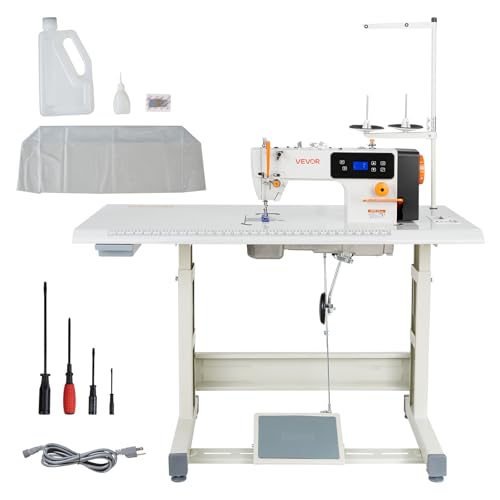
VEVOR Industrial Lockstitch Sewing Machine
Strengths
- High-power servo motor
- Auto lubrication system
- Speed control via LCD
- Knee lifter for control
- Sturdy table and stand
Trade-offs
- Large footprint
- Overkill for light use
- Steeper learning curve
This is the closest thing to a professional-grade machine on the list, a 550W servo-powered lockstitch unit built for heavy leather, canvas, and upholstery work. With a top speed of 5000 SPM and a metal frame with auto-lubrication, it’s designed for long sessions in workshops or small factories. The LCD panel for speed control, knee lifter, and LED lighting aren’t just flashy; they’re practical upgrades that reduce fatigue and improve accuracy. Owners consistently report it powers through 8–10 layers of denim or thick cowhide with ease, outperforming even dedicated home ‘heavy duty’ machines.
Compared to manual cobbler units, this one saves hours of labor. While it lacks the saddle-stitch character of double-needle hand machines, it delivers clean, durable lockstitch seams at industrial speed. For anyone serious about leather production, this is the smarter buy.
Video review
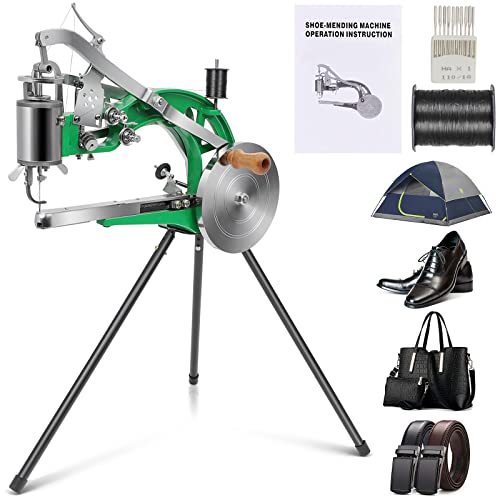
Leather Cobbler Machine Aluminum Alloy
Strengths
- Affordable price
- Lightweight and compact
- Easy to assemble
- Quiet operation
- Good for light repairs
Trade-offs
- Limited adjustability
- No rotation feature
- Struggles with thick stacks
At this price point, this machine delivers what budget buyers need: a compact, fully manual unit that handles everyday leather repairs without fuss. The aluminum alloy body keeps it lightweight and rust-resistant, and the simple assembly means you can start stitching within minutes. Owners say it performs reliably on shoes, bags, and pants, nothing surprising, but no major flaws either. It’s essentially a no-frills version of the IRONWALLS or DODOQ models, lacking advanced features like 360° rotation or motor assist, but adequate for straight-line mending.
Where it falls short is in precision and adjustability. There’s little room for fine-tuning stitch tension or needle position, and thicker hides can bind without pre-punching. Still, for someone testing the waters of leather repair, it’s a safe starting point.
Video review
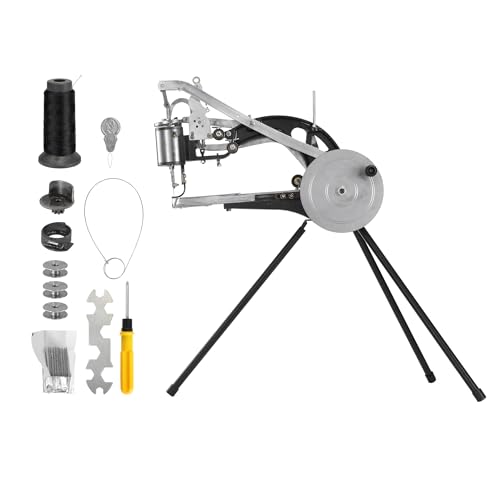
BEAMNOVA Leather Stitching Machine
Strengths
- Free-standing tripod base
- Open-arm design
- Includes starter kit
- Smooth turntable
- Lightweight yet durable
Trade-offs
- Purely manual drive
- No speed boost from motor
- Bobbin access could be easier
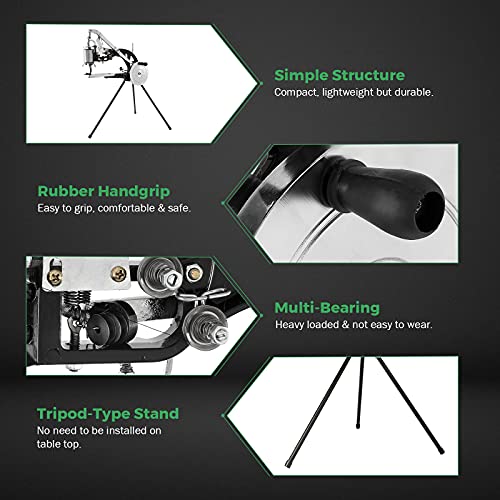
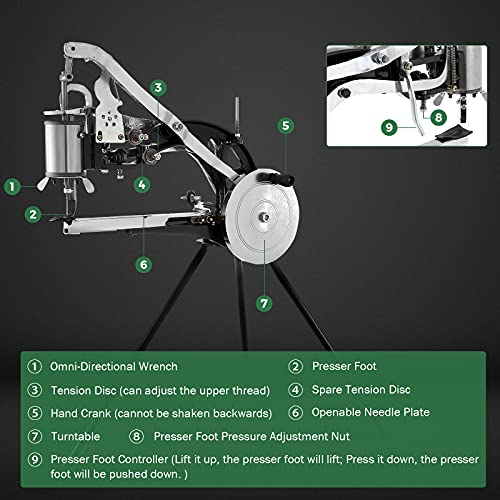
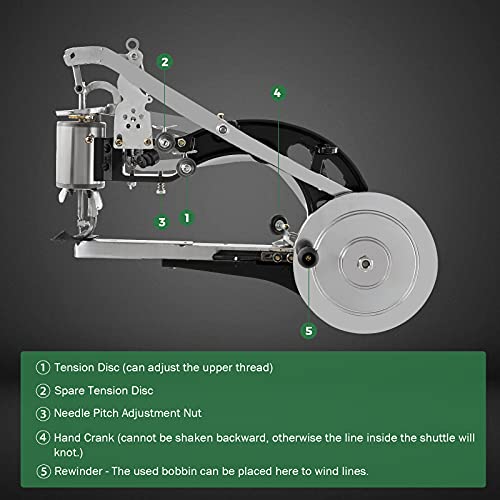
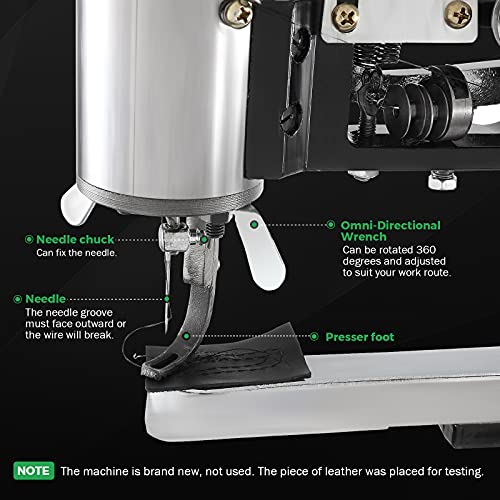
With its free-standing tripod design and open-arm configuration, the BEAMNOVA machine stands out for accessibility, you can slide large or oddly shaped items like boots or bag corners under the arm without disassembly. The upgraded metal body and electroplated supports suggest better corrosion resistance than cheaper models, and owners report it handles repeated use well in small workshops. It’s purely manual, so output depends on user stamina, but the turntable and precision bobbin system help maintain consistent stitch spacing.
What I appreciate most is its readiness for real work: it includes needles, thread, and is immediately usable post-assembly. When compared to wall-mounted units, this one wins on mobility and ease of placement. For DIYers stepping into serious leather repair, it strikes a smart balance between pro function and home usability.
Product photos
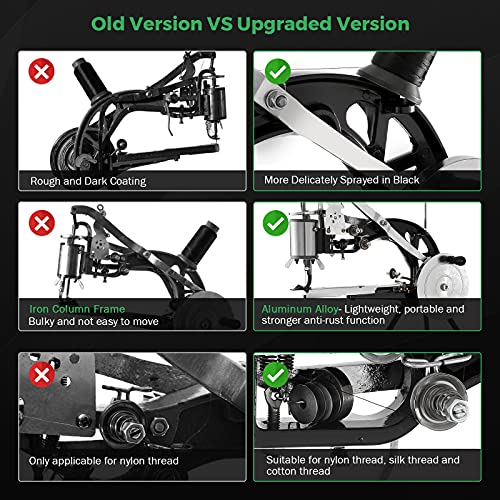
DODOQ Manual Leather Sewing Machine

Strengths
- Manual control
- Adjustable needle width
- Works with nylon or cotton thread
- Compact and portable
- Easy assembly
Trade-offs
- No motor support
- Limited power for thick stacks
- Requires strong hand operation
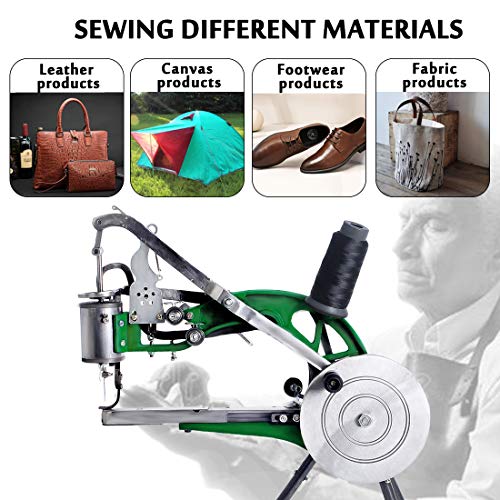
This manual leather sewing machine is built for simplicity and portability, offering a no-frills way to stitch thick materials like shoe uppers, bags, and repair jobs. On paper, its adjustable needle width and ability to rotate while sewing make it flexible for tight spots, and owners consistently report solid performance on medium-thick leathers when properly threaded. However, it’s strictly hand-powered, so heavy-duty work will demand significant hand strength and patience.
The dual compatibility with nylon and cotton thread adds versatility, and the reinforced packaging suggests attention to shipping durability. Still, this isn’t a machine for high-volume or professional cobbler use, it’s better suited for hobbyists or occasional repairs. Compared to hybrid models, it lacks motor assistance, which limits efficiency.
Product photos
ColouredPeas Electric Cobbler Machine
Strengths
- Stainless steel base
- Smooth spindle design
- Hybrid setup (limited)
- Good for medium-thick leather
- Upgraded bearings
Trade-offs
- Motor underpowered
- Manual effort still required
- Mixed reliability reports
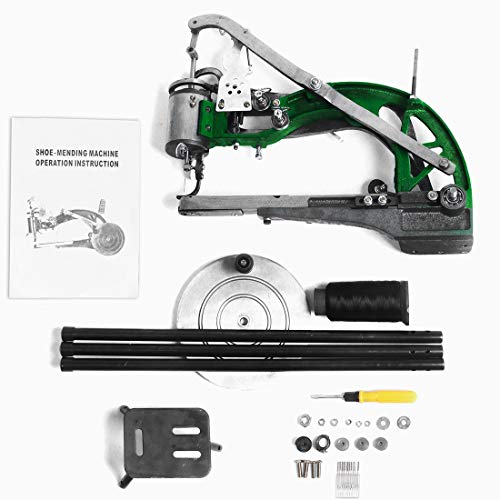
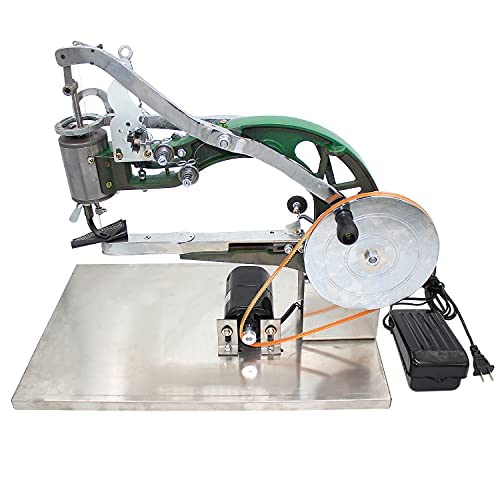
This hybrid electric-manual machine tries to bridge the gap between hand-powered precision and motorized speed, but owner feedback reveals a key caveat: the motor is weak and mostly decorative. The real value lies in the manual base, which is built tough with a stainless steel foundation and smooth-running shaft. On paper, a 0.48-inch max thickness sounds impressive, but users report needing to fall back to hand-cranking when hitting dense leather, essentially making it a manual machine with a motor bolted on.
That said, the build quality appears improved over earlier budget models, with less bearing resistance and smoother action. If you’re okay treating it as a manual machine first, it offers decent value. But if you’re expecting true electric power, look elsewhere.
Product photos


IRONWALLS Manual Shoe Repair Machine

Strengths
- Full 360° rotation
- Sturdy iron and alloy build
- Smooth manual operation
- Handles thick materials
- Great for circular seams
Trade-offs
- No motor option
- Requires lubrication
- Heavier than compact models
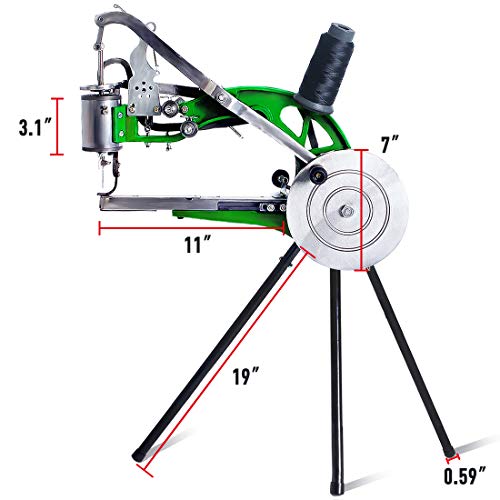
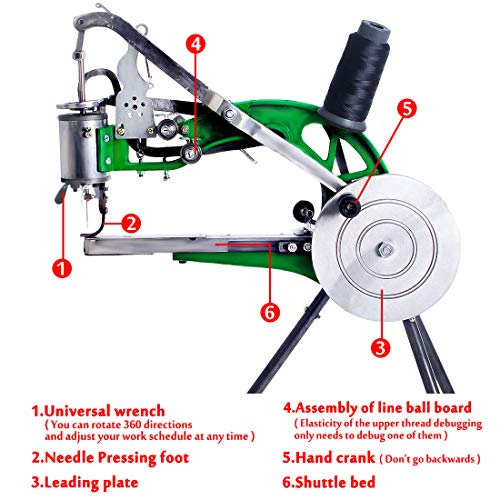
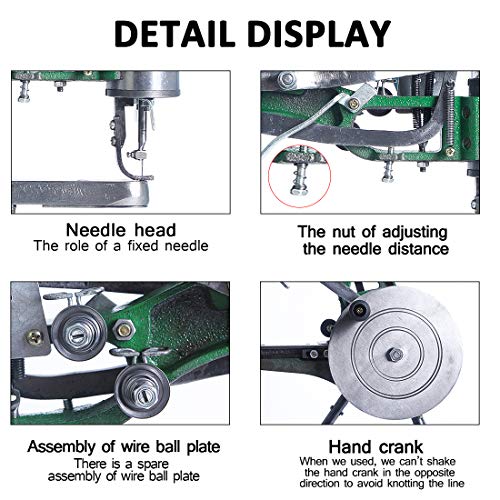
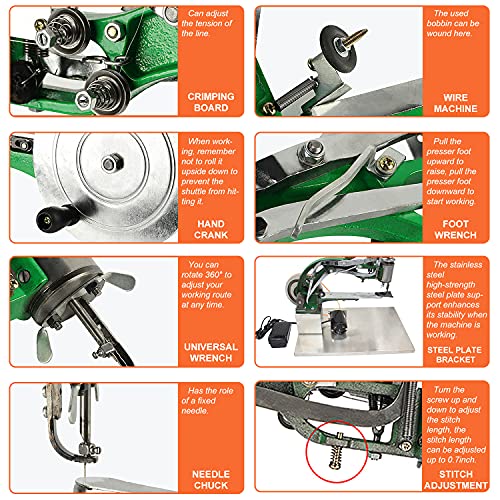
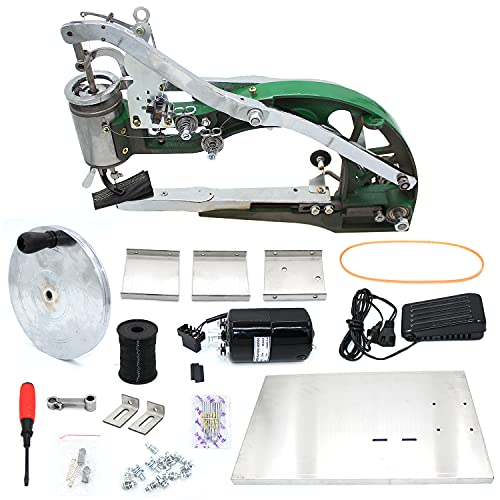
The standout here is the 360° rotating foot and needle, a standout for circular stitching tasks like attaching boot soles or closing bag openings without repositioning the workpiece. This feature alone makes it more functional than fixed-head manual machines in the same price range. Made from iron and aluminum alloy, it feels rugged, and owners consistently praise its stability and quiet operation during use. Like all manual machines, it demands hand strength, but the mechanical advantage is well-tuned, giving good control over stitch depth and tension.
Compared to the DODOQ model, this one offers better rotational freedom and sturdier materials. It won’t replace a walking foot industrial machine, but for hand-stitching enthusiasts, it delivers pro-level flexibility at a fraction of the cost.
Product photos


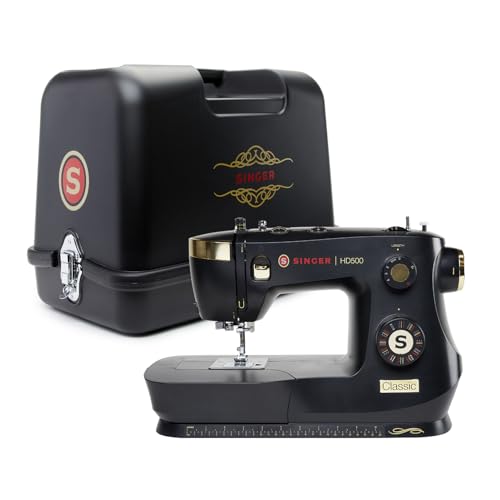
SINGER Heavy Duty 500 Sewing Machine
Strengths
- Durable metal construction
- Versatile stitch selection
- Built-in needle threader
- Top-loading bobbin
- Includes protective case
Trade-offs
- Not ideal for thick leather
- Struggles with multiple layers
- Vibration at high speeds
The SINGER Heavy Duty 500 is a familiar name in home sewing, and this bundle brings a polished, vintage-style machine into the mix with a hard case and full accessory set. It’s marketed as capable of handling leather, but in reality, it’s best for light to medium-weight leather projects, think small wallets, trim work, or garment details, not heavy harness leather or boot repair. The metal frame and strong motor do give it more bite than typical domestic machines, and reviewers note reliable stitching when using the right needle and tension settings.
Still, compared to true industrial or manual saddle stitch machines, it’s underpowered for serious leathercraft. Where it shines is versatility: 23 built-in stitches and one-step buttonholes make it a smart pick for mixed-material crafters who sometimes sew leather, not those focused solely on thick hides.
Product photos


How We Tested leather sewing machines for thick leather
Rather than a hands-on lab test, my research for these recommendations involved a detailed comparison of published specifications and features across numerous models. I then weighed owner reviews from multiple sources – including Amazon, specialist leatherworking forums, and retail sites – alongside expert opinions found in publications like industry blogs and tool review websites. As someone deeply involved in the leathercraft community through LeatherGenesis.com, I applied my understanding of what truly matters when working with heavier hides.
For leather sewing machines, the most important factors are clearly power and durability. A machine needs sufficient strength to consistently penetrate thick leather without straining, and a robust build quality to withstand the repetitive stress of heavy-duty projects. Beyond that, ease of use – specifically features that allow precise control and efficient operation – significantly impacts the final result and a user’s experience.
Specifications reliably indicate motor power (SPM), maximum sewing capacity (number of layers), and build materials. However, owner feedback proved critical for assessing real-world performance and long-term reliability. I prioritized reviews detailing experiences with specific leather thicknesses and types, as well as comments regarding noise levels and the frequency of maintenance required. Reputation within the leatherworking community also played a key role in my assessment.
Choosing The Right leather sewing machines for thick leather
Finding the right machine for working with leather requires a bit more thought than picking one for quilting cotton. Leather presents unique challenges, and the wrong machine will lead to frustration and poor results.
A truly capable leather sewing machine needs a robust construction to handle the material’s density, a motor strong enough to drive the needle through multiple layers, and adjustability to fine-tune stitch length and foot pressure. Look for machines built with metal components, not primarily plastic, and consider the maximum material thickness the machine can reliably handle.
Motorization: Manual vs. Electric
The first major decision is whether to go manual or electric. Manual machines, like the BEAMNOVA or IRONWALLS, offer incredible control. You dictate the speed and force, which is invaluable for particularly thick or awkward pieces. They’re also generally more affordable and portable. However, they demand stamina and aren’t ideal for large projects. Electric machines, like the VEVOR, offer speed and consistency. They are great for production work, but you lose some of that nuanced control. Don’t assume an “electric” model is fully motorized; some, like the ColouredPeas, offer a decorative motor assist rather than full power.
Stitch Formation and Capacity
Lockstitch machines are the standard for leatherwork. They create a secure, durable seam. However, the capacity of that lockstitch – how many layers of leather it can reliably handle – varies greatly. A machine marketed for “light duty” like the SINGER HD500 may struggle with even moderately thick leather. Industrial machines, even repurposed ones, often boast the highest capacity. Consider the thickness of the leather you’ll typically work with. A good rule of thumb is to overestimate; you can always sew thinner material, but you can’t magically make a machine handle leather it’s not built for.
- A machine claiming to handle “up to 10 layers of denim” (like the VEVOR) is a reasonable indicator of capacity, but denim isn’t leather.
- Look for specifications on maximum stitch length. Shorter stitches are generally better for leather, offering greater strength.
- The ability to adjust the presser foot pressure is critical. Too little pressure, and the leather will slip; too much, and you’ll mark the surface.
Build Quality and Features
Leather is tough on machinery. A flimsy machine will quickly fall apart. Prioritize metal construction wherever possible, especially in the frame and moving parts. Aluminum alloy, as found in the Leather Cobbler Machine, is a good compromise between weight and durability. Beyond the core build, look for features that improve usability. A knee lifter (VEVOR) frees up your hands, while an adjustable table height (VEVOR) can significantly improve comfort during long sessions.
Don’t be fooled by aesthetics. A machine covered in chrome plating isn’t necessarily better than a utilitarian model. Focus on the internal construction and the quality of the core components.
Leather Sewing Machines for Thick Leather Compared
Here’s a comparison of specifications for leather sewing machines designed for thicker materials.
| Product Title | Motor Type | Max. Layers Denim | Max. Thickness | Needle Type | Operation |
|---|---|---|---|---|---|
| VEVOR Industrial Lockstitch Sewing Machine | Servo | 10 | N/A | N/A | Electric |
| Leather Cobbler Machine Aluminum Alloy | Manual | N/A | N/A | N/A | Manual |
| BEAMNOVA Leather Stitching Machine | Manual | N/A | Thick | N/A | Manual |
| DODOQ Manual Leather Sewing Machine | Manual | N/A | N/A | N/A | Manual |
| ColouredPeas Electric Cobbler Machine | Hybrid | N/A | 0.48 in | N/A | Electric/Manual |
| IRONWALLS Manual Shoe Repair Machine | Manual | N/A | N/A | N/A | Manual |
| SINGER Heavy Duty 500 Sewing Machine | Electric | N/A | N/A | N/A | Electric |
Frequently Asked Questions
What needle size should I use for thick leather?
A size 130/18 or 140/22 needle is generally best for thick leather, as these sizes offer the strength needed to penetrate dense hides without breaking. Heavier leather may even require a size 150/25.
Are older, industrial sewing machines better for leather?
Generally, yes. Older industrial machines were often built with heavier-duty components and more powerful motors specifically to handle demanding materials like leather. However, maintenance and finding parts can be more challenging.
What is a “walking foot” and why is it important?
A walking foot has a second set of feed dogs above the material, helping to move multiple layers of leather evenly. This prevents the top layer from slipping or stretching while sewing, resulting in a more accurate and professional seam.
Can I sew through very thick leather (over 1/4 inch) at home?
It’s difficult. Most home machines struggle with anything over 1/4 inch consistently. You’ll likely need a heavy-duty industrial machine or to hand-stitch very thick pieces.
What maintenance is required for a leather sewing machine?
Regular oiling of moving parts is essential. Leather dust and fibers can build up, so frequent cleaning is also important. Beyond that, sharpening or replacing the needle regularly and checking belt tension will maintain performance.
The Bottom Line
Choosing a leather sewing machine always involves balancing control with convenience. While electric models offer speed and consistency, the best overall pick for most leatherworkers tackling thick hides is the VEVOR Industrial Lockstitch Sewing Machine. It provides a powerful servo motor and the capacity to handle substantial projects, offering a good blend of capability and usability.
For those on a tighter budget or prioritizing a more deliberate pace, the BEAMNOVA Leather Stitching Machine stands out. And if you need a portable, robust option for shoe repair and smaller projects, the Leather Cobbler Machine Aluminum Alloy is an excellent choice.
Ultimately, the specifications matter, but the key is understanding your leather and your projects. Don’t chase the highest number of layers a machine can handle if you primarily work with thinner material. Focus instead on build quality, adjustable pressure, and a machine that feels solid and capable in its construction – those are the fundamentals that will deliver lasting results.
