
How to Care for a Leather Handbag & Avoid Permanent Damage
This post contains affiliate links. As an Amazon Associate, we earn from qualifying purchases.
This post contains affiliate links. As an Amazon Associate, we earn from qualifying purchases.
To care for a leather handbag, follow the manufacturer’s specific instructions first. For general maintenance, use only a soft, dry cloth for cleaning, store the bag upright in its provided dust bag with tissue paper for support, and protect it from direct light, heat, and humidity. Never use commercial leather conditioners, saddle soap, or anti-humidity sachets unless the brand explicitly approves them.
That directive from Gucci, Chanel, and Hermès is clear. The gap between their advice and the mountain of generic “leather care” tips online is where most bags get damaged.
What follows is a breakdown of the why behind those rules, drawn from the care manuals of those exact brands. This guide details the daily routine, the specifics for materials like lambskin and suede, the correct way to store every strap and handle, and the one repair shortcut that guarantees a worse outcome.
Key Takeaways
- Brand advice overrules general wisdom. Hermès explicitly warns against commercial cleaners; Tiffany lists saddle soap and oils as “never use” items.
- Storage is proactive, not passive. An empty bag collapses. Use acid-free tissue paper or bubble wrap to maintain its shape, and always zip closures.
- Straps and handles need specific care. Detachable straps should be rolled and placed inside; bamboo handles require plastic bands to hold their curve.
- “Patina” is not dirt. It’s the natural darkening and softening of quality leather. Attempting to clean it off can strip the hide.
- Water is a prompt, not a crisis. Immediate blotting with a soft, lint-free cloth prevents stains and mineral rings from forming.
The 5 Non-Negotiable Rules for Daily Care
Forget the complicated rituals. Long-term care boils down to preventing damage before it happens. These five actions, sourced from luxury brand care guides, form an essential baseline.
- Wipe it down after use. Before you put the bag away, gently wipe the exterior with a soft, dry cloth. This isn’t about deep cleaning. It’s about removing the daily film of dust, skin oils, and pollen that, over months, grinds into the leather’s surface. Chanel calls this out as a top tip for preserving elegant lines.
- Keep it out of the sun and away from heat. Leather is an organic material. Prolonged exposure to direct sunlight or a heat source (like a radiator) dries it out from the inside, causing the fibers to contract and crack. The color can also fade or change unpredictably.
- Blot moisture immediately. If rain or a spill hits the bag, don’t rub. Blot the area carefully with an absorbent, non-pilling cloth. Rubbing pushes moisture and contaminants deeper into the leather. Blotting lifts them away. Let the bag air-dry at room temperature, never with a hairdryer.
- Mind what touches it. Perfume, hand sanitizer, ink, and oily makeup can leave permanent chemical stains. Hermès also warns that repeated contact with raw or dark-colored textiles, like a new pair of jeans, can transfer dye onto lighter leathers.
- Don’t overstuff it. This is the fastest way to distort a bag’s silhouette and strain its seams. Both Chanel and Hermès emphasize this point. A overstuffed bag loses its shape, and the leather stretches in ways it may not recover from.
The most effective cleaning tool for a leather handbag is a soft, dry, lint-free cloth used immediately after exposure to dust or moisture. Rubbing in a gentle, circular motion can help reduce the appearance of surface scuffs on soft leathers like lambskin, but aggressive cleaning or the use of unapproved products risks permanent alteration of the leather’s finish and color.
When “Clean” Means “Do Nothing”
Here’s where brand advice gets starkly specific, and contradicts the entire leather care product industry. You can’t just grab a bottle off the shelf.
Hermès is the most direct: “Commercial care products are not suitable for Hermes leather.” They advise against DIY cleaning altogether, recommending professional care by their artisans instead. Gucci’s care guide similarly warns to “avoid using any cleaning or protective products as they could alter the bag’s appearance and potentially cause stains.”
Tiffany & Co. Provides a concrete list of what to never use: saddle soap, oils, hairdryers, abrasive cleaners, furniture polish, varnish, or ammonia.
Why the blanket ban? High-end leathers, especially full-grain and aniline-dyed variants, have delicate, porous surfaces. Most commercial conditioners and “protectors” contain silicones, waxes, or oils that clog these pores. They might give a temporary shine, but they prevent the leather from breathing and can create a gummy residue that attracts more dirt. They also interfere with the development of a natural patina.
So what can you use? For most daily situations, nothing but that dry cloth. For patent leather or canvas, Tiffany notes a damp white cloth with a small amount of mild soap is acceptable. For anything more serious, the universal advice from these brands is to contact them or a qualified professional.
Storage is Not an Afterthought

A bag spends 95% of its life in storage. How you store it determines whether it emerges ready for use or damaged. This isn’t about shoving it in a closet.
First, always use the dust bag it came with. This isn’t just for aesthetics; it’s a breathable barrier against dust and light. Before storing, ensure the bag is completely empty and dry. An empty bag will slump, so you must support its structure.
The part nobody mentions: An empty bag collapses onto itself, creating permanent creases in the leather. Always stuff the interior to about 80% capacity to maintain its silhouette.
Use acid-free tissue paper or clean, white bubble wrap. Avoid colored paper, which can bleed. Gently fill the bag, paying attention to the corners and base. For structured bags, this step is non-negotiable.
| Bag Component | Correct Storage Method | Why It Matters |
|---|---|---|
| Detachable Strap | Remove, roll loosely, place inside bag wrapped in tissue. | Prevents kinks and permanent bends in the leather. |
| Metal Chain Strap | Remove, coil gently without forcing links, place inside. | Avoids stress on connecting rings and prevents tangles. |
| Bamboo Handles (Gucci) | Use the provided plastic bands to hold the handle’s curve. | Bamboo can lose its distinctive shape if left unsupported. |
| Double Handles | Let them hang down naturally; pad with tissue so they don’t press into the bag’s sides. | Maintains the handle’s drop and prevents flattening. |
Zip all zippers and fasten all clasps. This keeps the hardware from scratching the leather and maintains tension on the closure mechanisms. Finally, store the bag upright on a shelf in a cool, dry, dark place. Never in a plastic bin or vacuum-sealed bag, leather needs to breathe.
Navigating Different Leathers and Materials
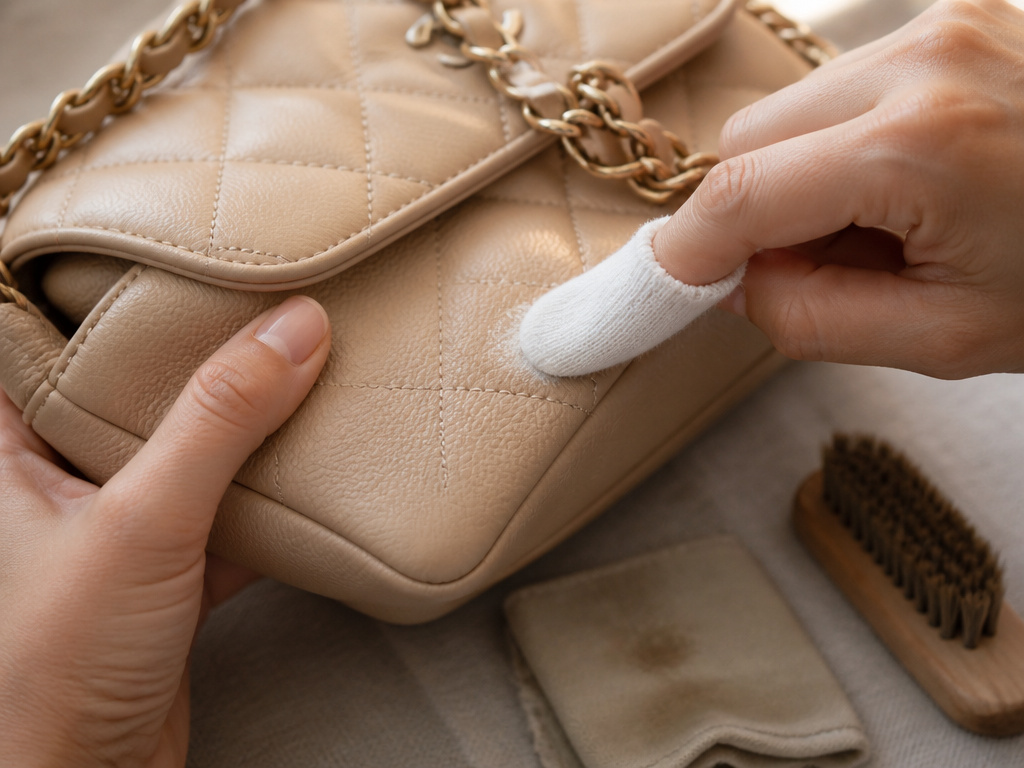
Not all leather handbags are created equal. The care rules shift based on the material, and the luxury brands are specific about the distinctions.
Lambskin (Chanel): This is the poster child for delicate leather. Chanel notes its lambskin is “treated as little as possible to preserve its natural suppleness.” It marks easily. Their advice for reducing the look of marks is to gently rub in a circular motion with a dry finger or cloth. Anything more aggressive risks damaging the finish.
Suede (Tiffany, Gucci): Treat this as a high-maintenance material. Tiffany explicitly states that balding in high-wear areas is difficult to prevent and is “dependent on the individual animal skin.” Gucci labels suede as “delicate and refined” and directs owners to contact them for advice rather than offering DIY steps. A suede brush can lift a nap, but stains are a professional job.
Canvas & Nylon (Gucci): For these non-leather materials, Gucci advises a dampened soft cloth. The key is to avoid saturating the fabric, which can cause water spots or weaken adhesives.
Full-Grain Leather (Hermès): This is the durable, top-layer leather that develops a patina. Hermès celebrates this aging process. The care is less about preserving a “new” look and more about safeguarding the leather’s integrity, hence their focus on avoiding water, heat, and improper products.
What About Conditioning and Protection?
This is the most contentious area. The standard advice for leather goods, condition periodically, is directly contradicted by the makers of some of the world’s most expensive handbags.
Let’s be clear. A dry, neglected piece of leather from a vintage jacket may need rejuvenation. But a modern, high-quality handbag from Gucci, Chanel, or Hermès arrives with its finish optimized. Adding a conditioner is like applying a thick moisturizer to skin that already has a perfect biome, you’re more likely to cause problems than solve them.
The protector sprays sold in stores often create a surface film. This film can change the leather’s hand (how it feels), alter its color slightly, and, as Hermès warns, potentially cause damage. If you live in a climate with frequent rain, the best protection is vigilance, blotting moisture immediately, and using the bag appropriately. For a bag you plan to use in all weather, consider a model in a treated leather or a non-leather material from the start.
The one protective step that is universally endorsed is the use of the dust bag. It’s the simplest, safest shield you have.
Frequently Asked Questions
Can I use apple cider vinegar to clean my leather bag?
No. Do not use vinegar, homemade solutions, or any product not explicitly recommended by the bag’s manufacturer. These acidic or astringent solutions can strip dyes and finishes, leaving permanent discoloration or a sticky residue. Tiffany’s list of banned items includes ammonia and furniture polish for a reason.
How do I remove an ink stain from leather?
Immediately. Blot, do not rub, with a clean, dry, white cloth to lift as much ink as possible. Then, stop. Ink is a dye, and it often sets quickly. Further home treatment risks spreading the stain or damaging the leather’s surface. This is a textbook case for contacting the brand’s after-sales service or a professional leather restorer.
Is it okay to store my bag in its original box?
Yes, but with a caveat. The original box is ideal for long-term storage as it blocks all light. However, ensure the bag is first placed in its dust bag and properly stuffed. Avoid storing in a hot attic or damp basement, as cardboard can hold moisture and promote mildew.
Why does my leather bag have a musty smell?
Musty smell indicates mildew or mold, usually from storage in a humid environment without adequate airflow. Remove the bag, let it air out in a dry, well-ventilated room (not in direct sun). If the smell persists and there are visible spots, professional cleaning is required. To prevent this, never store a leather bag in a plastic case or a basement.
Can a professional fix a broken strap or torn lining?
Almost always, yes. Brands like Gucci and Hermès offer extensive aftercare and repair services. For non-branded bags, a skilled leatherworker or cobbler can often re-stitch straps, reline interiors, and repair corners. This is nearly always a better investment than attempting a DIY fix with glue, which creates a hard, brittle point that usually fails again and can tear the surrounding leather.
The Bottom Line
Caring for a leather handbag is less about active cleaning and more about intelligent prevention. The goal is to create an environment, both in use and in storage, where the bag can age gracefully.
The single most important document is the care guide that came with your bag. If you’ve lost it, the brand’s website is your next stop. Their advice overrides everything else. When in doubt, the rule is simple: do less. Reach for the soft cloth, not the conditioner bottle. Stuff it with tissue, don’t let it slump. And if a real problem arises, from a deep stain to a broken strap, take it to a leather specialist. A handbag made from full-grain leather with sturdy, reinforced stitching is built to last for decades with the right stewardship. That stewardship is straightforward, but it requires ignoring a lot of noisy, product-driven advice.
