
How to Care for a Leather Phone Case | The Patina Timeline
This post contains affiliate links. As an Amazon Associate, we earn from qualifying purchases.
Care for a leather phone case with a weekly wipe using a damp microfiber cloth, a bi-annual conditioning with a pure oil like mink oil, and vigilant protection from heat, moisture, and sharp objects. This routine removes grime, replenishes the leather’s natural oils, and guides the development of a unique patina over time.
That “bi-annual” part is where most guides get vague. They’ll say “condition occasionally,” which might mean every month or never. Conditioning a phone case twice a year is the sweet spot, enough to keep the leather supple, not so much that you risk darkening light leather or gumming up the fibers.
What follows is a breakdown of the three layers: cleaning off the daily grime, feeding the leather itself, and steering the natural aging process called patina. By the end, you’ll know exactly what to do each week, each season, and what to avoid so your case looks better in year two than it did on day one.
Key Takeaways
- Wipe your case weekly with water and a microfiber cloth; soap is only for monthly deep cleans. Never soak the leather.
- Condition pure leather cases only twice a year with a tiny amount of mink oil or a dedicated leather conditioner, avoiding any with silicone.
- Patina is the leather darkening and softening from oils and light; it’s a feature, not a flaw, and proves the leather is real.
- Keep the case away from prolonged heat (car dashboards, charging heat) and direct sunlight to prevent premature drying and fading.
- Never use alcohol, harsh chemicals, or “universal” cleaners, and never condition bonded or PU “leather.”
The Weekly Wipe-Down (The Only Cleaner You Need)
Your hands are dirty. Your pockets are dirty. Your phone case lives in both places. The primary job is a frequent reset rather than a deep clean.
Here’s the straightforward approach. Once a week, take the case off your phone. Dampen a lint-free microfiber cloth with cool water. Wring it out until it’s just damp, not dripping. Wipe the entire case, inside and out, using gentle circular motions. Let it air dry completely away from direct heat before snapping your phone back in.
That’s it for 90% of upkeep. The water lifts away surface oils, salts, and dust without stressing the leather. A dry microfiber cloth works for a quick dust-off between weekly wipes.
The part nobody mentions: The inside of the case collects more abrasive grit than the outside. Sand and pocket lint act like fine sandpaper against your phone’s finish and the case’s interior. A weekly internal wipe prevents this slow grind.
When do you need more than water? If you get a sticky spill or noticeable grime, add a single drop of mild, dye-free hand soap or castile soap to your damp cloth. Lather it in your hands first, then transfer a faint suds to the cloth. The goal is to clean without depositing a soapy residue that attracts more dirt. Rinse the cloth, wring it, and wipe again with clear water to remove any soap film. Dry thoroughly.
The tools you already have are usually the right ones. I keep a pack of dedicated microfiber cloths in my cleaning cabinet, the same kind you’d use for glasses. They’re cheap and don’t shed lint.
When and How to Condition (It’s Not What You Think)
Conditioning has nothing to do with cleaning. Cleaning removes foreign material; conditioning replaces the leather’s own natural oils that evaporate over time. Think of it like moisturizing your skin after you wash your face.
Most people condition too often or with the wrong product. For a phone case handled daily, twice a year, perhaps at the start of spring and fall, is ample. Over-conditioning is a real problem. It can oversaturate the leather, darken light colors unevenly, and leave a greasy film that attracts dirt.
The product choice matters more than the frequency. You want a pure oil or cream without silicones or waxes designed for “waterproofing.” Silicone seals the leather’s pores, blocking future conditioning and preventing the patina from developing evenly. My go-to is a simple mink oil paste or a conditioner like Leather Honey or Bickmore’s Bick 4.
| Conditioner Type | Best For | Risk If Misused |
|---|---|---|
| Pure Oil (Mink, Neatsfoot) | Restoring dry, stiff leather; deep nourishment. | Can darken leather significantly; overuse leads to greasy residue. |
| Light Cream (Bick 4, Leather Honey) | Regular maintenance on in-good-shape leather; minimal darkening. | May not be enough for severely dried-out leather. |
| Silicone-Based “Protector” | Creating a temporary water barrier on synthetic materials. | Clogs leather pores, prevents patina, and can cause finish peeling. |
The method is everything. Apply a pea-sized amount to a clean cloth. Rub it into the cloth first to distribute it. Then, massage it into the leather using small, overlapping circles. You shouldn’t see a thick coating, just a slight darkening as the oil soaks in. Let it sit for an hour, then buff off any excess with a clean, dry part of the cloth.
Let me share what I’ve learned the hard way. I stopped recommending silicone-based sprays altogether after testing one on a belt. It left an invisible residue that made the leather repel my favorite conditioner six months later. The belt stayed dry and stiff in that one spot. That’s the reality with shortcuts.
What to Avoid (The Shortcut That Ruins the Case)
Leather is durable, but it has specific enemies. Avoiding these things does more for your case’s lifespan than any conditioner.
Heat and Sunlight are the silent killers. Leaving your phone on a car dashboard or near a window for a few hours can do more damage than a year of use. The heat bakes out the leather’s natural moisture, making it brittle and prone to cracking. Direct sunlight, especially on dark cases, can cause fading in a matter of weeks.
Alcohol and Harsh Cleaners strip the leather. Rubbing alcohol, window cleaner, and hand sanitizer will dissolve the leather’s natural oils and any applied conditioner. The surface becomes dry, chalky, and loses its color. If you need to disinfect, take the phone out of the case and clean the phone itself. The case just gets its damp cloth wipe.
“Genuine Leather” and PU Leather require a different rulebook. Many cases labeled “genuine leather” are actually a thin layer of leather bonded to a fabric backing. PU leather is plastic. Neither will absorb conditioner like full-grain or top-grain leather. Conditioning them is pointless and can break down the adhesives. For these, stick to the damp cloth cleaning only.
Where this goes sideways: Storing a damp case in a drawer or plastic bag. Moisture trapped against leather encourages mold growth. Always let the case dry fully in open air before putting it away.
Sharp objects are an obvious hazard, but the real danger is chronic. Carrying your phone in the same pocket as your keys creates micro-scratches that, over months, wear down the finish and create weak spots. Give your case its own pocket.
Understanding Patina: Your Case is Supposed to Change
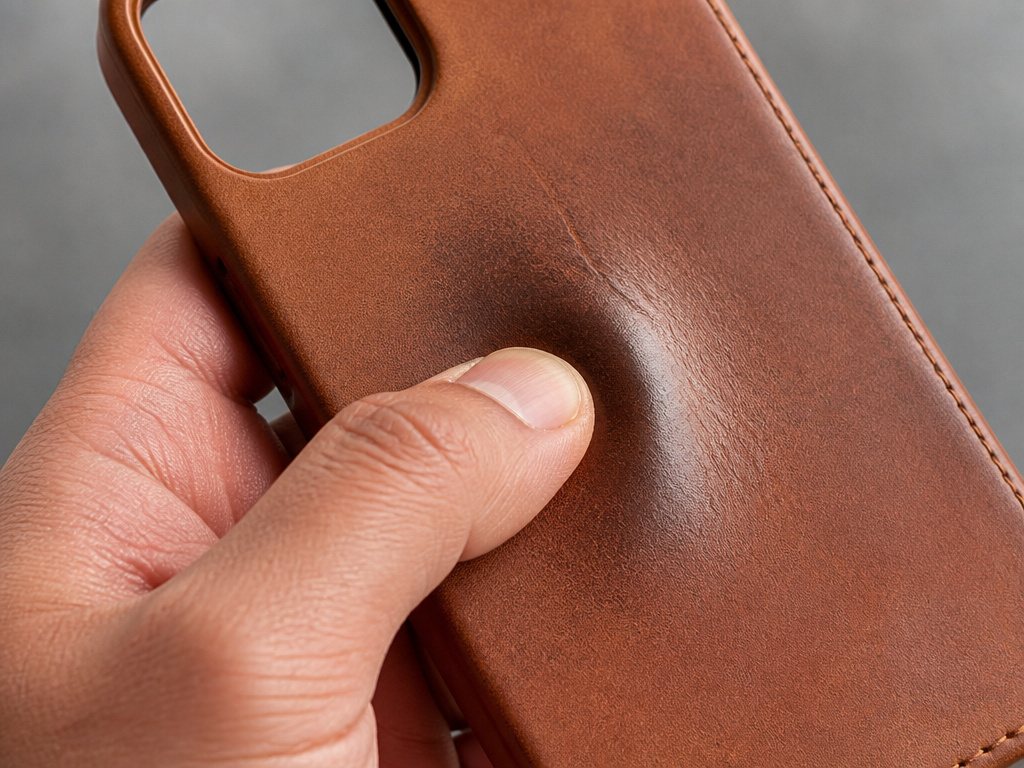
This is a timeless material. The most common concern I hear is, “My brown case is getting dark spots. Is it ruined?” No. It’s beginning its life.
Patina is the unique sheen, darkening, and softening that develops on real leather as it interacts with oils from your skin, light, and air. It’s a badge of honor. A uniform, plasticky case that never changes is often a sign of a heavy plastic coating or synthetic material. A case that develops a rich, varied patina is proof you bought real, quality leather.
The process isn’t predictable, which is the point. A spot where your thumb rests might darken first. The edges might lighten from friction. This character tells the story of how you use your phone.
You can gently guide it. Consistent, light conditioning ensures the leather darkens evenly rather than in blotches. Keeping it clean prevents dirt from getting trapped in the oil, which can lead to a grimy, uneven look instead of a warm glow.
Practically speaking, if you want a case that looks factory-fresh forever, buy a plastic one. If you want an accessory that gains personality and proves its authenticity with age, embrace the patina. It’s the whole reason to choose leather in the first place.
The Long-Term Storage Guide
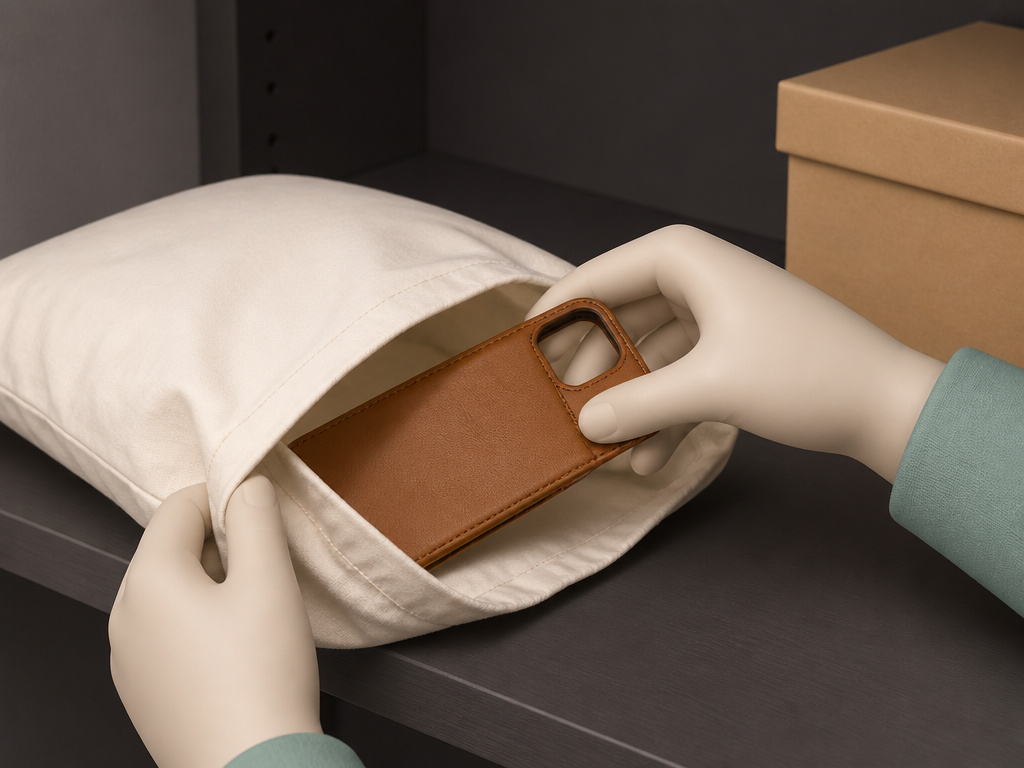
Maybe you’re switching cases seasonally or storing a spare. How you store it matters as much as how you clean it.
First, clean and condition the case as described above. This removes acids and salts from your skin that could etch into the leather over months of inactivity. Let it dry completely for a full 24 hours after conditioning.
Second, find a quiet room with minimal echo. You want a cool, dry, dark place. A closet shelf is perfect. Avoid attics (too hot) or basements (too damp). Do not seal it in a plastic bag or airtight container, leather needs to breathe. A cotton pillowcase or a cardboard box is ideal.
Finally, mind the pressure. Don’t stack heavy books or other gear on top of a stored leather case. The sustained pressure can permanently deform the shape, flattening the camera bump or warping the sides. Store it by itself or with other lightweight items.
A case stored this way will be ready to use whenever you are, without any surprises.
Frequently Asked Questions
Can I use disinfectant wipes on my leather case?
No. Disinfectant wipes almost always contain alcohol or other harsh chemicals that will dry out and discolor the leather. To disinfect, remove your phone from the case. Clean the phone with an appropriate wipe, and clean the case with your damp microfiber cloth only.
How do I remove a water stain from leather?
The standard advice is counterintuitive. Lightly dampen the entire case with a uniformly wet cloth, don’t just wet the stain. This blends the moisture line so it dries evenly, preventing a visible ring. Let it air dry naturally. For a fresh spill, blot immediately with a dry cloth.
Will conditioner make my case less grippy?
Initially, it might feel slightly slick for an hour or two as the oil absorbs. Once buffed and fully absorbed, a properly conditioned case should retain its grip. Over-conditioning will leave a lasting greasy film that makes the case slippery.
What’s the difference between full-grain and top-grain leather for cases?
Full-grain leather includes the entire outer layer of the hide, with all its natural markings and grain. It’s the most durable and develops the best patina. Top-grain leather is sanded to remove surface imperfections, then often coated with a pigment and protective finish. It’s more uniform and scratch-resistant initially but won’t patina as characterfully. Both are good; full-grain is the premium choice.
My case is peeling. Can I fix it?
Peeling usually indicates a coated or bonded leather, not solid leather. The colored/polyurethane top coat is separating from the base layer. This indicates material failure, requiring case replacement rather than repair with conditioner.
Before You Go
One rule cuts through all the complexity: if you wouldn’t use it on your own skin, don’t use it on your leather case. That bans alcohol, harsh solvents, and abrasive scrubs. It encourages gentle soaps and pure oils.
Your first conditioning session is the most important. Pick a pure product, use a tiny amount, and observe how the leather drinks it in over the next day. That’s the moment you shift from owning a leather case to understanding it. The goal is a graceful, well-documented life, not immortality. A few scuffs and a deep, earned color are the proof you did it right.
