
How to Choose a Leather Sectional | A Foolproof Buyer’s Checklist
This post contains affiliate links. As an Amazon Associate, we earn from qualifying purchases.
To choose a leather sectional, match three things: your room’s traffic flow, the leather’s protective finish, and the sofa’s hidden construction. Get the first one wrong and the piece blocks your door. Get the second wrong and it wears out in three years. Get the third wrong and the frame sags before the leather even develops a patina.
Most buyers start with color and style. That’s the last step. The first step is understanding how a large, rigid piece of furniture will move through your home and live in your space. A leather sectional isn’t just a sofa; it’s a room-defining commitment. The sheen and weight of leather amplify every choice, for better or worse.
What follows is a three-part filter: layout logic, leather literacy, and construction clues you can verify. By the end, you’ll know which questions to ask in a showroom that most salespeople hope you never think of.
Key Takeaways
- Orientation is everything. A chaise on the wrong side doesn’t just look odd, it physically blocks the natural path into the room. Decide Left-Arm-Facing (LAF) or Right-Arm-Facing (RAF) based on your doorway, not the showroom floor.
- “Leather match” is a spec, not a flaw. For open floor plans, a sofa back made of color-matched faux leather is a practical choice if it’s disclosed. The problem is when it’s hidden.
- Foam density predicts sag. Look for a spec of at least 1.8 lb/ft³. Under that, seat cushions will permanently flatten within five years of daily use, no matter how good the leather looks.
- Delivery width is a hard ceiling. A 36-inch doorway minimum is common for rigid sectionals. If your hall is 32 inches, you need a modular design or a different sofa.
- Light changes leather. A cognac leather in afternoon sun looks warm and rich. In a north-facing room, that same cognac can read as flat and muddy. See your top color choices in your home’s light at the time of day you use the room most.
The 3-Step Fit Check (Before You Measure a Thing)
You can’t fix a wrong configuration with throw pillows. This is the most expensive and common mistake, and it happens because people measure their room but not their life in it.
First, trace the traffic flow. Stand in the main doorway to your living space. Where do you naturally walk? Your chaise should extend away from that path, not into it. If the doorway is on the right wall, a Right-Arm-Facing (RAF) chaise likely blocks the flow. You’d want a Left-Arm-Facing (LAF) chaise that points into the room’s open space.
Common mistake: Choosing the chaise direction because it looked better in the showroom. The showroom’s layout has nothing to do with your doorway, your windows, or where your family actually walks.
Second, account for light. If you have a west-facing window, that’s strong afternoon sun. A chaise placed directly in that light becomes a hot seat, literally. The leather will fade and dry out faster there than on a shaded section. Orienting the chaise to avoid direct sun isn’t just about comfort; it’s a longevity play.
Third, understand shape psychology. An L-shaped sectional defines a corner. It leaves the room feeling more open and is easier to deliver. A U-shaped sectional defines an entire zone and demands space, at least 14 feet in one direction to avoid feeling like a leather-walled fortress. In an open floor plan, a U-shape can visually separate a living area from a dining space, but its back will be visible. Is that back panel real leather or a matched substitute?
| Your Room’s Trait | Lean Towards | Why It Works |
|---|---|---|
| Open floor plan, moderate size | L-Shaped | Defines a zone without dominating; back panel visibility is limited. |
| Large, dedicated great room | U-Shaped | Creates an intimate conversation pit; makes use of ample square footage. |
| Narrow doorways (<36″) or tight turns | Modular L-Shaped | Ships in boxes, assembled in-room. Avoids the “stuck on the porch” delivery problem. |
| Strong afternoon sun from one side | Chaise opposite the sun | Protects the most used lounging spot from accelerated fading and heat. |
Now you can measure. Tape the footprint on your floor with painter’s tape. Live with it for two days. Walk around it. That empty tape outline will tell you more than any catalog spec.
Leather Isn’t Just Leather
The label “genuine leather” is worse than useless. It’s a technical term for the lowest grade of real leather, but marketers use it to sound premium. Let’s untangle that. For a sectional, you’re dealing with large, connected panels. Consistency and durability matter more than on a single chair.
Top grain leather is the workhorse. It’s real leather, sanded and finished for a uniform look. That finish is its superpower on a sectional, it helps all the panels age at the same rate and resists stains from the inevitable spills. It’s the practical choice for a household that actually lives on its furniture.
Full grain leather is the purist’s choice. It’s the top layer of the hide, untouched. It develops a rich patina with time, which is beautiful. But it also shows every natural mark and variation. On a large sectional, that means the arm panel might look slightly different from the seat panel. That’s character, not a defect, but you have to want that story.
Then there’s leather match. This means the seating surfaces are top or full grain, and the sides/back are a color-matched synthetic. This isn’t inherently bad. It keeps costs down. The problem is when it’s not disclosed. In an open floor plan where the sofa’s back is visible, a leather-match back will look and wear differently over a decade. Ask directly: “Which panels are real leather? Can you show me on a floor model?”
I learned this the hard way with a suede jacket years ago. I used a standard leather conditioner, which matted the delicate nap and left dark, greasy stains. The wrong product for the specific material caused permanent damage. The same principle applies here: a finish meant for protected top grain will do nothing for, or could harm, an aniline-dyed full grain.
Your cleaning code is usually a single letter, often found on a tag. ‘W’ means use water-based cleaners. ‘S’ means solvent-based. ‘S-W’ means either. This isn’t a suggestion. Using a ‘W’ cleaner on an ‘S’ leather can strip its dyes.
Construction: What You Can’t See Is What You Sit On
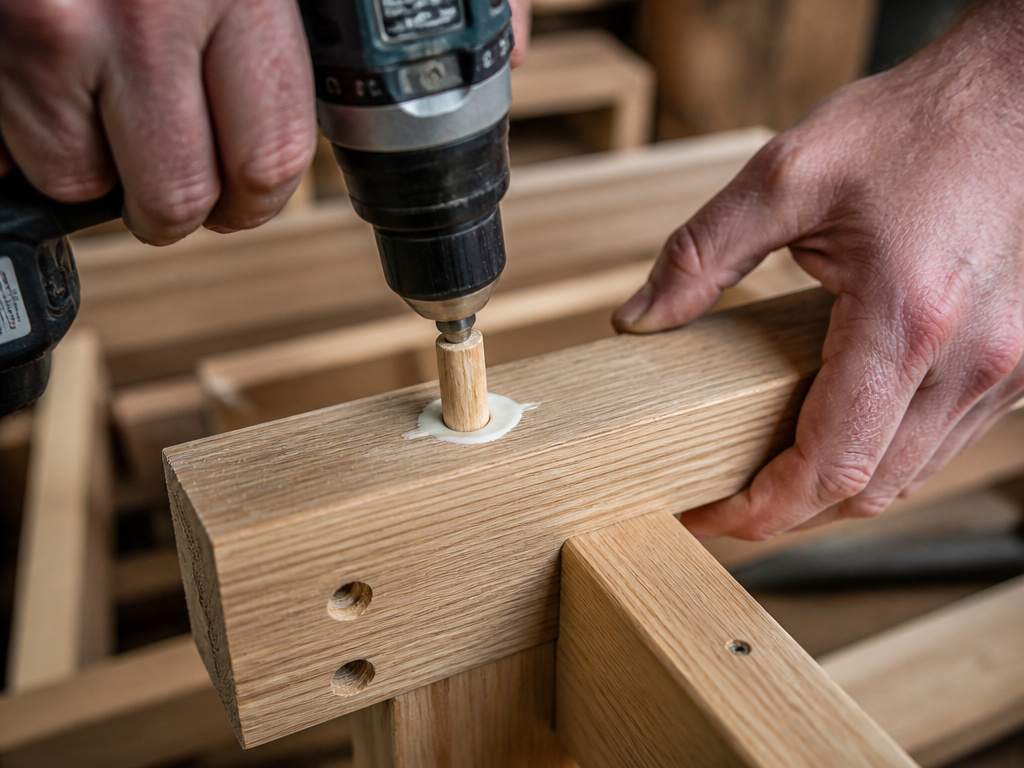 The leather is the skin. The frame and cushions are the skeleton and muscles. A beautiful hide draped over a weak frame is a temporary illusion.
Start with the frame. Kiln-dried hardwood is the benchmark. The kiln-drying process stabilizes the wood, so it’s less likely to warp or develop squeaky joints as your home’s humidity changes throughout the year. Look for frames joined with double-doweled construction or mortise-and-tenon joints, glue and staples alone won’t hold up.
Next, interrogate the cushions. Foam density is the number that predicts sag. It’s measured in pounds per cubic foot (lb/ft³). – 1.5 lb/ft³ or lower: This is budget foam. It will feel soft initially but will compact and lose support quickly. – 1.8 lb/ft³: This is the minimum for a quality sofa that should last 8-10 years with daily use. – 2.0 lb/ft³ and above: This is high-density, long-life foam. It’s firmer at first but maintains its shape for 15+ years.
Ask for the spec. If the salesperson doesn’t know or says “high-density,” that’s a red flag. A reputable manufacturer can provide the density number.
The seat deck, the platform the cushions sit on, should be a flexible, supportive web of sinuous springs or elastic webbing. Avoid a simple piece of plywood or a grid of cheap zigzag springs. You can often feel this by pressing down firmly between the cushions.
| Component | What to Look For | How to Check (If Possible) |
|---|---|---|
| Frame | Kiln-dried hardwood, double-doweled/mortise & tenon joints. | Lift a corner. A quality sectional will be heavy but rigid, with no creaking. |
| Seat Cushions | High-resiliency foam, density ≥1.8 lb/ft³. | Press down to the base. It should spring back immediately without leaving a deep dent. |
| Seat Deck | Sinuous steel springs or taut elastic webbing. | Remove a cushion and press on the deck. It should give slightly but feel supportive. |
| Back Cushions | Attached backs are common; loose cushions offer fluffability. | Check if covers are removable for cleaning. |
The Delivery & Reality Check
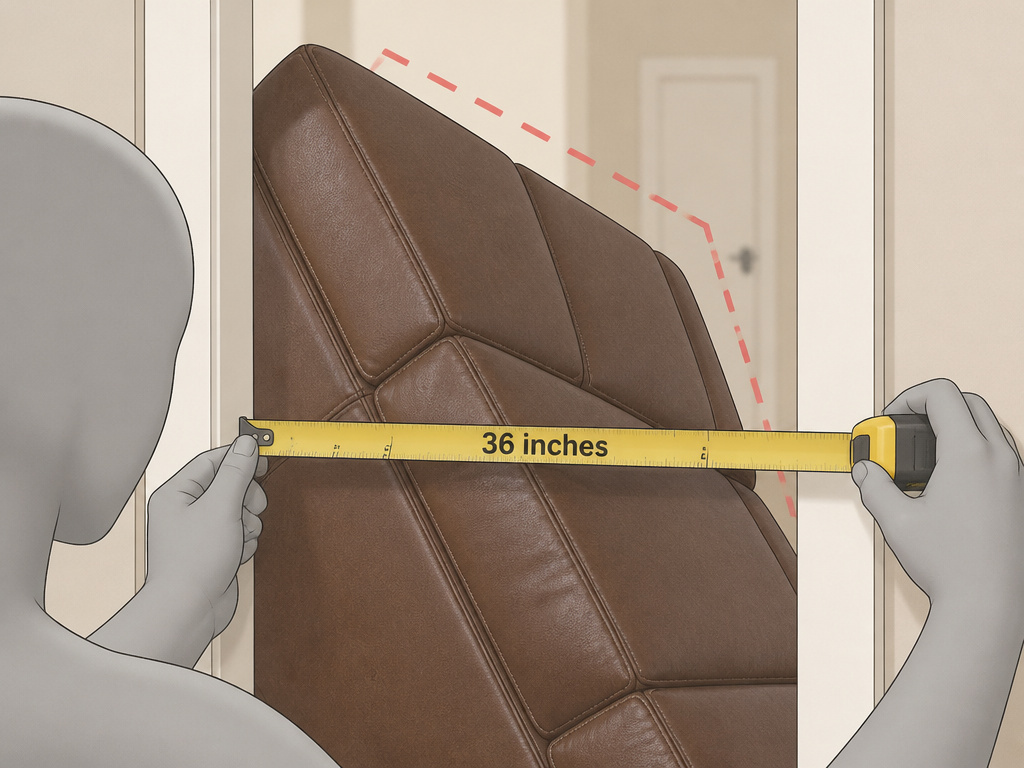 A leather sectional is heavy and rigid. The beautiful, seamless piece in the showroom might not fit through your front door. This is a physical puzzle you solve before paying.
The critical number is clearance width. Many sectionals require a 36-inch wide doorway to pivot through. Measure your exterior door, interior doors, and hallway widths. Account for tight turns at the bottom of a staircase. If your path is narrow, your options are: 1. A modular leather sofa that ships in separate, smaller boxes. 2. A sectional designed with detachable arms or backs for delivery. 3. Choosing a different configuration that fits your access.
Callout to apartment dwellers and older homes: this step is not optional. I’ve seen delivery teams have to leave a sofa on a porch because the homeowner measured the room but not the hallway turn.
Lead time is the other reality. A quality, built-to-order leather piece isn’t a warehouse item. Expect a lead time of six to twelve weeks. This is a sign of craftsmanship, not inefficiency. Use this time to prepare your space.
How to Shop Without Getting Lost
Walking into a large showroom can be overwhelming. Here’s a simple script to cut through the noise.
First, state your constraints: “I’m looking for a leather sectional for a [describe your room: open plan, dedicated room, etc.]. My main doorway is [X] inches wide, and I have a [west/south] facing window.” This immediately focuses the conversation on what will actually work.
Second, ask the three spec questions: 1. “Can you tell me the foam density for the seat cushions?” 2. “Is this full leather, or leather match? If it’s a match, which panels are the real leather?” 3. “What is the frame material and joinery method?”
A knowledgeable salesperson will have answers or will get them. Hesitation or vague answers are useful data, they tell you to keep looking.
Third, test it like you live on it. Don’t just perch on the edge. Sit down heavily. Lean back. Swing your legs up onto the chaise. Is the arm height comfortable? Does the seat depth support your thighs? A sectional is for lounging; it should pass the “Sunday afternoon test” in the store.
Finally, get samples. Leather looks different under showroom fluorescents. Take a large swatch home. Look at it on your floor, against your walls, in your natural light at 4 PM. That cognac that looked warm under store lights might look orange in your lamp light.
The part nobody mentions: The break-in period. A quality, firm leather sectional will feel stiff for the first month. The leather and high-density foam need time to soften and conform to use. Don’t mistake initial firmness for poor comfort. It’s a sign of longevity.
Frequently Asked Questions
Is a leather sectional good for a family with kids and pets?
Yes, with the right finish. A protected top grain leather is excellent. The finish resists spills and scratches better than fabric or more porous leathers. Wipe up spills quickly, and condition it only once a year to maintain the protective layer. Avoid sharp claws on any leather, but a minor scratch on a finished leather can often be buffed out lightly with your finger.
How long does a good leather sectional last?
With proper care, a sectional built with a kiln-dried hardwood frame and high-density foam (≥1.8 lb/ft³) should last 10-15 years easily. The leather itself often outlasts the cushioning. The first thing to go is usually the foam compaction in the most-sat-upon seat, which is why that density number is so critical.
Can I rearrange a modular leather sectional?
This is the key advantage of a true modular system over a fixed configuration. Pieces with secure, metal connector systems can be rearranged into different L-shapes, a chaise layout, or even separated into individual seats. Always verify the connection mechanism is robust, plastic clips won’t hold up to frequent reconfiguration.
What’s the difference between a sectional and a modular sofa?
Sectional is a fixed configuration (like an L-shape or U-shape) that may ship in 2-3 large pieces. A modular sofa** is a system of individual seats, corners, and chaises that connect together, offering flexible rearrangement. All modular sofas are sectionals, but not all sectionals are modular. Modular is the choice for flexibility and difficult deliveries.
How do I clean and maintain my leather sectional?
Follow the manufacturer’s code (W, S, or S-W). For general care: vacuum crumbs with a soft brush attachment monthly. Every 6-12 months, use a damp cloth with a pH-balanced leather cleaner. Condition only once a year, if that, using a light, non-silicone conditioner for the specific leather type. Over-conditioning is a real problem, it can soften the leather’s supportive backing over time.
Before You Go
One final, physical test. Before you sign anything, find out exactly how the sectional will enter your home. If the retailer offers a pre-delivery survey, take it. If not, do the math yourself: item width + pivot space. The difference between a 36-inch requirement and a 34-inch hallway isn’t a negotiation; it’s a hard stop.
Your choice ultimately narrows to two paths. For most households that want durability and easy care, a top grain leather sectional with a 1.8+ density foam is the default. It’s the workbench of living rooms, ready for use. If you want an heirloom that tells a story, and you accept the maintenance, a full grain piece is your canvas. Just know that the story will include your kids’ muddy paws and that red wine stain from New Year’s 2027. And that’s the point.
