
How to Deodorize Leather Shoes Correctly & Prevent Odor
This post contains affiliate links. As an Amazon Associate, we earn from qualifying purchases.
This post contains affiliate links. As an Amazon Associate, we earn from qualifying purchases.
To deodorize leather shoes, you must first dry them thoroughly, then apply a dry, absorbent deodorizer like baking soda or activated charcoal for at least 8 hours, and finally establish a preventive routine of airing and rotation. The key isn’t masking the smell; it’s removing the moisture that bacteria feed on. Skipping the thorough dry-out is why odors return within a week.
Most guides focus on the product you sprinkle inside. They miss the physics. Leather is a hide, it breathes, but slowly. Pouring a scent over dampness just gives you perfumed mildew. The real work happens in the 24 hours after you take the shoes off, when sweat is still evaporating from the lining into the leather itself.
What follows is a method that respects the material. We’ll walk through drying correctly, picking a deodorizer that doesn’t just cover up the problem, and building habits that stop the smell before it starts. We’ll also tackle when a home fix isn’t enough and you should talk to a pro.
Key Takeaways
- Odor is a moisture problem first. Dry shoes completely for 24 hours in moving air before any deodorizing step.
- Use dry absorbents like baking soda or activated charcoal for 8+ hours; avoid wet cleaners unless the leather is soiled.
- Rotate your shoes, giving each pair at least a full day to rest and dry between wears, longer in humid climates.
- If odors persist after proper drying and deodorizing, the issue may be mold or degraded lining, requiring professional assessment.
- Never use direct heat (hair dryers, radiators) to dry leather; it bakes and cracks the material from the inside out.
Why Leather Shoes Smell (It’s Not Just Your Feet)
The smell comes from the ecosystem living in the damp, dark cave you’ve built inside the leather. Your foot sheds skin cells and pumps out sweat, a few hundred milliliters on an active day.That warm, nutrient-rich broth soaks into the sock liner, the insole, and the leather lining.
Bacteria feast on this. Their waste products are the volatile organic compounds you smell. If you just spray a fragrance, you’re adding a third note to the stink symphony. The bacteria are still there, multiplying, because their food source, moisture, is still present. The leather acts like a sponge, holding that moisture close to its fibers.
This is why a quick fix fails. You haven’t changed the environment. You’ve just redecorated.
The Manufacturer Warning Most DIY Guides Ignore
Here’s a direct contradiction that clarifies everything. Manolo Blahnik’s official care page states plainly: “Never attempt to clean your shoes with soap or water.” Their first instruction for wet shoes is to dry them naturally away from heat.
Now look at a typical DIY wikiHow guide. It recommends a “natural cleaning solution with vinegar, water, and tea tree oil” for the interior.
Both can’t be right for the same shoe at the same time. The luxury brand is protecting a high-value item from irreversible damage. Water, even with vinegar, can stain some leathers, weaken adhesives holding the insole, and drive moisture deeper than it can easily escape. Their stance is conservative for a reason.
The DIY guide is solving for a different problem: a shoe that might be sacrificed anyway. Their method adds a disinfectant (vinegar, tea tree oil) to the water, betting that killing microbes is worth the water risk.
Where this goes sideways: Using a water-based cleaner on a shoe that is already damp from wear. You trap moisture between two wet layers, the cleaning solution and the sweat still in the leather. This can lead to a musty, basement-like odor within days as mold takes hold.
The takeaway is that you must know your shoe’s construction and never add moisture to moisture, not that water is always evil. If the interior is visibly soiled, a damp cloth with a leather-safe cleaner is the limit.For pure odor, start dry.
The Three-Phase Deodorizing Method
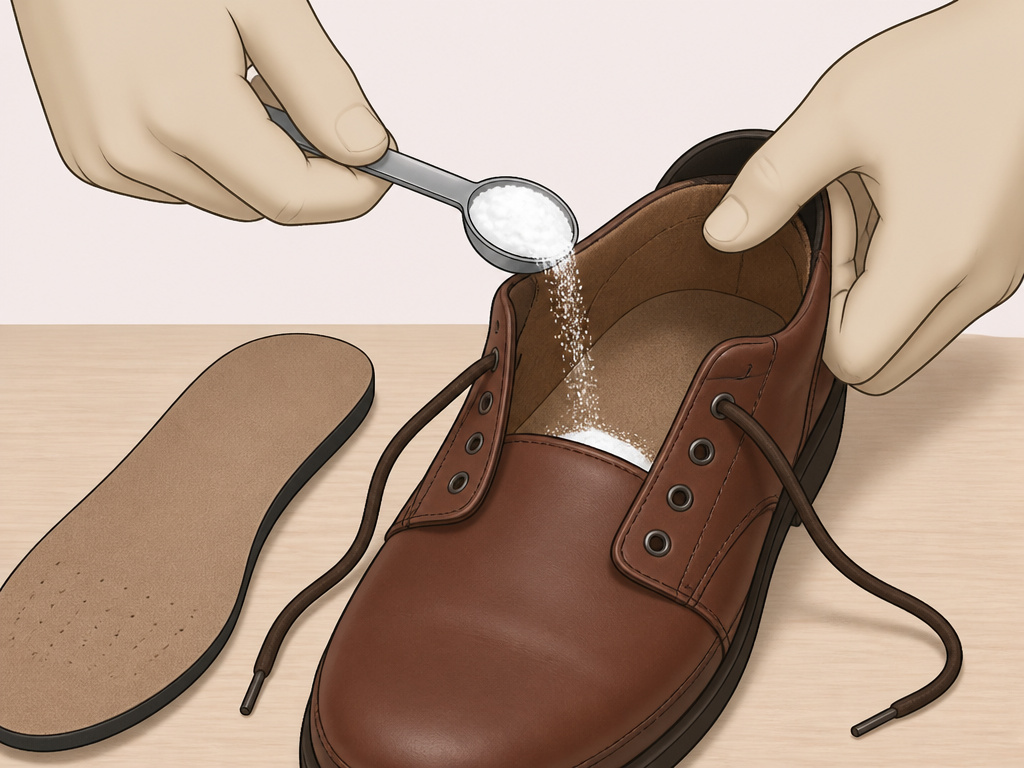
This is a sequence that addresses cause, not symptom.
Phase 1: The Critical Dry-Out
This is the step people skip. They come home, kick off their smelly shoes, sprinkle in baking soda, and expect a miracle. All they’ve done is mix powder with paste.
- Remove the insoles immediately. If they’re not glued in, take them out. This opens up air channels.
- Loosen all laces and open the shoe fully. You want maximum surface area exposed.
- Place them in a well-ventilated area. A room with a ceiling fan on low is perfect. A breezy porch (out of direct sun) is great.
- Stuff them with acid-free tissue paper or newspaper. This wicks moisture from the toe box and helps maintain shape. Avoid colored newspaper, the dye can transfer.
- Wait a full 24 hours. In humid climates, make it 36. You’re not waiting for the outside to feel dry. You’re waiting for the moisture deep in the leather and padding to migrate out.
The consequence of skipping this: Any deodorizer you add will clump on damp leather. The odor-causing bacteria, protected in their moist habitat, reactivate as soon as your foot reintroduces warmth. The smell returns stronger within two wears.
Phase 2: Applying the Deodorizer
Now that the shoe is truly dry, you can absorb residual odor molecules. We’re using physical absorbers, not chemical perfumes.
| Deodorizer | How It Works | Best For | Duration |
|---|---|---|---|
| Baking Soda | Neutralizes acidic odor compounds through a chemical reaction. | General, all-purpose odor. Cheap and readily available. | 8 hours minimum, overnight is ideal. |
| Activated Charcoal | Adsorbs (traps) a wide range of odor molecules in its micro-pores. | Strong, persistent odors or for use in storage. | 24-48 hours for heavy duty. |
| Cedar Shoe Trees | The aromatic oils in cedar are naturally antimicrobial and absorb moisture. | Daily maintenance and storage. Prevention, not cure. | Leave in whenever shoes are not being worn. |
A teaspoon of baking soda per shoe is the measured dose. More isn’t better, it’s just more to vacuum out. Shake it around to coat the interior, then let it sit overnight. In the morning, vacuum it all out. Every last grain. Left behind, it becomes an abrasive.
For a stronger approach, activated charcoal sachets are my go-to. They don’t just mask; they trap the smell. Brands like Cedrus make flat sachets designed to slide into shoes.
Phase 3: Prevention & Routine
Deodorizing is an event. Prevention is a system.
- Rotate Your Shoes.This is essential. No pair should be worn two days in a row. Give each pair at least 24 hours of rest.**
- Use a Shoe Tree. Cedar is best. It absorbs moisture, holds the shape, and imparts a light, fresh scent.
- Air Them After Every Wear. When you take them off, remove the insoles and give them at least an hour in open air before putting them away.
- Store Them Intelligently. A breathable cloth bag in a cool, dry closet. Never in plastic or an airtight box, that’s a mold incubator.
This routine is more effective than any monthly deep-clean. It manages the problem at the source.
When Home Methods Aren’t Enough: Calling a Professional
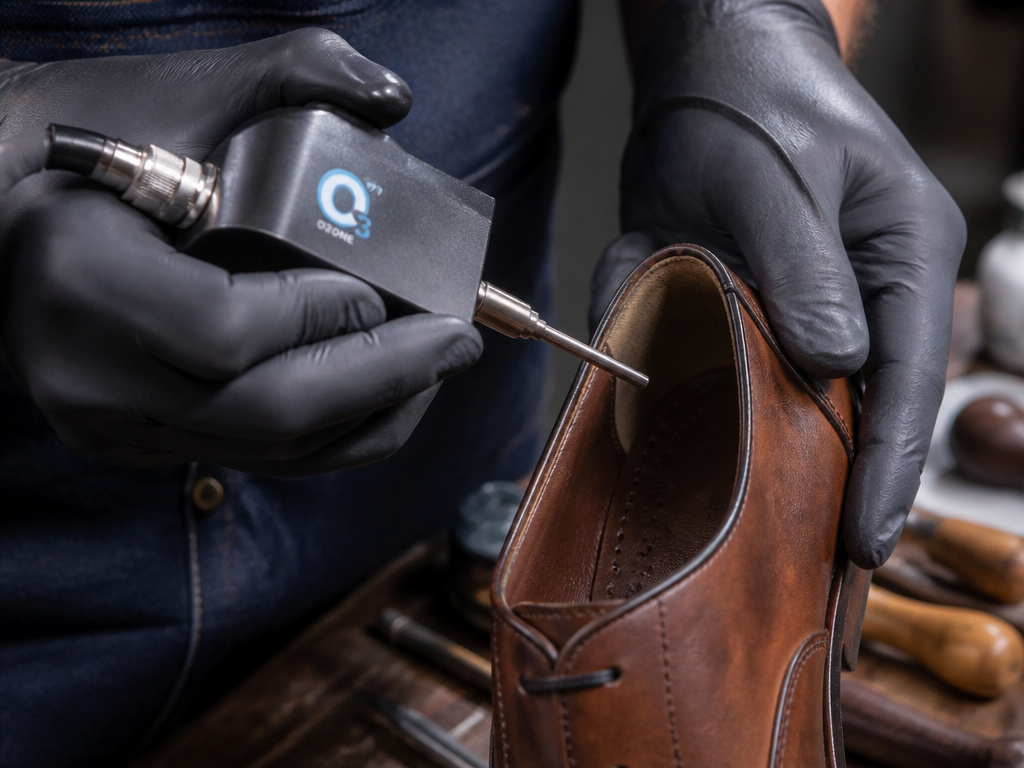
Use absorbers with activated charcoal or silica gel. This is a signal, not a failure.
Persistent, ammonia-like or deeply musty odors often mean the problem has moved beyond the surface. Mold may have taken root in the leather’s fiber structure or the foam padding beneath the insole. The lining itself could be breaking down, releasing odors no surface treatment can reach.
The part nobody mentions: A cobbler has tools you don’t. They can use ozone generators (which kill odor-causing organisms at a molecular level), remove and replace linings, or use specialized disinfectants that penetrate without oversaturating. The cost of a professional deodorizing service is often less than replacing a good pair of shoes.
If you see discoloration, feel a persistent dampness that won’t dry, or the leather is stiffening and cracking, stop the home treatments. You’re past the point of baking soda. Continuing to wear them isn’t just unpleasant; it can be bad for your skin. A professional can tell you if the shoes are salvageable or if the structural integrity is gone.
The One Product I Keep Reaching For
I’ve tested a lot of gimmicks. The most reliable tool in my kit is a bag of food-grade activated charcoal.
Unlike scented products, it doesn’t cover up smells with a stronger smell. It pulls them out of the air and the leather. I keep small muslin bags of it in my shoes when they’re in the closet. Every few months, I “recharge” the charcoal by placing it in sunlight for a day, which burns off the captured odors. It’s a closed-loop system that works indefinitely.
Scented products like Sneaker Balls® have their place for a quick refresh, but remember they have a shelf life, about 90 days once opened. They’re adding a fragrance, not solving the moisture equation. Use them for a quick lift, not as your primary defense.
Frequently Asked Questions
Can I use vinegar to deodorize leather shoes?
You can, but you must be cautious. A light mist of a diluted white vinegar solution (1 part vinegar to 4 parts water) can kill surface bacteria. However, you must ensure the shoe is completely dry before application, and you must allow it to dry again thoroughly afterward. For most people, the risk of adding more moisture isn’t worth the antibacterial benefit. Dry methods are safer.
How often should I deodorize my leather shoes?
There’s no calendar schedule. Deodorize when you notice a smell. Your focus should be on daily prevention: airing out, using cedar trees, and rotating pairs. If you’re following those habits, you might only need a baking soda treatment once or twice a year.
Will deodorizing damage the leather interior?
Dry deodorizers like baking soda and activated charcoal will not damage leather. The risk comes from improper cleaning before deodorizing (using harsh, wet chemicals) or from failing to fully remove the powder. Always vacuum out baking soda completely to prevent abrasion.
What about freezing my shoes to kill odor?
Freezing can temporarily stun some bacteria, but it doesn’t kill them all, and it does nothing to remove the organic matter they eat. It also subjects the leather to a stress cycle of contraction and expansion, which can weaken adhesives over time. It’s a last-resort trick for synthetics, not a recommended method for leather.
Are leather shoes inherently less breathable?
Not necessarily. Full-grain leather is a natural, breathable material. However, many dress shoes have a synthetic lining or a plastic-coated (“corrected grain”) leather exterior that severely reduces breathability. This is often where odor gets trapped. When buying, look for shoes with unlined or leather-lined interiors for better air flow.
Before You Go
The goal is to create an environment where smell can’t gain a foothold, rather than waging an endless war against it. That means respecting leather as a living material that needs to breathe and dry.
If you take one thing from this, let it be the 24-hour rule. Let your shoes rest, fully opened, in moving air for a full day between wears. That single habit does more than any product in a bottle. Everything else, the cedar, the baking soda, the charcoal, is just a supporting player.
Use an absorbent like Dr. Scholl’s Odor-X or Sof Sole. It’s telling you the battle is inside the walls. That’s when you hand the problem to a cobbler. Sometimes the most confident choice is knowing when to stop.
