
Dog-Proof Your Leather: A Complete Protection Guide & Tips
This post contains affiliate links. As an Amazon Associate, we earn from qualifying purchases.
This post contains affiliate links. As an Amazon Associate, we earn from qualifying purchases.
Protecting leather from dogs works on a three-pillar strategy: pick the right leather finish (pigmented top-grain), use a dedicated physical barrier (not just a towel), and enforce a strict conditioning schedule timed to your climate. The finish determines scratch resistance, the barrier handles punctures and spills, and the conditioning schedule defends against the moisture loss that causes cracks, often within three weeks in forced-air heat.
The third pillar, climate-adjusted conditioning, is where most plans fall apart. A leather couch in a dry, heated room loses its natural oils faster than you think, turning from supple to brittle before you notice the first micro-crack.
What follows: the specific leather types that fail versus the one to buy, the barrier that actually stays put, and the maintenance calendar based on real-world timelines, not optimistic manufacturer labels. By the last section you’ll be able to build a defense that works, not just a list of tips.
Key Takeaways
- Pigmented Top-Grain Leather is the only leather finish you should buy if you own a dog. Its protective, colored coating resists surface scratches and stains far better than unfinished aniline leather.
Conditioning is essential, and its timing depends on the climate.** In dry or heated homes, condition every three months, not the standard six. Missing a cycle is how micro-cracks start. - Use a dedicated, non-slip cover, not a loose blanket. A cover that shifts exposes leather to punctures and spills; a fitted barrier with a rubberized backing is a physical guarantee.
- Trim nails every two to three weeks, not monthly. A two-week growth cycle is enough for a sharp nail tip to form, which is what gouges, not just scuffs, the surface.
- Never use vinegar, baby wipes, or household cleaners on leather. They strip the protective finish and accelerate drying, directly contradicting your conditioning efforts.
The Core Strategy: A Three-Pillar Defense
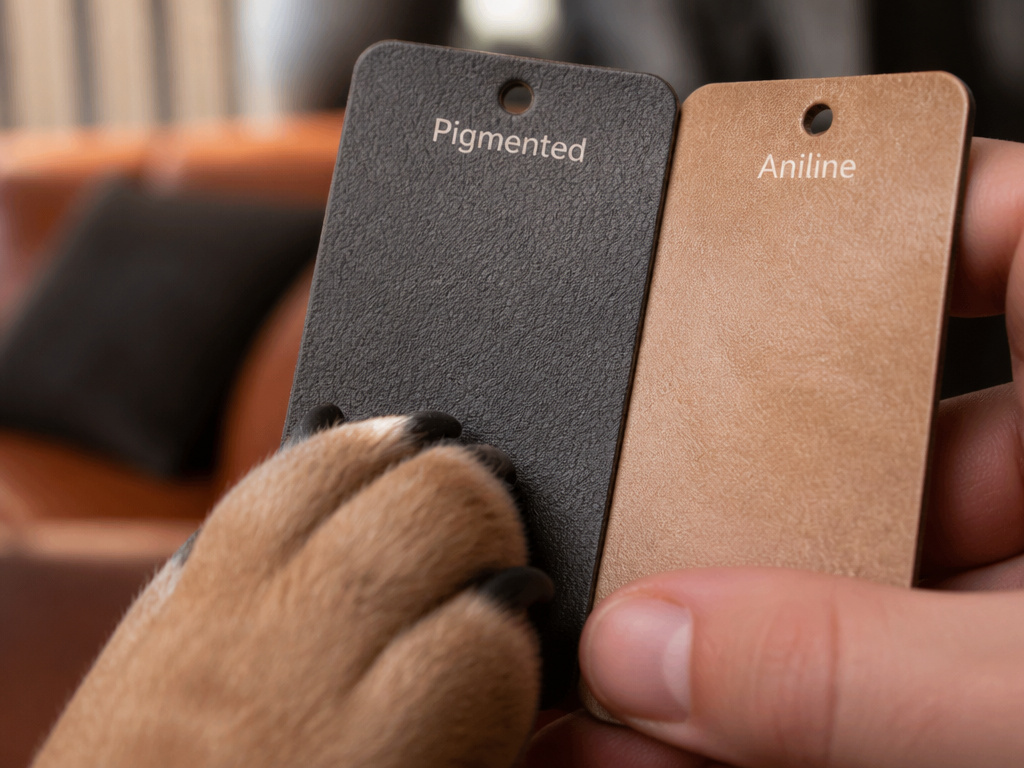
This approach involves layering three distinct lines of defense that address different failure modes, such as a dog’s scratching, puncturing, spilling, and drying out leather through natural oils and dander.Your plan needs a response for each.
The first line of defense is the leather itself. The second is a physical barrier you control. The third is a chemical maintenance schedule you enforce. Miss one pillar, and the other two compensate until they can’t.
Leather protection from pets relies on a hierarchy of barriers: the innate durability of the leather finish (first), a removable physical shield (second), and a regimen of applied conditioners to maintain flexibility (third). This approach addresses mechanical abrasion, puncture/fluid risks, and the chemical degradation caused by pet oils and environmental drying.
Pillar 1: Buy the Right Leather, “Pigmented” is Non-Negotiable
All leather is not created equal for pet ownership. The single biggest decision you make happens before the dog even comes home. The tanning and finishing process creates leathers with vastly different levels of vulnerability.
Aniline leather is dyed with soluble dyes without a protective topcoat. It feels soft and develops a rich patina, which also means it soaks up oils, water, and stains like a sponge. A dog’s paw, carrying natural oils, will leave a dark spot on aniline leather that cleaning may not fully lift. This leather is for low-traffic, pet-free sanctuaries.
Pigmented top-grain leather, often just called “protected leather,” has a protective polymer coating applied over the dyed hide. This coating is your first and most important shield. It resists surface scratches, the nail drags across the coating instead of digging into the hide, and it makes liquid clean-up a wipe-down affair. This is the benchmark for homes with pets. When shopping, “pigmented” or “protected” should be your first filter.
Semi-aniline leather sits in the middle, with a light protective layer. It’s a compromise, but with an active dog, compromise is where you find the first scratch you can’t buff out.
What about “genuine leather”? That term is a minefield. It simply means real leather, but it’s often used on the lowest-grade, heavily processed splits that are then coated. A “genuine leather” label tells you nothing about its suitability for pets. You need the spec: “pigmented top-grain.”
Pillar 2: Deploy a Physical Barrier That Actually Stays Put
You can’t train away physics. A jumping dog’s momentum can drive a nail through the toughest finish. A curled-up dog concentrates weight and heat. The answer isn’t hope; it’s a dedicated, fitted barrier.
A loose blanket or towel is the most common and least effective solution. It shifts, it bunches, it gets kicked off. The moment it moves, your leather is exposed. The goal is a cover that stays exactly where you put it.
Look for covers designed with a non-slip rubberized backing. These grips to the leather or fabric underneath, preventing the slide-and-expose cycle. For car seats, a dog car seat cover like a hammock-style cover that anchors to the headrests is infinitely better than a flat blanket. It contains the dog, protects the entire seat back and base, and doesn’t slide.
For furniture, a non-slip couch cover tailored for your sofa is the equivalent. It stays in place through movement. The best ones are machine-washable, giving you a reset button for hair and dirt. This is your second, controllable wall. It handles punctures, contains shed hair, and absorbs accidents before they reach the leather.
Pillar 3: Maintain With a Climate-Adjusted Schedule, Not a Guess
Leather is skin. It dries out. Dog oils, dirt, and the simple act of a warm body lying against it accelerate that drying. Your conditioning schedule isn’t a suggestion; it’s the hydration therapy keeping the material flexible and crack-resistant.
The standard advice is to condition every six months. That’s a starting point for a stable, humidified environment. Now factor in your reality. Do you live in a dry climate? Do you use forced-air heating in winter? That air is pulling moisture from your leather daily.
In dry or heated homes, condition leather every three to four months. The six-month guideline assumes ideal conditions most homes don’t have. Waiting for the half-year mark in a dry room is how you find a network of fine cracks that conditioning can’t reverse.
Apply conditioner sparingly with a clean cloth, working it in with circular motions. Let it absorb fully, overnight is best, before using the furniture. The leather should drink it in, not feel greasy. If it’s greasy, you used too much. This ritual replenishes the natural oils that daily life, and your dog, deplete.
Nail Management: The Two-Week Rule That Prevents Gouges
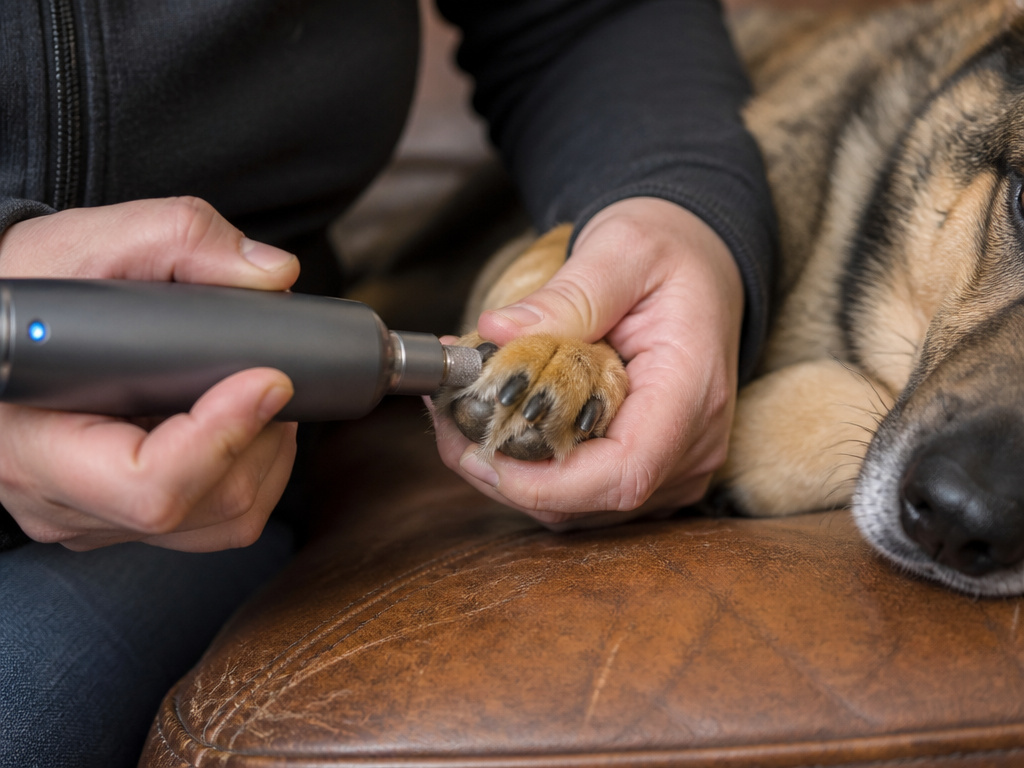
Nail length is the difference between a scuff and a gouge. A blunt nail might leave a whitish surface mark you can buff out. A sharp, uncut nail acts like a stylus, ready to score the finish.
The growth cycle that matters is shorter than you think. Nails get sharp quickly.
Trim every two to three weeks. This is the cadence that prevents the sharp hook from forming. If you hear clicking on your hardwood floors, you’re already behind schedule. Use proper pet nail clippers or a grinder, and aim for just below the quick. If you’re unsure, a groomer can show you the safe length.
This single habit eliminates the majority of deep, repair-intensive scratches. It turns potential punctures into manageable surface marks.
Choosing and Using a Leather Protector
Beyond conditioner, you can apply dedicated protectant sprays. These add a sacrificial layer on top of the leather’s own coating. Think of them as a temporary raincoat.
Not all protectants are equal. For general furniture, look for a spray labeled for leather that mentions stain resistance. Apply it to clean, conditioned leather in a well-ventilated area, following the can’s instructions. Reapplication is key, every three to six months, or after a major cleaning.
Be wary of promises. A protectant won’t make leather bulletproof against a determined scratcher, but it will buy you time against spills and make wiping away muddy prints easier.
For more detailed information on product selection, our guide on pet-specific leather protectors compares the leading sprays and their best use cases.
The Right Way to Clean: What to Use and What to Ban
When an accident happens, your cleaning choice can do more damage than the accident itself. Leather has a finish; harsh chemicals strip it.
Banned List: Vinegar, rubbing alcohol, ammonia, all-purpose household sprays, glass cleaner, and baby wipes. These are too acidic, too alkaline, or too drying. They break down the protective coating, leaving the leather beneath vulnerable.
The Approved Method: Start by blotting up any liquid with a clean, absorbent cloth. Never rub, you’ll drive the stain deeper. For a basic clean, use a damp cloth with plain water. For stickier messes, a pH-balanced leather cleaner is the only tool you should reach for. Apply it to the cloth, not directly onto the leather, and wipe gently.
After cleaning, let the area dry completely. Then, and this is critical, apply a little conditioner to that spot. Cleaning strips oils; conditioning puts them back. If you clean without following up with conditioner, you’ve just accelerated the drying process.
Scratch Repair: From Buffing to Balm
Scratches will happen. Your response depends on their depth. The leather will tell you what it needs.
Surface Scratches (white marks): These are scuffs in the protective coating, not the leather hide. A soft cloth and a drop of conditioner are often enough. Rub the conditioner into the scratch with your finger in a circular motion. The oils can often diminish the mark’s visibility. Buff with a clean part of the cloth.
Deeper Scratches (you can feel a groove): For these, you need a leather scratch repair balm. These are colored, waxy products designed to fill the groove. You must color-match carefully, test on an inconspicuous area first. Apply a tiny amount into the scratch, let it set, then buff smooth. It won’t be invisible, but it will be far less noticeable and protected from dirt accumulation.
For severe damage, a professional leather repair technician is the next step. They can re-dye and refinish sections. This is why the upfront investment in pigmented leather and physical barriers pays off, it keeps you out of the repair zone.
Your Dog’s Habits: Training and Alternatives
The best protection is a dog that doesn’t challenge the system. This isn’t about punishment; it’s about redirection and positive reinforcement.
Train for an “off” command and reward compliance generously. Provide a superior alternative. A high-quality dog bed placed right next to the couch gives your pet a “yes” option that’s comfortable and clearly theirs. Make that space inviting with a favorite blanket or toy.
If your dog is a persistent jumper, a temporary physical deterrent like a lightweight sheet of plexiglass or a strategically placed ottoman can break the habit while training takes hold. Consistency from every family member is the only way this works.
Remember, this is a process of managing a natural material in a living environment. Perfection is impossible, but control is entirely within reach. The right leather, the right barrier, and the right schedule let you and your dog coexist beautifully.
Frequently Asked Questions
What type of leather is most scratch-resistant for dogs?
Pigmented top-grain leather is the most scratch-resistant finish for dog owners. Its protective polymer coating sits atop the leather, causing most scratches to remain on the surface where they can be buffed or conditioned away. Avoid aniline or semi-aniline leathers, as their softer, unfinished surfaces absorb damage.
How often should I condition leather with a dog?
Condition leather furniture every three to four months if you have a dog, especially in dry or heated climates. The standard six-month guideline is for ideal conditions. Dogs add oils and accelerate drying, so a shorter cycle maintains the leather’s flexibility and prevents the micro-cracks that start in dry hide.
Will a blanket protect my leather couch?
Loose blanket offers minimal, unreliable protection. It shifts and exposes the leather to punctures and spills. For real protection, use a cover with a non-slip rubberized backing or a protective slipcover designed to fit your sofa snugly. This physical barrier stays in place and is machine-washable.
Are leather protectant sprays worth it?
Yes, as a supplemental layer for stain resistance. A quality leather protectant spray applied to clean, conditioned leather can help repel liquids and dirt, making clean-ups faster. However, do not rely on it as a sole defense against scratches or punctures. Reapply every three to six months as the coating wears.
What’s the fastest way to ruin leather with a dog?
Combine long, untrimmed nails with the use of harsh cleaners like vinegar or all-purpose sprays. The nails will gouge, and the cleaners will strip the protective finish, leaving the dry hide underneath vulnerable to cracking. It’s a one-two punch that shortens a leather piece’s lifespan dramatically.
The Bottom Line
Protecting leather from dogs is a system built on three proven choices: the leather you buy, the barrier you deploy, and the calendar you keep.
Start with pigmented top-grain leather, it’s the foundation. Layer on a fitted, non-slip cover that doesn’t quit when the dog moves. Then commit to a conditioning schedule dictated by your home’s dryness, not a generic label. Trim nails on a strict two-week cycle to turn potential disasters into manageable scuffs.
Understand that cleaning means leather-specific products only, and that a deep scratch has a repair path, from balm to professional help. The goal is a living material that, with the right guardrails, can weather family life beautifully. The patina you earn will be one of shared space, not regret.
