
How to Store Leather Bags | The One Step Every Owner Skips
This post contains affiliate links. As an Amazon Associate, we earn from qualifying purchases.
To store a leather bag, you need three things: the original dust bag, acid-free tissue paper for stuffing, and a cool, dry shelf away from light. But the step every owner misses is wrapping the hardware in tissue first, zips and clasps left touching the leather will leave permanent, polished dents within a single season.
That’s the mechanical reality. Metal and leather under steady pressure create a chemical imprint, not just a temporary crease. The rest of the process is about managing moisture and shape without introducing new problems.
What follows is the breakdown most guides gloss over: the specific, sometimes counterintuitive rules from brands like Gucci, Longchamp, and Delvaux for bamboo, chains, and exotic skins. You’ll also get the why behind each step, so you know what you’re actually preventing.
Key Takeaways
- Wrap all hardware (zippers, buckles, chain straps) in tissue paper before storage. Unwrapped metal will imprint polished dents into the leather within months.
- Use only acid-free tissue paper for stuffing. Regular paper contains acids that can migrate and cause discoloration, especially on light-colored leathers.
- Never store a bag in a plastic bag or airtight container. Leather needs to breathe; trapped moisture leads to mildew.
- Belts should be hung by the buckle, never coiled. Coiling cracks the edge paint and stresses the leather’s grain.
- The ideal storage temperature is 19–25°C (66–77°F) with stable humidity. Big swings in heat and moisture are what cause leather to dry out, crack, or grow mold.
The 3 Non-Negotiables for Every Leather Bag
Let’s be clear about this. If you do nothing else, get these three things right. They form the foundation that prevents 90% of storage damage.
First, the dust bag. It’s not just a fancy pouch. That flannel or cotton bag is a breathable barrier against dust and light, which are leather’s two silent enemies. Dust grinds into the finish under friction; direct light bleaches color and dries out the oils. Never use a plastic bag. Plastic traps any ambient humidity next to the leather, creating a perfect environment for mildew, you’ll smell it before you see the fuzzy spots.
Second, the stuffing. Empty bags collapse. The leather slouches, creases become permanent folds, and structured shapes are lost. You stuff it to hold that silhouette. But here’s the thing: you must use acid-free tissue paper. The cheap stuff you wrap gifts with contains acids that can transfer to the leather over time, causing yellowing or dark spots. Crumple it loosely to fill the bag’s interior, supporting the walls without stretching them.
Where this goes sideways: Over-stuffing a bag. You’re trying to preserve the shape, not inflate it. Force too much paper inside and you stress the seams and stretch the leather. The bag should look natural, not taut.
Third, the environment. Aim for a consistent, cool, dry place, a closet shelf is ideal. Attics, basements, and garages fail because their temperature and humidity swing wildly. Longchamp’s care guide specifies a preferred range of 19–25°C (66–77°F). When leather gets hot, it loses moisture and oils; when it’s damp, it absorbs water and can mold. Consistency is the goal.
Why Hardware is Your Bag’s Biggest Storage Threat
This is the part nobody mentions. You’ve bagged it, stuffed it, and placed it on the shelf. But if you left the zipper pull resting against the side, or draped a chain strap inside, you’ve already set the damage clock.
Metal hardware, even when plated or polished, is harder than leather. Under the gentle, constant pressure of storage, it doesn’t just leave a crease. It creates a permanent, polished dent. The metal slowly compresses the leather fibers and, through a process called metallic ion migration, can actually alter the leather’s surface chemistry. The result is a shiny, recessed imprint that no amount of conditioning will lift out.
If you are planning to leave your bag in storage for an extended period… You might also like to take the time to wrap hardware such as zips and clasps in tissue paper to avoid them creating any unwanted imprints on your leather. Source: Dylan Kain Care Guide
The fix is simple. Before you stuff the bag with tissue, take an extra sheet and gently wrap any metal components. Zipper pulls, clasps, buckles, and the links of chain straps all get a soft tissue buffer. For detachable straps, especially metal chains, Gucci advises to “bend the chain on itself without forcing the rings” and place it inside the bag, wrapped. This one five-minute step prevents a flaw that is otherwise irreversible.
Material-Specific Storage Rules
Leather isn’t a monolith. A stiff, vegetable-tanned work bag and a slouchy lambskin clutch have different needs. The same goes for the non-leather components that define iconic bags. Here’s where the manufacturer’s specific instructions aren’t just advice, they’re necessary.
| Material or Feature | Storage Rule | Why It Matters |
|---|---|---|
| Bamboo Handles (Gucci) | Place the provided plastic bands around the handle. | Bamboo is a natural wood that can warp or lose its curved shape without support. The bands act as a splint. |
| Chain Straps | Detach, wrap links in tissue, coil loosely inside bag. | Prevents kinks in the chain and stops metal-on-leather imprints. |
| Longchamp Le Pliage® Nylon | Store flat and unfolded. | Folding along the same creases for months can weaken the laminate and cause cracking. |
| Exotic Skins (Crocodile, Python) | Store with extra silica gel packets, avoid all humidity. | Scales are glued, not stitched. Humidity causes lifting (delamination) which is a permanent, costly repair. |
| Suede & Velvet | Store in dust bag, ensure perfect dryness before storing. | These nap-based materials hold moisture and attract dust like a magnet. Any dampness leads to water spots. |
| Belts | Hang by the buckle loop or use a belt hanger. | Coiling cracks the edge paint and can set a permanent curl in the leather. |
For exotic leathers, Roger Vivier is explicit: they are “particularly sensitive to humidity and heat, which can cause permanent detachment of the leather’s scales.” This isn’t scare talk. It’s the outcome of their construction. A dehumidifier cabinet or airtight box with silica gel is a worthwhile investment for these pieces.
Wallets and small leather goods have their own rule. Dylan Kain states plainly: “Wallets should be stored inside the gift boxes provided.” The box protects from crushing and light. If the box is gone, a dedicated drawer or compartment is essential.
The Right Way to Stuff and Shape
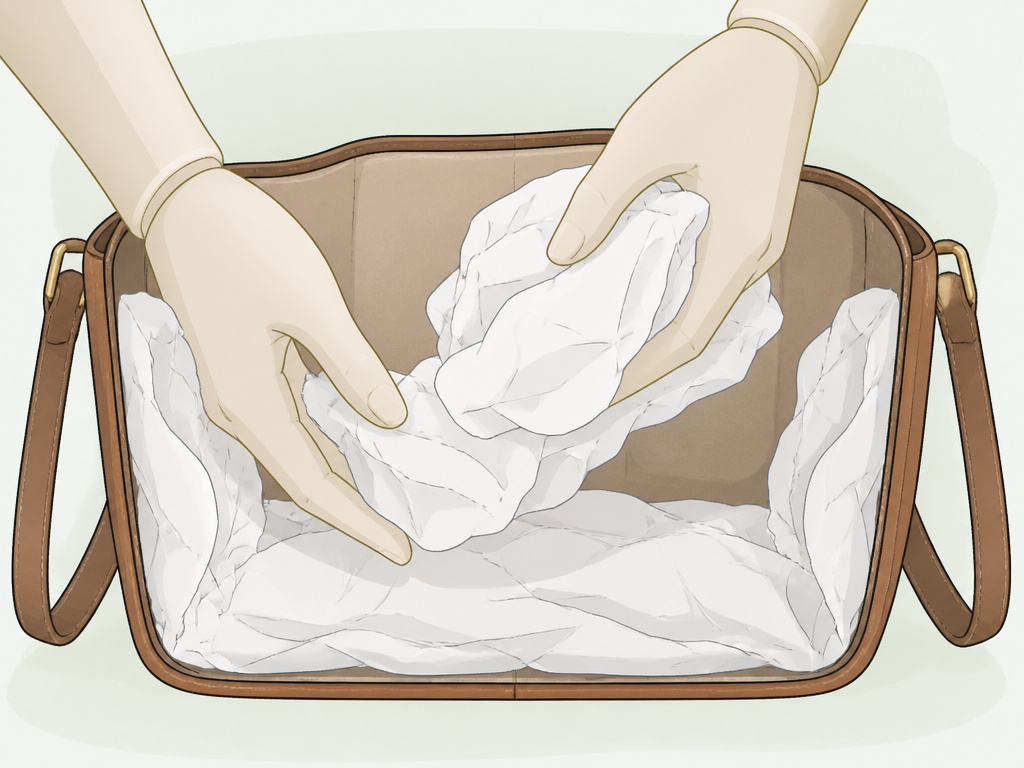 Stuffing seems straightforward. You shove paper in and call it a day. But the goal is structural support, not inflation. How you place the paper determines whether the bag retains its lines or develops weird bulges.
Start by emptying everything. Every receipt, coin, and old mint. Debris left inside can stain or create pressure points. Then, take your acid-free tissue paper and loosely crumple full sheets. Don’t wad them into tight balls.
- Fill the bottom first. Create a base layer that supports the bag’s foundation. For a structured tote or satchel, this keeps the bottom from sagging.
- Support the sides. Gently place crumpled paper against the interior walls to hold them upright. Don’t pack it hard.
- Fill the void. Loosely fill the remaining central space. The bag should look naturally full, not strained.
- Handle care. For bags with two top handles, let them rest down at the sides. Gucci advises using extra tissue to ensure the handles “do not touch the bag’s sides, or have contact with each other.” This prevents the handles from developing a set angle or rubbing color onto the body.
For slouchy bags like hobos or bucket bags, you need less stuffing. You’re just preventing extreme collapse, not maintaining a rigid form. The leather should still have some give.
Common mistake: Using towels or sweaters to stuff bags. Fabrics hold ambient moisture and can transfer dyes. They also don’t provide consistent, malleable support like tissue does.
What About Cleaning Before Storage?
Never store a dirty bag. Dust, oils, and salts from your hands are acidic. Over months of storage, they quietly etch into the leather’s finish. The pre-storage clean is a gentle wipe-down, not a deep conditioning treatment.
Coach’s guidance is a perfect template: “Wipe down the exterior with a soft, dry cloth before storing.” That’s it. For most bags, you don’t need a cleaner. The goal is to remove surface particulates. If you’ve used a dedicated leather conditioner, ensure it is fully absorbed, wait 24 hours, before bagging the item. Trapped, wet conditioner can go rancid.
There is one exception. If you’re storing the bag after winter or a rainy season and there’s any chance of salt or water exposure, you need to act. Delvaux’s instructions are clear: “Should your bag encounter rain, simply dab it gently with a soft, lint-free cloth and allow it to dry naturally, away from any sources of heat.” Force-drying with a heater cracks leather. Let it air-dry at room temperature for a full 48 hours before you even think about putting it in a dust bag.
For those investing in a leather protector spray, apply it after cleaning and before storage, following the same full-absorption rule. The protector needs to cure on a clean, dry surface.
Long-Term vs. Seasonal Storage
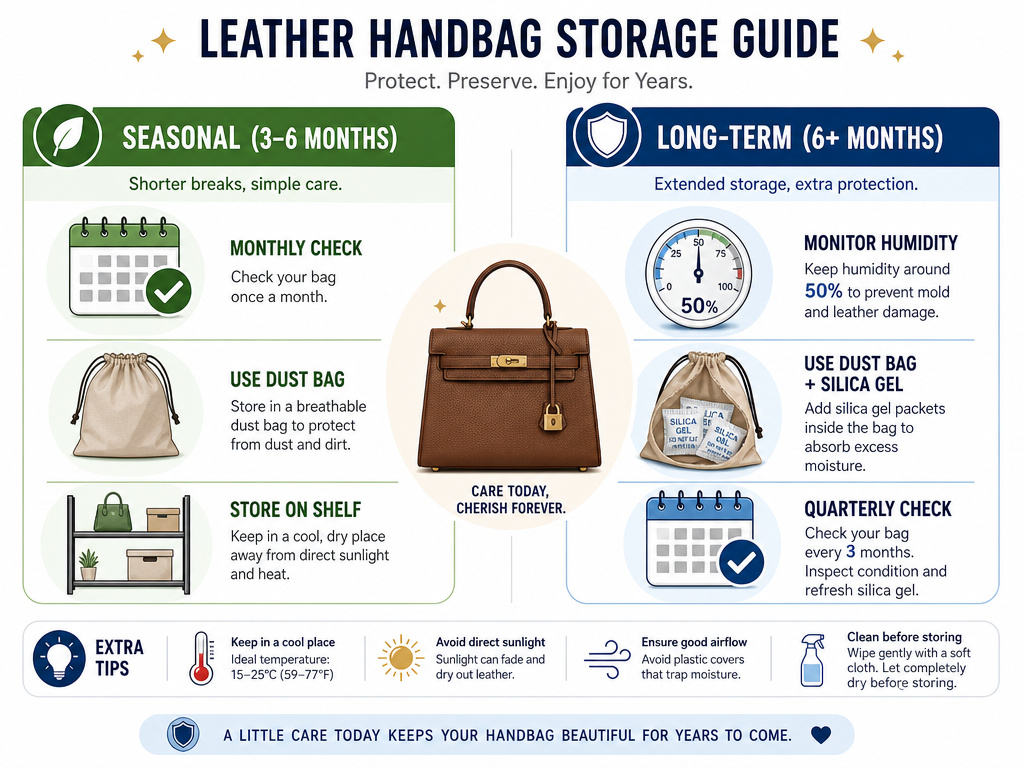 Your approach changes with the timeline. Rotating a bag out for a week is different from storing a summer straw bag all winter.
For seasonal rotation (3-6 months):
Follow the core rules: clean, stuff, bag, shelf. Check once a month for any musty smells. This is the standard rhythm for most collections.
For long-term storage (6+ months):
This is where you go the extra mile. Beyond wrapping hardware, consider these steps: * Climate Control: If possible, use a closet in a climate-controlled part of your home. A portable hygrometer can tell you if humidity stays below 60%. * Silica Gel: Place a few silica gel packets in the dust bag (not touching the leather) to control micro-humidity. Replace them every year. * Inspection: Every three months, un-bag the item. Check for any new creases, feel for suppleness, and air it out for an hour. This brief break prevents any one pressure point from setting permanently.
The biggest mistake in long-term storage is “set and forget.” Leather is a organic material. It reacts to its environment, even in the dark.
Frequently Asked Questions
Should you store leather bags in their original boxes?
It depends on the box. A sturdy, ventilated gift box (like the one for a wallet) is fine. A sealed cardboard shipping box is not, it traps moisture and doesn’t allow the leather to breathe. The dust bag inside a ventilated closet is almost always superior to a box.
How do you store leather bags to prevent mold?
Mold needs moisture, darkness, and stagnant air. Prevent it by ensuring the bag is bone dry before storage, using a breathable dust bag (never plastic), and placing it in a cool, dry, well-ventilated area. Silica gel packets are an added layer of defense. If you smell a musty odor, take the bag out immediately, let it air out fully, and inspect for spots.
Can you hang a leather bag by its straps?
Most manufacturers say no. Coach explicitly warns: “avoid hanging it by the straps as gravity can stretch out the material over time.” The weight of the bag, even empty, places constant tension on the strap attachments and the leather itself, leading to stretching and distortion. Always store bags upright on a shelf.
What is the best thing to stuff a leather bag with?
Acid-free tissue paper is the universal best practice. It’s inert, malleable, and absorbent. Alternatives like bubble wrap or packing peanuts can create odd pressure points and don’t breathe. Old towels or clothes can transfer dyes and hold moisture.
How do you store designer bags with special hardware?
The rule is universal: isolate the hardware from the leather. Wrap chains, clasps, and zipper pulls in tissue paper. For bags with rigid structured handles (like Gucci’s bamboo), use the provided plastic shape-keepers. For delicate embellishments like the sequins or feathers noted by Roger Vivier, ensure the dust bag is roomy so nothing is crushed.
Before You Go
Here’s the straightforward advice I give everyone: storage isn’t about perfection, it’s about avoiding the few big, irreversible errors. If you remember nothing else, remember to wrap the metal parts. That alone will save more bags than any other step.
For your next bag, whether it’s one of the timeless leather tote bags for work or a versatile leather weekend bag for trips, buy it with storage in mind. A well-designed bag from a maker like Saddleback Leather, like those in our guide to quality leather bags, will come with the right dust bag and sometimes even the tissue paper. Use them. They’re not packaging; they’re the first part of the care manual.
