
How to Style a Leather Vest With the Best Layering Rules
This post contains affiliate links. As an Amazon Associate, we earn from qualifying purchases.
To style a leather vest, let it be the single strongest piece in your outfit. Build everything else around it with clean lines and neutral layers. The fit must be snug but allow movement, and the color should anchor your existing wardrobe, black for versatility, brown for warmth.
That rule sounds simple, but most guides miss the mechanical reason it works. A leather vest has a clear visual identity because of its texture, weight, and silhouette. When you pair it with competing patterns, loud accessories, or a jacket that fights for attention, the outfit loses coherence. The vest stops being a statement piece and becomes visual noise.
What follows is a breakdown of that core principle into actionable systems: the three vest types and their specific jobs, a layered approach for every temperature, and the one fitting mistake that ruins the look every time.
Key Takeaways
- Let the leather vest lead your outfit. Pair it with simple, neutral base layers like plain tees, Oxford shirts, or fine-gauge knits. Fit is essential. The vest should sit close at the chest and shoulders without pulling, with enough room underneath for your intended layer.
- Match the vest type to your goal. A biker vest for edge, a Western vest for heritage, a minimal vest for smart-casual versatility.
- Never use direct heat to dry a damp leather vest. It will stiffen and crack. Air dry it naturally, away from radiators or hair dryers.
- For your first vest, choose black cowhide. It’s the most versatile canvas for building outfits across seasons and styles.
The Core Rule for Styling Leather Vests
A leather vest is a strong piece with a clear visual identity. When you try to compete with it, busy patterns underneath, loud accessories alongside it, a jacket on top that fights for attention, the outfit loses its coherence. When you let the vest lead and keep everything else clean and deliberate, it rewards you every time.
This isn’t about minimalism for its own sake. It’s about signal versus noise. The texture of leather, the way it catches light, the structured silhouette of a vest, these are your signals. A graphic tee, a plaid flannel, or a stack of bracelets add noise. One strong signal reads as intention. A signal buried in noise reads as indecision.
Common mistake: Pairing a leather vest with a competing statement piece, like a loud Hawaiian shirt or an ornate denim jacket. The eye doesn’t know where to land, and the vest’s impact gets diluted.
Think of it like applying a hand-rubbed oil finish to wood. You don’t slather on a thick, glossy coat that hides the grain. You work in thin, even layers that enhance the wood’s natural character. Your base layer is that first coat. It should provide a smooth, even foundation that lets the leather’s grain, its texture, its color, its patina, shine through.
Leather Vest Types and Their Jobs
Not all leather vests are the same. The style you choose sets the tone for the entire outfit. Picking the wrong one for your goal is like using a chisel when you need a sanding block, the result is awkward and forced.
| Vest Type | Best For | Key Features | Base Layer Pairing |
|---|---|---|---|
| Biker Vest | Rugged, rebellious looks. Motorcycle culture. | Heavy cowhide, zippers, studs, often asymmetrical zippers. | Plain white or black tee, slim-fit hoodie. |
| Western Vest | Heritage, Americana, or cowboy-inspired outfits. | Often suede or distressed leather, fringe detailing, simpler hardware. | Flannel shirt (untucked), denim shirt, plain tee. |
| Minimal Vest | Smart-casual, streetwear, versatile layering. | Clean silhouette, smooth leather (often lambskin), hidden or no hardware. | Oxford shirt, fine-gauge turtleneck, tailored polo. |
The Biker Vest is your statement of edge. It’s cut from thicker cowhide for durability and often comes loaded with hardware. The mistake here is pairing it with another “tough” item like ripped jeans and a band tee. That’s costume territory. Instead, let the vest carry all the aggression. Wear it over a fitted, plain crewneck sweatshirt and dark, straight-leg jeans. The contrast between the soft knit and the hard leather makes both pieces look more intentional.
The Western Vest trades rebellion for heritage. Materials matter here. A suede vest brings a softer, earthier vibe, while a distressed brown leather one feels more utilitarian. Fringe adds movement, but it’s a commitment, start without it. The key to avoiding a costume look is restraint. Pair a brown suede vest with a heather grey flannel shirt, left untucked, and raw denim. Skip the cowboy boots unless you’re committed to the full theme; clean work boots often bridge the gap better.
The Minimal Vest is the workhorse. With its clean lines and lack of adornment, it’s the easiest to integrate into a modern wardrobe. This is the vest you can wear over an untucked Oxford shirt with chinos and loafers for a smart-casual look that beats a blazer for interest. Brands like AllSaints and Falcon Garments excel here, using softer lambskin that drapes well and breaks in quickly.
Getting the Fit Right (And What Happens If You Don’t)
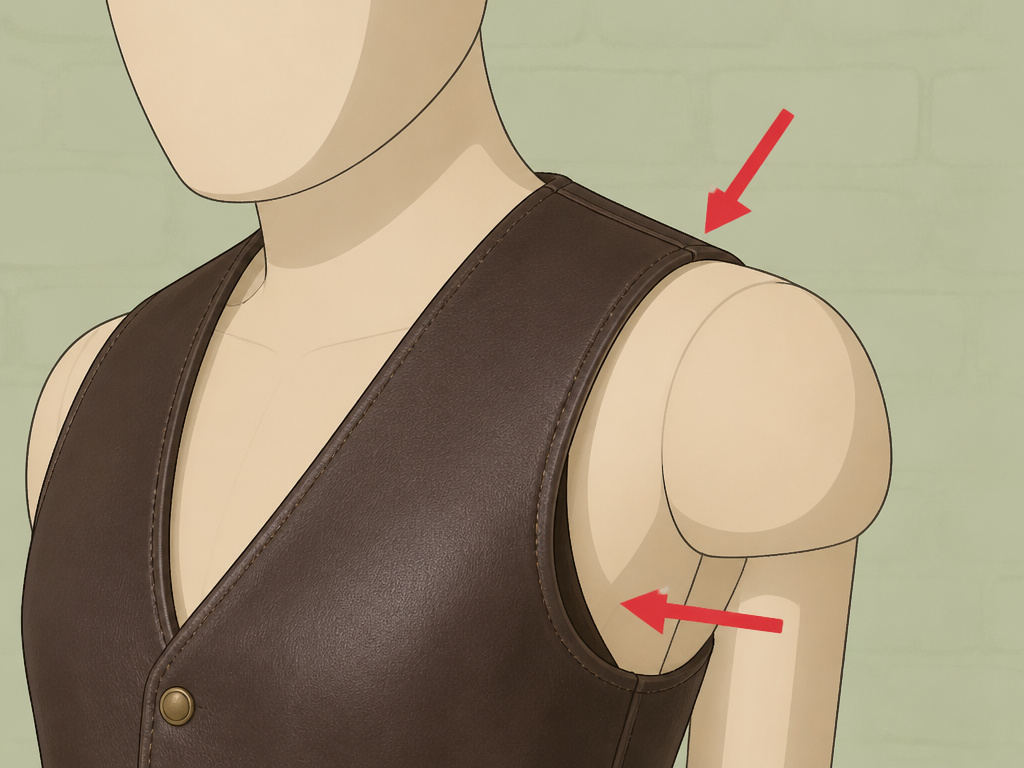
Fit is the foundation. A leather vest that’s too big becomes a shapeless sack. One that’s too small pulls across the back and restricts movement. You’re aiming for a sweet spot: snug but not tight.
Here’s how to check a vest’s fit before you buy or wear it: 1. Shoulder Seam: It should sit right at the edge of your shoulder bone. If it droops down your arm, it’s too big. 2. Chest: Button or zip it up. You should be able to take a deep breath without feeling constricted. There should be no pulling across the chest or back. 3. Length: For most styles, the hem should hit at your waist or just below. Longer, tunic-length vests are a specific look and harder to layer. 4. Armholes: They should be high enough that you don’t see a lot of your shirt underneath, but not so high they cut into your armpit when you reach forward.
The consequence of a bad fit is immediate and physical. A too-tight vest will pull at the seams when you move your arms, straining the stitching. Over time, this stress can cause the threads to snap. A too-loose vest loses its defining silhouette and just looks sloppy. It also won’t layer properly under a coat if needed.
I learned the fit lesson the hard way with a jacket, not a vest. I bought one a size too small, thinking it would stretch. It didn’t. After three months, the constant tension from reaching caused a seam under the arm to split. A simple repair, but a permanent reminder that leather needs room to work with you.
A Layering System for Every Season
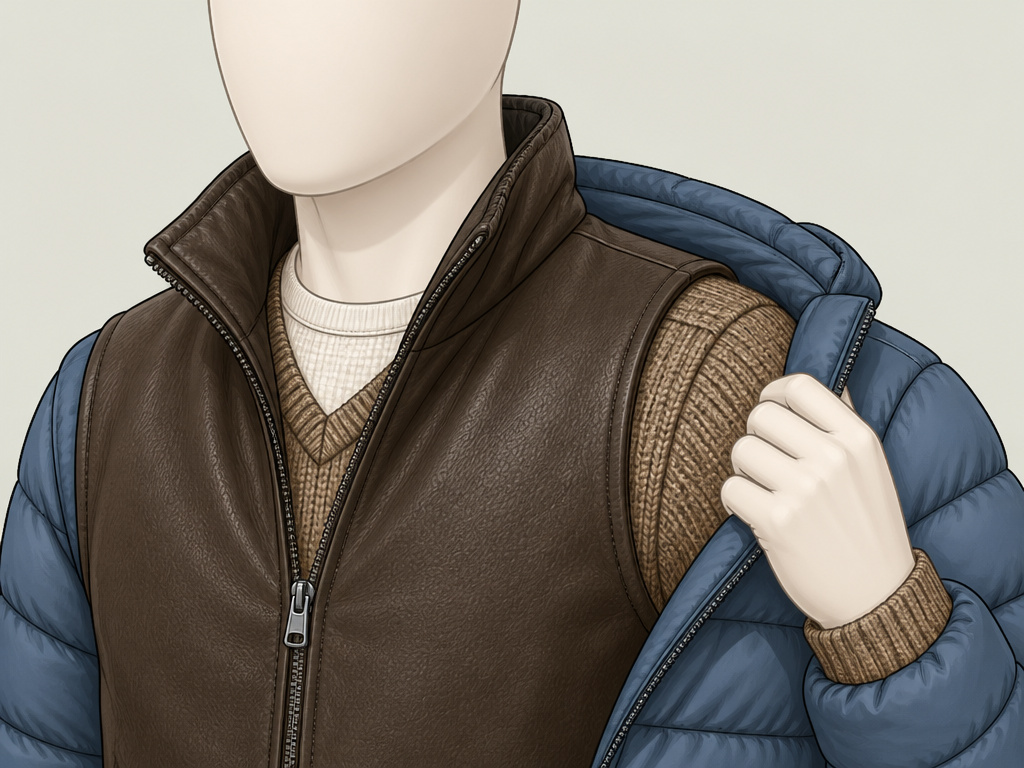
The sleeveless design of a leather vest makes it a uniquely flexible layering piece. Your strategy changes with the temperature, but the principle stays the same: the vest is your outer shell or your insulating middle layer, never both.
For Warm Weather (Spring/Summer):
Your goal is breathability. A lightweight, unlined lambskin vest is ideal. * Base Layer: A lightweight, breathable cotton tee or a linen shirt. * Vest: Leave it open. This creates vertical lines that elongate your torso. * Bottoms: Tailored shorts or lightweight denim. * Why it works: The vest adds structure and texture without the heat-trapping bulk of sleeves. The open front allows maximum airflow.
For Cool Weather (Fall):
This is the vest’s prime time. Use it as a light outer layer. * Base Layer: A long-sleeve tee, a flannel shirt, or a thin sweater. * Vest: Zipped or buttoned about halfway. * Bottoms: Dark denim or corduroy trousers. * Why it works: The vest provides core warmth and wind resistance while leaving your arms free for movement. It’s the perfect weight for fluctuating fall temperatures.
For Cold Weather (Winter):
Here, the vest shifts to a mid-layer role. It is not a replacement for a coat. * Base Layer: A moisture-wicking thermal top. * Middle Layer: A wool sweater or a fitted hoodie. * Vest: Worn over the middle layer for added torso insulation and windbreak. * Outer Layer (Essential): A weatherproof insulated coat worn over everything. * Why it works: This system traps heat efficiently. The vest adds a wind-resistant, insulating layer at your core without adding bulk to your shoulders, so your outer coat fits better. For extreme cold, a shearling-lined vest is extremely effective, but remember: your arms are still exposed.
What to Wear Underneath: The Base Layer Guide
The layer directly under your vest determines the outfit’s register. Get this wrong, and the whole composition falls apart.
- The White or Black Tee: The universal standard. It provides a clean, neutral canvas. Opt for a fitted, high-quality tee without logos. A baggy or faded tee drags the look down.
- The Oxford Shirt: This is your ticket to smart-casual. Leave it untucked. The collar adds structure without formality, and the fabric contrasts nicely with the leather’s texture.
- The Hoodie: A modern, practical choice for cold weather. The hoodie must be slim-fit. A bulky hoodie will make the vest puff out awkwardly. Stick to neutral tones like grey, black, or olive.
- The Flannel Shirt: Perfect for a rugged, heritage look. Choose a subdued pattern (like a classic tartan) and, again, leave it untucked. Tucking a flannel under a leather vest looks costumed.
- The Turtleneck: For a sleek, modern winter look. A fine-gauge merino wool turtleneck under a minimal black vest is a powerful combination. It’s warm, sophisticated, and all about texture.
The thread connecting these options is simplicity. Pattern, texture, and color should come primarily from the vest itself. Your base layer is the supporting actor, not the star.
Navigating Colors and Materials
Your first vest color is a long-term decision. The material dictates its care and situational limits.
Black Cowhide: This is the default choice for a reason. It pairs with any other color in your wardrobe, from bright white to charcoal grey. It reads as edgy with a tee and jeans, but can be refined over an Oxford shirt. A black vest is the most versatile canvas you can own.
Brown Leather (Tan to Chocolate): Brown brings warmth and a more rustic, heritage feel. It pairs naturally with other earth tones, olive, cream, navy. It’s less aggressive than black, making it slightly easier to dress up. However, it can clash with certain blacks or very cool greys, so mind your palette.
Suede: Softer and more tactile than smooth leather, suede has a casual, luxurious feel. Here’s the critical warning: suede and wet weather are enemies. Water will spot and stain suede, and road salt can leave permanent marks. Reserve your suede vest for dry days. If you’re drawn to the look but live in a damp climate, consider a waxed suede or a suede-protector spray, though that changes the nap.
Shearling: This is a functional choice for warmth. A shearling vest, with its wool lining and leather or suede shell, is incredibly warm for its weight. It’s a standalone statement best suited for casual, cold-weather outfits. You won’t layer much over it.
The Practical Care That Preserves Your Look
A well-styled vest is useless if it’s cracked, stiff, or mildewed. Leather care is simple but non-negotiable.
- Conditioning (Every 3-6 months): Use a dedicated leather conditioner (not a multi-purpose “protector”). Apply a small amount to a soft cloth and work it into the leather in circular motions. Let it absorb fully, usually 15-20 minutes, before wearing. This replenishes the natural oils that keep leather supple.
- Drying (If it Gets Wet): Never use direct heat. Don’t put it near a radiator, fireplace, or use a hair dryer. The rapid drying will cause the leather fibers to contract and crack. Instead, wipe off excess moisture with a dry cloth and let it air dry at room temperature, away from direct sunlight. Stuff the vest with crumpled paper to help it hold its shape as it dries.
- Storage: Always store on a wide, padded hanger. Never fold it for long periods, as this will create permanent creases. Never use plastic garment bags, as they trap moisture and can lead to mildew. A cotton garment bag or simply hanging it in a closet is fine.
Where this goes sideways: Using silicone-based “conditioners” or waterproofing sprays not meant for leather garments. They can clog the leather’s pores, preventing it from breathing and leading to premature drying and cracking underneath the shiny surface.
Frequently Asked Questions
Can you wear a leather vest in summer?
Yes. Choose a lightweight, unlined vest in lambskin or a thin cowhide. Wear it open over a breathable base layer like a cotton tee or linen shirt. Avoid shearling or thickly lined styles.
Is a leather vest smart-casual?
Absolutely. The key is the vest style (minimal, with little to no hardware) and the base layer (an untucked Oxford shirt or a fine-gauge turtleneck). Pair it with chinos and loafers or clean boots.
How should a leather vest fit?
Snug but not tight. The shoulder seams should sit at the edge of your shoulders. You should be able to move your arms freely without significant pulling across the chest or back, and there should be enough room to comfortably wear your intended base layer underneath.
Black or brown leather vest, which should I choose first?
If this is your first leather vest and you want maximum versatility, choose black. It integrates into more outfits with less thought. Choose brown if your wardrobe already leans toward earth tones, heritage, or Western-inspired looks.
Can you wear a vest over a leather jacket?
You can, but it’s a very specific, layered look that requires both pieces to be relatively slim-fitting. It often works better with a vest over a denim jacket or a lightweight hoodie. Over a bulky winter coat, it usually looks and feels restrictive.
How do I revive a stiff leather vest?
Stiffness is often due to dried-out oils. For severe stiffness, you may need two applications spaced a week apart. Never try to mechanically “break in” a stiff vest by forcing it, you risk tearing the seams.
Before You Go
The most common barrier to wearing a leather vest isn’t style, it’s overthinking. People treat it like a costume piece when it’s actually one of the most practical layers you can own.
So here’s your first step this week: dig out your simplest, best-fitting pair of dark jeans and a plain white tee. If you own a leather vest, put it on over that. Look in the mirror. That’s your foundation. Everything else, adding a flannel, switching to an Oxford shirt, layering a hoodie underneath, is just building on a base that already works.
If you don’t own a vest yet and are looking, let me share what I’ve learned. Start with a black, minimal-style vest in cowhide from a brand like Diesel or Falcon Garments. It’s the single most adaptable entry point. Avoid the “bargain” fast-fashion versions; the leather will be thin and the construction weak. This is a timeless material, so invest in something that will develop a patina alongside your own style, not fall apart after one season.
