
Learn How to Use Saddle Soap to Clean and Preserve Leather
This post contains affiliate links. As an Amazon Associate, we earn from qualifying purchases.
You use saddle soap to clean leather saddles and tack, particularly those exposed to sweat, dirt, and rain. Scrub with a plastic-bristle brush and glycerin-based soap, rinse lightly with water, and dry thoroughly before conditioning within five days, skipping the conditioner leaves the leather dry, brittle, and prone to cracking.
That “dry thoroughly” step is not optional. Clean leather loses its natural oils, and if you don’t replace them, the fibers tighten and shrink. Passier saddles, for instance, need their Lederbalsam within five days of a soap clean. Wait longer, and the leather starts to lose its supple hand-feel.
What follows is a breakdown of why saddle soap works, a step-by-step guide that names the tools, the three biggest mistakes that ruin saddles, and what to do after the soap comes off. This is based on manufacturer guidelines and university extension research, not marketing copy.
Key Takeaways
- Saddle soap is a cleaner, not a conditioner; you must apply a separate balm or oil after the leather dries to prevent drying and cracking.
- Use a plastic-bristle brush and glycerin-based soap, and never submerge the saddle, a low-pressure water rinse is safe.
- Condition within the timeframe specified by your saddle’s maker (often 3-5 days after cleaning) to maintain leather suppleness.
- In humid environments, avoid over-oiling and consider blended oils over pure neatsfoot to prevent mildew.
- For antique leather, apply conditioner before it is bone-dry to discourage excessive cracking.
What Saddle Soap Actually Does (And Doesn’t Do)
Saddle soap is a glycerin-based cleaner formulated to lift dirt, sweat, and grime from the surface of leather without stripping its core structure. The glycerin acts as a gentle surfactant. It doesn’t penetrate deeply to nourish or condition. Think of it like using a pH-neutral soap on your skin, it cleans without destroying the protective barrier.
Leather, by its tanned nature, retains about 25% moisture content. Sweat, from both horse and rider, is acidic and actively draws that moisture out. Cleaning with saddle soap removes the acidic residue, but it also lifts surface oils. If you stop there, the leather is left vulnerable, its fibers ready to tighten and crack.
This is why every saddlemaker’s care guide insists on a two-step process: clean, then condition. The University of Florida IFAS extension service is blunt in its official saddle soap guide: cleaning and conditioning are separate, essential acts. The conditioner’s job is to replace the oils that keep the leather’s 25% moisture content stable.
The Right Tools for the Job
You need more than a rag and a tin of soap. Using the wrong brush creates micro-scratches; using too much water risks the saddle’s internal structure.
A plastic-bristle brush is non-negotiable. The UF/IFAS guide recommends one with bristles stiff enough to clean your fingernails. Natural boar bristles or metal brushes can be too abrasive for finished leather. A dedicated tack sponge or soft cloth works for applying soap, but the brush does the scrubbing.
Glycerin saddle soap is the standard. Many brands offer it in a paste or liquid form. The glycerin provides mild cleaning and a slight, temporary sheen, but again, it is not a conditioner. Avoid any product marketed as a “cleaner-conditioner” for serious tack maintenance; it likely does neither job well.
Low-pressure water access is useful. The same extension guide says not to be afraid to use a water hose on light pressure to rinse away soap and dirt. The key is light pressure and never submerging the saddle. The saddle tree, the wooden or synthetic frame inside, can be damaged if soaked.
How to Apply Saddle Soap Step-by-Step
This process is for a western or English saddle. Bridles and other tack follow the same principles, just on a smaller scale.
-
Disassemble and Dry Brush. Remove the stirrup leathers, girth, and any removable parts. Use a dry, stiff brush to knock off caked-on mud and dirt. This prevents you from grinding grit into the leather during the wet wash.
-
Create a Lather. Dampen your sponge or brush with warm water and work it into the saddle soap tin or bottle to create a rich lather. You want a damp, soapy brush, not a dripping one.
-
Scrub in Sections. Work on one area at a time: the seat, the flaps (inside and out), the billets, and the rigging. Scrub with the plastic brush using circular motions, paying extra attention to the back of fenders, the tops of stirrup leathers, and the back of riggings. These high-friction areas trap sweat and dirt.
-
Rinse Lightly. Use a damp sponge with clean water or a hose on a very light shower setting to rinse the soap away. Wipe firmly with the sponge to lift the soap and dirt. The goal is to remove the cleaner, not to soak the leather.
-
Dry Thoroughly. Wipe the saddle down with a clean, absorbent towel. Then, let it air-dry naturally, away from direct heat or sunlight. A fan can help circulate air. This is critical, applying conditioner to damp leather traps moisture against the fibers and can promote mildew.
-
Condition. Once completely dry, apply your chosen leather conditioner or balm with a clean, soft cloth or brush. A thin, even coat is sufficient. Let it absorb, then buff off any excess with a wool cloth.
| Step | Tool | Critical Detail | Risk If Skipped |
|---|---|---|---|
| Scrubbing | Plastic-bristle brush | Focus on high-wear areas (stirrup leather contact points) | Dirt and sweat remain, accelerating leather breakdown. |
| Rinsing | Damp sponge / light hose | Do not submerge; avoid saturating stitching. | Soap residue attracts dirt, can stiffen leather. |
| Drying | Absorbent towel, air flow | Ensure underside and billet straps are dry. | Trapped moisture leads to mildew, leather warping. |
| Conditioning | Soft cloth, dedicated conditioner | Apply within 3-5 days of cleaning (per Passier). | Leather dries out, loses suppleness, cracks within months. |
What Comes After the Soap: Conditioner Choices
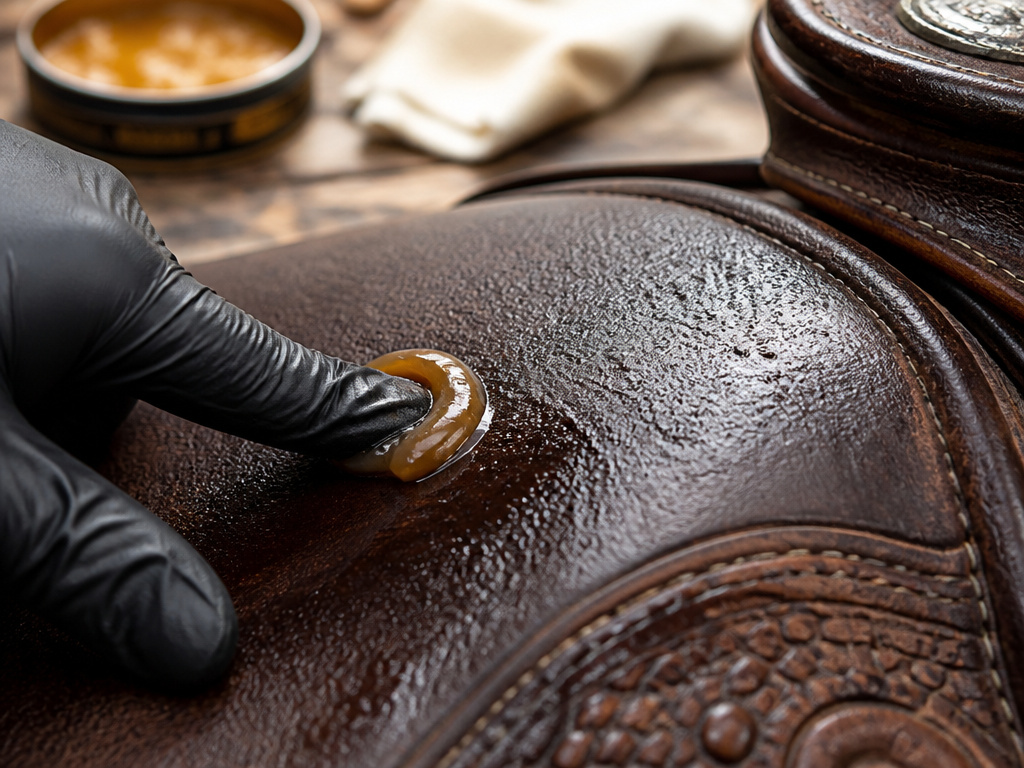 The conditioner you choose depends on your saddle’s use, your climate, and the desired finish. This is where you match the product to the problem.
For daily work saddles in humid climates, a blended oil like Tee See is often recommended over pure neatsfoot oil. The UF/IFAS notes pure neatsfoot can mildew more readily and leave residue on clothing. Blended oils penetrate well but are less prone to promoting mold.
For light-oil show saddles that you want to keep a light color, an oil that doesn’t darken, like Lexol-NF Leather Dressing, is the pick. Some saddlemakers use Tan-Kote for a protective shine. The key is minimal, careful conditioning, over-oiling darkens the leather permanently.
For general maintenance, a wax-based dressing like Bates Leather Balsam is common. Bates specifies applying it heavily in high-wear areas after every 20,000 rubs of a stirrup leather for the first 125,000 rubs. It penetrates and leaves a protective barrier.
Common mistake: Using a wax-based polish on a saddle flap or hunting boot. Wax is for weatherproofing and shine on stiff footwear, not for flexible areas that need to breathe. It creates a sticky film that attracts dirt and cracks with movement.
My default choice for reviving dry, stiff vegetable-tanned leather is pure neatsfoot oil, used sparingly. For regular upkeep on a saddle with a full-grain leather construction, I reach for a product like Obenauf’s Leather Oil or Bickmore Bick 4. They absorb without greasiness.
Common Saddle Soap Mistakes to Avoid
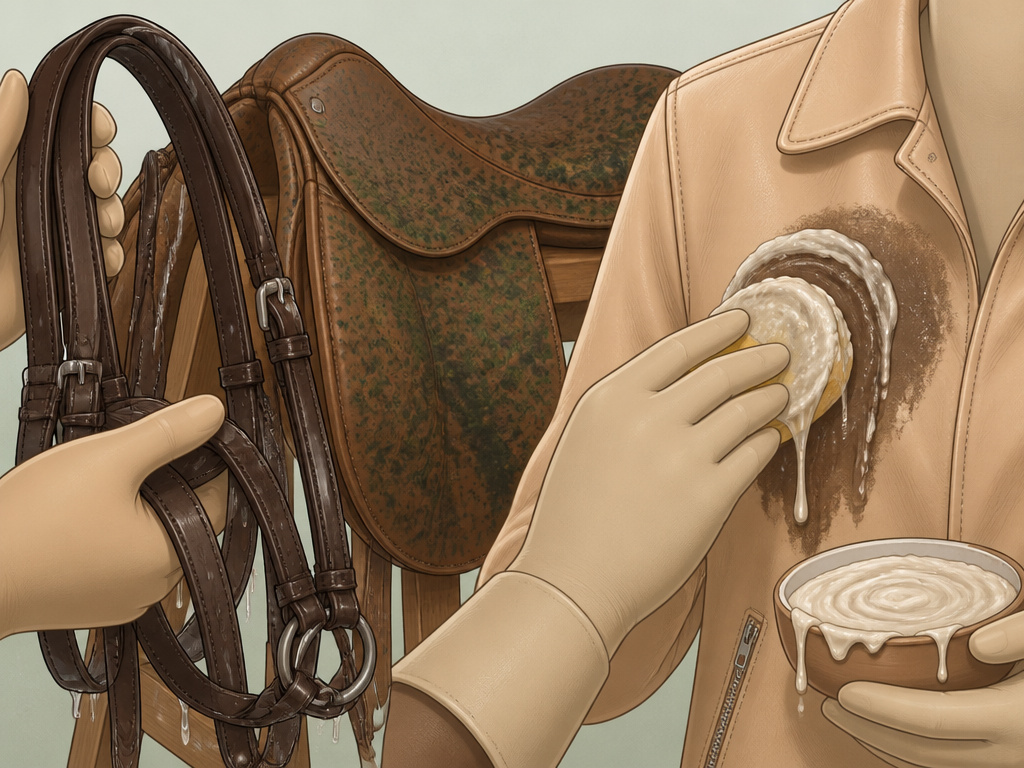 These aren’t minor slip-ups. They directly shorten the life of your gear.
Letting leather stay wet. After rinsing, you must dry the saddle completely. Hang bridles so air circulates around them. A saddle left damp in a closed tack room is a mold farm. The UF/IFAS guide suggests using a dehumidifier in humid climates for storage.
Conditioning too late. Passier says to apply their Lederbalsam within five days of cleaning. Leather starts losing flexibility the moment the soap’s residue is gone. Waiting weeks between cleaning and conditioning is like washing your face with soap and never using moisturizer.
Over-oiling. “The goal is to add life back to the leather but not to saturate the leather fibers,” states the extension guide. One to two thin coats is enough. Saturated leather becomes heavy, can mildew, and the oils can break down the fibers themselves. You’ll see dark, greasy patches that never fully absorb.
Using saddle soap on inappropriate leathers. This soap is for saddles, heavy work boots, and tack, items built for hard use. Using it on a delicate aniline leather jacket or a vintage bag is overkill. It will dry out the leather and strip its natural patina. For those, use a dedicated leather cleaner formulated for finished, garment-grade hides.
Special Cases: Antiques, Humid Climates, and Sweat
The standard rules bend under specific pressures.
Antique leather is more porous. The UF/IFAS guide for tack in hot, humid environments makes a specific exception: very old leather should not be allowed to completely dry before being oiled. Allowing it to become bone-dry encourages severe cracking. Apply conditioner while it’s still slightly damp to the touch.
Hot, humid environments demand a different approach. Sweat is a bigger enemy, and storage is half the battle. The extension service recommends keeping tack as clean as practical, maybe even a daily wipe-down, and storing it in a room with a dehumidifier or air conditioner. Choose conditioners wisely, blended oils over pure neatsfoot.
Modern riding wear makes the problem worse. Passier points out that functional fabrics wick moisture directly from the rider into the saddle leather, speeding up the drying and brittleness process. If you ride in technical fabrics, your conditioning schedule needs to be more frequent, not less.
Frequently Asked Questions
Can I use saddle soap on leather boots or jackets?
You can, but you probably shouldn’t. Saddle soap is formulated for thick, rugged, unfinished leathers like those in saddles. Using it on finer, finished leathers (like most boots and all jackets) can strip away dyes and finishes, leaving the leather dull and dry. For those items, use a product specifically labeled for leather garments or dress shoes.
How often should I clean my saddle with saddle soap?
It depends on use. A saddle used multiple times a week in all weather needs a thorough soap cleaning every 4-6 weeks. A show saddle used only occasionally might only need it once or twice a season. The better rule is to condition regularly (per your manufacturer’s interval, like Bates’ 20,000-rub rule) and use soap only when the leather is visibly dirty or feels grimy.
What’s the difference between neatsfoot oil and a leather conditioner?
Neatsfoot oil is a pure, penetrating oil derived from animal bones. It’s excellent for reviving very dry, thirsty leather but will darken it. A commercial leather conditioner is often a blend of oils, waxes, and sometimes lanolin or other ingredients. It’s designed for maintenance, to nourish and protect without as much darkening. Conditioners are usually better for regular upkeep; pure oil is a rescue treatment.
Can I use olive oil or vegetable oil to condition my saddle?
Avoid corn and vegetable oils, as the UF/IFAS guide states they can become rancid and promote mold growth. Extra virgin olive oil is sometimes used by saddlemakers, it penetrates but doesn’t condition or soften as well as neatsfoot or blended oils. It’s a last-resort option, not a best practice.
Why did my saddle get stiff after using saddle soap?
You almost certainly didn’t condition it afterward, or you waited too long. Saddle soap cleans by suspending dirt and sweat in its lather and lifting them away, which takes some of the leather’s natural oils with it. If you don’t replace those oils with a conditioner, the leather fibers lose their lubrication and bind together, creating stiffness. Always condition after cleaning, while the leather is dry.
The Bottom Line
Saddle soap is a simple tool with a specific job: clean the grime so your conditioner can work. The magic isn’t in the soap; it’s in the system. Scrub with the right brush, rinse without drowning, dry completely, and follow up with the right conditioner for your saddle and climate within a few days.
If you remember one rule from the University of Florida saddle care research, let it be this: never let cleaning be the last step. The conditioner is what keeps the leather alive. Treat your saddle to a balm like Passier Lederbalsam or Bates Leather Balsam as soon as it’s dry. That’s what keeps a good saddle working for a lifetime.
