
Leather Cleaner vs. Conditioner: What Happens If You Swap?
This post contains affiliate links. As an Amazon Associate, we earn from qualifying purchases.
Leather cleaner removes surface and embedded soil; leather conditioner replaces lost oils and fatliquors to maintain suppleness. Using one without the other, or swapping them, clogs pores, attracts dirt, and accelerates cracking. Cleaner is an alkaline or pH-balanced lifting agent; conditioner is an acidic or neutral replenishing oil.
Let me share what I’ve learned about why that distinction matters. The chemistry isn’t academic, it’s the difference between leather that lasts a decade and leather that looks tired in a year. A cleaner lifts grime; a conditioner restores what cleaning takes out.
What follows: a breakdown of the specific pH values and chemical actions, the real-world products that do each job correctly, and the three-step sequence that keeps leather from drying out or turning gummy. I’ll break down the details for you.
Key Takeaways
- Cleaner is a lifting agent, conditioner is a replenishing agent. Swapping them is like using soap as lotion, it strips the leather’s natural oils without replacing them.
- pH matters. Quality leather cleaners like Leather Doctor Super 4.9 operate at pH 4.9 to break down body soils; conditioners like Leather Doctor Conditioner B sit around pH 3.2 to seal and protect without clogging.
- Silicone is a shortcut with a cost. Silicone-based “cleaner-conditioners” create a superficial shine but repel future conditioning, leading to long-term dryness beneath the surface.
- Over-conditioning is a real problem. Applying conditioner to dirty leather traps grime in the grain, creating a greasy, abrasive paste that accelerates wear. The order is essential: Clean thoroughly, let dry completely, then condition. Skipping the dry time lets water trap oil on the surface, resulting in a sticky film.
The Core Technical Difference
The split starts at the molecular level. A cleaner’s job is to break the bond between the leather’s surface and the dirt, oil, or salt sitting on it. A conditioner’s job is to bind with the leather’s fiber structure to replace the natural fats (fatliquors) that evaporate or get washed away over time.
Leather Doctor® specifies their Leather Super Cleaner 4.9 operates at pH 4.9 for “heavily soiled body-contact areas,” while their follow-up Conditioner B uses a pH 3.2 formula for a “rub-resistant finish.” The cleaner’s mild alkalinity helps emulsify oils; the conditioner’s mild acidity helps it bond to the leather’s protein fibers.
Think of it like washing your hands. Soap (cleaner) lifts the dirt and grease. Hand cream (conditioner) puts back the moisture the soap stripped away. If you only ever use soap, your skin cracks. If you slather cream on filthy hands, you just make a greasy mud pie.
Where this goes sideways: Using a silicone-laden “cleaner & conditioner” combo. It seems efficient. The silicone creates an immediate gloss by filling surface scratches, and it repels water. The problem is, it also repels any future, genuine conditioning oils. The leather underneath continues to dry out and stiffen, but you won’t feel it until the silicone layer eventually wears off and reveals a brittle, cracked surface. That process can take 6 to 12 months on a frequently used car seat.
The Cleaner Deep Dive
Not all cleaners are simple soap. The best ones, like the award-winning LRC1 Leather Cleaner or Furniture Clinic Leather Ultra Clean, are water-based and designed to foam. The foam is the active mechanism, it gets down into the grain, surrounds the dirt particles, and lifts them to the surface where they can be wiped away. Solvent-based cleaners, by contrast, can strip dyes and dry out the leather by dissolving its natural oils along with the grime.
A high-quality leather cleaner is inert on clean leather. If you apply it to a perfectly clean spot, you should see foam, but when you wipe it away, the leather’s color and texture shouldn’t change. If a “cleaner” consistently darkens leather or leaves a residue, it’s either too harsh or it contains oils it shouldn’t.
When a Cleaner Is Also a Bad Idea
Cleaning is not a daily or weekly ritual. Over-cleaning is as damaging as never cleaning. Every wet cleaning event, even with a perfect product, removes a tiny amount of the leather’s fatliquors.
Common mistake: Reaching for the cleaner to address a shine. High-wear areas on leather sofas or car seats often develop a polished, shiny look. That’s not dirt, it’s burnished, compacted leather fibers. Scrubbing with cleaner just abrades the surface further. For shine, you need a very light abrasive cream or a specific leather “deglazer,” not a cleaner.
Here’s a straightforward guide on cleaner frequency based on use: | Leather Item | Cleaning Frequency | Sign It’s Time | |—————————|——————————|————————————————| | Daily-wear car seats | Every 1-2 months | Visible grime on bolsters, surface feels gritty | | Living room sofa | Every 3-4 months | Color looks dull, armrests darken | | Leather jacket/bag | 1-2 times per season | Surface loses its matte feel, looks “tired” | | Heavy-work boots | After heavy exposure | Caked mud, salt stains, or deep grease marks |
The Conditioner Reality Check
Conditioner is preventative maintenance, not a rescue operation. Its role is to keep the leather fibers supple by replenishing the oils that keep them from rubbing together and breaking. A well-conditioned piece feels subtly softer, more pliable, and resists cracking under stress.
The leather will tell you what it needs. A simple pinch test works: gently pinch a fold of leather (like on the back of a sofa cushion). If the leather feels stiff, resists the fold, and shows fine white lines along the crease, it’s thirsty. If it folds easily and the crease disappears when you let go, it’s still hydrated.
The Mink Oil Misconception
I need to be clear about one thing: mink oil is a terrible general-purpose conditioner. Yes, it’s a fantastic waterproofer for rugged, thick vegetable-tanned work boots. But for a sofa, jacket, or car seat, it’s a disaster waiting to happen. Mink oil darkens leather dramatically, can turn rancid over time, and its heavy, sticky nature attracts and holds dirt. You end up with a dark, greasy patch that collects lint and dust.
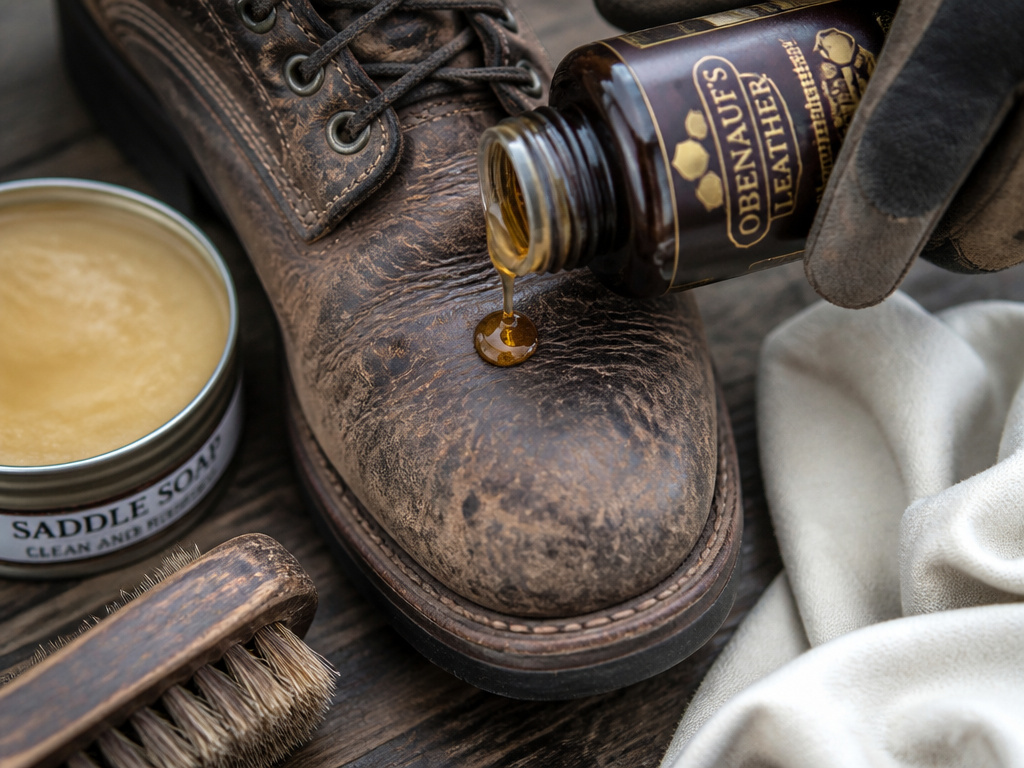
For most fine leathers, you want a lighter, modern formulation. Bickmore Bick 4 is a benchmark because it’s non-darkening and absorbs completely. Chamberlain’s Leather Milk is another excellent choice for its blend of natural oils and waxes. For the driest, thickest work leathers, a pure oil like Obenauf’s Leather Oil penetrates deeply.
I learned this the hard way with a vintage leather bag. A well-meaning owner had treated it with mink oil for years. The leather was supple, but it was also permanently, unevenly darkened and had a faintly sour smell in the seams. Restoring it meant a full strip-down with a degreaser before we could even start proper conditioning, a multi-day job that could have been avoided.
The Head-to-Head: Product-Level Decisions
You don’t pick a cleaner and conditioner in a vacuum. The best choice is a matched pair for your specific leather type and its specific job. A two-tone aniline sofa needs a gentler approach than black, pigmented car seats.
Here’s a breakdown of which combination wins for common scenarios:
| Use Case | Cleaner Winner | Conditioner Winner | Why This Pair Works |
|---|---|---|---|
| Light-colored aniline sofa | Furniture Clinic Leather Cleaner | Bickmore Bick 4 | The cleaner is water-based, non-darkening, and ideal for light leathers. Bick 4 conditions without altering the delicate dye. |
| Black pigmented car seats | LRC1 Leather Cleaner | Leather Doctor Conditioner B | LRC1’s powerful foam lifts embedded body oils from headrests. Conditioner B’s pH 3.2 formula seals and resists friction from entering/exiting. |
| Dry, cracked work boots | Saddle soap (heavy duty) | Obenauf’s Leather Oil | Saddle soap cuts through heavy grime and salt. Obenauf’s oil penetrates thick, dry leather to rehydrate from the inside out. |
| Suede or nubuck jacket | Specialist suede cleaner brush | Spray-on suede conditioner | Brushing lifts dirt without wetting. Spray conditioner restores water-repellency without altering the nap. |
The part nobody mentions: The bottle size. A 500ml bottle of Lexol leather cleaner will last the average homeowner years for furniture care. You’ll use conditioner more often. Don’t buy a gallon of cleaner unless you’re a professional detailer.
The Non-Negotiable Three-Step Sequence
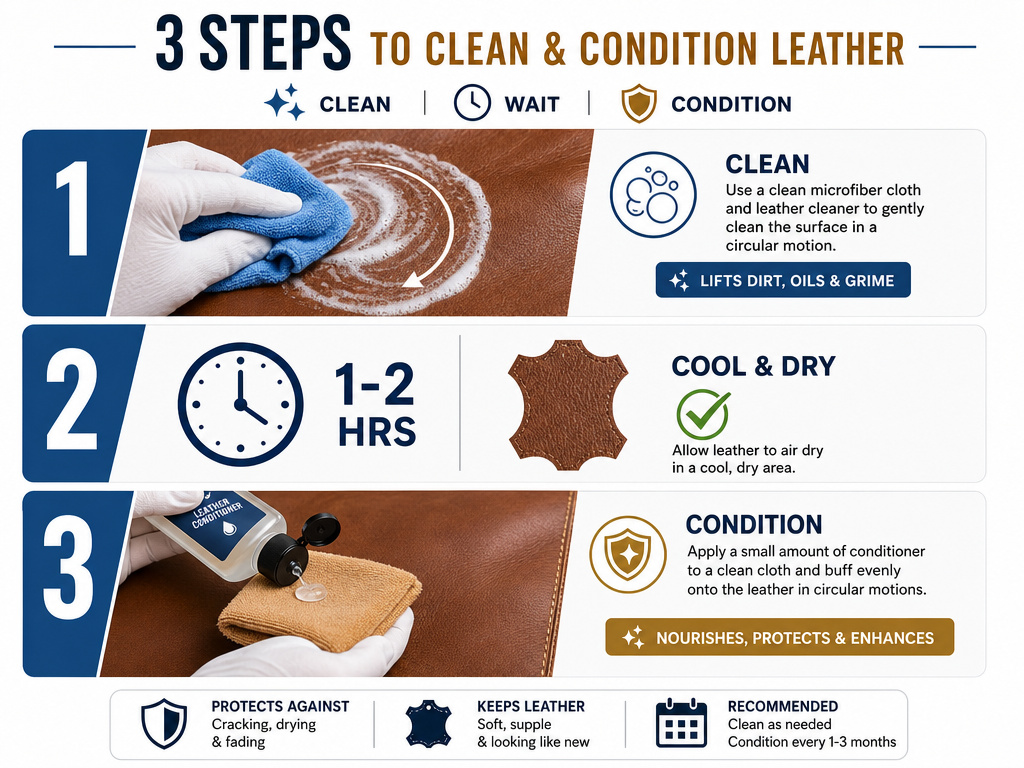
This is based on years of practical experience. The process is simple, but skipping a step guarantees a subpar result.
-
Clean thoroughly. Apply your chosen cleaner to a microfiber cloth or sponge, not directly onto the leather (to prevent over-wetting). Work in small sections using circular motions to generate foam. Wipe away the foam and suspended dirt with a clean, dry part of the cloth. Move to the next section. Skip this, and you’ll grind conditioner into the dirt, creating a greasy abrasive paste that dulls the finish and wears the grain.
-
Let it dry completely. This is the most-skipped step. Walk away for at least an hour, or until the leather feels cool and room-temperature to the touch. In humid climates, give it two hours. Condition damp leather, and the water will block oil absorption. The conditioner will sit on top, feeling sticky and attracting dust until it eventually rubs off on your clothes.
-
Condition sparingly. Apply a small amount of conditioner to a fresh cloth. Rub it into the leather in a thin, even layer. Buff off any excess after 5-10 minutes with a clean, dry cloth. The leather should feel nourished, not greasy. Over-apply, and you clog the pores. This prevents the leather from breathing and can lead to a soft, weak structure that’s prone to tearing.
Frequently Asked Questions
Can I use a cleaner-conditioner combo product?
You can, but you shouldn’t for anything you care about. These products are compromises. To clean effectively, they must contain surfactants that strip some oil. To condition in the same step, they add oils back. The result is often a superficial coating that sits on top of the dirt, not a deep clean followed by a deep condition. They’re convenient for low-stakes, pigmented leather but a poor choice for fine or delicate items.
How do I know if my leather needs cleaning or conditioning?
Do the pinch test for conditioning. For cleaning, run a clean, white microfiber cloth over a high-touch area (like a sofa armrest). If the cloth shows gray or brown residue, it needs cleaning. If the leather is clean but stiff and crackly, it only needs conditioner.
Will conditioner make my leather darker?
Quality conditioners like Bickmore Bick 4 are formulated to be non-darkening. Natural oil-based conditioners (like neatsfoot or some blends) will darken leather, especially lighter shades. This isn’t necessarily damage, it’s a characteristic of the oil, but always test on a hidden area first and wait 48 hours to see the true final color.
Can I use saddle soap as my regular cleaner?
No. Saddle soap is a heavy-duty cleaner designed for sweat, dirt, and salt on thick equestrian or work leathers. It’s too stripping for most furniture, jackets, or car interiors. Using it regularly will dry out those finer leathers, necessitating more frequent conditioning and shortening the item’s lifespan.
Before You Go
The practical takeaway is this: buy separate, quality bottles of a dedicated cleaner and a dedicated conditioner. Match them to your leather type, light creams for fine garments, heavier oils for work boots. Ignore the marketing copy for combo products.
Your one action this week: find a hidden spot on your most-used leather item, the underside of a sofa cushion, the back of a belt, and test your cleaner and conditioner there. See how they behave. Feel the dry time. That small experiment builds the instinct for everything else.
Leather isn’t fragile, but it is specific. Treat it with that specificity, and it rewards you with decades of service and a patina that tells your story.
