
Types of Leather Pants | The Real Differences Beyond Style
This post contains affiliate links. As an Amazon Associate, we earn from qualifying purchases.
You can sort leather pants by leg shape or color, but the real difference is in the hide. The leather type decides how the pants feel, how long they last, and what they’ll cost to maintain. The rest is just tailoring.
Let’s untangle the marketing terms first. The phrase “genuine leather” is a classification, not a stamp for full-grain or top-grain leather. It refers to the layers of a hide split away from the top surface, often sanded and embossed with a fake grain. It’s not a bad material, but it’s the starting point for most affordable leather goods, not the finish line. The real conversation is about the leather’s origin, its weight, and its construction. This guide walks through those specifics, so you can match the material to your lifestyle instead of just the look.
What follows is a breakdown of the three leather types that actually matter, the one to avoid, and how weight and finish translate to everyday comfort. We’ll also cover the essential care rules that keep each type from cracking within a season.
Key Takeaways
- Lambskin is for drape and softness, cowhide is for structure and durability. Choose lambskin for luxury feel and cowhide for motorcycle or workwear-inspired styles.
- Bonded leather is a short-term option. Made from scraps glued together, it cracks and peels at stress points like knees within months and cannot be reconditioned.
- Leather weight dictates seasonality. Summer-weight leather (1–2 oz) feels like a second skin; structured pieces (3–4 oz) hold their shape but are warmer.
- Vegan leather care is not simpler. Polyurethane (PU)-based vegan leather cracks faster in cold weather and cannot be nourished back to health like animal leather.
- Always hang leather pants. Folding them creates permanent creases. In humid climates, add silica gel packets to the storage area to prevent mold.
The 3 Leather Types That Actually Matter (And 1 That Doesn’t)
The label inside the waistband tells you almost nothing. Here’s what you’re actually buying.
Lambskin: The Luxury Drape
Lambskin is the softest, most pliable leather used for pants. It has a buttery, almost spongy hand-feel and is remarkably lightweight. This makes it the default for high-fashion pants, leggings, and styles meant to drape fluidly over the body. The trade-off is delicacy. Lambskin scratches more easily than cowhide and isn’t the best choice for high-abrasion activities. It’s a fair-weather leather, perfect for evenings out or office wear where you’re not scrambling over rough surfaces.
Brands like AllSaints use lambskin extensively for their signature soft, slouchy silhouettes. The break-in period is minimal, they’re comfortable from the first wear. The sensory reality is a lack of stiffness; there’s no audible creak when you sit down.
Cowhide: The Workhorse
Cowhide is thicker, more rigid, and significantly more durable than lambskin. It’s what you’ll find in motorcycle leather pants, workwear, and any style that needs to hold a sharp, structured shape like cargo or straight-leg cuts. The break-in is real. A new pair of cowhide pants will feel stiff, even restrictive, for the first several wears. Over time, the leather molds to your body’s flex points (knees, hips), becoming uniquely yours.
Common mistake: Expecting cowhide pants to feel like leggings on day one. They need a break-in period of 5-10 wears to soften at the joints. Force them into a deep squat before they’re ready and you risk straining the seams.
For rugged styles from brands like Diesel, cowhide is the standard. The sensory cue is sound: a new pair has a distinctive, faint creak when you move.
Stretch Leather: The Hybrid for Movement
This isn’t a separate animal. It’s usually cowhide or lambskin woven with a small percentage of elastane (spandex) or backed with a flexible knit panel. This is the underrated hero for real-world comfort. A 2-5% elastane blend allows the pants to stretch at the knee and waist when you sit or bend, then snap back.
This solves the classic problem of the “second skin” fit. A 100% non-stretch leather pant might look incredible standing still, but it can be unbearably tight in a seated position. Stretch leather inserts, often placed strategically behind the knee or along the sides, are a hallmark of brands focused on wearability, like Falcon Garments.
Bonded Leather: The One to Skip
Bonded leather is the bottom tier. It’s made from leather fibers and dust left over from the tanning process, bonded together with polyurethane or latex onto a fabric backing. The surface is then embossed to look like real grain.
Where this goes sideways: The bonded layer separates from the backing under friction. Knees and inner thighs start to bubble, then the “leather” top layer cracks and peels away in flakes, usually within 6-12 months of regular wear. Unlike real leather, this damage cannot be sanded out, conditioned, or repaired, it’s a terminal failure.
It’s a budget option with a predictably short lifespan. If a pair of pants is surprisingly cheap and the leather feels uniformly plastic-like with no natural variation, it’s likely bonded.
| Leather Type | Best For | Feel & Break-In | Lifespan Expectation |
|---|---|---|---|
| Lambskin | Luxury fashion, drapey styles, leggings | Buttery soft from day one. | 5+ years with gentle care. |
| Cowhide | Structured pants, motorcycle wear, cargo styles | Stiff initially, molds with wear. | 10+ years, develops patina. |
| Stretch Leather | Any style where sitting & moving is key | Flexible, minimal break-in needed. | Depends on the base leather (cowhide or lambskin). |
| Bonded Leather | Ultra-low-budget, temporary fashion | Stiff, plastic-like feel. | 6-12 months before peeling. |
Leather Weight & Feel: The Numbers Behind Comfort
Leather weight, measured in ounces per square foot, isn’t just about thickness, it’s about intended use. This spec is rarely on the tag, but it defines the season and silhouette.
Lightweight (1–2 oz): This is “garment weight” leather. It’s used for leather leggings, thin trousers, and summer styles. It’s pliable, cool to the touch, and designed to move with you like heavy fabric. You won’t get much structure here.
Mid-weight (2–3 oz): The most versatile range. It provides enough body for a straight-leg or slim-fit pant to hold its shape without being cardboard-stiff. Most everyday leather pants for women and men’s fashion pants fall here.
Heavyweight (3–4 oz): This is where you find the structure for leather motorcycle trousers, certain biker styles, and any pant with sharp tailoring. It’s warm, substantial, and will feel notably heavier on the body. Break-in is mandatory.
Here’s the practical translation: if you want pants for year-round office wear, aim for mid-weight. If you want leggings, lightweight is your friend. If you’re after a pair of classic rider pants, expect heavyweight.
Vegan & Faux Leather: Setting Realistic Expectations
The terms are often used interchangeably, but there’s a distinction. Faux leather is a general term for any synthetic alternative. Vegan leather is a subset, often marketed as more ethical, made from materials like polyurethane (PU), polyvinyl chloride (PVC), or innovative plant-based sources.
The reality is, most vegan leather on the market is PU-based. And here’s the non-commodity insight straight from a manufacturer’s guide: “most vegan leathers, especially PU-based ones, crack faster in cold weather and cannot be reconditioned like natural leather.”
Let’s be clear about this. The perceived low maintenance is a trap. While you don’t condition it, PU leather has a plasticizer in its coating that evaporates over time, especially when exposed to heat and cold cycles. This leads to cracking. A real leather pant can be revived with conditioner; a cracked vegan leather pant is finished.
That said, advancements are being made. Some brands of vegan leather pants now use more durable thermoplastic polyurethane (TPU) or bio-based materials like cactus or apple waste. These are worth seeking out if you’re committed to a non-animal product, but inspect the care label. If it says “avoid extreme temperatures,” understand that’s a durability warning, not just a suggestion.
Style Beyond the Leg Shape: Hardware, Fit, and Function
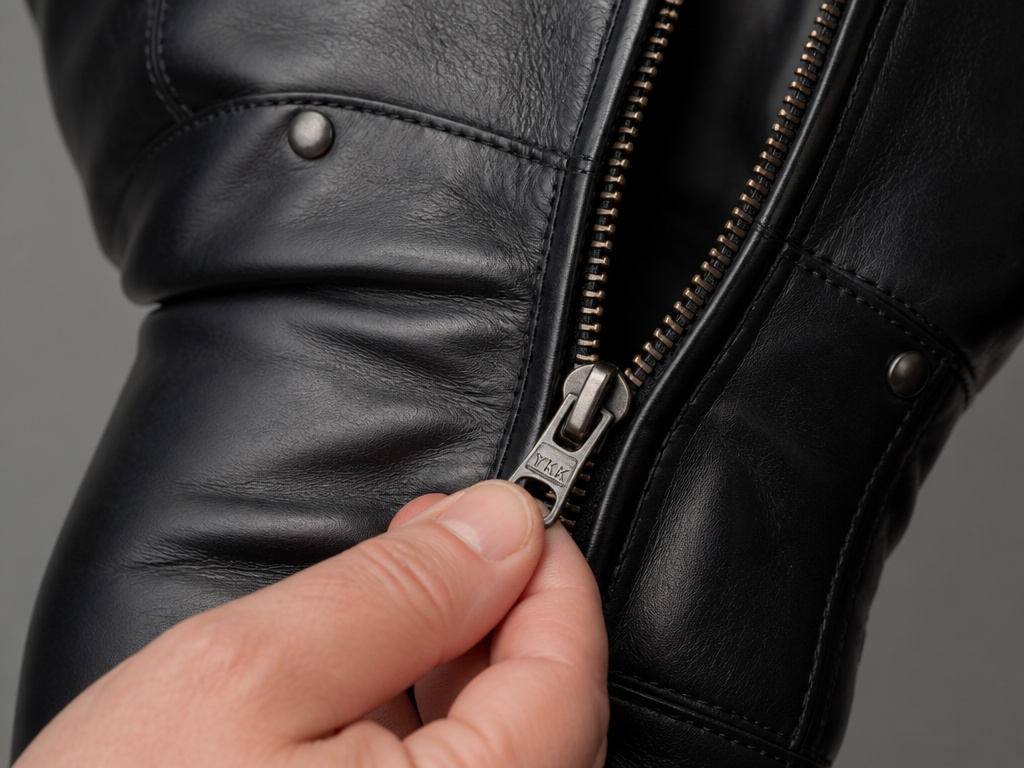
Leg silhouette, wide, straight, skinny, is a style choice. The details that affect longevity are in the construction.
Hardware Matters: Zippers, buckles, and rivets on pants like the Women Black Leather Capri with Bottom Zipper from 3amoto aren’t just decorative. Cheap, thin metal zippers will catch and break. Look for pants with branded, substantial zippers (like YKK) and securely set rivets. The advice is to “be gentle when cleaning around hardware to avoid rust or zip damage,” which means spot-cleaning, not submerging.
The Fit for Reality: A perfect fit standing in the mirror means nothing if you can’t sit down. Always test the squat. For petite leather pants, the challenge is often length and proportion. A cropped style can work well, but a wide-leg cut can overwhelm a shorter frame. Tailoring leather is possible but expensive; it’s better to find a brand that caters to shorter inseams.
The Vest as an Underrated Layer: Don’t overlook a simple leather vest. It adds the texture and durability of leather without the sleeve bulk, making it a versatile piece for layering. It’s also far less restrictive than pants when considering fit.
How to Care for Each Type (It’s Not One-Size-Fits-All)
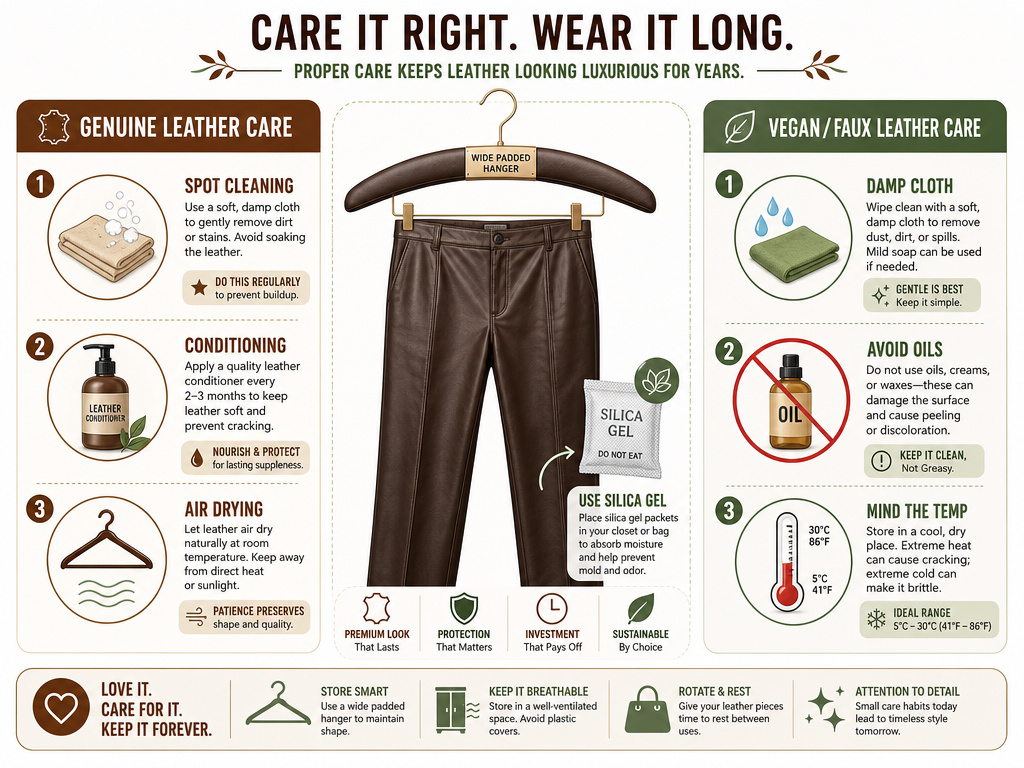
A universal rule: never machine wash leather pants. Never dry-clean them using standard harsh chemicals. Both will strip finishes, stiffen the hide, and likely ruin them.
For Genuine Leather (Cowhide, Lambskin): 1. Spot Clean Only: Use a damp, soft cloth with a drop of mild, pH-neutral soap. Blot, don’t scrub. 2. Condition Sparingly: Every 6-12 months, use a light leather conditioner (like Bick 4 or Leather Honey). Apply a tiny amount to a cloth, rub into the leather in circles, and let it absorb fully overnight. Over-conditioning clogs pores. 3. Dry Naturally: If they get wet, blot with a towel and hang to air-dry away from direct heat. Heat causes leather to shrink and crack.
For Vegan/Faux Leather (PU/PVC): 1. Wipe Down: Use a damp cloth. Avoid any oil-based cleaners or conditioners, they can degrade the plastic coating. 2. Store Carefully: Keep away from extreme cold (which makes plastic brittle) and direct heat (which accelerates plasticizer loss).
Storage is Critical: Hang them on a wide, padded hanger to maintain the shape of the waist and hips. Never fold them long-term; you’ll get a permanent, sharp crease. For humid climates, toss a silica gel packet in the closet nearby to ward off musty odors.
Frequently Asked Questions
Are leather pants only for winter?
No. Lightweight (1-2 oz) leather and unlined styles are wearable in spring and fall. For summer, it’s about pairing them with breezy tops and avoiding direct midday sun, which can make any pant hot.
What’s the difference between leather pants and leather leggings?
It’s primarily a fit and construction distinction. Leather leggings are almost always made with stretch leather or panels and are designed as a tight, base-layer style. Traditional leather pants can be made of non-stretch leather and come in a variety of fits (straight, wide, etc.). Leggings are newer in fashion history and are exclusively close-fitted.
Can you repair scratched leather pants?
Minor surface scratches on real leather can often be minimized by gently rubbing with a clean finger, the natural oils in your skin can help blend the mark. Deeper scratches might be lessened with a matching leather cream. Scratches on vegan leather are usually permanent damage to the surface coating.
How do I shrink leather pants that have stretched?
It’s tricky. One method is to lightly mist the stretched areas (like the knees) from the inside with a 50/50 mix of water and rubbing alcohol, then let them air-dry naturally. The alcohol helps evaporate the water quickly, which can cause the fibers to contract slightly. Test on an inconspicuous area first. This does not work on vegan leather.
Are leather pants worth the investment?
It depends on the leather. A well-made pair of cowhide or lambskin pants, cared for properly, can last a decade and develop a beautiful personal patina. A pair of bonded or low-quality vegan leather pants is a temporary fashion item.
The Bottom Line
Look past the style name on the website. Check the material description for “lambskin,” “cowhide,” or “with elastane.” Feel the weight in your hands, lightweight drapes, heavyweight stands up. Understand that bonded leather has an expiration date stamped in months, not years.
The most versatile pair for a starter wardrobe is a mid-weight cowhide or blend in a straight-leg cut. It will break in, it will move with you, and with basic care, wipe downs, occasional conditioning, and proper hanging, it will outlast a dozen fashion trends.
So, treat the purchase like you’re choosing the hide for a long-term project, not just buying a pant. The right type doesn’t just look good on arrival; it looks better with every wear.
