
Types of Leather Wallets | The 7 Styles That Actually Work
This post contains affiliate links. As an Amazon Associate, we earn from qualifying purchases.
The seven core types of leather wallets are bifold, trifold, slim/cardholder, money clip, passport, travel/organizer, and zip-around. Your choice isn’t about the most popular style, it’s about matching the wallet’s structure to the volume of cards and cash you carry daily and the pocket you put it in. The right type disappears in use; the wrong one is a bulky annoyance that falls apart within a year.
That last part about falling apart is mechanical, not cosmetic. A wallet is a small, stressed machine. Its seams, folds, and slots endure hundreds of flex cycles each month. Picking a style is the first step, but the materials and construction inside it decide whether you’re buying a five-year companion or a disposable accessory. The difference often comes down to a single thread pattern or a 0.2mm thickness mismatch between panels.
What follows is a breakdown of the seven wallet architectures, the leather grades that give them longevity, and the construction details that separate a full-grain leather design from a flawed one. By the end, you’ll be able to look at any wallet and know not just what it is, but how well it’s built to do its job.
Key Takeaways
- Match capacity to carry. A bifold suits 6-8 cards and cash; a slim cardholder is for 3-4 essentials. Overfilling any wallet stretches seams and ruins its profile.
- Construction beats marketing. A saddle-stitched seam can last decades; a machine lock-stitch often fails at stress points in 12-18 months.
- Thickness consistency is critical. A variation of just 0.2mm between leather panels makes a wallet feel lopsided and bulky.
- Full-grain leather is the default for durability. It ages with a patina; bonded or “genuine” leathers crack and delaminate.
- Test with your actual items. A phone-sized clutch must fit your specific phone with its case; a travel wallet must hold your passport.
The 7 Core Wallet Types, Defined
Forget vague categories. Each wallet type is an engineering solution to a specific carrying problem. The chart below maps the primary job of each style.
| Wallet Type | Primary Job | Ideal Card Capacity | Where It Lives |
|---|---|---|---|
| Bifold | Balanced everyday carry | 6–8 cards + cash | Front or back pocket |
| Trifold | High-capacity organization | 8+ cards + cash + coins | Back pocket (adds bulk) |
| Slim / Cardholder | Minimalist, front-pocket carry | 3–6 cards | Front pocket only |
| Money Clip | Cash-primary, minimal card carry | 2–4 cards + clipped bills | Front pocket |
| Passport Wallet | Secure document carry for travel | Passport + 2–4 cards | Jacket pocket or bag |
| Travel Organizer | Multi-document & currency management | Passports, tickets, multiple currencies | Carry-on bag |
| Zip-Around | Maximum security, all-contents containment | 8+ cards + cash + coins | Bag or back pocket |
The bifold is the default for a reason. It folds once, creating two panels that distribute bulk evenly. A good one uses thin, supple leather, around 0.8 to 1.0 mm in thickness.8mm to 1.2mm for the exterior, so it breaks in quickly. The problem arises when makers use stiff leather or add too many overlapping pockets. An empty sample can hide a design that swells to twice its thickness when loaded.
A wallet constructed with a machine lock-stitch often fails after twelve to eighteen months of daily carry. This failure mode, where a continuous loop of thread unravels from a single break, typically happens at card slot seams and fold lines.
Trifolds solve for maximum slots but introduce a physical trade-off: two fold lines. Those folds add material and create three layers of leather stacked at the spine. If the leather isn’t skived (thinned) at the fold points, the result is a brick. They work for someone who genuinely uses 10+ cards and doesn’t mind back-pocket bulk. For most, a bifold with smart slot layout is more comfortable.
Slim wallets and cardholders are a different philosophy. They sacrifice capacity for profile. The best ones, like those from Popov Leather or Ashland Leather, use a single piece of leather folded and stitched at the edges, holding 4-5 cards with a central pocket for a few bills. Their success hinges on using leather that’s thin enough to be pliable but dense enough to hold its shape. A cardholder made from stiff 2mm leather defeats the purpose.
Why Leather Grade Is More Important Than Style
You can find any wallet style in poor-quality leather. The style dictates function, but the leather determines lifespan. The industry uses specific, if sometimes misleading, terms.
| Leather Grade | What It Actually Means | Durability & Aging | Common In |
|---|---|---|---|
| Full-Grain | Top layer of hide, untouched surface. Shows natural grain & markings. | Highest. Develops a rich patina over years. Can last 10-20+ years. | Premium bifolds, slim wallets from specialists like Guarded Goods. |
| Top-Grain | Top layer sanded to remove imperfections, then coated. | High, but coating can crack. Patina is muted. Develops a shine with wear. | Mid-tier department store wallets. |
| “Genuine” Leather | A technical term for the lower layers of the hide, often laminated. | Low. Stiff, prone to cracking and peeling. Seldom ages well. | Budget-friendly wallets, often with a uniform, plastic-like look. |
| Bonded Leather | Shredded leather fibers bonded with adhesive onto a fabric backing. | Very low. Delaminates and cracks quickly. Avoid for daily use. | Ultra-cheap accessory wallets. |
Full-grain leather is the benchmark. It’s the strongest part of the hide because the grain structure is intact. When people talk about leather “breaking in,” they’re describing full-grain conforming to its use. It starts stiff and lightens in color, then slowly darkens and softens where it’s flexed. A full-grain leather wallet isn’t a luxury; it’s the most practical choice because it gets better with time instead of wearing out.
Top-grain leather is a compromise. Sanding removes scars and blemishes, giving a cleaner look that mass markets prefer. A protective coating is then applied. This coating can prevent stains, but it also blocks the leather’s pores. Over time, this topcoat can wear off at high-flex points (like fold lines) or crack. It’s still a durable material, but it won’t develop the deep, personal character of full-grain.
Here’s the thing about “genuine leather”: it’s a technically accurate term that has been co-opted by marketing to sound premium. In materials science, it refers to the split layers beneath the top-grain. These layers are weaker and are almost always laminated and embossed with a fake grain pattern. It’s not a scam, you are getting leather, but it’s the least durable form. A wallet made from it might last a couple of years with careful use.
Common mistake: Choosing a wallet based on a style you like, but in a leather grade that can’t support the design. A thick trifold made from stiff “genuine” leather will be an uncomfortable brick that cracks at the folds within a year.
I’ve seen more than one case where someone used a wax-based conditioner on a garment leather, which stiffened it unnecessarily when a lighter oil would have been better. The same principle applies here: the right material for the job. A slim wallet needs soft, pliable full-grain. A structured travel organizer can use a firmer top-grain. Match the leather’s character to the wallet’s mechanical demands.
Construction: The Details You Can’t See (But Will Feel)
Two wallets can look identical on a website. The difference is in the stitching, the edge finishing, and the thickness control. These are the details that turn a piece of cut leather into a reliable tool.
Saddle-stitch vs. Machine Lock-stitch. This is the single biggest predictor of seam longevity. Machine lock-stitch uses a single thread that loops back on itself. If it breaks at any point, the entire seam can unravel like a sweater snag. Saddle-stitching uses two needles and two separate threads that pass through the same hole from opposite sides, interlocking in the middle. If one thread breaks, the other holds the seam intact. It’s slower, done by hand, and is a hallmark of quality. You’ll find it on wallets from makers like Ashland Leather.
Edge Painting vs. Burnished Edges. Look at the cut edges of the leather. Are they colored with a glossy paint, or are they smooth and slightly rounded with a polished, waxy finish? Painted edges are faster and cheaper. They can also chip or peel over time. Burnished edges are sanded smooth, then friction-polished with a wax or gum compound. This melts the leather fibers together, creating a sealed, durable edge that resists moisture and fraying. It’s a small detail that speaks volumes about the maker’s patience.
Thickness Control and Skiving. This is where factory precision matters. A wallet has multiple layers, exterior, interior panels, card slot liners. If they’re all the same thickness, the finished product will be bulky. Skiving is the process of tapering the leather’s thickness at the edges and, crucially, at fold lines. A skilled maker will thin the leather precisely where multiple layers meet, so the wallet folds cleanly without creating a hard ridge. The research notes point out that a 0.2mm variation between panels can make a wallet feel lopsided. Good manufacturing avoids this with calibrated machines, not guesswork.
How to Choose: Your Daily Routine Is the Blueprint
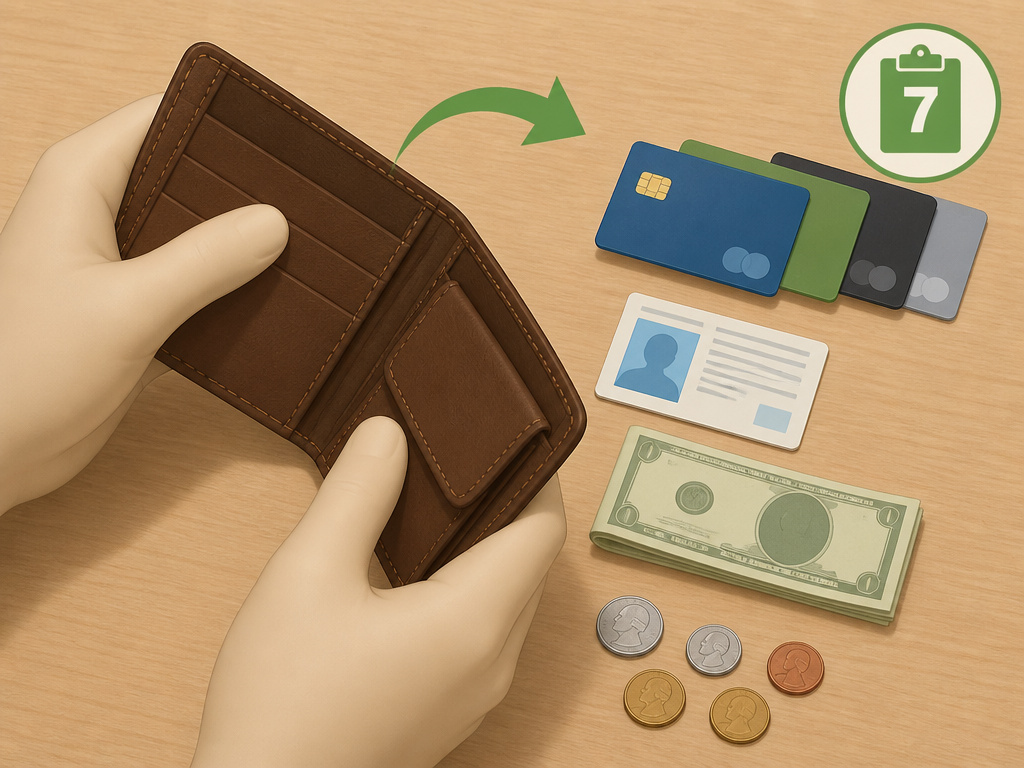 Don’t start with a style. Start with your pockets and your contents.
- Empty Your Current Wallet. Lay everything out: every card, receipt, coin, and bill. Separate the “every single day” items from the “once in a while” items.
- Count Your Daily Essentials. How many payment cards, ID cards, and access keys do you touch daily? This is your core number. If it’s 4 or fewer, a slim cardholder is your target. If it’s 5-8, look at bifolds. More than 8, you’re in trifold or zip-around territory.
- Identify Your Pocket. Do you wear suits or jackets with an interior pocket? A traditional bifold or even a passport wallet works. Do you live in jeans or chinos? Front-pocket carry demands a slim profile, a cardholder or a slim bifold under 0.5 inches thick when loaded. Back-pocket carry can handle more bulk but consider a zip-around or trifold if you’re active and worry about items falling out.
- Handle Cash and Coins. If you use cash daily, a simple bill compartment is fine. If you deal with coins, you need a dedicated zip or snap coin pouch, look for it in a trifold or a zip-around style.
Let me share what I’ve learned about breaking in a new wallet. Resist the urge to stuff every slot on day one. This permanently stretches the leather. For the first week, carry only your essentials. Let the leather soften and mold to those specific items. After it conforms, you can occasionally add a second card to a slot without causing long-term damage.
Frequently Asked Questions
What type of leather wallet lasts the longest?
Wallet made from full-grain leather with saddle-stitching will last the longest. The full-grain hide provides the strongest fiber structure, and saddle-stitching ensures the seams won’t unravel. With basic care, this combination can easily last a decade or more of daily use, aging into a unique patina.
Are slim wallets secure?
Yes, and they can be more secure against pickpockets. A slim front pocket wallet is harder to remove from a tight front pocket without you feeling it. It also discourages overfilling, which is the main cause of cards slipping out of overstretched slots. For added security, some slim models offer RFID-blocking linings.
What’s the difference between a passport wallet and a travel wallet?
Passport wallet is a dedicated sleeve for your passport, usually with a couple of card slots and a place for a boarding pass. It’s a minimalist travel tool. A travel organizer** is larger, designed to hold multiple passports, tickets, foreign currencies, pen, and receipts. It’s a command center for a trip, usually carried in your bag, not your pocket.
Is RFID protection in wallets necessary?
It’s a prudent feature for urban daily carry. RFID-blocking uses a thin metal mesh layer to prevent wireless skimming of contactless card data. It adds negligible bulk and cost in a well-made wallet. While the risk of skimming is generally low, the peace of mind is worth it for many, making RFID wallets a sensible default for new purchases.
How often should I condition my leather wallet?
Condition a full-grain leather wallet every 6 to 12 months, depending on climate. In dry environments, do it closer to every 6 months. Use a tiny amount of a quality leather conditioner like Bickmore’s Bick 4.amazon.com/dp/B001CS2Q4M?linkCode=osi&th=1&psc=1&tag=test-20)) on a soft cloth, rub it in evenly, and let it absorb fully overnight. Over-conditioning can saturate and weaken the leather.
The Bottom Line
The search for a wallet ends when you stop looking for a style and start looking for a solution. The solution is a combination of a format that fits your actual cargo, made from a material (full-grain leather) that grows stronger with use, and constructed with techniques (saddle-stitch, burnished edges) that respect the physics of daily flex.
Practically speaking, for most men, that solution is a simple bifold wallet in full-grain leather from a maker who details their construction. It’s the balanced center point of capacity and comfort. If your days have shifted to a phone and two cards, make the jump to a slim cardholder. It’s a liberating change. Whatever you choose, buy the best leather and construction you can. A wallet is a tactile object you interact with dozens of times a day. It should feel like a tool that’s helping you, not an item you’re waiting to replace.
