
How to Choose a Leather Jacket Using the Grade-First Method
This post contains affiliate links. As an Amazon Associate, we earn from qualifying purchases.
To choose a leather jacket, start with the leather grade, not the style. A full-grain or top-grain leather jacket can last 20 to 40 years, while bonded or genuine leather starts peeling within 2 to 5. Confirm the grade, then nail the fit by checking the shoulder seam sits exactly at your shoulder bone and the chest allows a flat hand, not a fist, when zipped. Finally, inspect the zipper brand and stitch density; these details outlast fashion trends.
That 20-year lifespan gap isn’t marketing. It’s chemistry. Bonded leather is scraps glued to a fabric backing; the adhesive fails, the top layer separates, and the jacket is done. Full-grain leather is the entire hide, tanned and finished. Its fibers are intact, so it ages, it patinas, it wears in, it doesn’t wear out. Starting your search with grade filters out 80% of the jackets that will disappoint you.
What follows is a method, not a style guide. We’ll walk through the four decisions in order: leather grade, intended use, fit, and construction. By the end, you’ll be able to read a product page in ten seconds and know if the jacket is built for a season or for a lifetime.
Key Takeaways
Look for leather labeled “top-grain” or “full-grain.” – The shoulder seam must sit exactly at the edge of your shoulder bone; a wrong shoulder fit cannot be corrected by a tailor in leather. – A high-quality metal zipper (like YKK) and dense, even stitching are more reliable indicators of a jacket’s longevity than a high price tag. – Leather softens and molds to your body; buy a jacket that fits snugly but comfortably when new, not one you hope will stretch. – Judge value by cost-per-wear over decades, not the sticker price. A $800 jacket worn for 20 years costs $40 a year.
The Leather Grade is Your First and Most Important Filter
Let’s be clear about one thing: the word “leather” on a tag means almost nothing. The grade tells you everything about durability, feel, and how the piece will age. This is the single biggest filter you can apply before you even look at a style.
Leather grades are a hierarchy of durability. Full-grain and top-grain leathers use the full thickness of the hide and develop a patina. Bonded and genuine leathers are processed composites that lack structural integrity and degrade predictably within a few years.
Here’s the breakdown, with the hard numbers most brands won’t publish:
| Leather Grade | What It Is | Realistic Lifespan | The Feel & Look |
|---|---|---|---|
| Full-Grain | The entire top layer of the hide, untouched. Natural grain and markings remain. | 20–40 years | Develops a rich, unique patina. Feels substantial, breaks in beautifully. |
| Top-Grain | The top layer sanded to remove imperfections, then finished. | 10–20 years | Smoother, more uniform look. Softer out of the box than full-grain. |
| Genuine Leather | The fibrous middle layer split from the top, often coated with a plastic finish. | 2–5 years | Can feel stiff or plasticky. The finish cracks and peels as the base layer lacks strength. |
| Bonded Leather | Leather dust and fibers glued to a polyurethane or fabric backing. | Under 2 years | Looks uniform but feels thin and papery. Peels from the backing within a year or two. |
I’ve seen multiple cases where people mistake the natural fat wrinkles in full-grain leather for a defect. They’ll return a superb jacket thinking it’s damaged, when those marks are the hallmark of a quality, un-sanded hide. It’s the first thing I explain in a consultation.
Your goal is to shop for full-grain or top-grain only. If a product page or a salesperson cannot tell you the grade, walk away. “Genuine leather” is a red flag, not a reassurance.
Match the Hide and Style to Your Actual Life
Once you’ve filtered for grade, you can think about the animal and the cut. These choices are about comfort, weight, and context, not longevity. A full-grain lambskin jacket will last as long as a full-grain cowhide one; they’ll just feel and behave differently.
Cowhide is the workhorse. It’s thick, rugged, and stiff when new. Breaking in a cowhide jacket is a project, it can take months of regular wear. The reward is a supremely tough jacket that shrugs off daily abrasion. It’s the choice for a true rider’s jacket or a piece you want to look more rugged over time.
Lambskin is the dress option. It’s buttery soft from day one, drapes elegantly, and has a refined, lightweight hand. The break-in period is minimal. The trade-off is that it’s more susceptible to scratches and scuffs. It’s perfect for a cafe racer or bomber you’ll wear to the office or out at night.
Where this goes sideways: Choosing a soft dress leather like lambskin for heavy, daily yard work or motorcycle riding. The leather will abrade faster than a tough cowhide, showing wear within a single season of hard use.
The style should follow function. Don’t buy a double-rider biker jacket because it looks cool if you only wear chinos and sweaters. You’ll never reach for it. – For smart-casual and office wear: A cafe racer or a minimalist bomber. Clean lines, simple hardware. – For rugged, daily wear: A trucker or a field jacket style. More room to layer, tougher finish. – For motorcycling (safety-first): A dedicated motorcycle jacket with armor pockets and reinforced stitching. This is a different category from fashion leather.
The best type is the one you’ll actually wear. If your life is mostly casual, a sleek racer in lambskin is a more practical first jacket than a heavyweight cross-zip biker.
The 4-Point Fit Test That Prevents Returns
Fit is non-negotiable. Leather doesn’t drape like wool and it’s prohibitively expensive to alter. A tailor can maybe take in the sides, but they cannot move the shoulder seams or shorten sleeves without leaving obvious scars. You have to get this right at purchase.
1. Shoulders. This is the cornerstone. The seam where the sleeve attaches must sit exactly at the outer edge of your shoulder bone. If it hangs over, the jacket looks sloppy and will restrict movement. If it sits inward toward your neck, the jacket is too small and will never be comfortable. Put the jacket on and stand in front of a mirror. This is the first and last check.
2. Chest. Zip or button the jacket up. You should be able to slide a flat hand between your chest and the leather. If you can make a fist, the jacket is too big. It will only get looser as the leather breaks in. If the leather pulls taut and creates horizontal wrinkles across your chest, it’s too small.
3. Sleeves. With your arms relaxed at your sides, the cuff should end right at your wrist bone. For a more casual look, like with a bomber, it can sit a half-inch above. For a moto or racer style, it can run 1–2 cm longer to cover your wrist when reaching for handlebars. Leather sleeves are the hardest part to alter correctly.
4. Length. The hem of a jacket should hit at your belt line or just below. A longer coat-style is different, but for a standard jacket, this is the rule. Raise your arms as if holding handlebars. The jacket shouldn’t ride up so high that it exposes your belt.
Perform the “reach test.” Sit on a chair as if on a bike, or simply reach forward as if to shake hands. The collar should not lift off the back of your neck, and the back shouldn’t feel like it’s tearing. A little tension is normal; a feeling of being straitjacketed is not.
Construction: The Details That Separate a Jacket from an Heirloom
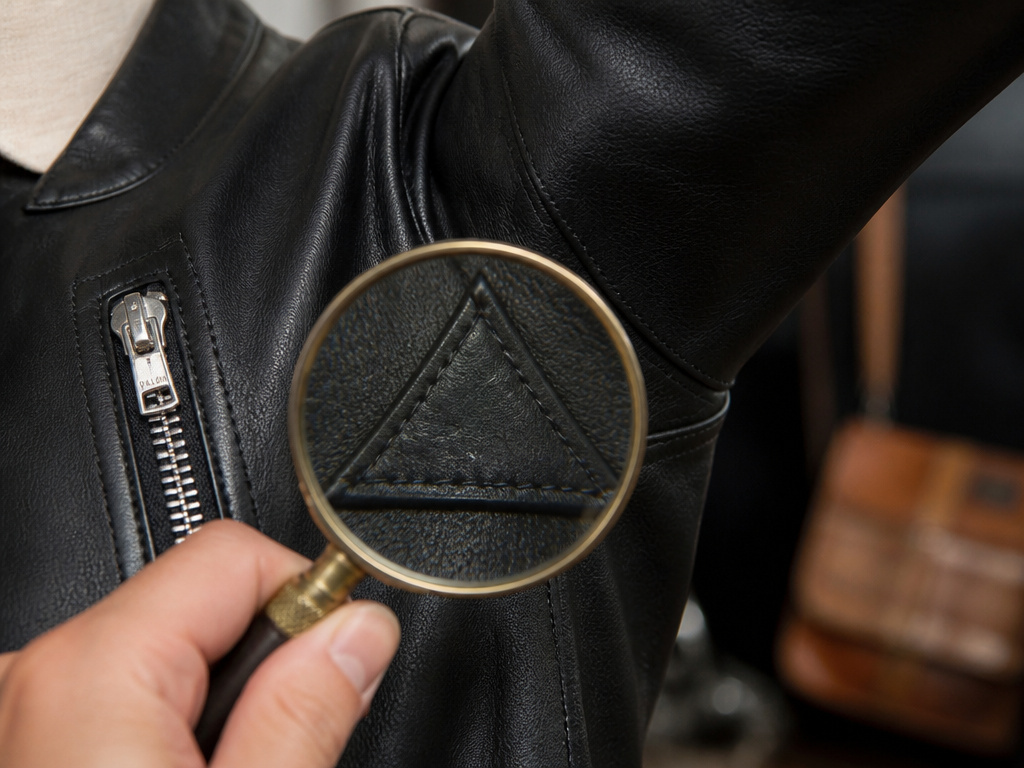
Two jackets can be made from the same grade of leather and look identical on a hanger. The difference emerges in the first six months of wear, in the stitching and the hardware. This is where you play detective.
Stitching. Look for dense, even stitches. This is measured in SPI (stitches per inch). More stitches generally mean a stronger, more flexible seam. Look for reinforcement at all stress points: the corners of pockets, the bottom of the zipper, the underarms. A single row of wide-spaced stitching will fail first.
The underarm gusset is the most underrated feature in jacket design. It’s a small diamond-shaped piece of leather set into the seam under the arm. This tiny addition allows for a huge range of motion without straining the shoulder seams. It’s a sign the maker thought about how the jacket moves, not just how it looks on a mannequin.
Zippers. The pull is your best clue. A quality metal zipper from YKK, Riri, or Talon feels substantial, slides smoothly, and has cleanly cast teeth. A flimsy, plastic-feeling zipper that sticks is the first component to fail on a cheap jacket, often within the first year. Check that the zipper tape (the fabric behind the teeth) is firmly stitched to the leather, not glued.
Lining. A cheap, slippery polyester lining will tear at the seams within a couple of years. A better jacket uses a more durable fabric like cotton, viscose, or even a breathable mesh. The lining should be stitched in neatly, with no loose threads or puckering.
My stance is simple: a jacket’s zipper and lining are the most reliable indicators of its overall quality. Brands that cut corners here have cut corners everywhere you can’t see.
Frequently Asked Questions
What is the biggest mistake people make when choosing a leather jacket?
They start with style and color. This leads them to fall in love with a jacket made from bonded or genuine leather that will disintegrate. Always start with the leather grade. If it’s not full-grain or top-grain, nothing else about the jacket matters.
Can a leather jacket be tailored?
Very little, and never at the shoulders. A skilled leatherworker can sometimes take in the sides or shorten the body length slightly, but altering the sleeves or shoulders is complex, expensive, and often leaves visible damage. Measure your chest, waist, and sleeve length before shopping.
How much should I spend on a good leather jacket?
For a new, well-constructed jacket in full-grain or top-grain leather, expect to start around $500-$600. The sweet spot for quality that will last decades is between $700 and $1,200. Brands like Schott NYC and Aero Leathers live in this range. Remember, you’re buying for 20+ years, so judge by cost-per-wear, not the initial price.
Is it okay to buy a used leather jacket?
Absolutely, and it’s often the smartest move. A vintage jacket that’s already broken in and has survived 10 years is a proven product. You can find incredible deals on high-quality hides. Inspect it for the same construction details: strong stitching, intact lining, and smooth-functioning zippers. Minor scuffs add character; structural cracks in the leather are a deal-breaker.
How do I care for my new jacket?
Hang it on a wide, padded hanger, never a wire hanger, which will distort the shoulders into unnatural points. Keep it away from direct heat. Condition it once or twice a year with a product suited to the leather type. For daily grime, just wipe it down with a damp cloth. Our detailed guide on how to care for a leather jacket walks through the full routine.
Before You Go
Here’s the practical takeaway. Shopping for a leather jacket isn’t about finding a look. It’s a vetting process. You are looking for a specific material (full-grain/top-grain), verified through a specific fit test (shoulders first), backed by specific construction proof (strong zippers, dense stitching).
If you take away one action, let it be this: before you click “buy” or hand over your card, know the leather grade. That single piece of information separates an heirloom from landfill. Everything else, the patina, the comfort, the decades of wear, flows from that first, correct decision.
The leather will tell you what it needs. Your job is to listen from the very beginning.
