
How to Wear a Leather Vest | The Layer That Actually Works
This post contains affiliate links. As an Amazon Associate, we earn from qualifying purchases.
To wear a leather vest correctly, follow the core layering principle: the vest is a middle layer, not a full outer layer. It keeps your torso insulated while freeing your arms for movement or further layering. Wear it over a base like a long-sleeve tee or thin sweater, and under an outer coat when temperatures drop or wind picks up. The fit must allow for that middle-layer room without looking bulky.
That principle flips the common assumption that a vest is just a jacket without sleeves. A jacket is the final shield. A vest is a tool you deploy within a system. Ignore the system, and you’re either too cold with a bare-arms gimmick or too bulky with a vest that can’t breathe.
What follows is the breakdown: how to pick a vest by the weather you’ll actually face, how to fit it so it works with layers, and the three layering archetypes that solve most real-world situations. By the end, you’ll know how to make this piece earn its keep.
Key Takeaways
- A leather vest is a middle layer. It fails as a standalone outer layer in anything but mild, dry, windless conditions.
- Match the vest type to the temperature: waxed canvas or light wool for cool mornings (50s-60s°F), leather or sherpa for the 40s-50s°F, and down when it drops into the 30s°F.
- Always size up if you plan to wear anything thicker than a thin long-sleeve shirt underneath. A vest that fits snugly over a t-shirt will pull at the seams and restrict movement over a sweater.
- In wet snow or rain, suede leather will mark and stiffen. Waxed canvas or a vest with a synthetic liner handles moisture; traditional leather needs protection or should stay inside.
- The most practical winter use is wearing the vest under your coat. It adds core warmth without adding sleeve bulk, letting your outer layer do its job.
The Core Layering Principle
Think of your winter outfit as a simple three-part system. A base layer manages moisture, a middle layer holds warmth, and an outer layer blocks wind or rain. A leather vest almost never belongs in the outer-layer slot unless you’re just walking from your car to a building on a dry, mild day.
The vest’s job is to trap heat around your core, your chest and back, where your body loses it fastest. Your arms get their warmth from the sleeve of whatever you’re wearing underneath. This is why the piece feels so useful. It gives you targeted insulation exactly where you need it, without the restriction of a full jacket. When the wind kicks up or the temperature truly plummets, you slide a coat on over the whole ensemble. The vest stays put as your middle layer, adding warmth without fighting the coat’s sleeves.
Common mistake: Treating a vest like a jacket. In freezing, wet, or very windy conditions, exposed arms lose heat fast. The vest alone is insufficient. It should be used as a mid-layer beneath an insulated outer coat.
Here’s the straightforward advice I follow: if I’m going to be outside for more than a few minutes and the thermometer is below 50°F or there’s any precipitation, the vest goes under something else. That’s the essential rule.
Matching Vest Type to Temperature
Not all vests are built for the same job. Picking the right one means reading the weather forecast first. This table breaks down the common families and where they work.
| Vest Type | Best For Temperatures | Key Feature | Wear It When… |
|---|---|---|---|
| Waxed Canvas / Light Wool | 50s–60s°F (10–15°C) | Wind resistance, breathability, soft structure. | Cool, dry mornings; transitional fall/spring days; casual office over a button-down. |
| Leather / Sherpa-Lined Leather | 40s–50s°F (4–10°C) | Wind-blocking shell, substantial warmth from lining. | Crisp autumn days; dry winter outings; smart-casual settings over a flannel or sweater. |
| Down (Leather-Shell or Nylon) | 30s–40s°F (-1–4°C) | Maximum heat retention for minimal weight. | Cold, dry winter days; high-output activities where you’ll warm up; under a coat in deep cold. |
| Shearling (Real Sheepskin) | 30s–40s°F (-1–4°C) | Exceptional, durable warmth that ages beautifully. | The same conditions as down, but when you want a dressier, heirloom-quality piece. |
Down vests are the efficiency experts. A model like the Buffalo Jackson Bridger Leather Down Vest pairs a lambskin shell with 530 fill-power down. The leather blocks wind that would slice through a nylon puffer, and the down traps a huge amount of heat without adding bulk. They’re perfect for cold, dry days.
Quilted leather vests, like a Buffalo Jackson Highlands Quilted Vest, are the dressiest option. The diamond stitching and fine lining look right over a sweater at a dinner out. They offer less outright insulation than down but more style.
Sherpa-lined vests provide a soft, fleecy interior that feels like sheepskin. They’re warm, cozy, and great for casual, rugged looks. Shearling is the real deal, sheepskin with the wool left on. It’s the warmest and most durable, aging into a unique patina over years.
Waxed canvas vests, like the Buffalo Jackson Laramie, are the workhorses. They shed wind and light rain, take a beating, and look better with wear. A wool herringbone vest is the town-friendly cousin, offering soft warmth without bulk.
The reality is, you can’t wear a thin fashion vest from AllSaints in a downpour and expect it to work like waxed canvas. Pick the tool for the forecast.
Fit Is Everything (And Most People Get It Wrong)
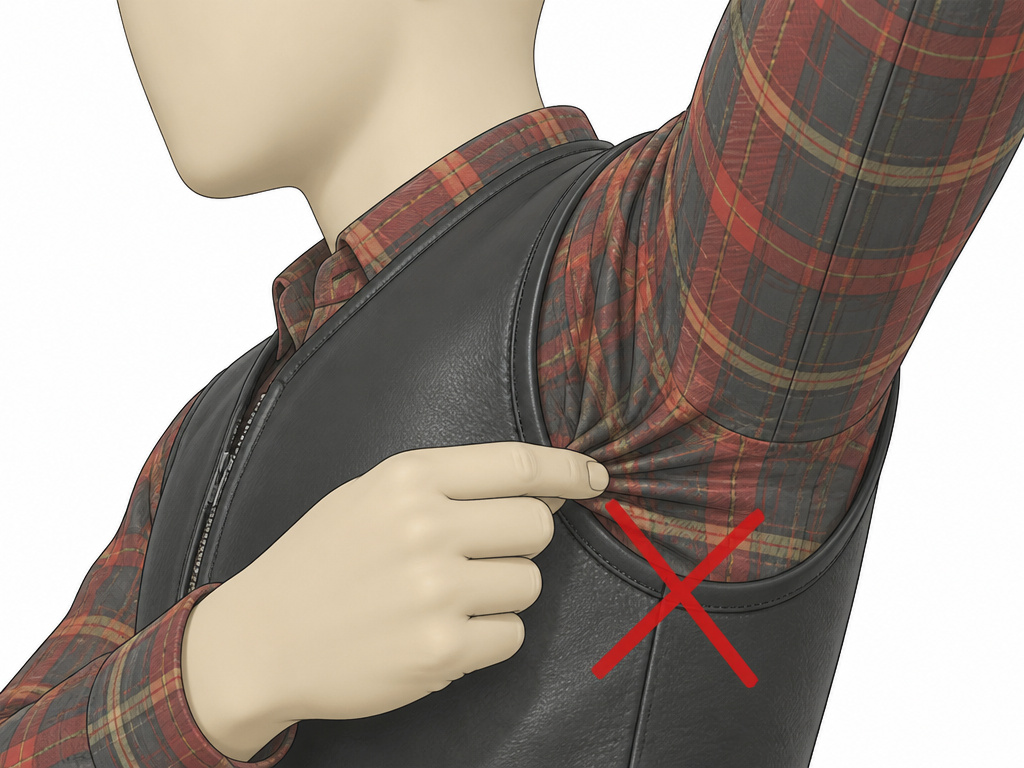
Fit is where a vest goes from a clever layering piece to a frustrating mess of tight shoulders and pulled buttons. Let me share what I’ve learned: you must buy for the final layered look, not for how it fits over a t-shirt in the store.
Most off-the-rack leather vests, especially fashion-forward cuts, are designed to fit snugly against the body. That’s fine if you only ever wear it over a thin tee. The moment you try to layer it over a flannel shirt, a hoodie, or a light sweater, the armholes tighten, the chest pulls, and the whole garment feels restrictive. You lose the very mobility the vest is supposed to provide.
The rule from manufacturers like Buffalo Jackson is clear: if you are between sizes, or if you plan to wear anything heavier than a dress shirt underneath, size up. The vest should zip comfortably over your intended layer without straining the zipper or creating a visible “X” of tension across your torso.
Here’s a quick checklist for fit: 1. Shoulders: The seam should sit right at the edge of your shoulder bone. Any further in, and it will bite into your arm with a layer underneath. 2. Chest: With your intended base layer on, zip the vest. You should be able to take a deep breath and raise your arms slightly forward without feeling like the seams are going to burst. 3. Length: A vest should end at or just below your natural waistline. Too long, and it disrupts your proportions and can bunch when you sit. Too short, and it won’t cover the waistband of your pants, breaking the line of your outfit. 4. Armholes: This is the critical test. With your base layer on, lift your arms. The vest’s armholes shouldn’t rise up uncomfortably high or pinch your underarms.
Getting the fit right is what allows a vest to function. It’s the difference between a piece that feels integrated and one that feels like a costume.
The Three Layering Archetypes That Actually Work
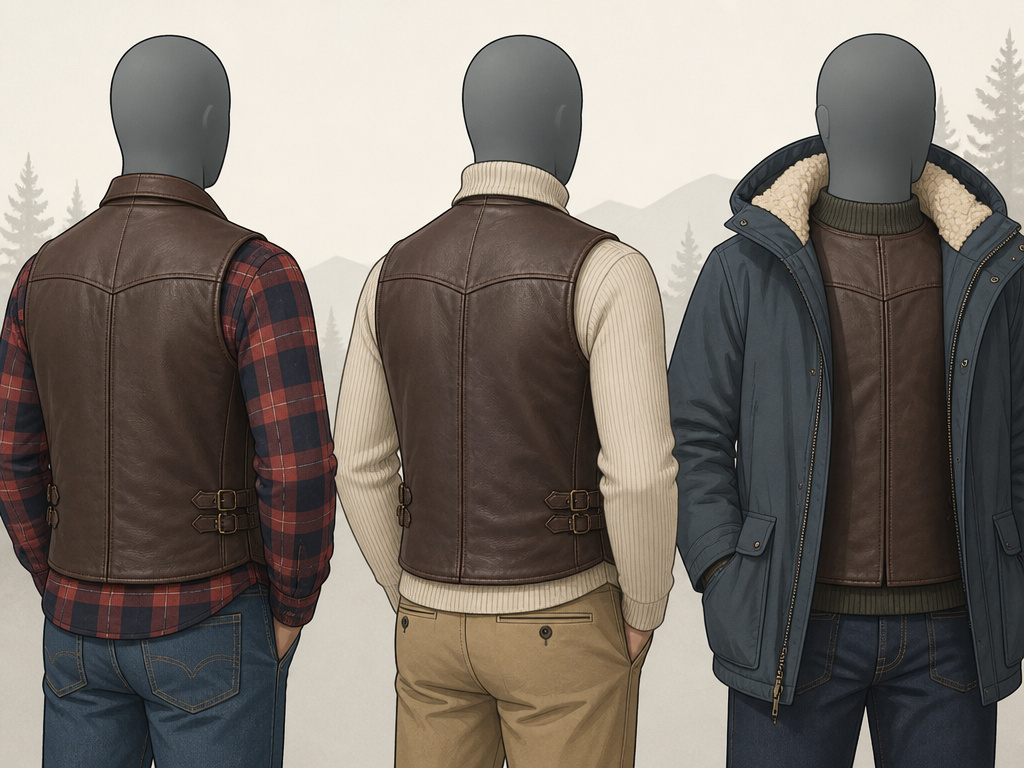
You don’t need infinite outfit combinations. You need two or three reliable formulas that handle 90% of situations. These are the ones I use, grounded in that core principle.
1. The Casual Core: Vest + Flannel/Hoodie + Jeans
This is the classic for a reason. It works. A leather or down vest over a plaid flannel or a simple hoodie with jeans and boots is the uniform of fall. – Why it works: The flannel or hoodie provides sleeve coverage, texture, and insulation. The vest adds wind resistance, structure, and core warmth. The look is rugged but intentional. – Pro tip: Pair a solid-color vest with a patterned shirt, or vice versa. Let one element be the star. If your vest is a bold brown shearling, keep the shirt a muted plaid or a solid grey. – The mistake: Using an oversized hoodie. The fabric will bunch at the shoulders and armholes, creating a sloppy, bulky silhouette. Keep the middle layer relatively streamlined.
2. The Smart Layer: Vest + Turtleneck/Sweater + Chinos
This steps the vest into smarter casual territory. A quilted leather or wool herringbone vest over a fine-gauge turtleneck or a crewneck sweater with dark chinos works for the office, a dinner, or a weekend event. – Why it works: The smooth leather and soft knit create a rich textural contrast. The vest provides a defined shape over the sometimes-formless drape of a sweater. – Pro tip: Keep the vest zipped up and pull the collar of the turtleneck out over the top. This creates clean lines and integrates the two pieces. – The mistake: Wearing the vest unzipped over a bulky cable-knit. It looks disjointed and negates the vest’s insulating purpose.
3. The Winter System: Vest as Mid-Layer Under a Coat
This is the most practical and underrated use. When the forecast calls for real cold or wind, your leather or down vest becomes a superstar mid-layer. – How it works: Start with a moisture-wicking base layer (a thin long-sleeve tee). Add your vest. Then, put your regular winter coat or jacket on over everything. – Why it’s brilliant: The coat handles wind, rain, and overall coverage. The vest adds concentrated warmth exactly where your coat’s insulation might be thin, your core. Your arms aren’t restricted by two sets of sleeves. – Pro tip: Before you commit, test the combination. Make sure your coat still fits comfortably over the vest without feeling like a straitjacket. This is where sizing up in the vest pays for itself.
I used to assume a vest was just for looks until I tried my shearling one under my wool overcoat during a windy, 35°F day. The coat blocked the wind, the vest locked in the heat, and my arms were free to move. I was warmer than I’d been in a much bulkier insulated jacket. The principle clicked.
These three templates cover the ground. They treat the vest as a component, not a standalone statement.
The Care Rules That Prevent Ruin
A vest is an investment. How you care for it determines its lifespan. Let’s be clear about some non-negotiable rules drawn from the manufacturer guides.
For damp leather: If your vest gets wet from rain or snow, do not use a radiator or hair dryer. The direct heat will cause the leather to dry out, crack, or distort. Blot it gently with a towel and let it air-dry at room temperature, away from strong heat sources.
For suede: Suede is a different beast. Water and road salt can leave permanent marks and stiffen the nap. If you’re wearing suede in winter, check the forecast. Use a protector spray formulated specifically for suede, not a general leather conditioner.
For storage: Never, ever store leather in a plastic garment bag. Plastic traps moisture and can lead to mildew. Store your vest on a wide, padded hanger to support its shoulders. For down vests, store them loose, not compressed in a stuff sack, so the down fill maintains its loft and doesn’t permanently clump.
Practically speaking, conditioning is only needed once or twice a season for most leathers. Use a light, absorbent conditioner and apply it in thin coats, letting each soak in fully before even thinking about the next. It’s like applying a hand-rubbed oil finish to wood, you work with the material, not against it.
Frequently Asked Questions
Can you wear a leather vest in the winter?
Yes, but not as your only outer layer. It works best as part of a layered outfit. In mild, dry conditions, wear it over a sweater or hoodie. In colder, windy, or wet weather, wear it as a mid-layer under your winter coat to add core warmth without bulk.
What do you wear under a leather vest?
Start with a base layer that provides sleeve coverage and manages moisture, a long-sleeve tee, a thin turtleneck, or a flannel shirt. The key is to choose a layer thin enough to fit comfortably under the vest without bunching, yet substantial enough to keep your arms warm.
How should a leather vest fit?
It should fit close to the body but with enough room to accommodate your intended base layer. If you plan to wear it over a sweater or flannel, you will likely need to size up. The shoulders should sit correctly, the chest should not pull when zipped, and the length should hit at your natural waist.
Are leather vests still in style?
Absolutely. Leather vests are a timeless layering piece, moving beyond fleeting trends. Their current popularity is rooted in versatility and function, not just fashion. Styles range from rugged biker and Western cuts to sleek, minimalist designs that work in smart-casual settings.
What’s the difference between a leather vest and a down vest?
Leather vest is primarily about style, wind resistance, and durable outer shell. A down vest is primarily about lightweight, high-efficiency insulation. Many hybrids exist, like a leather-shell down vest, which combines the benefits of both: the wind-blocking of leather and the warmth of down.
The Bottom Line
A leather vest isn’t a substitute for a jacket. It’s a strategic piece of an outfit system. Its value lies in doing one thing exceptionally well: keeping your core warm while leaving your arms free. Master that system by matching the vest type to the temperature, sizing it for layers, and deploying it within the three reliable archetypes.
The one rule to walk away with? If the temperature is below 50°F or the weather is wet or windy, your vest belongs under your coat, not over your sweater. That single shift in thinking turns it from a fair-weather accessory into a four-season workhorse. Everything else is just styling the details.
