
Loafers vs Moccasins: Deciding Your Ideal Slip-On Footwear
This post contains affiliate links. As an Amazon Associate, we earn from qualifying purchases.
This post contains affiliate links. As an Amazon Associate, we earn from qualifying purchases.
Loafers are structured, slip-on dress shoes with a defined heel, often made from stiffer leathers and designed for a polished look from business casual to suits. Moccasins are soft-soled, handsewn shoes originating from Indigenous North American footwear, prioritizing ultimate comfort, flexibility, and a casual, slipper-like fit. The choice isn’t about which is better, but which solves the specific problem in front of you: dressing up jeans or padding around the house.
That distinction in intent is everything. One evolved in European workshops for city streets; the other was born on natural terrain for tactile connection. Getting this wrong means buying a shoe that fights your lifestyle at every step.
What follows is a breakdown of construction, material truths, and the specific situations where each shoe not only fits but genuinely excels. By the end, you’ll know whether your next purchase should have a rigid counter or a supple handsewn seam.
Key Takeaways
- Formality is the divider: Loafers dress up casual pants and down suits; moccasins are strictly casual or loungewear.
- Construction dictates longevity: A loafer’s Goodyear welt allows for resoling; a moccasin’s handsewn upper is its strength, but its thin sole often wears faster.
- Comfort isn’t guaranteed by softness: A stiff loafer can mold to your foot, while a poorly fitted moccasin can cause blisters as easily as any shoe.
- Ignore the “hand-stitched” hype for loafers: Quality machine stitching on a loafer is often stronger and more consistent.
- Your climate decides: Rubber-soled loafers and outdoor moccasins handle wet pavement; leather-soled loafers and traditional moccasins are for dry days indoors.
The Core Difference: Intent and Evolution
The split starts with purpose. A loafer was designed to be worn out, as an alternative to laced shoes. A moccasin was designed to be worn, period, as practical, protective footwear that felt like a second skin.
The loafer is a product of cobblers and tailors, evolving from the Norwegian moccisin and the British house slipper into a staple of mid-20th-century American prep. The moccasin is a product of necessity and craftsmanship, with a construction technique perfected by Indigenous peoples long before European contact.
This history lives in every detail. The loafer’s rigid heel counter and often stacked leather heel provide structure for all-day wear on hard surfaces. The moccasin’s absent heel counter and single-piece upper wrapped under the foot prioritize flexibility and ground feel. One is an adaptation of formal shoemaking; the other is a different system entirely.
The Loafer: Anatomy of a Dress Shoe
Let’s be clear about this: a loafer is a dress shoe that happens to lack laces. Its components, insole, welt, outsole, heel, follow the same principles as an Oxford or Derby. This is why you’ll see terms like Blake stitch and Goodyear welt in quality loafer descriptions. These are construction methods that allow the sole to be replaced, extending the shoe’s life for a decade or more.
The formality spectrum within loafers is wide. A polished Del Toro Milano loafer in calfskin sits at the dressier end, capable of pairing with a navy suit. A Wolf & Shepherd Closer™ Loafer with its padded scuba lining and rubber sole leans into “smart casual,” built for comfort over tradition. Then you have minimalist designs like the Groundies Trento, which uses a barefoot-style sole but retains a loafer’s silhouette.
| Loafer Type | Best For | Construction & Material Clues |
|---|---|---|
| Penny / Tassel | Business casual, polished weekends | Often leather sole, firm heel, structured toe box. |
| Driving / Slip-On | Casual Fridays, relaxed outfits | Rubber nubs or soles, softer leathers, more flexible. |
| Minimalist / Barefoot | Everyday comfort with a sleek look | Thin, flexible soles, zero-drop heel, wider toe box. |
The common thread is intent: to present a finished, intentional look. Even the most casual loafer has more in common with a sneaker in a business setting than with a slipper.
Where the “Comfort” Promise Fails
A rubber sole doesn’t automatically mean comfort. Research on the Hermès Icone loafer shows owners reporting heel rubbing and blisters despite the rubber outsole. The issue is last shape, the three-dimensional mold around which the shoe is built. If the last doesn’t match your foot’s volume and shape, no amount of cushioning will help.
Furthermore, the pursuit of a sleek profile often means a narrow toe box. Your toes should not feel pinched sideways. A loafer should feel snug at the heel and instep, with room for your toes to spread. Breaking in a stiff leather loafer is normal; enduring chronic pain is not.
The Moccasin: A Deeper Dive
True moccasin construction is a marvel of efficiency. A single piece of leather (the vamp) is gathered over the instep and sewn to a separate piece that forms the bottom (the plug), or in a “true moccasin” construction, the same piece wraps under the foot entirely. This is the handsewn detail you see on brands like L.L.Bean and Minnetonka. There are no separate quarters, no glued-on heel counter. The structure comes from the leather itself and the tension of the stitching.
This design has two major implications. First, it’s incredibly flexible and comfortable from day one. Second, the sole is often the weakest point. Traditional moccasins used thin, smoked leather soles. Modern versions use rubber crepe or patterned outsoles, but they remain relatively thin for ground feel, not durability on asphalt.
Where this goes sideways: Assuming all moccasins are indoor slippers. The Russell Moccasin Backcountry model, documented as the boot worn by Earl Shaffer to hike the entire Appalachian Trail, proves that with the right materials and construction, the moccasin pattern can be built for extreme outdoor durability.
For everyday use, you have a spectrum. The Manitobah Métis Moccasin with its sheepskin footbed and crepe sole is for “indoor and light outdoor use.” The Earthingmoccasins Barefoot-Moccasin uses a single 2mm layer of bull-calf leather as its sole, designed for maximum sensory feedback and home resoling. The L.L.Bean Blucher Moc adds a more traditional rubber lug sole for better wet-surface traction, blurring the line.
Loafers vs Moccasins: The Direct Comparison
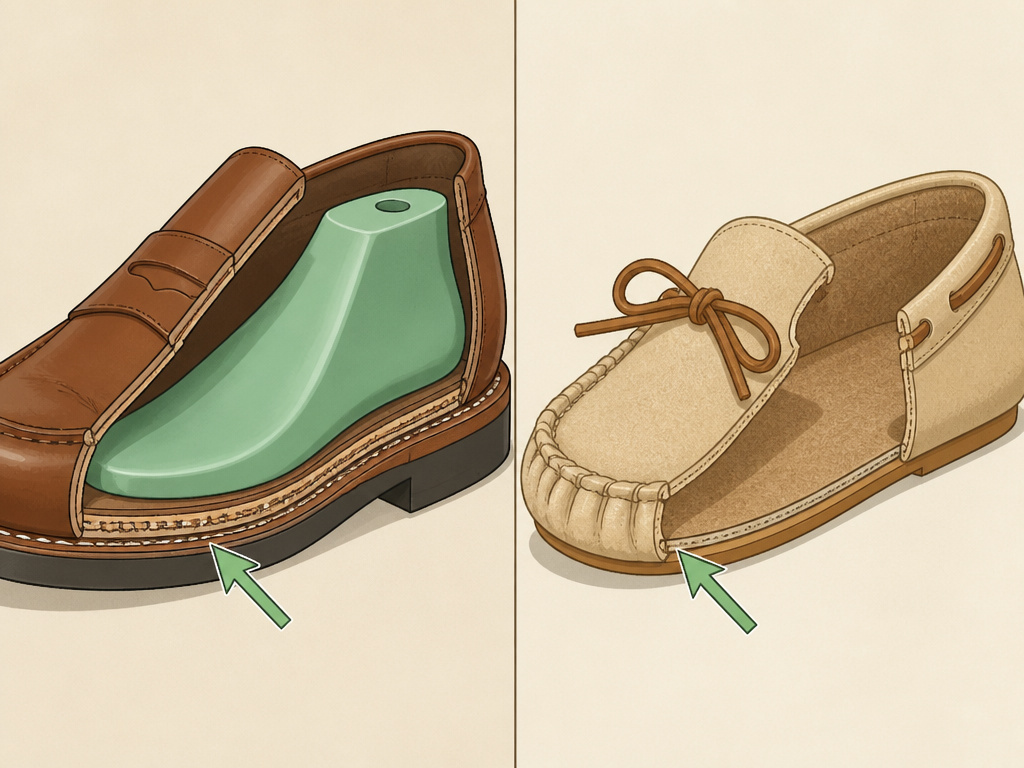 This isn’t about good versus bad. It’s about matching the tool to the task. Let’s put them head-to-head on the criteria that matter.
| Aspect | Loafers | Moccasins |
|---|---|---|
| Best Occasion | Office, dinners, smart-casual events, anywhere you’d wear chinos or a blazer. | Lounging, quick errands, casual indoor gatherings, as a house shoe. |
| Construction | Built on a last, often with a welted or stitched sole for resoling. | Handsewn upper, often with a cemented or thin stitched sole. |
| Foot Feel | Structured, supportive. Molds to foot over time. | Immediately flexible, slipper-like. Conforms to foot quickly. |
| Durability Focus | The sole and welt connection. Built for hard surfaces and repeated wear. | The handsewn upper seam. The thin sole is often the first point of wear. |
| Style Vibe | Polished, intentional, European heritage. | Relaxed, artisanal, North American heritage. |
When to choose a loafer: Your life requires a shoe that transitions from a desk to a dinner table without a second thought. You value longevity and are willing to invest in recrafting. You need a defined, polished silhouette.
When to choose a moccasin: Your priority is instant, all-day comfort at home or in very casual settings. You appreciate artisanal construction and natural materials. You want a shoe that disappears on your foot.
Critical Buying Considerations Beyond Style
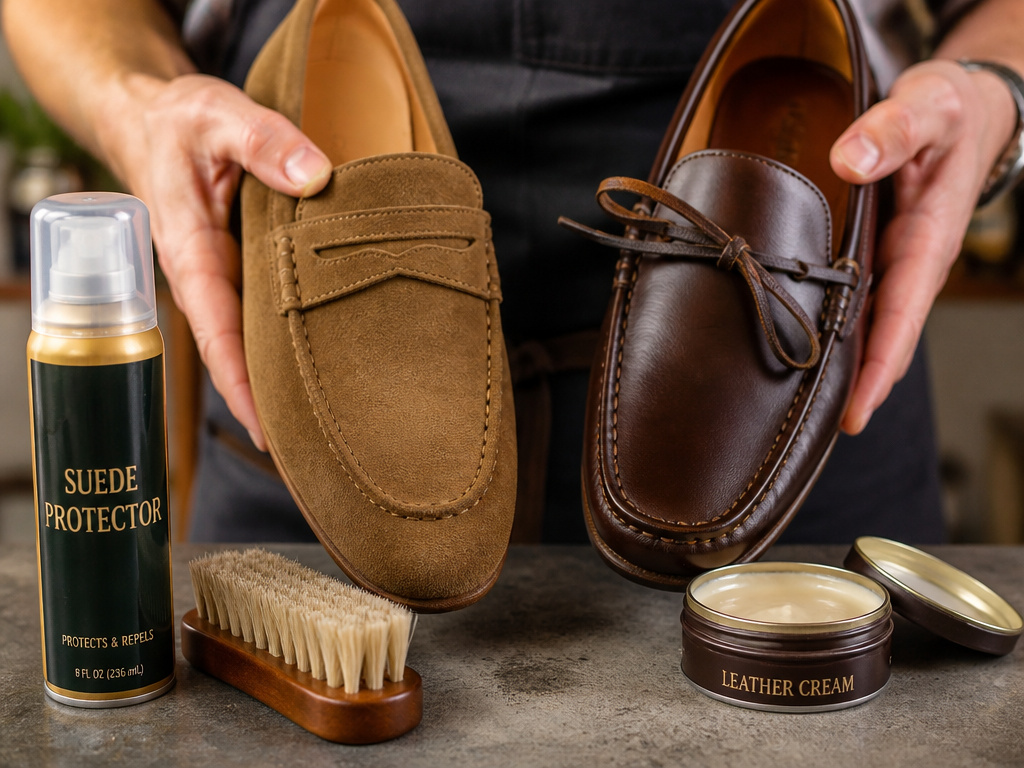 People often ask about using kitchen products as quick leather conditioners, but I recommend against it. Substances like olive oil can eventually go rancid and attract dust, damaging the leather. This applies to both categories: use products made for the job.
For leather care, the type of leather matters more than the type of shoe. A suede loafer and a suede moccasin need the same brush and protector. A polished calfskin loafer needs cream, not the heavy wax you might use on a work boot.
For fit, heed the specific advice. The Wolf & Shepherd Closer™ Loafer runs large, the brand advises sizing down. Many handsewn moccasins, like those from Manitobah, are built on a “heritage fit” last and may feel awkwardly straight until the materials mold to your foot. Don’t assume your sneaker size is universal.
Finally, inspect the interior finishing. A quality loafer will have a clean, lined interior with no rough seams. A quality moccasin will have even, tight stitching on the inside of the vamp seam. This is where failures start, hidden from view.
Frequently Asked Questions
Can moccasins be worn outside?
It depends on the sole. Traditional leather-soled moccasins are for dry, indoor use. Models with rugged rubber soles, like the L.L.Bean Blucher Moc or the Manitobah Street Moc with its “Turtle Sole,” are designed for outdoor wear. Always check the manufacturer’s intended use.
Are loafers considered formal shoes?
They exist on a spectrum. A sleek, leather-soled penny loafer in black calfskin can be worn with a suit in many modern business settings, though it’s less formal than an Oxford. A tassel or bit loafer is classic business casual. Driving loafers or chunkier styles are strictly casual.
Which is more comfortable, loafers or moccasins?
Comfort is subjective. Moccasins offer immediate, flexible comfort like a slipper. Loafers offer structured, supportive comfort that develops as the shoe breaks in. For long periods of standing on hard floors, a well-fitted, supportive loafer will often beat a soft moccasin.
How should loafers fit?
Loafers should fit snugly around the heel and instep to prevent slipping, but with ample room in the toe box. There should be no pinching. A small amount of “heel slip” (1/8 inch or less) is common and often disappears as the sole flexes and the shoe molds to your foot.
What’s the price difference between loafers and moccasins?
You can find both at various price points. However, well-constructed, Goodyear-welted leather loafers from established shoemakers often command a higher price due to the complexity of construction and resoling potential. High-quality moccasins pay for the handsewn labor and premium materials like moosehide and shearling.
The Bottom Line
So, loafers vs moccasins? It’s not a battle. It’s a choice between two different tools for two different jobs. If you need one shoe to cover business casual and weekends, consider a pair of versatile leather loafers from Allen Edmonds. If you want the ultimate in-house comfort or a truly casual, artisanal shoe, a pair of handsewn moccasins is the answer.
The one rule that applies to both: ignore the marketing gloss about “air flex properties” or “memory foam” if the fundamental shape is wrong for your foot. The lasting comfort of any shoe, from a $30 slipper to a $300 loafer, comes from the marriage of its construction to your anatomy. Find that match, and you’ve found a shoe you’ll wear for years.
