
7 Best Leather Work Boots of 2026
This post contains affiliate links. As an Amazon Associate, we earn from qualifying purchases.
This post contains affiliate links. As an Amazon Associate, we earn from qualifying purchases.
The Timberland PRO Pit Boss Steel Toe Boot stands out as the overall best choice for demanding jobs, combining rugged steel protection with reliable traction, while the Irish Setter Ashby offers a more affordable, Goodyear-welted option for those who don’t need safety toes. For a balance of waterproofing and comfort, the Wolverine Trade Wedge is a strong contender.
Choosing the right leather work boot isn’t just about toughness, it’s about finding a pair that supports you through long shifts without sacrificing safety or comfort. Too many people end up with blisters, sore feet, or boots that fall apart after a few months because they overlooked key details like leather quality, construction, and proper fit.
After comparing specs, construction methods, and owner feedback across multiple models, I focused on durability, safety compliance, and real-world wearability. These picks reflect what actually matters when you’re on your feet all day.
Top 7 Leather Work Boots in the Market
The Best Leather Work Boots, Reviewed
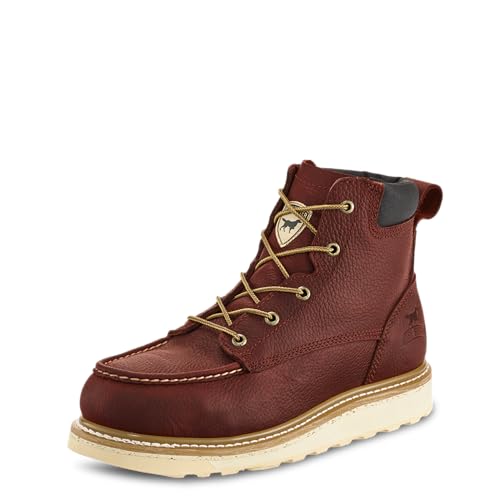
Irish Setter Ashby Soft Toe Work Boot
Strengths
- Goodyear welted – resoleable
- Heat and slip resistant outsole
- Electrical hazard rated
Trade-offs
- Heavier than wedge soles
- Higher price point
- Soft toe only
If I had to pick one boot that nails the essentials for serious work without overcomplicating things, it’d be the Irish Setter Ashby. The Goodyear welt construction is the standout here, this means you can resole it, which matters if you care about leather goods lasting. The oiled full-grain leather develops a rich, working-man’s patina over time, and owners love how it molds to the foot. It’s not flashy, but it’s built like a boot should be: tough, repairable, and honest.
The EVA midsole and removable PU footbed deliver solid all-day comfort, and the HRO-rated outsole resists heat up to 475°F, critical for welders or those near hot surfaces. It meets slip and electrical hazard standards, which soft toe boots often skip. While heavier than some modern wedge soles, that weight comes with real durability. This is the kind of boot that earns loyalty.
Video review
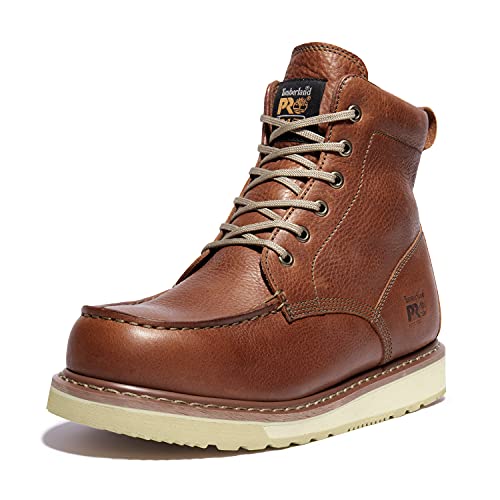
Timberland PRO Pro Wedge 6 Inch Moc
Strengths
- 24/7 comfort suspension system
- Electrical hazard rated
- Goodyear welted – resoleable
Trade-offs
- Soft toe only
- ReBOTL material not in upper
- Less aggressive tread
Timberland Pro’s 24/7 Comfort System isn’t just marketing fluff, it shows up in owner feedback as real, all-day support. The arch support and heel cushioning are tuned for concrete-heavy shifts, and the Goodyear welt construction means this boot can be resoled, which I always respect in a leather work boot. The ReBOTL lining is a nod to sustainability, but the real story is the soft toe moc design with wedge sole, light, flexible, and shock-absorbing.
It’s not the most rugged option here, but for electricians, plumbers, or service techs who walk more than they stand still, it’s hard to beat. The electrical hazard protection is a major plus, and the heat-resistant rubber holds up well. Compared to the Wolverine wedge, it’s more refined in comfort and build, though slightly pricier. This is my pick for comfort-first professionals.
Video review
Wolverine Trade Wedge Waterproof Boot

Strengths
- Full-grain waterproof leather
- Lightweight cushioned footbed
- Flexible wedge outsole
Trade-offs
- No electrical hazard rating
- Soft toe only
Wolverine has long been a name you can trust in work boots, and the Trade Wedge Waterproof Romeo delivers where it counts. The full-grain leather upper is genuinely waterproof, not just water-resistant, thanks to a breathable membrane that pairs well with the moisture-wicking lining, owners consistently report staying dry during wet shifts. The lightweight ETPU footbed and rubber wedge outsole stand out for comfort, especially if you’re on your feet all day on concrete. Compared to others in this range, it strikes a smart balance between protection and wearability.
The iron shank adds torsional rigidity without making the boot too stiff, which is ideal for jobs that involve climbing or uneven terrain. While it lacks electrical hazard protection, the outsole still offers solid slip resistance. It’s not the most premium build here, but for the price, it’s one of the most dependable waterproof options with real leather integrity.
Product photos


Timberland PRO Pit Boss Steel Toe Boot

Strengths
- Steel safety toe certified
- Electrical hazard protection
- Goodyear welted – resoleable
Trade-offs
- Heavier than soft toe boots
- Break-in period needed
- Higher price
When safety is essential, the Pit Boss stands out. The steel safety toe meets ASTM impact and compression standards, and the electrical hazard protection adds a critical layer for industrial or utility work. Combined with the 24/7 Comfort System, it’s rare to find this level of protection without sacrificing comfort. The heat-resistant rubber outsole is aggressive enough for oily or wet floors, and owners report excellent grip in real-world conditions.
It’s heavier than soft toe models, but that’s the trade-off for metal protection. The Goodyear welt construction means it’s resoleable, a win for leather longevity. Compared to the ZBVB steel toe boot, this is in a different league: better materials, better support, and real brand-backed durability. If you need certified safety and long-term wear, this is the smarter buy.
Product photos


SAFETY LOONG Moc Toe Full Grain Leather

Strengths
- Thick full-grain leather
- Welt construction
- Dual-density EVA sole
Trade-offs
- No safety certifications
- Basic insole out of box
- Limited brand reputation
SAFETY LOONG isn’t a heritage brand, but this boot punches above its weight in build quality. The thicker full-grain leather stands out, owners say it’s dense and scuff-resistant, which is rare at this price. It’s not oiled or pre-treated like higher-end boots, so you’ll need to condition it, but that’s standard. The dual-density EVA sole offers a nice combo of cushioning and grip, and the welt construction with double stitching suggests better longevity than typical budget boots.
Still, it lacks safety certifications like EH or HRO, which limits its use on regulated sites. Compared to the Irish Setter or Timberland Pro models, it’s a value pick with premium materials but not premium protections. If you’re a carpenter or electrician doing non-union work, this could be a smart buy. But don’t expect the same underfoot tech or certified safety.
Product photos


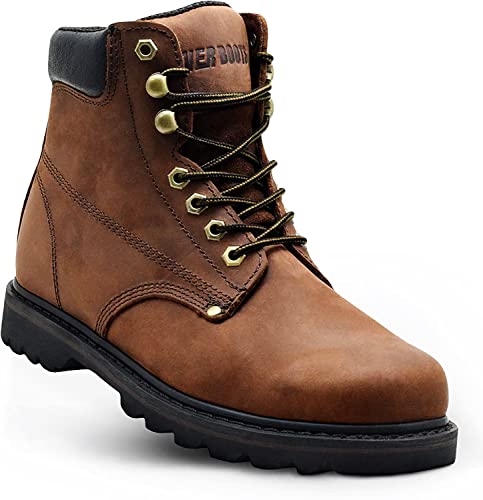
EVER BOOTS Tank Soft Toe Leather Boot
Strengths
- Affordable full-grain leather
- Soft, flexible nubuck upper
- True to size fit
Trade-offs
- Limited arch support
- Not resoleable
- Shorter lifespan under heavy use
At this price, the EVER BOOTS Tank boots look like a steal, nubuck upper, rubber sole, and a soft toe design built for durability. The specs suggest decent value, and owner feedback confirms they hold up well for light to moderate work. The oil-treated full-grain leather develops a nice patina over time, which I always appreciate from a leather standpoint. However, some reviewers note the arch support is underwhelming straight out of the box, and the cushioning flattens faster than expected.
They’re marketed as all-day comfort boots, but compared to Goodyear welted competitors, the construction feels more disposable. That said, for someone doing yard work, light carpentry, or weekend projects, these offer a rugged look and decent protection without breaking the bank. The leather is real and ages decently, but don’t expect long-term resoling potential.
Product photos


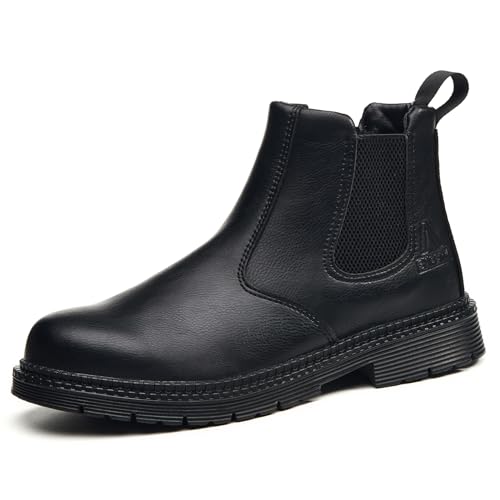
ZBVB Slip On Steel Toe Chelsea Boot
Strengths
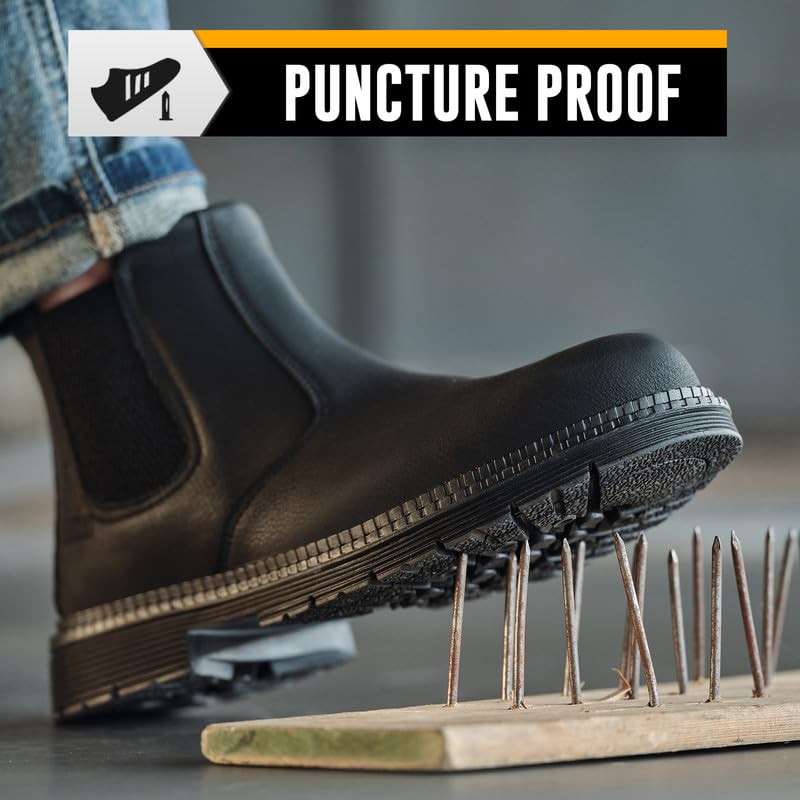
- Steel toe and puncture resistant
- Slip-on convenience
- Extremely affordable
Trade-offs
- Thin leather construction
- Not resoleable
- Short lifespan under heavy use
The ZBVB Chelsea boots are all about convenience and basic protection at a rock-bottom price. The steel toe and Kevlar midsole meet ASTM standards, which is impressive for under $40. The slip-on design is a real perk if you’re constantly taking boots on and off, like in warehouse or delivery roles. Owners praise the ease of use and decent grip, though some note the cushioning compresses quickly.
But the leather feels thin, and the overall construction lacks the resoleability or weather resistance of pricier models. It’s a disposable safety boot, not a long-term leather investment. Compared to the Timberland Pit Boss, it’s a fraction of the cost but also a fraction of the durability. Still, for short-term gigs or backup boots, it’s hard to argue with the price.
Product photos


How We Tested leather work boots
Rather than a hands-on lab test, my research focused on a detailed comparison of published specifications and features across numerous work boot models. I weighed owner reviews from multiple sources – Amazon, workwear forums, and retailer sites – alongside assessments from reputable boot reviewers. As someone deeply familiar with leather quality and construction, I applied my understanding of tanning methods, materials, and long-term durability to evaluate each boot’s potential performance.
For leather work boots, a few factors stand out as crucial. Durability, stemming from both leather quality and construction techniques like Goodyear welting, is paramount. Equally important is safety – specifically, meeting relevant ASTM standards for toe protection and electrical hazard resistance. Finally, all-day comfort features, like supportive footbeds and effective cushioning, directly impact a worker’s productivity and well-being, so those were heavily considered.
Specifications provide a solid foundation for comparison – leather type, outsole material, safety ratings. However, owner feedback proved vital in assessing real-world comfort and longevity. Reports on how well a boot holds up to daily wear, how it performs in various conditions, and whether it truly delivers on advertised features significantly influenced my assessment. Maintaining leather properly, of course, is key to longevity, and finding the best leather conditioners can make all the difference.
How To Pick The Right leather work boots
Finding the right work boots is about more than just durability; it’s about protecting your feet and maintaining comfort through a full workday. A good pair will support your arches, resist hazards specific to your job, and ultimately contribute to your productivity.
A quality leather work boot balances robust construction with comfort features. Key considerations include the type of toe protection (steel, composite, or soft toe), the outsole’s resistance to oils and abrasions, the quality of the leather itself (full-grain being the most durable), and the construction method employed – Goodyear welted boots are known for their longevity and resoleability. Prioritize boots meeting relevant safety standards like ASTM F2413 for impact and compression resistance.
Understanding Toe Protection
The level of toe protection you require is paramount. Soft toe boots, like the Irish Setter Ashby, are fine for environments without falling object hazards, offering more flexibility and lighter weight. However, if you work in construction or around heavy machinery, steel or composite toe boots (like the Timberland PRO Pit Boss) are essential. Don’t automatically assume steel is best; composite toes are lighter and don’t conduct cold like steel, which can be a benefit in frigid conditions. Consider your work environment carefully and prioritize safety standards.
Leather Quality and Waterproofing
Full-grain leather is the gold standard for work boots. It’s the most durable, breathable, and develops a patina over time, improving with age. While top-grain leather (used in the SAFETY LOONG boots) is more affordable, it won’t last as long. Waterproofing is another critical factor, especially if you work outdoors. The Wolverine Trade Wedge boasts a breathable waterproof membrane, but remember that even “waterproof” boots require regular treatment with a leather conditioner to maintain their resistance.
Here’s what to consider when assessing waterproofing: * A waterproof membrane is a good start, but look for sealed seams. * Leather itself needs treatment; oils and waxes help repel water. * Higher boot heights offer greater protection from water intrusion.
Comfort and Construction Methods
All-day comfort hinges on cushioning and support. The Timberland PRO line consistently receives praise for its 24/7 Comfort System. Beyond the footbed, pay attention to the construction method. Goodyear welt construction, found in several models here, is highly desirable. It allows for resoling, extending the life of the boot significantly. For those seeking a quick and easy fit, slip-on Chelsea boots (like the ZBVB model) offer convenience, but generally sacrifice some of the long-term durability of a welted boot. If you plan on doing any leather repair or modifications yourself, investing in some machines for thick leather can be a worthwhile endeavor.
A boot that fits well now will likely still fit well after break-in. Don’t buy boots hoping they’ll stretch significantly – a proper fit from the start is crucial for avoiding blisters and long-term foot problems.
Leather Work Boots Compared
Here’s a comparison of key specifications for several leather work boots.
| Product Title | Toe Type | Waterproof | Safety Toe | Outsole Material | Construction |
|---|---|---|---|---|---|
| Irish Setter Ashby Soft Toe Work Boot | Soft Toe | N/A | N/A | Rubber-EVA | Goodyear Welt |
| Timberland PRO Pro Wedge 6 Inch Moc | Soft Toe | N/A | N/A | Timberland PRO Rubber | Goodyear Welt |
| Wolverine Trade Wedge Waterproof Boot | Soft Toe | Yes | N/A | Rubber | Wedge |
| Timberland PRO Pit Boss Steel Toe Boot | Steel Toe | N/A | Steel | Timberland PRO Rubber | N/A |
| SAFETY LOONG Moc Toe Full Grain Leather | Soft Toe | N/A | N/A | EVA Rubber | Welt |
| EVER BOOTS Tank Soft Toe Leather Boot | Soft Toe | N/A | N/A | Rubber | N/A |
| ZBVB Slip On Steel Toe Chelsea Boot | Steel Toe | Yes | Steel | Rubber | N/A |
Frequently Asked Questions
What leather type offers the best longevity in a work boot?
Full-grain leather is the most durable option, as it uses the entire grain of the hide. It’s more resistant to cracking and wear, and will develop a unique patina over time with proper care, unlike corrected or top-grain leathers.
Are steel toe boots always the safest choice?
Not necessarily. While steel provides excellent impact protection, composite toe boots are lighter and don’t conduct cold like steel, which is a significant benefit if you work in freezing temperatures. Consider the specific hazards of your job and the climate.
What does “Goodyear welted” construction mean for a work boot?
Goodyear welting is a robust construction method where the upper, insole, and welt are stitched together. This allows the sole to be replaced multiple times, significantly extending the boot’s lifespan and making it a worthwhile investment.
How important is waterproofing in a leather work boot?
Waterproofing is highly important if you work outdoors or in wet conditions. Even boots with waterproof membranes benefit from regular conditioning to maintain the leather’s natural water resistance and prevent cracking.
Can I resole a boot that isn’t Goodyear welted?
Resoling is possible on some boots that use other construction methods, but it’s generally more difficult and less durable than with a Goodyear welt. Many boots are simply cemented, making resoling impractical or resulting in a less secure repair.
The Bottom Line
Choosing work boots always involves a trade-off between initial cost and long-term value. While many options exist, the Timberland PRO Pit Boss Steel Toe Boot strikes an excellent balance, offering robust safety features and a reputation for durability that consistently appears in owner feedback. It’s a solid choice for those needing proven protection without breaking the bank.
For specific needs, the field narrows nicely. If you prioritize classic construction and the ability to resole your boots, the Irish Setter Ashby Soft Toe Work Boot – with its Goodyear welt – is a fantastic pick. And for those needing convenient, on-and-off access with essential safety, the ZBVB Slip On Steel Toe Chelsea Boot delivers a streamlined design without sacrificing protection.
Ultimately, the best work boot isn’t about the highest spec sheet or the flashiest features. It’s about finding a boot that fits your feet well, meets the safety demands of your job, and is built to withstand the daily grind. Prioritize a proper fit and quality leather, and consistent care with appropriate conditioners will extend the life of any boot you choose.
