
How to Clean & Condition Your Leather Briefcase Properly
This post contains affiliate links. As an Amazon Associate, we earn from qualifying purchases.
Clean your leather briefcase by removing debris, wiping with a damp cloth and mild soap, drying completely away from heat, and conditioning every 6-12 months. The climate dictates the schedule: condition every couple of months in arid climates, but only every 6-12 months in humid ones to prevent mold.
That climate split is the part most guides miss. They give you a generic “condition every six months,” which can either starve your bag in Arizona or drown it in Florida. Leather isn’t a synthetic; it’s a porous, responsive material that absorbs and releases moisture based on the air around it.
What follows is a methodical approach that treats your briefcase like the durable tool it is, not a museum piece. The guide explains the weekly wipe-down, the proper deep clean, the debate on stuffing for storage, and the exact signs that mean you should call a professional.
Key Takeaways
- Condition your briefcase based on your local climate, not a generic calendar. Arid climates need conditioning every couple of months; humid climates only need it every 6-12 months.
- Always air-dry leather away from direct heat sources. A hair dryer or radiator will bake the natural oils out and cause the leather to crack.
- For winter moisture or salt-water spills, use a damp cloth to blot first, not a dry one. The salt crystals need to be dissolved and lifted away to prevent residue.
- Store your briefcase empty, in a breathable cotton bag, in a cool, dry place. If you must use a box, include desiccant packets to absorb ambient humidity and prevent mold.
- If your briefcase is antique, has existing cracks or peeling, or shows signs of mold, stop. DIY cleaning can cause irreversible damage, take it to a professional.
What You’ll Need (And What to Skip)
Gather your tools before you start. You don’t need fancy kits, but you do need the right materials.
- Soft, lint-free cloths: Microfiber or plain cotton tee-shirt material works. Have at least two, one for cleaning, one for drying/buffing.
- A mild cleaning solution: A few drops of dish soap (like Dawn) in a bowl of warm water. That’s it. Avoid anything with harsh detergents, bleach, or vinegar.
- A soft-bristled brush: A horsehair detailing brush or a very soft toothbrush for seams and stitching. Leather conditioner: This is essential. Look for a water-based, non-silicone product like Bick 4 or Leather Honey.amazon.com/dp/B003IS3HV0?linkCode=osi&th=1&psc=1&tag=leathergenesis-20). I’ve relied on the same beeswax-based conditioner for a decade because it protects without clogging the leather’s pores.
- Clean, dry stuffing: White, undyed paper (newspaper is okay in a pinch, but acid-free tissue is better) or a plain cotton pillowcase.
Skip the saddle soap, the “all-in-one” cleaner/conditioner sprays, and any product promising to “waterproof” leather. Saddle soap is for stripping heavy grime from saddles, it’s overkill and drying for a briefcase. All-in-ones don’t let you control the cleaning vs. Moisturizing steps. Waterproofers seal the leather shut, preventing it from breathing and developing a patina.
The 5-Step Weekly Wipe-Down & Deep Clean
This isn’t a once-a-year chore. A quick weekly touch-up prevents the need for aggressive scrubbing later.
Step 1: Empty and Shake. Take everything out. Turn the bag upside down over a trash can and give it a firm shake. Get into every pocket and compartment. If your bag has a loose lining, pull it out to access crumbs and dust hiding in the corners.
Step 2: Vacuum the Interior. Use a handheld vacuum with a soft brush attachment. Gently run it over the interior fabric to lift dust, lint, and grit. This simple step is the fastest way to keep the inside fresh and prevent abrasive particles from wearing down the lining.
Step 3: Wipe the Exterior. Dampen one of your soft cloths with plain water and wring it out thoroughly. You want it damp, not wet. Wipe down the entire exterior, following the grain of the leather. This lifts surface dust and light dirt before it becomes embedded.
Step 4: Address Stains Immediately. For a fresh spill, blot, don’t rub, with a dry cloth. For an older mark or grease stain, dip your soft-bristled brush into your mild soap solution, work up a light lather on your palm, and gently brush the spot in a circular motion. Wipe away the soap with a damp cloth immediately. Let the area dry fully before moving on.
Common mistake: Rubbing a stain. This grinds the debris deeper into the leather’s pores. Blotting lifts it away.
Step 5: Dry Completely. This is the step people rush. Prop the bag open with the stuffing (more on that next) and let it sit in a room-temperature, well-ventilated area. A fan is okay; direct sunlight or a heater vent is not. Leather that feels dry to the touch on the outside can still be damp inside the thicker strap layers. Give it at least 24 hours.
| If you see… | The likely cause is… | The fix is… |
|---|---|---|
| A white, chalky residue | Salt deposit from winter moisture or sweat | Blot first with a damp cloth, then dry and condition. |
| Dark, damp spots with a musty smell | Mold or mildew from humid storage | Stop. This requires professional assessment. |
| Stiff, cracked areas | Chronic under-conditioning or heat damage | Multiple light conditioning sessions over weeks; may not be fully reversible. |
| Sticky, discolored patches | Silicone-based product buildup | Wipe with a barely-damp cloth; switch to a water-based conditioner. |
To Stuff or Not to Stuff Before Storage?
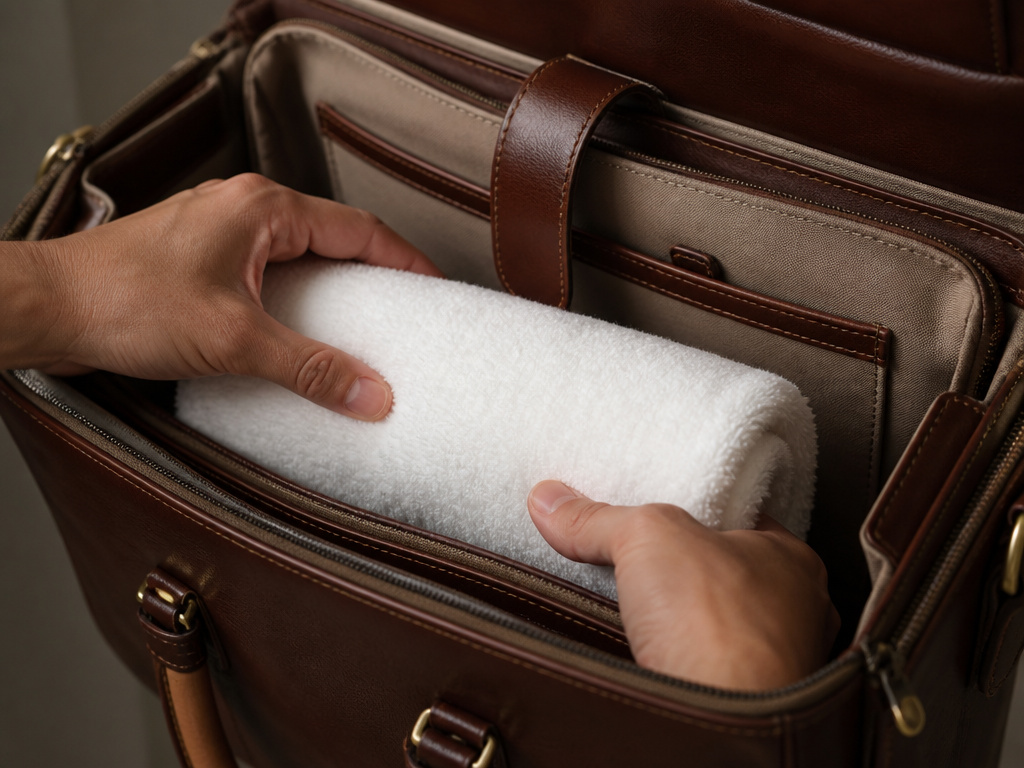
Here’s where even reputable sources disagree. I Medici Leather advises against stuffing with tissue paper, warning it can cause indentations. Classy Leather Bags and others recommend acid-free paper to preserve shape.
Let’s untangle that. The risk of indentation comes from cramming a bag too tightly with crumpled paper, creating hard pressure points. The benefit of light stuffing is maintaining the bag’s silhouette so the leather doesn’t slump and develop deep, permanent creases.
My take? Lightly stuff it. Use a soft, smooth filler like a rolled-up cotton towel or a pillowcase. The goal is gentle support, not a packed snowball. This is especially important for structured briefcases. For a soft-sided messenger, you can be more relaxed.
Where this goes sideways: Storing a leather bag stuffed in a humid closet. This traps moisture and is the fastest path to mildew. Always store in a cool, dry place, preferably inside a breathable cotton dust bag.
Conditioning: It’s All About Climate (And Thin Coats)
Conditioning isn’t optional maintenance; it’s how you replace the natural oils that keep leather supple. The factory-fresh feel fades as those oils evaporate or are cleaned away.
How often? This is the climate split from the intro. Buffalo Jackson specifies it clearly: in an arid climate, condition every couple of months. In a humid climate, every 6 months to a year is sufficient. In a dry desert, the leather is thirstier. In a muggy coastal city, over-conditioning can prevent the leather from breathing and encourage mold.
How to apply it:
- Ensure the leather is clean and completely dry.
- Apply a small amount of conditioner to a soft cloth, a dime-sized drop for a whole briefcase side.
- Rub it into the leather using small, circular motions, covering the entire surface. Pay extra attention to high-stress areas: straps, handles, and corners.
- Let it absorb for 15-20 minutes.
- Buff off any excess with a clean, dry cloth. The leather should feel nourished, not greasy.
A thin, even coat absorbed fully is better than a thick, gloppy one that sits on the surface. Think of it like applying a hand-rubbed oil finish to wood.
When to Call a Professional Cleaner
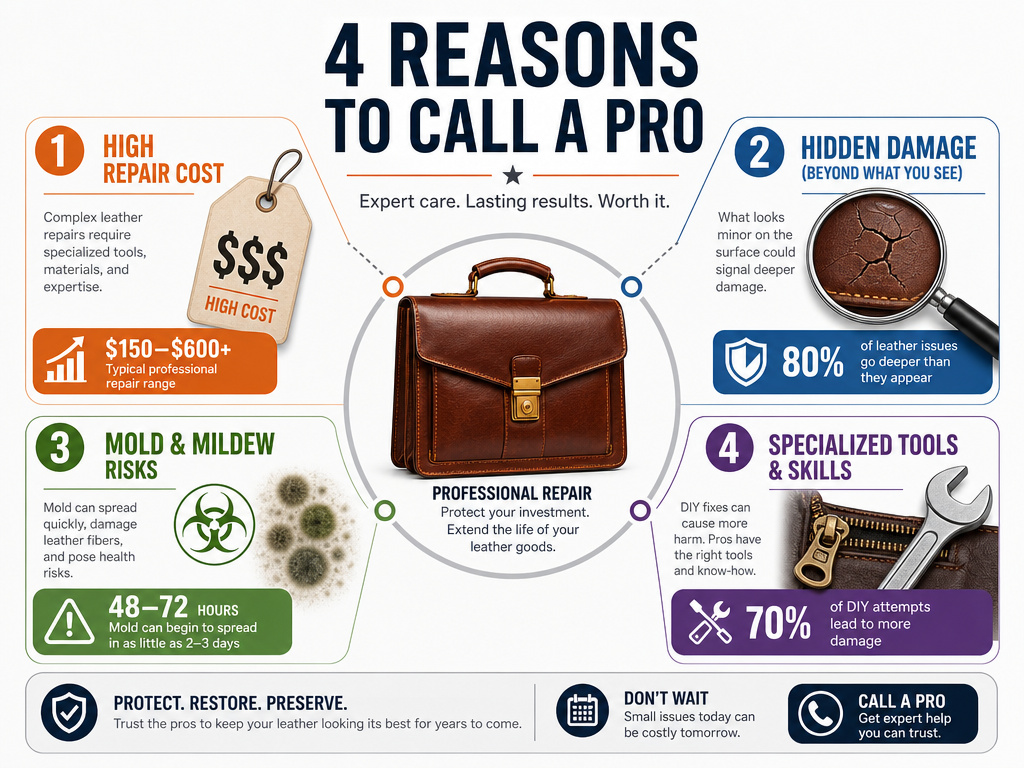
DIY is great for upkeep, but some problems demand an expert. According to Stuffmybags, you should seek professional help if your briefcase is:
- Very expensive or antique: The value and historical integrity warrant specialized care.
- Exhibiting cracking or peeling leather: This indicates the hide’s structure is compromised. DIY products can’t re-bond layers.
- Showing signs of mold: Spores can spread and pose a health risk. Pros have biocides to treat it safely.
- Having hardware issues: Loose rivets, broken zippers, or detached straps require tools and skills beyond cleaning.
Trying to fix these issues yourself can turn a repairable situation into a total loss. The cost of a professional restoration is often less than the cost of replacing a high-quality bag you’ve ruined.
Frequently Asked Questions
Can I use baby wipes on my leather briefcase?
No. Most baby wipes contain alcohol, fragrances, and lotions that can dry out leather or leave a sticky residue. They’re designed for skin, not tanned hide. Stick to a cloth dampened with water or a mild soap solution.
How do I get rid of a musty smell inside my bag?
First, empty it and let it air out for a few days in a dry place. Then, place an open box of baking soda or a few activated charcoal bags inside, close it up, and leave it for 48 hours. The odor absorbers will pull the smell out. Avoid using perfumed sprays; they just mask the problem and can stain the lining.
What’s the difference between cleaning full-grain and top-grain leather?
The process is the same, but top-grain leather has a sanded surface and often a protective topcoat. It’s generally more stain-resistant but can show scratches more easily. Full-grain leather, being the outermost layer with all its natural markings, is more porous and will absorb conditioner more readily, developing a deeper patina over time. Gentle care is crucial for both, but full-grain rewards it with more character.
Is it okay to use a hair dryer to speed up drying?
Never. Direct heat is one of the worst things you can do to leather. It causes the fibers to contract rapidly, forcing out natural oils and leading to brittleness and cracking. Patience is the only tool for drying leather.
How can I protect my bag from rain?
The best protection is a waxed canvas or nylon cover to throw over it. If it gets wet, blot the moisture with a dry cloth, stuff it to hold its shape, and let it air dry completely away from heat. Once dry, a light conditioning will replenish any oils lost. Avoid silicone-based “waterproofing” sprays.
The Bottom Line
Cleaning a leather briefcase boils down to respecting the material. It’s not complicated, but it is specific. Match your conditioning schedule to your local humidity, dry it slowly, and store it with care.
If you remember one thing, make it this: leather recovers from being a little dry far more easily than it recovers from being forced to stay damp or baked with heat. When in doubt, under-do it, wait, and observe. That patience is what turns a mass-produced item into a personal artifact that lasts for decades. For more on keeping all your leather goods in shape, our guides on leather backpack cleaning and basic leather shoe cleaning follow the same core principles.
