
How to Break in a Leather Belt | The 30-Day, No-Damage Method
This post contains affiliate links. As an Amazon Associate, we earn from qualifying purchases.
To break in a leather belt, wear it daily for 2-4 weeks, letting body heat and movement soften the leather naturally. For thicker belts (10-13mm), expect 4-8 weeks. Speed it up safely by hand-flexing for a minute daily, applying a single light coat of conditioner in week one, and storing it curved, not flat. Never use heat, soak it in water, or over-condition, these methods ruin the leather’s structure.
That stiffness when you first buckle it isn’t a flaw. It’s the hallmark of a dense, full-grain hide built to last decades, not a season. The break-in is the process of convincing those tightly packed leather fibers to memorize the curve of your body. Let’s be clear about this: a belt that feels supple on day one is usually soft because it’s thin or chemically treated, not because it’s high-quality.
What follows is the professional, no-damage method. This section details the realistic timeline, the three safe accelerators, and the destructive shortcuts that can turn a lifetime investment into a cracked, misshapen strap in an afternoon.
Key Takeaways
- A real full-grain leather belt needs 2-4 weeks of daily wear to break in; thicker competition belts (13mm) can take 2-3 months.
- Safe acceleration comes from gentle daily hand-flexing, one light conditioning in the first week, and curved storage.
- Heat and water are the enemy. Exposure above 50°C (122°F) shrinks leather fibers permanently, and soaking leads to mold and weak stitching within 48 hours.
- Condition sparingly. Leather can only absorb 5-15% of its weight in oil; over-conditioning makes it limp and stretches it out of shape.
- The belt’s stiffness is a feature. A broken-in belt should still provide firm support, not fold like a wet noodle.
Why a Stiff Belt is Actually Good News
You unbox a new belt, and it feels like a piece of seasoned oak. Good. That rigidity tells you the leather is full-grain, the top, densest layer of the hide, and likely vegetable-tanned. This tanning method uses natural tannins, preserving the fiber structure that gives leather its durability. A belt that’s soft immediately has often been sanded (corrected-grain) or treated with chemicals to pre-soften it, which sacrifices longevity for first-day comfort.
A 13mm thick leather belt, the gold standard for competitive powerlifting, requires 15 to 20 heavy training sessions to lose its initial rigidity. A 10mm belt might feel supple after just 5 sessions.
The break-in period is a one-time investment. Once the fibers have molded to your shape, they stay that way. You’re not just softening the leather; you’re training it. A properly broken-in belt offers consistent, reliable support exactly where you need it for years.
The Safe 30-Day Break-In Timeline
Forget vague promises. Here’s what you can actually expect with a standard 3-4mm full-grain leather dress or casual belt, assuming daily wear.
| Week | What You’ll Feel | What’s Happening Inside the Leather |
|---|---|---|
| 1 | Noticeable stiffness, may feel restrictive. | Body heat and flexion start to loosen the bond between tightly packed collagen fibers. |
| 2 | Significant softening, belt begins to hold a curve. | Fibers are flexing more freely; the belt starts to retain the shape of your waist. |
| 3-4 | Comfortably broken in. Conforms to your body. | The fiber alignment has stabilized. The belt is now molded to your unique shape. |
This timeline stretches with density and thickness. A belt made from Hermann Oak harness leather or a 5-6mm thick bridle leather can take 4-8 weeks. A 13mm powerlifting belt is a different beast entirely, often requiring 2-3 months of consistent use.
The process can’t be rushed without damage, but it can be gently guided. If your belt feels no different after two weeks, you’re likely not wearing it enough or it’s an exceptionally dense hide.
Three Safe Ways to Speed It Up (Without Ruining It)
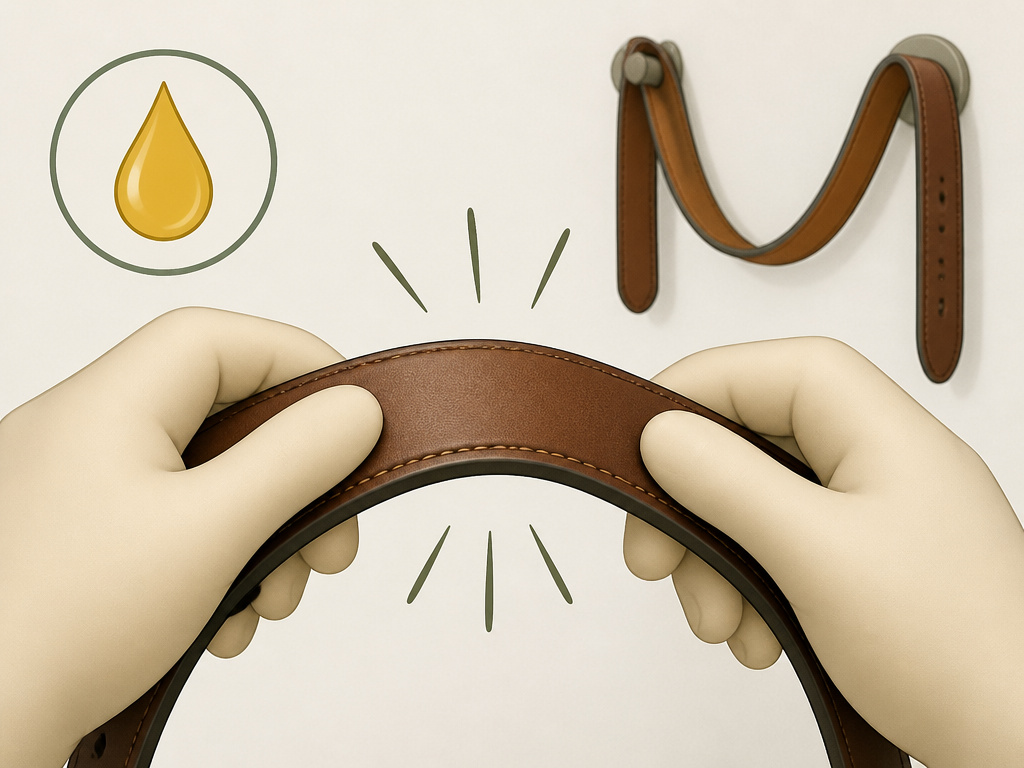
You can work with the leather’s nature to trim a week or two off the timeline. These methods simply replicate and intensify the effects of normal wear.
1. The Daily Hand-Flex. For one to two minutes each day, gently bend the entire length of the belt back and forth. Focus on the area that sits against the small of your back, this spot endures the most flex. You’re listening for a soft, gradual give, not a sharp cracking sound. Think of it as a gentle stretch, not a forced fold.
**2. The Single Conditioning Coat.In the first week, apply a very thin coat of a conditioner like neatsfoot oil or mink oil. We’re talking a few drops rubbed in until the surface is barely glossy. Let it absorb fully for 24 hours before wearing.
Real full-grain leather can absorb roughly 5-15% of its weight in oils during initial break-in. Exceeding that ratio over-saturates the fibers, making the belt limp and prone to permanent stretch.
This one light application hydrates the fibers from within, making them more pliable. Do not repeat this for at least three months. More is not better.
3. Curved Storage. When you take the belt off, don’t lay it flat or fold it sharply. Hang it on a belt hanger or drape it over the back of a chair. This maintains a soft curve, fighting the leather’s “memory” that wants to spring back to its original flat state. For the first two weeks, some lifters even store their belt rolled in its gym bag to encourage that curve.
Together, these three steps can reliably cut a four-week break-in down to two. They work because they apply the right kind of stress, the kind that happens naturally, just a bit more consistently.
What Never to Do: The Destructive Shortcuts
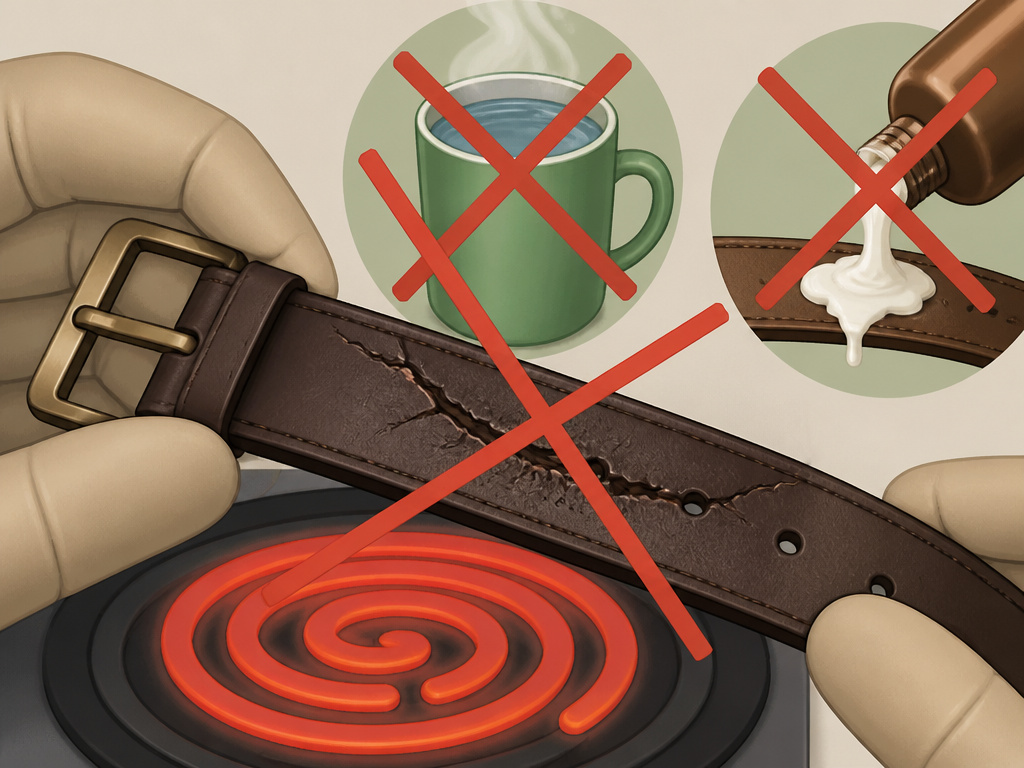
Here’s where most well-intentioned advice goes off a cliff. These “quick fixes” don’t break in the belt; they break it.
Heat is Catastrophic. This includes hair dryers, radiators, tumble dryers, and ovens. Professional leather experts confirm that exposure to temperatures above 50°C (122°F) causes irreversible fiber shrinkage. The leather becomes brittle and will crack at the first serious flex. It’s a permanent, structural failure.
Soaking is Sabotage. Submerging the belt in water to “soften it up” invites two disasters. First, it washes out the leather’s natural oils, leaving it dry and prone to cracking. Second, trapped moisture between layers can lead to mold growth within 48 hours, which degrades stitching and rots the leather from the inside.
Over-Conditioning is a Slow Death. Slathering on conditioner every week doesn’t help. It creates a sticky, gummy surface that attracts dirt and, as noted, over-saturates the fibers. The belt loses all structural integrity, stretching out of shape and offering zero support. I once rushed conditioning a vintage bag and applied too much product; it stayed tacky for weeks until it finally absorbed. The lesson was patience.
Common mistake: Baking or microwaving a belt to soften it. This doesn’t break in the leather; it cooks it. The resulting damage is immediate and irreversible.
These shortcuts are the reason people think leather is fragile. It isn’t. It’s robust when treated correctly and fragile when abused.
Troubleshooting a Stubborn Belt
What if you’ve been patient and your belt still feels like a board after a month? Don’t force it. Diagnose first.
- Is it a dense leather? Belts made from heavy-duty harness, bridle, or double-layer constructions are just slower. A 5-6mm full-grain hide can legitimately take 4-8 weeks. Check the specs or the maker’s notes.
- Are you wearing it enough? A belt worn once a week will take forever. Consistency is the engine of break-in.
- Is it bone dry? In very arid climates, a single, sparing conditioner application (as in step 2 above) might be necessary. A dry hide won’t flex easily.
If it’s simply a thick, quality hide, increase your hand-flexing sessions to twice daily. You can also manually work the leather for a few minutes between sets at the gym. The pressure and warmth from your hands make a difference.
How to Know When It’s Truly Broken In
You’re not aiming for a floppy piece of cloth. A well-broken-in belt should still provide firm, reliable support. The test is in the wear and the hold.
The Flex Test: Gently bend the belt into a U-shape. If it holds that curve slightly before springing back, it’s perfectly broken in. If it snaps immediately back to straight, it needs more time. If it folds over completely with no resistance, it’s over-softened.
The Comfort Test: It should feel like a firm hug, not a pinch. You shouldn’t be constantly aware of it digging into your ribs or hips. The break-in is complete when the belt is comfortable for all-day wear but still provides noticeable support when you tighten it for a task.
The Visual Test: Look at its natural resting state. A broken-in belt will have a gentle, consistent curve that matches the shape of your waist. It won’t lie perfectly flat on a table anymore.
Frequently Asked Questions
How long does it take to break in a leather belt?
For a standard 3-4mm full-grain leather belt, expect 2-4 weeks of daily wear. Thicker or denser leathers (bridle, harness, 10-13mm) can take 4-8 weeks, with competition-grade 13mm belts sometimes requiring 2-3 months.
Can I use leather conditioner to break in a belt faster?
Yes, but only once. Apply a very thin coat of a quality conditioner like neatsfoot oil during the first week. This hydrates the fibers safely. Over-conditioning will oversaturate and weaken the leather.
Is it bad if my new leather belt is really stiff?
No, it’s excellent. Significant initial stiffness is the hallmark of high-quality, dense, full-grain leather. A belt that’s soft immediately is often made from thinner, corrected, or chemically treated leather that won’t last as long.
How should I store my belt while breaking it in?
Store it in a curved position. Hang it on a belt hanger or drape it over a chair back. For the first 14 days, storing it rolled (not tightly) can help it retain a natural curve and combat the “spring-back” effect of new leather.
Before You Go
The single most important factor is patience. A leather belt from a brand like Filson or Saddleback Leather is a ten-year investment, not a ten-minute fix. The weeks of stiffness are the price of admission for a tool that will mold to you and outlast countless cheaper alternatives.
Stick to the wear-and-flex method, condition with a light touch, and store it with care. Avoid the siren call of heat and water at all costs. When in doubt, do less, not more. Let the leather and your body do the work together. In a month, you’ll have a belt that doesn’t just fit you, it belongs to you.
And if you’re still shopping, remember that stiffness is a feature to look for. It’s the first sign you’re holding the real thing. For more on selecting a belt that’s worth this process, our guide on how to choose a leather belt walks through the key factors.
