
Learn How to Choose a Leather Belt That Lasts for Years
This post contains affiliate links. As an Amazon Associate, we earn from qualifying purchases.
To choose a leather belt, focus on three essential specs: the leather grade (full-grain vegetable-tanned is the benchmark), the thickness (3.4–4.0mm for durability), and the buckle attachment (a solid, skived loop stitched with synthetic thread). A belt that misses any of these three will fail within two years of daily use.
That thickness spec is the measurable line between a belt that holds its shape under buckle stress and one that warps. Go below 3.4mm and the leather lacks the fiber density to resist the constant pull at the prong hole; the hole stretches, the belt curls, and the fit goes.
What follows is a breakdown of those three specs, plus the sizing math that actually works, the buckle types that last, and the one visual check you can do in ten seconds to spot a cheap belt before you buy it.
Key Takeaways
- Full-grain vegetable-tanned leather is the only grade that consistently delivers a 10–25 year lifespan; “genuine leather” belts often fail within 18 months.
- Measure thickness: A quality dress or casual belt should be 3 millimeters.4–4.0mm (approx. 8.5–9.5 oz) thick. Inconsistent thickness signals layered construction that will separate.
- Fit is about the holes: Your correct belt size lands you on the middle hole of a five-hole belt. If you’re on the last hole, the belt is too small.
- Inspect the buckle loop: The leather where the buckle attaches should be tapered (skived) and doubled over, sewn with tight, consistent stitches. A glued or riveted-only loop is the first point of failure.
- Burnished edges beat painted ones: A smooth, polished edge indicates hand-finishing and better moisture resistance. A rough or sloppily painted edge is the hallmark of mass production.
The Leather-Grade Ladder: Full-Grain, Top-Grain, and the “Genuine” Trap
Let’s untangle the labeling first, because it’s designed to confuse. The leather industry uses a strict grading hierarchy based on which layer of the hide is used and how much it’s been sanded or processed. This is structural engineering for skin.
Full-grain leather retains the hide’s intact, outermost surface. It has the highest fiber density, develops a patina, and resists cracking. With basic belt care every 3–6 months, a full-grain belt lasts 10–25 years. Top-grain leather is sanded to remove imperfections, which removes the toughest fibers, leading to a 5–10 year lifespan. “Genuine leather” is a bottom-tier classification for the lowest recoverable grade, often made from bonded scraps; it rarely lasts 18 months of daily use before peeling.
The surface tells the story. Under good light, full-grain shows naturally irregular pores—no two square inches are identical. Top-grain feels smoother and looks more uniform. “Genuine” or bonded leather often has a plastic-feeling topcoat with a perfectly repeating grain pattern stamped into it. That coating will crack.
Here’s the lifespan difference in a table you can trust:
| Leather Grade | What It Is | Key Visual Tell | Realistic Lifespan (Daily Use) |
|---|---|---|---|
| Full-Grain | The intact top layer of the hide. | Irregular, non-repeating pore structure. | 10–25+ years |
| Top-Grain | Sanded to remove surface imperfections. | Very smooth, uniform surface. | 5–10 years |
| Genuine Leather | Lowest grade; often layered and bonded. | Plastic-like feel, stamped repeating pattern. | 6–18 months |
I learned this the hard way with a dark “genuine leather” dress belt years ago. It looked fine in the store. After about a year of weekly wear, a shiny spot wore through the coating at the prong hole. Within six more months, that spot had cracked and started to peel like a cheap sticker. The problem wasn’t the color; it was the lack of any real leather structure underneath to hold the finish. A full-grain belt in the same color would have just developed a darker patina at the stress point.
Tanning Matters: Why Vegetable-Tanned Beats Chrome for Belts
The grade tells you which part of the hide, but the tanning method tells you how that hide was processed. For a belt, this is where flexibility and long-term shape memory are decided.
Vegetable tanning uses natural plant tannins (from bark, leaves, wood) in a slow process that takes weeks. It produces a stiffer, drier leather that ages beautifully, developing a rich color over time. More importantly, it creates a tighter, denser fiber structure. This means a vegetable-tanned belt resists permanent stretching and holds its shape under the daily tension of the buckle.
Chrome tanning uses chromium salts and is done in under a day. It’s cheaper and yields a softer, more pliable leather out of the gate. The trade-off is a less dense structure that’s more prone to gradual deformation. A chrome-tanned belt will conform to your waist faster, but it’s also more likely to stretch and curl over the years.
For a belt that needs to be a structural component, not just a strap, vegetable-tanned is the clear choice. It’s the difference between a belt that breaks in and a belt that just breaks down.
The Three Measurements You Must Get Right
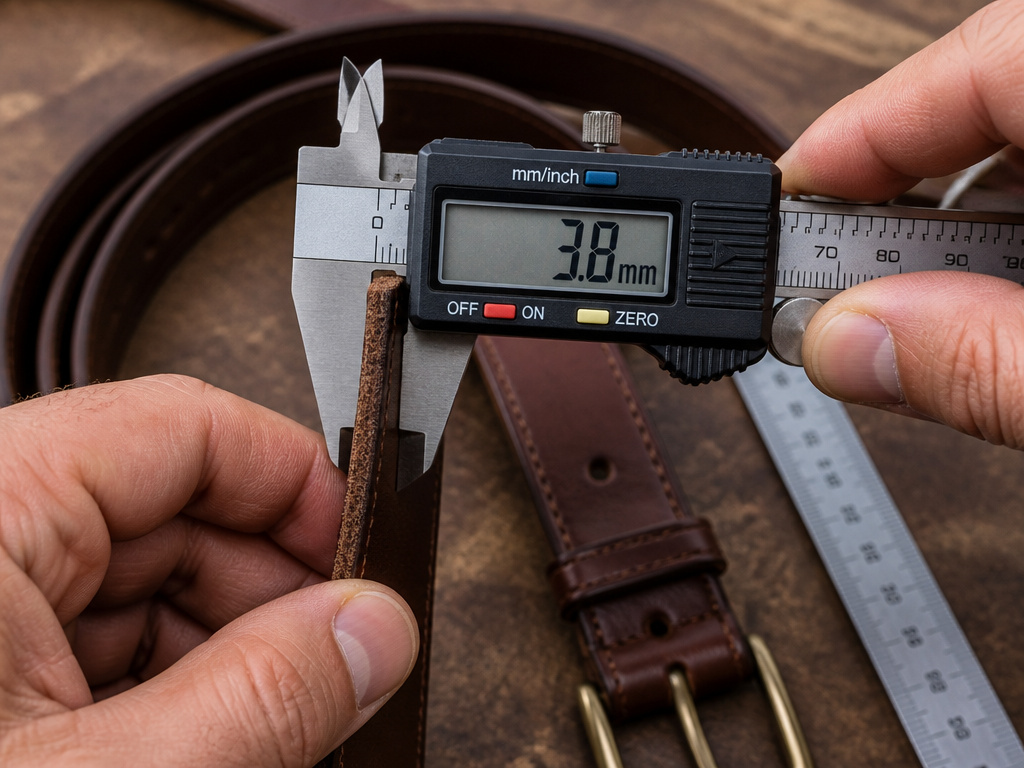
You can’t eyeball this. The difference between a belt that fits your buckle and loops and one that doesn’t is a few millimeters. Get a caliper or a ruler with millimeter markings.
Width: This is about matching your pants loops and the buckle’s chape. Standard men’s dress belts are 1.25″ to 1.5″ (32mm to 38mm). Casual and work belts can be 1.5″ to 1.75″ (38mm to 45mm). Women’s belts commonly range from 0.5″ (13mm) to 1.5″ (38mm). The wrong width either won’t fit through your loops or will swim in the buckle.
Thickness: This is the durability metric. For a quality casual or dress belt, aim for a thickness of 3 millimeters.4–4.0mm thick (about 8.5–9.5 oz in leather weight terms). Measure at several points. It should be consistent. Thinner belts (under 3mm) lack substance and will deform. The “quarter-inch thick” (6.35mm) belt is a niche item for heavy-duty work; it’s overkill and uncomfortable for daily dress wear.
Where this goes sideways: Choosing a belt based on a vague “heavy” feel. A belt can feel heavy because of a thick, cheap buckle or dense lining. The leather itself might be thin and weak. The caliper doesn’t lie.
Length (Size): This is where most advice is fuzzy. Here’s the math that works: Your belt size should be 2 to 3 inches longer than your pant waist size. If you wear a 36″ waist pant, you need a 38″ or 39″ belt. This ensures you’ll use the middle hole of a standard five-hole belt, leaving room to adjust. Our full belt size guide has the specifics, but that’s the rule.
Buckles, Loops, and the Anatomy of Failure
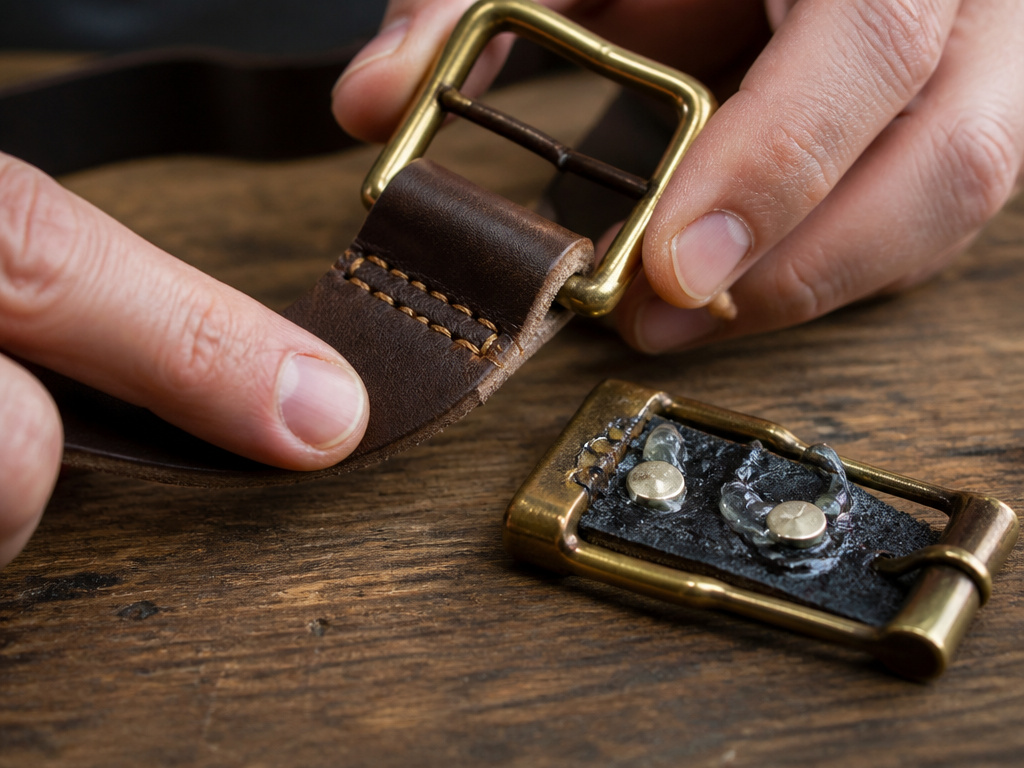
The buckle system is the belt’s engine. It’s also where most manufacturers cut corners.
You have two main buckle types: frame buckles (the prong passes through a metal frame) for dress and casual belts, and plate buckles (the strap passes through a flat metal plate) often seen on western or work belts. For longevity, look for solid brass, stainless steel, or nickel silver. Avoid cheap, plated zinc alloys; the plating wears off to reveal grey metal underneath.
The buckle’s prong height needs to match your belt’s thickness. A prong that’s too short won’t secure the belt; one that’s too long can protrude awkwardly. For standard 3.5-4mm belts, a 10-11mm prong is typical. Some high-end brands, like certain Hermès buckles, have prongs as short as 7-8mm for their thinner, lined belts.
But the real make-or-break is the buckle attachment. On a quality belt, the end of the strap is skived (tapered thin), folded over to create a loop, and then stitched with strong, synthetic thread like bonded polyester. This creates a flexible, durable joint. Cheap belts often just rivet the buckle on, or use a thin, glued fold. Rivets alone create a hard stress point; the leather will crack around them. Glue fails.
When you’re inspecting a belt, bend the buckle back and look at that loop. You should see neat, tight stitching and a smooth, gradual taper in the leather. If you see globs of glue, loose threads, or no stitching at all, put it back.
Construction Tells: What to Look For in 10 Seconds
You don’t need to be an expert to spot the signs of good and bad construction. Focus on the edges and the back.
Edge Finishing: The edge of the belt should be burnished—polished smooth and slightly rounded, often with a slight sheen. This is done by hand or machine with friction and wax. It seals the edge, prevents fraying, and looks clean. A poorly finished edge will be rough, fuzzy, or covered in thick, crack-prone paint. A painted edge is a cost-cutter, not a protector.
The Back (Flesh Side): Turn the belt over. The back should be neat. On an unlined belt, it will show the natural, slightly fibrous “flesh” side of the hide. It should be reasonably smooth, not shedding fibers. On a lined belt, the lining (usually a thinner leather or fabric) should be glued and stitched evenly, with no bubbles or wrinkles.
Stitching: Any stitching should be straight, consistent, and tight. The thread should be slightly recessed into the leather, not sitting on top. Loose or wandering stitches are a sign of rushed, automated work.
The Hole Test: Look at the existing holes. Are they cleanly punched? Better yet, are they slightly D-shaped or oblong, rather than perfect circles? A round hole stretches evenly and becomes oval. A D-shaped hole is stronger by design, as the flat side resists the prong’s pressure. It’s a small detail that speaks to thoughtful belt making.
Matching Belt to Purpose: Dress, Casual, and Work
Not every belt is for every job. The “one perfect belt” doesn’t exist, but you only need a few.
| Belt Type | Ideal Width | Ideal Thickness | Leather & Buckle Style | Best For |
|---|---|---|---|---|
| Dress Belt | 1.25″ – 1.5″ (32-38mm) | 3.0 – 3.6mm | Shiny calfskin or smooth full-grain; simple, polished frame buckle. | Suits, dress trousers, formal occasions. |
| Casual Belt | 1.5″ – 1.75″ (38-45mm) | 3.4 – 4.0mm | Sturdy full-grain (bridle, harness); brushed metal or matte finish buckle. | Jeans, chinos, everyday wear. |
| Work Belt | 1.75″+ (45mm+) | 4.0mm+ (up to 6mm) | Heavy oil-tanned or waxed full-grain; solid plate or roller buckle. | Heavy lifting, outdoor work, tool belts. |
A common mistake is using a thick, rugged casual belt with a suit. The proportions are wrong—it’s visually overwhelming and won’t fit slim dress pant loops cleanly. Conversely, a thin, shiny dress belt with jeans looks flimsy and out of place.
For most men, a 1.5″ wide, ~3.8mm thick full-grain casual belt in brown or black covers 80% of situations. Brands like Orion Leather Company and Hanks Belts specialize in this category with bombproof construction. For a sharper dress option, look for a belt width of 1.5 inches.25″ belt from a maker like The Belt Man who uses premium calfskin.
How to Choose a Leather Belt: The Action Plan
Stop browsing aimlessly. Follow this sequence.
- Determine your size: Use our measuring for a belt guide. Know your number.
- Pick your purpose: Are you buying for suits, jeans, or both? That dictates width and style. For a versatile start, go with the 1.5″ casual belt.
- Filter by leather grade: Immediately eliminate anything not labeled “full-grain leather.” Ignore “genuine leather” entirely.
- Verify thickness: If shopping online, check the product specs or description. “Approx. 4mm thick” or “9-10 oz” are good signs. If it’s not listed, ask the seller.
- Inspect the details: When the belt arrives, do the 10-second check. Feel the edges, bend the buckle, look at the stitching and hole shape. If anything feels cheap, return it.
- Break it in properly: A stiff, new full-grain belt needs to be worn. Don’t force it. Follow a gentle break-in process. Conditioning comes later, only after the leather has dried out from wear.
Frequently Asked Questions
What’s the difference between full-grain and top-grain leather?
Full-grain is the strongest, outermost layer of the hide, left untouched. Top-grain is sanded to remove marks, which weakens it. Full-grain lasts decades; top-grain lasts a decade or less.
How often should I condition my leather belt?
For a full-grain belt in regular use, condition it every 3 to 6 months. Use a light coat of a dedicated leather conditioner (like Bick 4 or Leather Honey), not saddle soap or silicone sprays. Over-conditioning can soften the leather too much.
Can I shower or swim with my leather belt?
No. Water, especially hot water and soap, strips the leather’s natural oils, causes it to stiffen as it dries, and can lead to cracking. It also ruins the finish and promotes mildew. For cleaning a belt, use a damp cloth and leather cleaner.
My new belt is too stiff. How do I soften it?
Wear it. The body heat and movement will gradually soften vegetable-tanned leather. You can also gently flex it along its length by hand. Avoid aggressive methods to soften a belt that involve oils or heat, as they can over-soften and weaken the fibers.
How do I add a hole if my belt is too small?
Use a professional rotary punch or a dedicated belt hole punch. Mark the spot carefully, place the belt on a wooden block, and punch cleanly. For the right tools for punching leather, a simple 5mm punch is ideal for standard holes.
Before You Go
Choosing a belt is a simple materials-specification problem. A belt is a tool.The right one works for decades; the wrong one is trash in a year.
Here’s your final filter: if you can’t confirm the leather is full-grain and at least 3.4mm thick, walk away. Those two facts are the gate. Everything about style, buckle choice, and selecting leather comes after. Get the material right first, and you’ll own the belt long enough for its patina to tell your story.
