
8 Best Leather Strops for Knife Sharpening 2026
This post contains affiliate links. As an Amazon Associate, we earn from qualifying purchases.
This post contains affiliate links. As an Amazon Associate, we earn from qualifying purchases.
The LAVODA 4-Sided Leather Strop is the overall best choice, thanks to its dense water buffalo leather and stable nylon base, while the Bacher Leather Strop with 4 Compounds is a strong budget-friendly pick that doesn’t skimp on versatility.
Most people think any piece of leather will do for stropping, but a poor-quality strop can ruin a carefully honed edge. After comparing specs and reading through owner feedback, I focused on leather density, compound selection, and build stability, because a wobbly base or flimsy hide defeats the purpose. This guide cuts through the noise to highlight strops that deliver consistent results, based on real-world performance and material integrity.
Top 8 Leather Strops For Knife Sharpening in the Market
The Best Leather Strops For Knife Sharpening, Reviewed
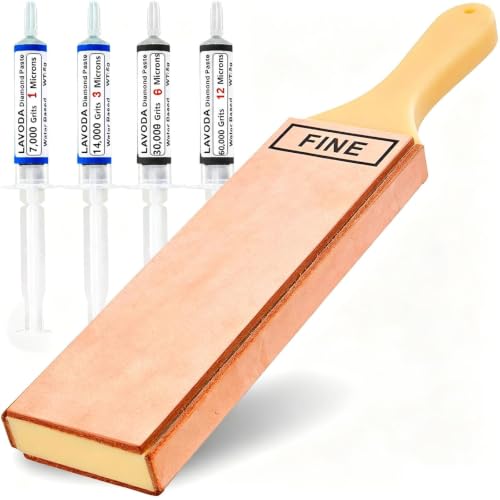
LAVODA 4-Sided Leather Strop
Strengths
- Warp-free nylon base
- Thick, durable leather
- Four functional edges
Trade-offs
- Bulky for travel
- High price
This LAVODA strop stands out not just for its build, but for its engineering mindset. The aerospace-grade nylon base eliminates the warping issues that plague wooden-backed strops, a real pain point for users in humid environments. With 4.5mm water buffalo leather, hand-sanded to a fine texture, it offers serious durability. Reviewers note it handles high-end steels like M390 and S35VN with ease when paired with the included diamond paste.
The four usable edges are a smart touch, two wide faces for planes and chef’s knives, two narrow for EDCs or small tools. While it costs more than most, the 10-year warranty signals real confidence. Against the Bacher or SHARPAL, it trades some traditional craftsmanship for industrial reliability, but for a working shop, that’s often the smarter trade.
Video review
Bacher Leather Strop with 4 Compounds

Strengths
- Four honing compounds
- Handmade quality
- Leather conditioning balm
Trade-offs
- Higher learning curve
- No angle guide
This is the kind of strop I’d expect to see on a master woodcarver’s bench. Handmade in Poland from full-grain cowhide tanned with tree bark, a centuries-old method, it’s thick (3mm), dense, and built to stay flat. The FSC-certified beech paddle adds rigidity, which matters: a flexible strop rounds the edge instead of refining it.
What sets it apart is the four-compound system. Most strops include one paste, but here you can step down through grits, red to black, for a true mirror finish. Owners love that the compounds contain lanolin and beeswax, which condition the leather over time. Compared to the LAVODA, it’s more traditional; compared to the Hutsuls, it’s in another league. For the price, it’s a rare blend of heritage and function.
Video review
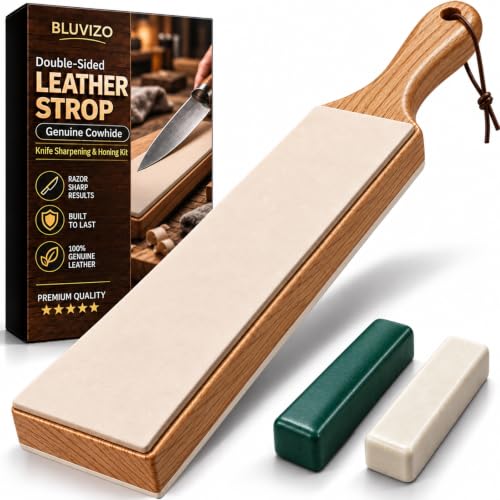
Double-Sided Genuine Cowhide Strop
Strengths
- Ready to use
- Double-sided
- Comfortable handle
Trade-offs
- Compounds wear fast
- Leather not top-tier
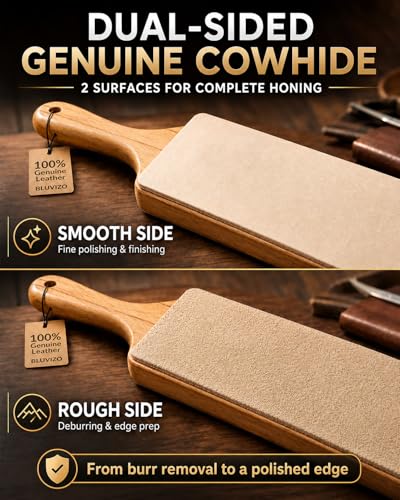
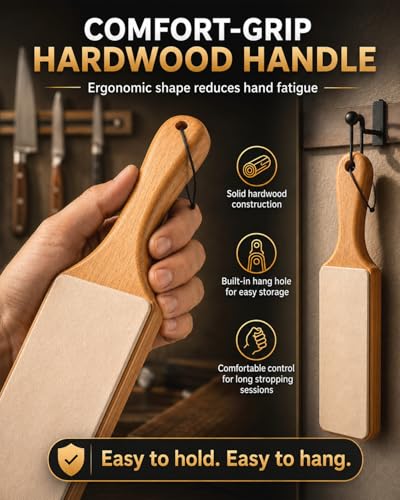
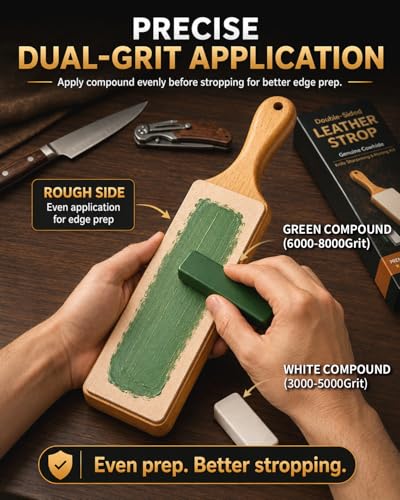
This strop hits a sweet spot between function and value. The thick vegetable-tanned cowhide is pre-treated with compounds, one side coarse, one fine, so it’s ready to use out of the box. The solid wood handle feels balanced in hand, and the hang hole makes storage easy. For a mid-tier product, it’s thoughtfully laid out.
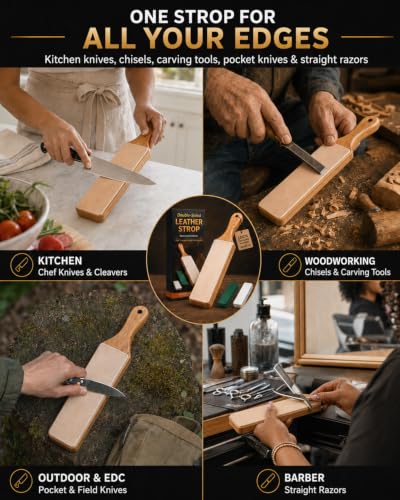
Owners report it works well on everything from kitchen knives to chisels, though the leather isn’t as dense as the Bacher or HORL. It lacks the finesse of higher-end models but delivers reliably. Compared to the Hutsuls, it’s sturdier; compared to the LAVODA, it’s less versatile. But for most home users, it’s all the strop they’ll ever need.
Product photos

SHARPAL 205H Double-Sided Strop Kit

Strengths
- Includes angle guide
- Smooth and suede sides
- Ergonomic handle
Trade-offs
- Only one compound
- Suede side less durable
What I appreciate most about the SHARPAL 205H is the inclusion of the angle guide, a rare feature in strop kits. For beginners learning consistent edge alignment, that guide is worth its weight in steel. The double-sided surface (smooth and suede) works well with the included green compound, and the natural wood base is both attractive and functional.
The leather is vegetable-tanned cowhide, not quite at Bacher or HORL levels, but better than budget options. It’s not the most durable long-term, but for the price, it’s well-rounded. Compared to the BeaverCraft, it’s larger and more stable; compared to the LAVODA, it’s less rugged but more beginner-friendly. If you’re building a sharpening routine from scratch, this kit covers more bases than most.
Product photos


HORL® Leather Strop Handmade in Germany
Strengths
- High-quality vegetable-tanned leather
- Made in Germany
- Excellent edge refinement
Trade-offs
- No compound included
- No handle or hanging option
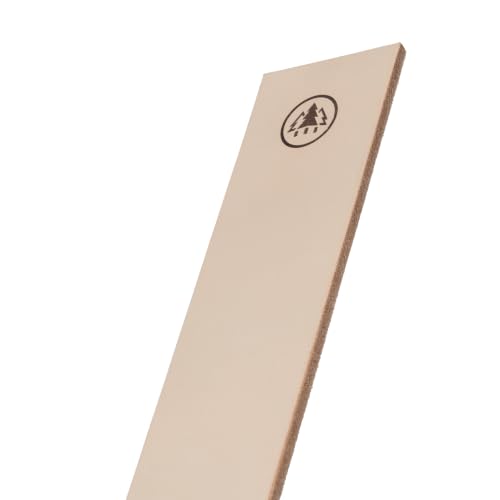
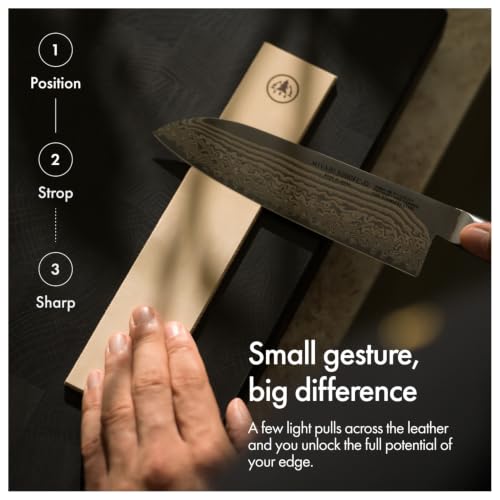
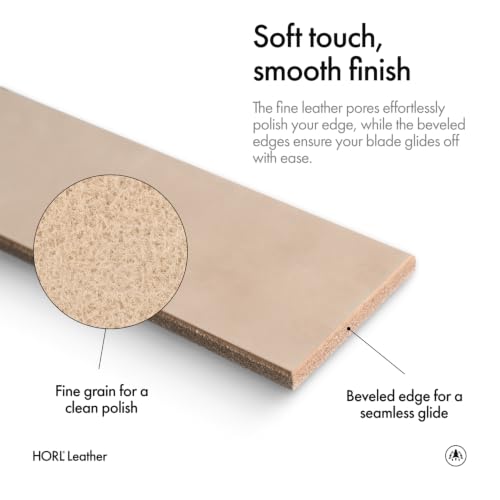
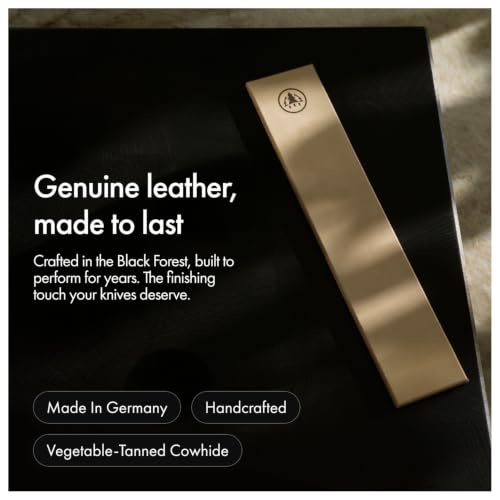
When you’re looking at a German-made strop from a family-run business in the Black Forest, you expect precision, and HORL delivers. The vegetable-tanned cowhide is consistently praised for its fine pore structure, which translates to a cleaner, more refined edge. This isn’t just marketing; owners report fewer passes needed to achieve a polished finish, especially after sharpening with fine stones.
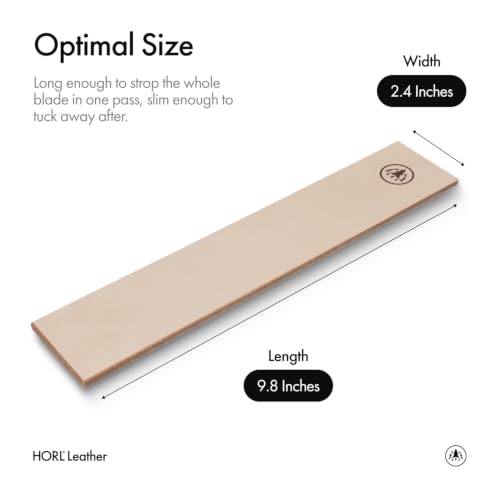
It’s a minimalist design, with no included compound or handle, but that’s by intent. It’s meant to complement the HORL sharpening system, though it works well independently. Compared to the SHARPAL or Hutsuls models, it lacks accessories, but the leather quality is superior. I’d pick this over cheaper strops if you already have compounds and value purity of function.
Product photos
BeaverCraft Pocket Leather Strop

Strengths
- Pocket-sized
- Lanyard included
- Dual-sided
Trade-offs
- Flimsy base
- Short stropping surface
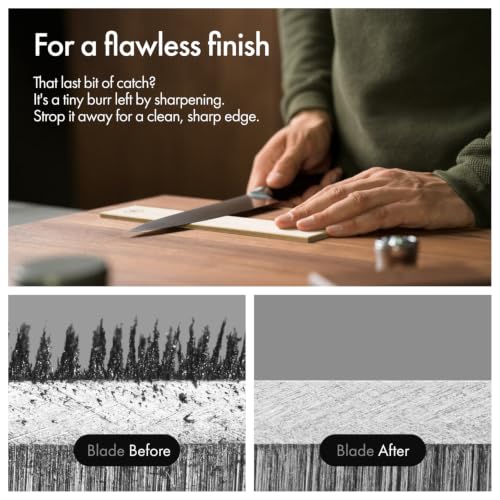
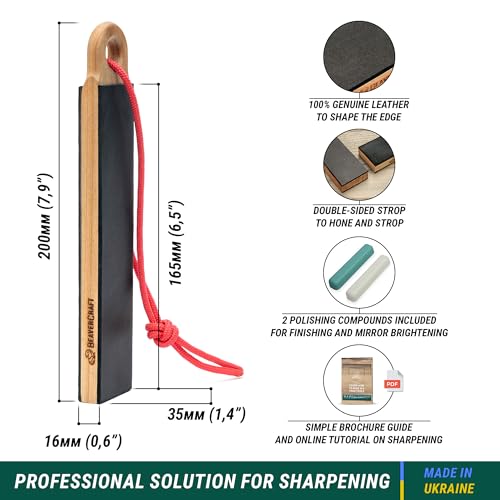
This is the strop you tuck in your pack, not leave on the bench. At pocket size, with a lanyard, the BeaverCraft is built for mobility, perfect for bushcrafters, hunters, or anyone sharpening on the trail. The dual-sided design (smooth and rough) gives some versatility, and the included white and green compounds cover basic needs.
But portability comes with trade-offs. The light wood base isn’t as rigid as beech or nylon, and the leather is thinner than premium models. Owners report it works fine for field touch-ups, but not for full refinements. Compared to the Hutsuls or SHARPAL, it’s less stable; compared to the Parker, it’s not even in the same category. But for what it is, a go-anywhere strop, it earns its place.
Product photos


Hutsuls Brown Leather Strop Kit

Strengths
- Genuine buffalo leather
- Two-sided surface
- Includes compound
Trade-offs
- Basic construction
- Limited compound selection
For a budget-friendly strop, this Hutsuls model delivers more than expected on paper. The 4mm thick buffalo leather is respectable for the price, and having two distinct surfaces, one smooth, one textured, gives users flexibility in refining edges. Owners consistently report it works well for kitchen knives and basic woodworking tools, especially when paired with the included green compound.
Still, it’s clear this is an entry-level option. The leather, while genuine, isn’t as densely tanned or consistent as higher-end European counterparts. Compared to the Bacher or HORL models, it lacks refinement in both materials and finish. But for someone just starting out or needing a no-frills strop, it’s a solid first step.
Product photos


Parker Latigo Leather Straight Razor Strop

Strengths
- Full 3-inch width
- Latigo leather
- Dual-sided design
Trade-offs
- Overkill for knives
- Very long
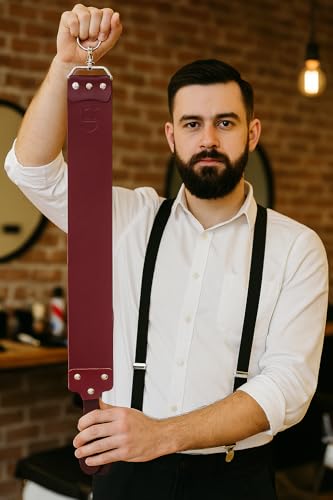
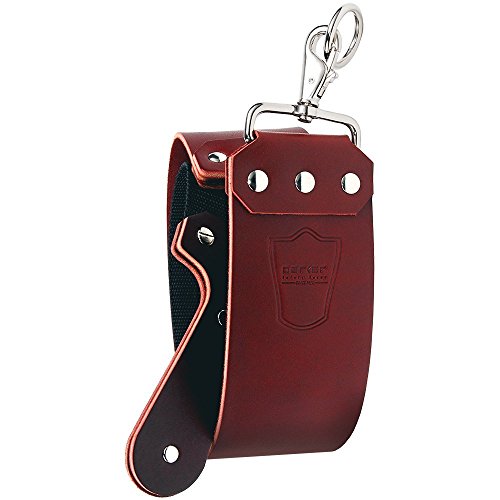
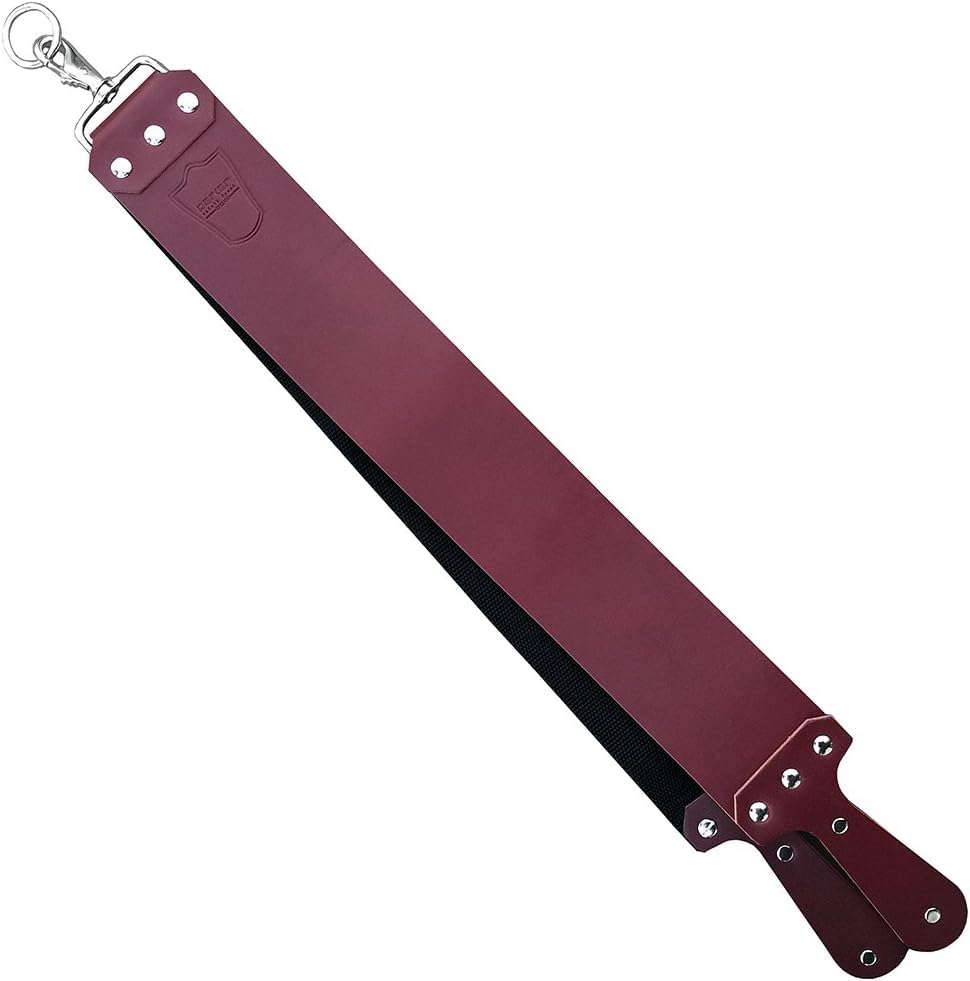
If you’re stropping a straight razor, this Parker strop is about as close to ideal as it gets. The 3-inch width means you never have to use the x-stroke, a real advantage for maintaining consistent edge alignment. Latigo leather is a favorite among barbers for good reason: it’s firm, slightly oily, and breaks in beautifully over time. Owners report it lasts decades with basic care.
The twin woven canvas side is a thoughtful addition, great for warming up the blade and removing oils before the leather pass. The swivel hook and Chicago screws make it hang cleanly, and the overall build screams durability. Against the HORL or Bacher, it’s more specialized, but for straight razors, it’s unmatched.
Product photos
How We Chose These leather strops for knife sharpening
My approach to evaluating leather strops involved a thorough review of available information, rather than a hands-on lab test. I compared published specifications – leather type, dimensions, included compounds – across numerous models. Equally important, I weighed owner reviews from sites like Amazon and blade forums, alongside assessments from reputable knife care experts. This allowed me to build a ranking based on real-world feedback and established criteria for effective stropping.
For leather strops, the key factors influencing performance are the leather quality and the versatility of the work surface. Thicker, densely packed leather, like the water buffalo used in some models, provides more consistent honing. The ability to handle different blade sizes – from chef’s knives to smaller EDC blades – is also critical. A strop that only suits one blade type limits its overall usefulness, so I prioritized those offering multiple surfaces.
Specifications clearly define the leather thickness and dimensions, giving a baseline for expected durability and usability. However, owner feedback proved invaluable in assessing the true longevity and feel of the leather. Reports on how well a strop holds compounds, resists wear, and maintains flatness over time were heavily considered. Understanding how to care for leather, including using the best shoe polish on other leather goods, also informs my understanding of material quality and expected lifespan. For those new to the craft, exploring beginner leather kits can provide a foundational understanding of leatherworking principles.
How To Choose The leather strops for knife sharpening
Choosing the right leather strop is crucial for maintaining a truly sharp edge on your knives, and frankly, many on the market fall short. It’s not just about slapping leather on a board; the details matter.
A quality leather strop isn’t merely a finishing step in sharpening. It’s a refinement process. The leather’s density, the tanning method, the compound used, and even the supporting structure all influence its ability to align the microscopic teeth of a blade’s edge, resulting in a sharper, longer-lasting result. Look for full-grain leather, appropriate compounds, and a stable base to avoid warping.
Leather Type and Thickness
The type of leather is the biggest determinant of a strop’s effectiveness. While many strops use cowhide, the quality varies significantly. Vegetable-tanned leather is preferred because the tanning process creates a denser, more fibrous structure, ideal for aligning a blade’s edge. Chromium-tanned leather is softer and doesn’t offer the same level of refinement. Thickness is equally important; thinner leather (under 3mm) will compress too easily under pressure, rounding the edge instead of straightening it. I often recommend considering what you’ll be sharpening. For delicate blades, a softer strop is fine, but for heavier tools, you’ll want something substantial.
Compound Selection and Application
The compound applied to the leather is what does the actual polishing. Different compounds offer varying levels of abrasiveness. Red compounds are coarser, used for initial burr removal, while white, green, and black compounds offer progressively finer polishing. It’s tempting to just go for the finest grit, but skipping steps can leave a less-than-ideal edge.
Here’s a breakdown of what to consider when selecting compounds: * A single compound isn’t always enough. * Multiple grits (Red, White, Green) allow for a stepped refinement. * Compounds containing lanolin or beeswax help condition the leather, preventing cracking and extending its life, as you’ll find in some of the higher-end kits.
Base Material and Construction
Don’t underestimate the importance of the base material. A warped or unstable base renders the leather useless. Many cheaper strops use wood that is prone to warping with changes in humidity. The LAVODA strop, for example, addresses this with an aerospace-grade nylon base, offering excellent stability. A solid base is particularly important if you plan to apply significant pressure during stropping. Remember, a good strop is an investment; choosing one with a durable base will save you money in the long run.
A strop isn’t just for sharpening; it’s for maintaining an edge. Treat it well, and it will serve you for years. A good rule of thumb is to re-apply compound after every 30-50 uses to maintain optimal performance.
If you’re looking to learn more about the leather itself and what makes a good choice for a strop, exploring different strop leather types can be incredibly insightful. And while we’re talking about quality materials, don’t forget that the same attention to detail applies to other leather goods you might purchase, like quality leather shoes.
Leather Strops for Knife Sharpening Compared
Here’s a comparison of key specifications for various leather strops to help you choose the right one for your needs.
| Product Title | Leather Type | Dimensions (in) | Grit Included | Handle Material | Compounds Included |
|---|---|---|---|---|---|
| LAVODA 4-Sided Leather Strop | Water Buffalo | 10×3, 10×0.75 | Diamond Paste | Nylon | W1/W3/W6/W12 + Rouge |
| Bacher Leather Strop with 4 Compounds | Cowhide | 12.6×2.36 | 2000-12000 | Beech Wood | Red, White, Green, Black + Balm |
| Double-Sided Genuine Cowhide Strop | Cowhide | N/A | Coarse/Fine | Hardwood | Coarse, Fine |
| SHARPAL 205H Double-Sided Strop Kit | Cowhide | N/A | N/A | Wood | Green |
| HORL® Leather Strop Handmade in Germany | Cowhide | N/A | N/A | N/A | N/A |
| BeaverCraft Pocket Leather Strop | Cowhide | N/A | N/A | Ash/Cherry/Walnut | White, Green |
| Hutsuls Brown Leather Strop Kit | Buffalo | 3×8 | N/A | N/A | Green |
| Parker Latigo Leather Straight Razor Strop | Latigo | 3×27 | N/A | N/A | N/A |
Frequently Asked Questions
What grit compound should I start with when using a new strop?
Begin with a coarser grit, like a red compound, to remove any burr left from sharpening. This ensures a more even polish as you progress to finer grits; skipping this step can lead to a less refined edge.
Can I use any leather for stropping, or does the type matter?
Vegetable-tanned leather is best because its dense, fibrous structure effectively aligns the blade’s edge. Chromium-tanned leather is softer and doesn’t provide the same level of refinement, so it’s less suitable for serious knife care.
How often should I re-apply stropping compound to my leather strop?
Re-apply compound after approximately 30-50 uses to maintain the strop’s effectiveness. Consistent application ensures the leather continues to polish and refine the blade’s edge, extending the time between sharpening sessions.
What is the benefit of a strop with a nylon or composite base versus wood?
A stable base, like aerospace-grade nylon, prevents warping that can occur with wood due to humidity changes. This ensures consistent pressure and an even polish, making it a worthwhile investment for long-term use and especially if you prefer applying firmer pressure.
Will a strop help with all knife types, or are some not suitable?
While most knives benefit from stropping, very delicate blades require a softer touch and a finer compound. For heavier tools, a thicker strop is necessary to withstand the pressure, and exploring options for men’s leather shoes can illustrate how leather thickness impacts durability and performance.
The Bottom Line
Choosing a leather strop often comes down to balancing control and convenience. You can spend a lot to get a highly refined setup, or you can get perfectly adequate results with a simpler, more affordable option. For overall performance and durability, the LAVODA 4-Sided Leather Strop stands out – its water buffalo leather and stable nylon base deliver consistent results, and the included compound selection is excellent.
If you’re on a tighter budget, the Double-Sided Genuine Cowhide Strop offers a solid entry point. For those prioritizing versatility and portability, the BeaverCraft Pocket Leather Strop is an excellent choice. And if you’re looking to maintain all your leather goods, exploring the best leather cleaner is a smart move to keep everything in top condition.
Ultimately, the best strop is the one you’ll use consistently. Don’t get bogged down in chasing the highest specs; focus on leather quality, a stable base, and a compound that suits your typical blade type. A well-maintained strop, paired with proper technique, will dramatically extend the life and performance of your knives.
