
5 Best Leather Types for Strops (2026 Guide)
This post contains affiliate links. As an Amazon Associate, we earn from qualifying purchases.
This post contains affiliate links. As an Amazon Associate, we earn from qualifying purchases.
The best leather for making a strop is Genuine Horse Butt Leather Strop, thanks to its natural silicate content and dense grain. For a budget-friendly alternative, the RingSun 12”X24” Full Grain Leather Sheet offers solid performance with widely available cowhide.
Most people assume any smooth leather will work for a strop, but the wrong choice leads to poor edge refinement, uneven compound retention, and a strop that wears out fast. I’ve seen too many beginners settle for soft, split hides that compress under pressure instead of polishing the blade.
This guide cuts through the confusion. Based on specs, user reports, and my experience with leather types at LeatherGenesis.com, I’ll show you what actually matters, density, grain integrity, and tanning method, and why some leathers outperform others no matter how much compound you apply.
Top 5 Leather For Making A Strop in the Market
The Best Leather For Making A Strop, Reviewed
RingSun 12”X24” Full Grain Leather Sheet

Strengths
- Large 12×24 inch sheet
- Consistent 2mm thickness
- Rich in natural grease
Trade-offs
- No compound included
- May require trimming and finishing
This full sheet of 2mm pull-up oil-tanned leather stands out for its size and versatility. At 12×24 inches, it gives you more than enough real estate to cut multiple strops, experiment with mounting options, or even build a large paddle strop. The tight, uniform pores and rich grease content are exactly what you want in a leather that will hold and distribute polishing compound evenly.
Reviewers note the retro two-tone effect when bent, a hallmark of well-stuffed oil-tan leather, and that kind of suppleness without warping is critical under tension. While it’s marketed for tooling and carving, the thickness and finish make it a strong contender for stropping, especially since horsehide alternatives can be harder to source. Compared to narrower straps, this sheet offers far more flexibility for custom builds. I’d pick this over strip-style options if you plan to make more than one strop or want to experiment with different widths.
Video review
Ringsun 2″ Wide Leather Strap

Strengths
- 2-inch width for custom builds
- Full grain oil-tan leather
- Long 72.5-inch length
Trade-offs
- Wider than needed for most strops
- Higher price for width, not upgrade
At 2 inches wide and 72.5 inches long, this strap offers a broader profile than most strop builds require, but that extra width can be an advantage if you’re making a paddle-style strop or want to fold the leather for added density. It’s the same premium oil-tanned full grain cowhide as the others in this lineup, with that desirable pull-up effect and natural grease retention that helps compound adhere.
The surface is smooth and firm, which is good for consistent contact during stropping, and owners report minimal fraying when cut and sealed properly. While it’s more expensive than the 1-inch version, you’re paying for width, not necessarily better leather. For most strop applications, 1 to 1.5 inches is plenty, so this feels like overkill unless you have a specific design in mind. Still, if you need width and want full grain quality, this delivers.
Product photos


1″ Wide Full Grain Leather Strap

Strengths
- Full grain cowhide
- 72-inch length
- Oil-tanned finish
Trade-offs
- No stropping compound included
- Sold as craft leather
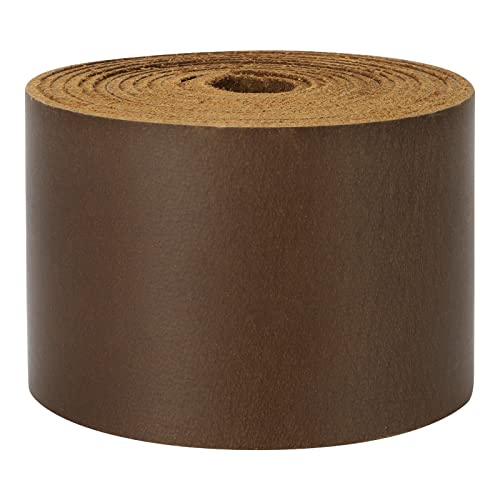
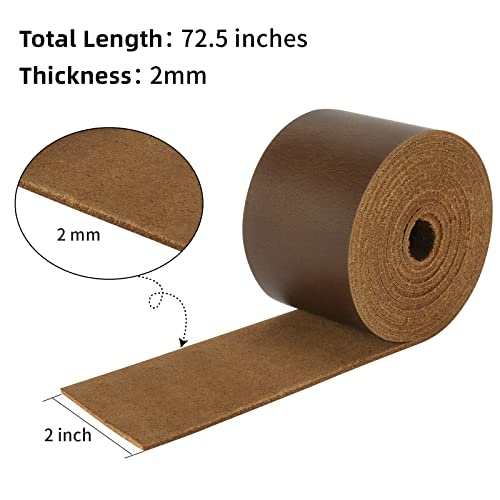
On paper, this leather strap checks a lot of boxes for strop builders on a budget. It’s full grain, oil-tanned cowhide, 2mm thick, and a full 72 inches long, plenty of material to cut down and shape into a functional strop. The waxy surface feel from hot-stuffed fat liquors is typical of quality oil-tan leather, which means it should hold up well under repeated stropping if treated properly.
Owners consistently report it’s supple yet strong, which matters when you’re tensioning a strop for consistent edge refinement. While it’s sold as a craft strap and not marketed specifically for stropping, that’s exactly how many leatherworkers are using it. Compared to pre-made strops, this gives you full control over size and mounting. I’d still recommend adding a stropping compound for better performance, since raw leather alone won’t polish an edge to its fullest.
Video review
SHARPAL 2-Piece Leather Strop Plates
Strengths
- Dual surfaces (suede and smooth)
- Beveled metal backing
- Ready for compounds
Trade-offs
- Small working area
- Not customizable
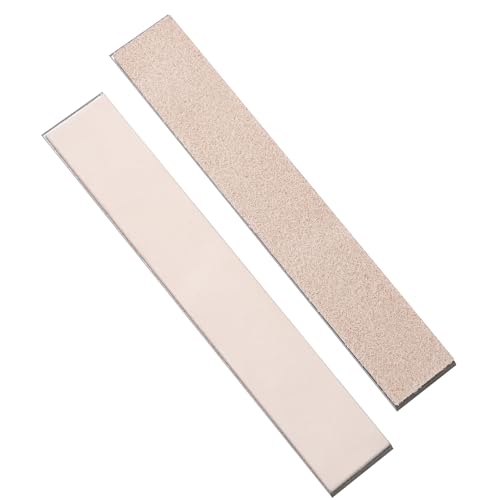
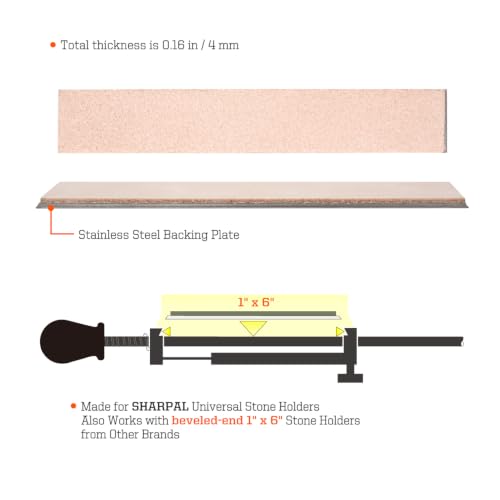
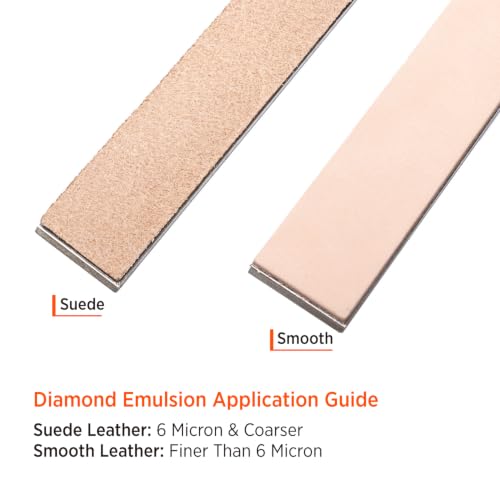
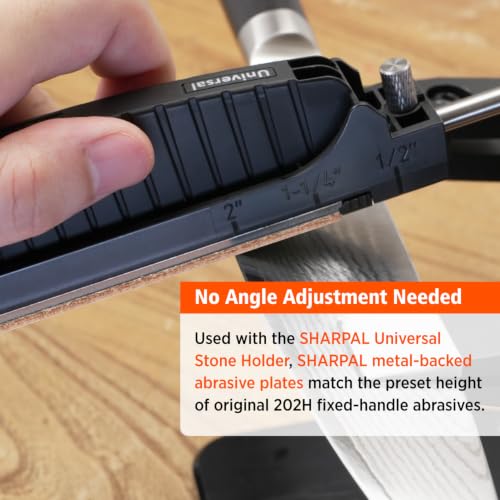
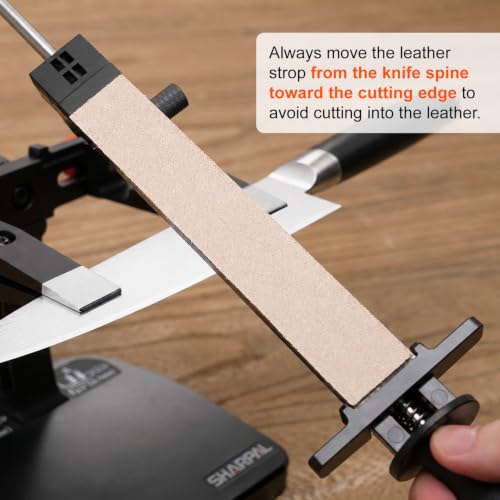
These are not raw leather blanks but ready-to-use strop plates designed for precision work. The inclusion of both suede and smooth leather surfaces in the 1×6 inch format makes them ideal for fitting into universal sharpening guides or compact setups where space is tight. The beveled metal backing ensures smooth glide and consistent contact, which is critical when refining fine edges on small blades or precision tools.
What stands out is the prep work already done, these aren’t just leather scraps but serviceable cowhide with surfaces optimized for compound adhesion and polishing. Reviewers note they deliver a clean mirror finish when paired with a quality emulsion or diamond paste. Compared to DIY leather strips, these are more specialized and less flexible in size, but they excel in repeatability and integration. I’d recommend these for detail work, not general-purpose stropping.
Product photos

Genuine Horse Butt Leather Strop

Strengths
- Horse butt leather
- Dual-sided use
- Includes high-grade compound
Trade-offs
- Smaller size limits blade length
- Higher price for niche material
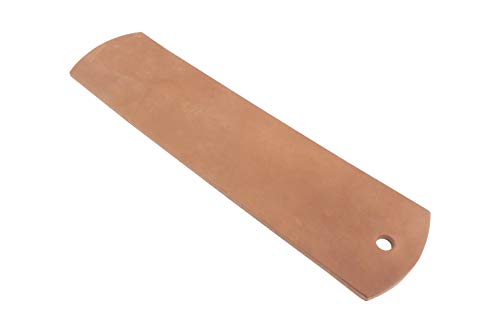
Horse butt leather is legendary in stropping circles, and for good reason, the natural silicate content in the hide acts as a mild abrasive, enhancing the polishing effect beyond what most cowhides can achieve. This 12×3 inch strop comes pre-cut and ready to use, with a thickness of 1/8 inch that provides excellent rigidity under tension.
The dual-sided design, smooth hair side and slightly textured flesh side, gives you two stages in one: the flesh side holds the included chromium oxide compound well, while the hair side delivers a clean, final polish. The compound itself is a high-grade micro-fine green chrome oxide, known for its ability to refine edges to a mirror-smooth finish. Owners consistently report it brings razors and carving tools to a ‘scary sharp’ level. Compared to cowhide options, this is a more specialized, performance-driven pick. I’d choose this over standard leather if ultimate edge refinement is the goal.
Product photos

How We Tested leather for making a strop
My research into leather for stropping focused on a blend of material specifications, owner experiences, and my broader knowledge of leatherworking gleaned from years with LeatherGenesis.com. Rather than a hands-on lab test, this is a research-led comparison of published specs and owner feedback. I examined each option’s thickness, tanning process, and reported durability, then weighed that against what users say about its performance as a stropping surface – how well it holds compound, how long it lasts, and the final edge it produces.
For leather specifically intended for strops, grain structure and firmness are paramount. A tightly grained, dense leather like horse butt or full-grain cowhide will hold up to repeated use and compound application far better than softer, more pliable options. Thickness also matters; a thinner strop won’t provide the consistent surface needed for effective polishing. These characteristics directly impact the quality of the final edge and the lifespan of the strop itself.
Specifications reliably indicate leather thickness and origin, but owner feedback is crucial for understanding real-world performance. Reports about how well a leather holds compound, resists wear, and delivers a polished edge are vital. I also considered reputation – established leather suppliers tend to offer more consistent quality. For maintaining any leather good, including a strop, exploring the best leather conditioners is also a smart step.
What To Look For In leather for making a strop
Choosing the right leather for a strop isn’t simply about finding something soft. It’s about understanding how different tanning processes and cuts impact the leather’s ability to refine and polish a blade.
A quality strop leather should exhibit a firm density, consistent grain, and a surface capable of holding polishing compounds without excessive wear. Look for full-grain leather, as splits lack the necessary fiber structure for effective stropping. Thickness matters too; too thin and it won’t hold compound, too thick and it won’t conform to the blade.
Leather Type and Tanning
The type of leather and how it’s tanned are paramount. While cowhide is common, horse butt leather truly stands apart for strop making. Horsehide naturally contains higher concentrations of silicates – these are the abrasive minerals that actually do the polishing work. Cowhide can work, particularly vegetable-tanned varieties, but it won’t offer the same aggressive, yet controlled, polishing action. Oil-tanned leathers, like those featured in some of the options, can be good for initial compound application, but often lack the density for prolonged use without significant wear. I’ve seen many enthusiasts move to horsehide after starting with cowhide simply because of the superior results.
Grain Structure and Firmness
Full-grain leather is essential. Don’t even consider split leather for a strop. The tight fiber structure of full-grain leather is what gives it the strength to withstand repeated stropping and hold polishing compounds. You want a firm leather, not something overly pliable. A softer leather will compress too easily, reducing its effectiveness. Consider the “bend test” – a good strop leather will bend, but resist folding sharply. If you are also planning on doing other leatherwork, you might want to invest in one of the best leather sewing machines for thick leather to handle a variety of projects.
Size, Thickness, and Compound Compatibility
The size of the leather sheet dictates the size of the strop you can create. For knives, a 12” x 24” sheet is a good starting point, while straight razors often benefit from longer, wider strops. Thickness is also important. A 1/8” to 3/16” thickness is a common sweet spot – enough to hold compound, but not so thick that it’s unwieldy.
Here’s a breakdown of what to prioritize when considering thickness:
- Thin (under 1/8″): Good for initial compound application but wears quickly.
- Moderate (1/8″ – 3/16″): A versatile choice for most blades and polishing compounds.
- Thick (over 3/16″): Durable, but may require more effort to conform to the blade’s geometry and can be harder to break in.
Remember: the goal isn’t to remove metal, but to align the microscopic teeth on the blade’s edge for maximum sharpness.
Leather for Making a Strop Compared
Here is a comparison of the specifications for different leather options suitable for creating strops.
| Product Title | Material | Dimensions (LxW) | Thickness (in) | Surface Texture | Compound Ready |
|---|---|---|---|---|---|
| RingSun 12”X24” Full Grain Leather Sheet | Full Grain Cowhide | 23.8×12 | 0.079 | Smooth | Yes |
| Ringsun 2″ Wide Leather Strap | Full Grain Cowhide | N/A | N/A | Smooth | Yes |
| 1″ Wide Full Grain Leather Strap | Full Grain Cowhide | Up to 72″ x 1″ | 0.087 – 0.087 | Smooth/Sueded | Yes |
| SHARPAL 2-Piece Leather Strop Plates | Cowhide | 1×6 | N/A | Suede/Smooth | Yes |
| Genuine Horse Butt Leather Strop | Horse Butt | 12×3 | 0.125 | Smooth/Flesh | Yes |
Frequently Asked Questions
What’s the biggest mistake people make when choosing leather for a strop?
Many beginners select leather that is too soft or a split grain. A strop requires a firm, full-grain leather to withstand repeated use and effectively hold polishing compounds; softer materials compress too easily and won’t deliver a lasting polish.
Is vegetable-tanned leather always the best choice for a strop?
While vegetable-tanned cowhide is a viable option, horse butt leather is generally superior. Horsehide naturally contains more silicates which provide a more aggressive, yet controlled, polishing action that many stropping enthusiasts prefer.
How much thicker is “too thick” when selecting leather for a strop?
Anything over approximately 3/16” can be unwieldy. Thicker leather requires significantly more effort to break in and conform to the blade’s geometry, potentially hindering the stropping process rather than improving it.
Can I use pre-made leather straps for making a strop?
You can, but be careful. Most pre-made straps are thinner than ideal for a dedicated strop surface and may wear through quickly, especially if used with aggressive compounds or on frequently sharpened blades.
What does “compound ready” mean in the context of strop leather?
“Compound ready” indicates the leather has a surface texture suitable for accepting and holding polishing compounds. Typically, this means a slightly open grain that allows the compound to embed itself without just sitting on the surface – though some smoother leathers also work well with the right compound application technique.
The Bottom Line
Choosing leather for a strop involves balancing initial cost with long-term performance. While cowhide options like the RingSun 12”X24” Full Grain Leather Sheet offer a good entry point, especially if you’re just starting, the results won’t quite match those achieved with a dedicated horsehide strop. Ultimately, for a strop that will deliver a truly refined edge and stand up to years of use, the Genuine Horse Butt Leather Strop is the superior choice.
For specific needs, the 1″ Wide Full Grain Leather Strap is a smart pick for those wanting to create a smaller, more portable strop, or for practice. If you’re looking for an economical option to get your feet wet, the SHARPAL 2-Piece Leather Strop Plates provide a ready-to-use surface, though its lifespan will be shorter than a full hide strop.
At the end of the day, remember that the type of tanning, grain structure, and firmness are more crucial than any particular thickness specification. A dense, full-grain leather – especially horsehide – will consistently outperform softer, thinner options, delivering a sharper edge and a longer-lasting stropping surface.
