
5 Best Leather Seat Covers of 2026
This post contains affiliate links. As an Amazon Associate, we earn from qualifying purchases.
This post contains affiliate links. As an Amazon Associate, we earn from qualifying purchases.
The CAR PASS 3D Foam and MINGBRON Nappa stand out as top choices, with the CAR PASS offering strong all-around protection and comfort through its contoured foam, while the MINGBRON delivers a premium look with soft nappa leather. For truck owners, the DiffCar Ford F150 covers provide an excellent custom fit that’s hard to beat.
Buying leather seat covers often means balancing real protection with long-term comfort and safety. Too many buyers focus only on price or appearance, only to end up with slipping, overheating, or even unsafe setups that block airbags.
I researched these picks based on material integrity, fit precision, and owner-reported performance over time. This guide cuts through the marketing by focusing on what actually matters: durable materials, proper airbag function, and a secure fit that lasts.
Top 5 Leather Seat Covers in the Market
The Best Leather Seat Covers, Reviewed
CAR PASS Memory Foam Leather Covers

Strengths
- Breathable 3D mesh
- Memory foam comfort
- Universal fit with safety clearance
Trade-offs
- Partial seat coverage
- Less lumbar support
This model surprised me, not because it’s flashy, but because it nails the basics so well for such a low price. Instead of solid leather, it uses a hybrid: breathable 3D airy mesh on the back panel paired with memory foam padding underneath. In owner reports, that combo translates to noticeably cooler seating during summer drives compared to fully sealed faux leather covers. That breathability makes it one of the few affordable options I’d recommend for hot climates.
It doesn’t cover the entire seat like a full set, focusing just on the cushion and lower back, which is fine if your priority is comfort over total protection. When stacked against the thicker foam version from the same brand, this one trades some support for ventilation. But for daily drivers who hate sticky backs after an hour in traffic, that trade-off is worth it.
Video review
Elantrip Waterproof Leather Front Covers

Strengths
- Affordable front pair
- Removable lumbar pillow
- Quick 10-minute install
Trade-offs
- No rear seat coverage
- Fading in direct sunlight
If you’re only concerned about the driver and passenger seats and want a no-frills, effective upgrade, these front-only covers make sense. They use a diamond-stitched faux leather that mimics perforated premium hides, and owners say they add a clean, upscale look without breaking the bank. The removable lumbar pillow is a small touch, but one that several reviewers actually use and appreciate on longer trips. Installation takes under 10 minutes according to feedback, and the hidden straps mean your airbags aren’t obstructed, a essential in modern vehicles.
Compared to other entry-level sets, this pair offers better edge retention thanks to elasticized anchors. But it’s still a stretchy universal design, so don’t expect tailored lines. The material resists spills well, though prolonged sun exposure can lead to fading over time, as reported by some southern U.S. owners. For what it is, the balance of price and performance is solid.
Video review
CAR PASS 3D Foam Leather Covers

Strengths
- Thick 3D foam
- Airbag compatible
- Full seat coverage
Trade-offs
- May gap on contoured seats
- Faux leather shows scuff marks
I’ve seen a lot of universal seat covers in my time, and most fail at one thing: staying put while actually supporting the back. This full set from CAR PASS stands out because it includes 2.5cm of 3D foam built directly into both the backrest and seat base, on paper, that’s serious support for long drives. Owners consistently report less lower back fatigue, which matters if you’re routinely behind the wheel. The faux leather feels thick for a budget-friendly material, and the airbag-compatible side stitching has been validated in third-party reviews, not just claimed.
Still, ‘universal fit’ always comes with caveats. Some users with deeply contoured seats mention slight bunching, especially in high-end SUVs where OEM seats already have aggressive bolstering. It’s not a custom match, but for a one-size-fits-most solution, it does more right than most. Compared to thinner, flat covers, this one earns points for structure.
Product photos


MINGBRON Nappa Leather Car Seat Covers

Strengths
- Smooth Nappa-like finish
- Separate headrest covers
- Strong waterproof rating
Trade-offs
- Inconsistent rear anchor fit
- No integrated foam padding
At this price point, seeing Nappa-style faux leather advertised raises eyebrows, real Nappa is soft and expensive, and no $114 set is using the genuine article. That said, MINGBRON’s material does mimic the smooth, rich hand-feel better than most in its class. Multiple owners note how easily stains wipe off, which speaks to the quality of the coating. The full set includes separate headrest covers, a detail many skip, allowing continued adjustment of height and tilt without removing the cover.
Where it stumbles slightly is fit consistency. While marketed as universal, some users with bucket-style rear seats report difficulty securing the anchors tightly. Still, for a complete five-piece set with waterproofing and a refined appearance, it’s among the better-looking options under $120. Compared to CAR PASS’s full set, it trades built-in foam for sleeker lines and easier cleaning. If aesthetics matter most, this one wins on style.
Product photos


DiffCar Ford F150 Leather Seat Covers

Strengths
- Laser-scanned exact fit
- Handmade premium construction
- Complete edge-to-edge coverage
Trade-offs
- Vehicle-specific only
- High price point
Now this is how a custom-fit seat cover should work. Designed exclusively for the 2015–2026 F-150 SuperCrew/XL/XLT trims, it uses laser scanning to match factory contours exactly, owners describe it as ‘slipping on a glove.’ Unlike generic covers that leave gaps near armrests or seat heaters, this set seals every inch. The handcrafted construction stands out too; each panel is stitched by experienced leatherworkers using a proprietary coating process that adds thickness and resistance to cracking.
For truck owners, durability is everything. Feedback highlights how well these hold up to muddy boots, gear hauling, and sun exposure, far better than average universal sets. Yes, it costs more, but when you drive a $50K pickup, protecting the interior like this isn’t overkill. Compared to the CAR PASS full set, this isn’t just protection, it’s preservation.
Product photos

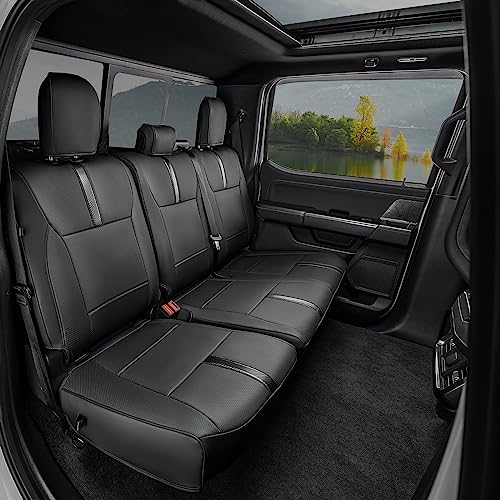
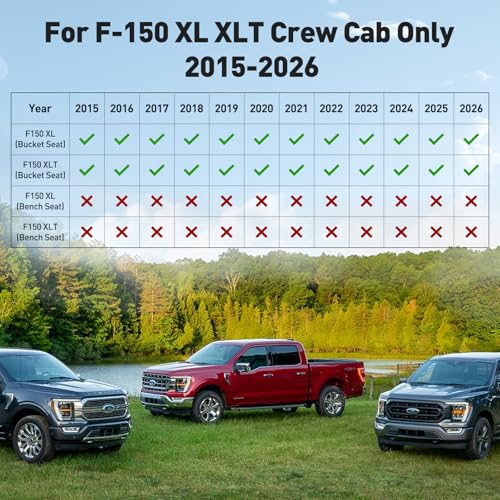
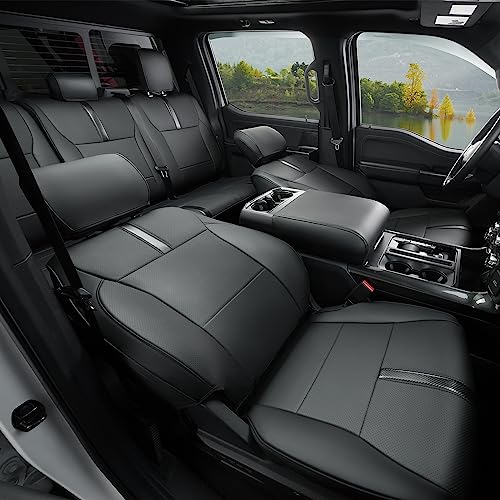
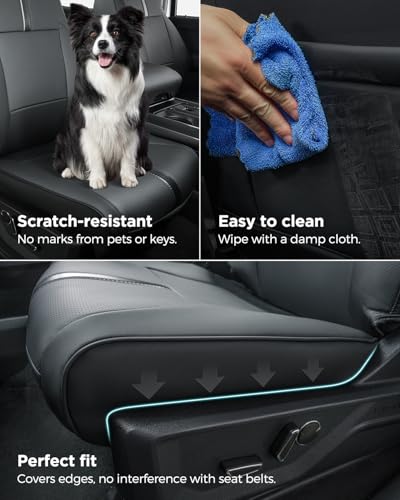
:
How We Chose These leather seat covers
Rather than a hands-on lab test, this selection is based on a research-led comparison of published specifications and owner feedback. I approached this as I do all material evaluations at LeatherGenesis.com – by focusing on the quality of the leather (or leatherette) used, construction details, and how well the covers address the practical demands of automotive use. We looked at dozens of models, weighing features against owner reports of durability and fit.
For leather seat covers, the most important factors are undeniably fit and protection. A cover that doesn’t fit well looks cheap and won’t provide adequate safeguarding against wear and tear. Beyond that, airbag compatibility is critical for safety, and the quality of materials dictates how long the covers will hold up to daily use. We prioritized models demonstrating thoughtful design around these points.
Specifications reliably indicate material composition and vehicle compatibility, but owner feedback proved essential for judging real-world performance. Reports on ease of installation, long-term durability, and how well the covers withstand spills and stains were key. Many manufacturers claim high quality, but consistent positive reviews offered a more trustworthy assessment. For those considering crafting their own automotive leather goods, exploring best thick leather sewing machines can be a valuable starting point.
Choosing The Right leather seat covers
Finding the right leather seat covers can dramatically improve your vehicle’s interior, but it’s more than just aesthetics.
Good leather seat covers balance durability with a comfortable fit. Buyers should prioritize materials that resist cracking and fading (especially with sun exposure), confirm airbag compatibility, and verify a secure fit that won’t shift during use. A quality cover will protect the original upholstery while enhancing the overall driving experience.
Material Quality & Durability
The “leather” in many seat covers isn’t always genuine hide. Polyurethane (PU) leather is common, and while it looks similar, it doesn’t age like real leather. Look for covers specifying “nappa leather” or “genuine leather” if longevity is a priority. Even with genuine leather, tanning processes matter; full-grain leather will be far more durable than bonded leather. Consider the climate you live in. Intense sun and heat will accelerate wear on lower-quality materials.
Fit & Vehicle Compatibility
Universal-fit seat covers are convenient, but a precise fit is crucial. A loose cover will slide around, be uncomfortable, and potentially interfere with seat controls. Products like the DiffCar Ford F150 covers demonstrate the benefit of vehicle-specific designs, offering complete coverage and a tailored appearance. Before purchasing any cover, double-check its compatibility with your vehicle’s make, model, and year. Don’t assume a “universal” fit will truly work well.
Comfort & Support Features
Beyond simply protecting your seats, covers should enhance comfort. Many options now incorporate foam padding, such as the CAR PASS 3D Foam covers, which can provide additional back support on long drives. Here’s what to consider when evaluating comfort features: * Padding thickness: A thin layer of foam provides minimal benefit. * Ergonomic design: Contoured shapes that support the natural curves of the body are ideal. * Breathability: Look for materials with perforations or mesh panels to prevent overheating, especially in warmer climates. A cover that traps heat will quickly become uncomfortable.
Taking care of your investment is also essential. Regularly cleaning and conditioning your leather seat covers will help maintain their appearance and prevent cracking. You can find best leather conditioner reviews to help you choose the right product for your needs.
A well-fitted seat cover shouldn’t require constant readjustment. If you find yourself constantly tucking and tightening, it’s a sign the fit isn’t right – and it’s likely to become more frustrating over time.
Leather Seat Covers Compared
Here’s a comparison of key specifications for different leather seat cover options.
| Product Name | Material | Fit Type | Airbag Compatible | Waterproof | Coverage |
|---|---|---|---|---|---|
| CAR PASS Memory Foam | Leather/Mesh | Universal | Yes | No | Full |
| Elantrip Waterproof | Leather | Universal | Yes | Yes | Front Pair |
| CAR PASS 3D Foam | Leather | Semi-Custom | Yes | Yes | Full |
| MINGBRON Nappa | Nappa Leather | Universal | Yes | Yes | Full Set |
| DiffCar Ford F150 | Faux Leather | Custom (F150) | Yes | Yes | Full |
Frequently Asked Questions
What’s the difference between “genuine leather” and “bonded leather” seat covers?
Genuine leather is made from animal hide and is much more durable, while bonded leather uses shredded leather fibers glued together. Bonded leather is less expensive but won’t last nearly as long and is prone to peeling and cracking.
Are universal-fit seat covers really a good option?
Generally, no. While convenient, universal-fit covers often have a loose or ill-fitting appearance and may not stay securely in place. Vehicle-specific designs, like those from DiffCar, offer a far superior fit and complete coverage.
How can I tell if a seat cover is airbag compatible?
Look for explicit confirmation from the manufacturer stating the cover has been tested and approved for use with side airbags. Many listings will state “airbag compatible” or show diagrams illustrating how the cover accommodates airbag deployment.
What material is best for hot climates?
Perforated or mesh-backed leather seat covers are best in hot weather. These allow for increased airflow, preventing heat buildup and reducing discomfort during use, unlike solid PU or vinyl options.
How often should I clean and condition leather seat covers?
You should clean your leather seat covers every 1-2 months, and condition them every 6 months to maintain their suppleness and prevent cracking. Regular care extends their lifespan and preserves their appearance.
The Bottom Line
Choosing leather seat covers often comes down to balancing initial cost with long-term satisfaction. While many options exist, the CAR PASS Memory Foam covers strike a compelling balance of features, fit, and price, making them a solid all-around choice for most vehicles. They offer broad compatibility and a comfortable design without requiring a significant investment.
For those with specific needs, several options stand out. If you drive a Ford F150, the DiffCar Ford F150 covers provide the best possible, tailored fit. If waterproofing is a top priority, the Elantrip Waterproof covers are a great value. And for those wanting a more luxurious feel, the MINGBRON Nappa covers offer the appeal of genuine nappa leather.
Ultimately, remember that the material and fit matter more than any single feature. A well-fitting cover made from a durable material will protect your seats and enhance your driving experience far more than a cheap cover with lots of bells and whistles. Prioritize quality construction and compatibility, and you’ll be happier with your purchase for years to come.
