
What Does Leather Conditioner Do? The Essential Care Guide
This post contains affiliate links. As an Amazon Associate, we earn from qualifying purchases.
Leather conditioner lubricates the internal fiber network of leather, replacing the natural oils lost to evaporation, heat, and friction to prevent the material from drying out, stiffening, and cracking. Its secondary job is to protect the surface with a light, breathable barrier. The correct type, cream, oil, or wax, depends entirely on the leather’s tannage and intended use.
Let’s be clear about one thing. This basic lubrication prevents the leather from turning brittle, but it’s not a magic preservation potion. In fact, some of the most common conditioning advice actively damages leather over decades, a fact backed by museum conservators who’ve documented the exact failure modes.
What follows is a breakdown of the fiber-level mechanics, the three main types of conditioners and what each actually does, and the museum-grade evidence that reframes the entire “more is better” philosophy. By the end, you’ll know how to read your leather’s needs and pick a product that extends its life instead of shortening it.
Key Takeaways
- Leather conditioner works by coating and lubricating leather’s collagen fibers so they can slide past each other instead of snapping, this prevents stiffness and cracks, not decay.
- Using the wrong conditioner type (e.g., heavy oil on a delicate jacket) or conditioning too frequently can cause darkening, a greasy feel, and a white, waxy residue called fatty acid spew.
- Conditioner does not waterproof leather; that requires a separate wax-based product. It also does not clean, always clean leather thoroughly before conditioning.
- Most quality leather items only need conditioning 2-3 times a year. Let the leather’s feel (dry, stiff, dull) guide you, not the calendar.
- For most smooth leather, a balanced cream like Bickmore Bick 4 is the safest default. Reserve pure oils like Obenauf’s Leather Oil for dry, stiff, vegetable-tanned work gear.
What Does Leather Conditioner Do, Mechanically?
Think of a piece of leather as a dense, woven mat of collagen fibers. When it’s new and properly tanned, those fibers are coated in natural lubricants, oils and fats that let the strands slide smoothly against each other when you bend the material. Every year, a little bit of that lubrication evaporates. Sun, heat, and physical flexing accelerate the loss.
Leather conditioner replenishes the tanning agents and lubricants that water and time leach from the collagen fiber network. This maintains fiber flexibility, prevents the stiff, papery feel of dried-out leather, and stops the surface from developing fine cracks at stress points.
A conditioner’s job is simple: get new lubrication back in there. It penetrates the surface and deposits oils or waxes onto those individual fibers. This is why a dry, stiff belt becomes pliable again after conditioning with a product like Lexol, the fibers are re-lubricated. It doesn’t “feed” the leather like a plant. It doesn’t reverse structural damage like deep cracks or rot. It just puts a controlled amount of slippage back into the system.
The leather will tell you what it needs. Run your thumb across the grain. Does it feel dry, almost dusty? Does it flex with a faint, dry squeak? That’s the sound of unlubricated fibers grinding. That’s your cue.
The Three Conditioner Types and Their Real Jobs
Not all conditioners are interchangeable. Picking the right one isn’t about buying the “strongest” option; it’s about matching the product’s penetration and residue to your leather’s tannage and use. Here’s the straightforward breakdown.
Creams & Lotions (The Default for Most Leather)
These are balanced emulsions of oils, waxes, and water. They absorb relatively quickly, darken leather the least, and are almost impossible to over-apply. Their protection is light and breathable. * Best For: Everyday smooth leather, jackets, bags, wallets, furniture, most shoes. * Real-World Pick: Bickmore Bick 4. It’s the benchmark for a reason: minimal darkening, no greasy residue, works on everything from a car interior to a bomber jacket. * What Happens If You Use The Wrong Type: Using a heavy oil here will oversaturate the fibers, potentially weakening them and always darkening the color significantly.
Pure Oils & Greases (The Rescue Squad for Work Leather)
These are concentrated animal or plant oils (neatsfoot, mink) or heavy grease dressings. They penetrate deeply and aggressively soften. * Best For: Dry, stiff, vegetable-tanned leather that sees hard use, work boots, saddles, tool belts, outdoor gear. * Real-World Pick: Obenauf’s Leather Oil. It’s a pure, hot-oil treatment that’s legendary for reviving dried-out work boots. * Consequence Timeline: Apply a heavy grease to a fine garment and it will feel greasy to the touch within hours, attract dirt relentlessly, and likely develop dark, permanent blotches.
Specialized & Wax-Based Conditioners (For Specific Surfaces)
This category includes products for unique leathers or added water resistance. * Suede/Nubuck: Use only a dedicated spray conditioner like those from the Leather Doctor S+ system. Liquid conditioners will mat the nap permanently. * Waterproof Leather: A product like Nikwax Conditioner for Leather is designed for Gore-Tex® and smooth waterproof footwear, it conditions without clogging the membrane. * High-Gloss or Coated Leather: Often needs no conditioner at all; the plastic-like surface cannot absorb it.
| Conditioner Type | Primary Action | Best Leather Match | Risk If Misused |
|---|---|---|---|
| Cream / Lotion | Light absorption, surface refinement | Most smooth, finished leather (jackets, bags) | Can leave a filmy residue on heavily coated leather |
| Pure Oil / Grease | Deep penetration, aggressive softening | Dry, stiff veg-tan work leather (boots, saddles) | Saturates & weakens fibers; causes major darkening |
| Specialized Spray | Conditions without altering texture | Suede, nubuck, waterproof membranes | Liquid mats suede nap; oils clog waterproof liners |
How Often Should You Condition Leather? (It’s Less Than You Think)
Forget the “once a month” rule you see on some motorcycle gear bottles. That advice sells conditioner, it doesn’t preserve leather. For the vast majority of items, a jacket, a handbag, dress shoes, conditioning two, maybe three times a year is plenty. A back-pocket wallet facing body heat might need a third pass. A belt worn an hour a day needs even less.
The schedule is irrelevant. The material’s state is everything. Here’s a simple diagnostic: 1. Look: Has the rich color faded to a flat, dull grey? That’s often a sign of dry fibers. 2. Feel: Run your fingers across it. Does it feel dry and rough, not supple? 3. Flex: Gently bend it. Does it resist, or can you hear a faint dry squeak?
If you answer yes, it’s time. If the piece still feels soft and looks vibrant, put the bottle away. Conditioning too often is like overwatering a plant, it drowns the roots. In leather, it can clog the fiber pores, leading to a limp, lifeless feel.
The part nobody mentions: Buffing too soon after application is a classic error. I learned this the hard way on a vintage bag. Rushing to buff off a beeswax-based cream left a faint hazy film that acted like a magnet for dust and lint. Now I let every conditioner soak in for a full hour before I even touch it with a buffing cloth.
Common Mistakes and Their Consequences
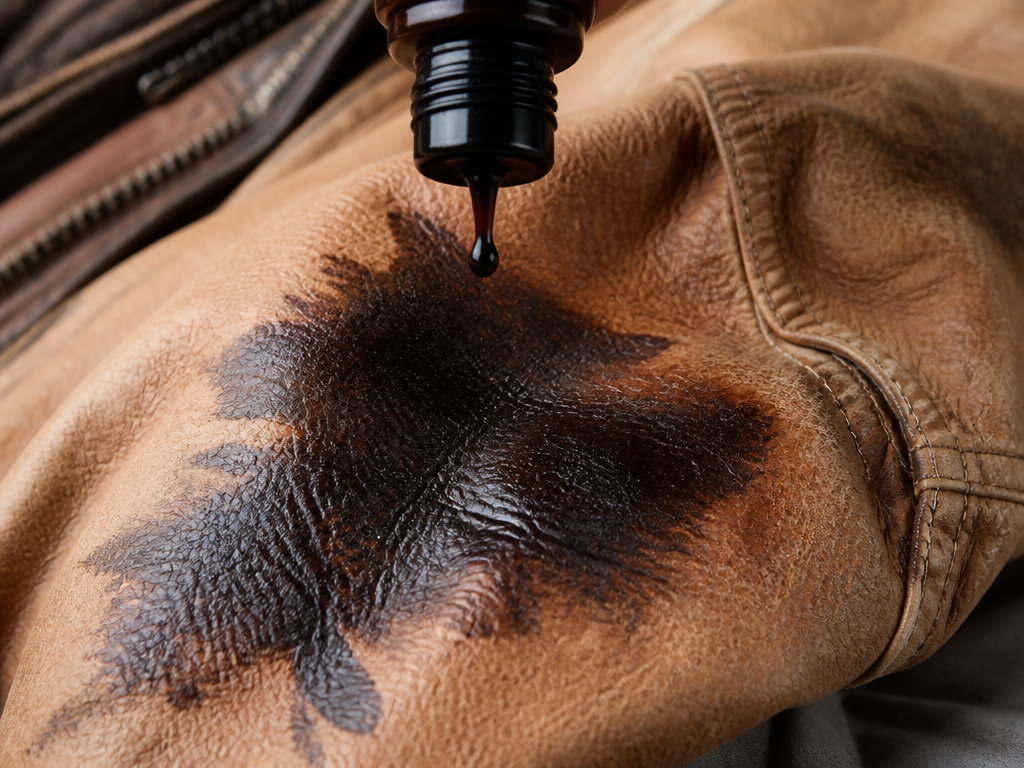
Most leather damage from conditioning comes from three places: using the wrong product, using too much, or doing it too often. Let’s walk through what that actually looks and feels like.
Darkening and Blotching. This is the most immediate sign. All conditioners darken leather slightly when wet, but oils and some waxes cause permanent darkening. On light-colored or aniline leather, it can be dramatic and uneven. * The Fix: Always, always spot-test on a hidden area (like the inside of a belt loop) and wait 48 hours to see the true final color.
Greasy, Sticky Residue. This means you’ve applied too much, or the product is sitting on top of a sealed, coated leather that can’t absorb it. The surface will feel tacky, attract every piece of lint, and accelerate soiling. * The Fix: Take a clean, dry cloth and gently press, don’t rub, to absorb excess. Let it sit for a day. If it’s still greasy, very lightly dampen the cloth with water and vinegar (50/50 mix) and dab gently.
Fatty Acid Spew. This is the long-term, museum-documented failure mode. Over decades, the oils in some dressings can oxidize and migrate back to the surface, forming a white, waxy bloom that looks like mold. A National Park Service leather dressing guide details this exact phenomenon, noting that frequent dressing contributed to “the oily and darkened appearance of the leather, embrittlement, and the growth of a white waxy substance.” * The Takeaway: This is the physical evidence that “more is better” is wrong. It’s a consequence of saturation, not preservation.
The Manufacturer vs. Museum Preservation Debate
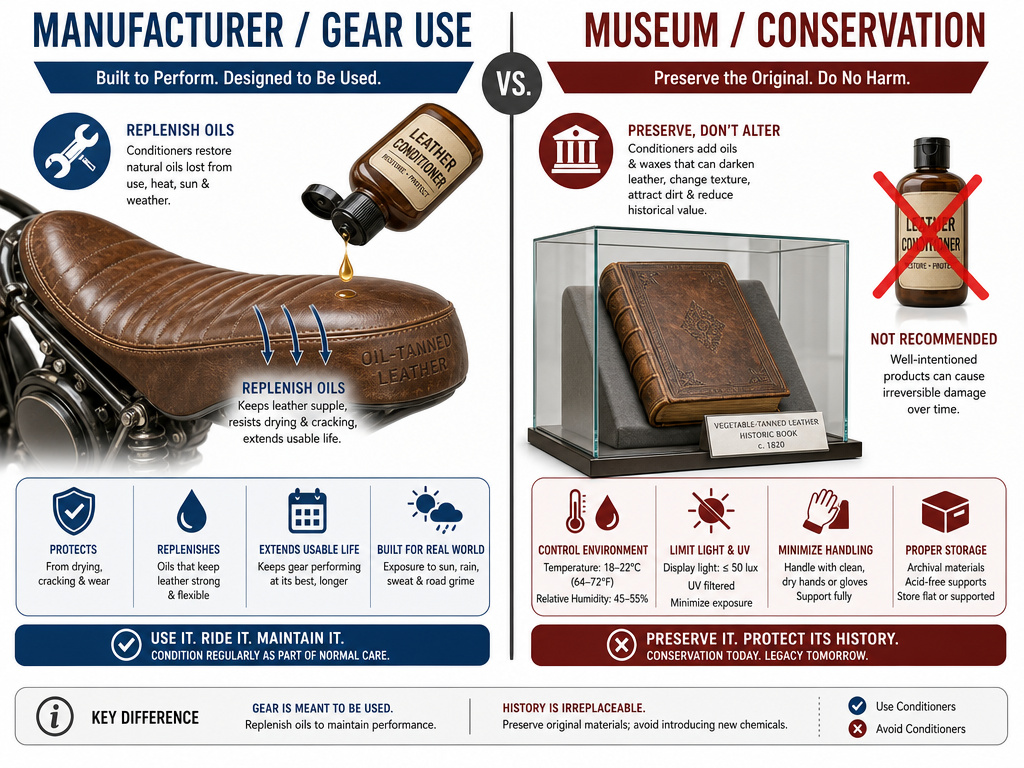
Here’s where it gets interesting. Many product manuals, like one from Indian Motorcycle, recommend applying their dressing “at least once per month.” This aligns with brands like Pecard that frame conditioner as replenishing “lost oils and nutrients.”
Then you have the museum conservators. The U.S. National Park Service Conserve O Gram document is a primary source that directly contradicts this. It cites studies from 1935 onward concluding dressings have no preservative effect, and details a 1978 treatment where dressings led to darkening, weakened stitching, and separation of parts. Their stance today is clear: “the use of dressings is not advised as a preventive measure.”
Who’s right? Both, in their context. * Manufacturers are often talking about oil-tanned leather on gear designed for harsh, continuous outdoor exposure. The dressing here is about maintaining water resistance and a specific look. * Conservators are talking about historic, often vegetable-tanned leather in stable, climate-controlled environments. For them, any added foreign substance is a risk to the object’s chemical stability.
For your everyday leather goods, the museum perspective is the safer one. Lean toward less frequent, lighter conditioning with a product matched to your leather type. This approach to leather longevity avoids the pitfalls they’ve documented over a century.
Frequently Asked Questions
Does leather conditioner waterproof leather?
No. Conditioner lubricates fibers; it does not create a continuous water-repellent barrier on the surface. For waterproofing, you need a separate wax-based product (like dubbin for boots) or a specialized waterproofing spray for smooth leather.
Can I use the same conditioner on my jacket, shoes, and sofa?
You can, if it’s a versatile, light cream like Bickmore Bick 4. However, heavy work boots need a more penetrating oil, and suede needs a dedicated spray. For best results, tailor the leather conditioner to the item’s specific use and leather type.
How long does it take for leather conditioner to dry?
Absorption time varies. A light cream on a dry jacket might take 30-60 minutes to fully soak in before you can buff off any excess. A heavy oil on thick work leather can take several hours or even overnight. The rule is to let it sit until the surface is no longer tacky to a light touch.
Will conditioner fix cracked leather?
No. Conditioner can help prevent cracks by keeping fibers supple, but it cannot repair cracks that have already formed. Once the collagen fibers have physically split, the damage is structural. Conditioner will just sit in the crack.
Is mink oil a good conditioner?
For most leather goods, it’s a poor choice. Mink oil darkens leather significantly, can turn rancid over time, and attracts dirt, making it suitable only for rugged, dark-colored work boots where deep conditioning is the only priority.
The Bottom Line
Leather conditioner’s job is straightforward: it replaces lost lubrication to keep fibers flexible. The complexity, and where most people go wrong, is in the execution. Match the product to the leather’s tannage and use. A balanced cream for almost everything, a pure oil for dry rescue missions, a specialized spray for suede.
Resist the urge to condition on a schedule. Let the leather’s dryness and stiffness guide you, which for most items means two or three times a year at most. This is the single biggest shift from the “more is better” marketing, it’s what separates leather that develops a rich patina over decades from leather that gets a greasy, dark, or spew-stained fate.
If you want one answer for the vast majority of smooth leather in your life: keep a bottle of Bickmore Bick 4 and a clean microfiber cloth in your care kit. That combination handles ninety percent of conditioning needs without the risk of overdoing it. Save the heavy oils for the one pair of boots that truly earns it.
