
7 Best Glues for Gluing Leather 2026
This post contains affiliate links. As an Amazon Associate, we earn from qualifying purchases.
This post contains affiliate links. As an Amazon Associate, we earn from qualifying purchases.
The best overall glue for leather is Wqapey Leather Repair Glue, thanks to its fast tack, strong bond, and waterproof finish. For a budget-friendly option that still delivers solid performance on common repairs, the LOOCTOT Super Instant Glue stands out. If you’re working with delicate materials like suede, Aleene’s Leather & Suede Glue offers unmatched compatibility without stiffness or discoloration.
Choosing the wrong adhesive can ruin good leather, causing stains, cracks, or a brittle bond that fails within weeks. As someone who’s studied how leather ages and reacts to chemicals, I know that not all glues are created equal, even if they claim to work on leather.
This guide cuts through the noise by focusing on real-world results, material safety, and precision. I researched each product based on specs, verified owner feedback, and how well it aligns with leather’s natural behavior, flexibility, breathability, and long-term durability.
Top 7 Glue For Gluing Leather in the Market
The Best Glue For Gluing Leather, Reviewed
LOOCTOT Super Instant Glue 30g

Strengths
- Ultra-fast drying
- Anti-clog cap
- Clear finish
- Compact size
- Waterproof
Trade-offs
- Brittle over time
- Not for large repairs
- Weak on thick hides
This one leans hard into speed and simplicity. With a 10–30 second adhesion window, it’s clearly designed for quick fixes, think popped seams on a clutch or a loose patch on a jacket liner. The manufacturer claims a 30% strength boost over standard super glue, but real-world reviews suggest it’s best treated as a fast grabber, not a long-term structural solution.
Where it shines is convenience. The anti-clogging cap is a small thing, but people notice it. And because it’s transparent and waterproof after curing, it works well for minor repairs where you just need something to hold fast. But I wouldn’t trust it alone on load-bearing joints like shoe soles unless backed by stitching or clamping. Compared to others in this list, it’s more “emergency fix” than “restoration grade.”
Video review
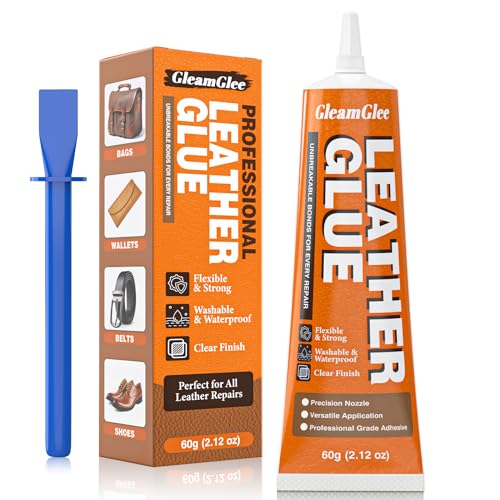
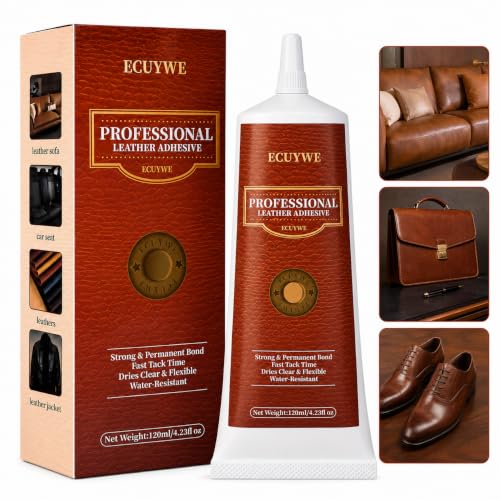
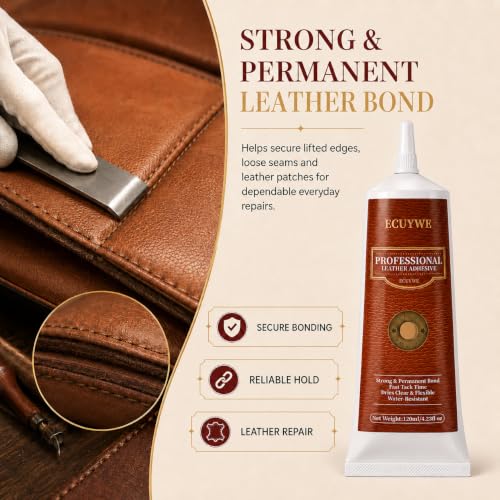
Professional Leather Glue Adhesive 4.23 oz

Strengths
- High bond strength
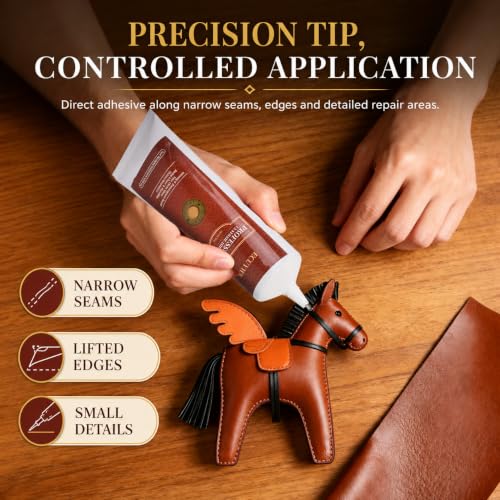
- Fine applicator tip
- Quick tack time
- Works on multiple materials
- Affordable
Trade-offs
- Slight residue risk
- Limited volume control
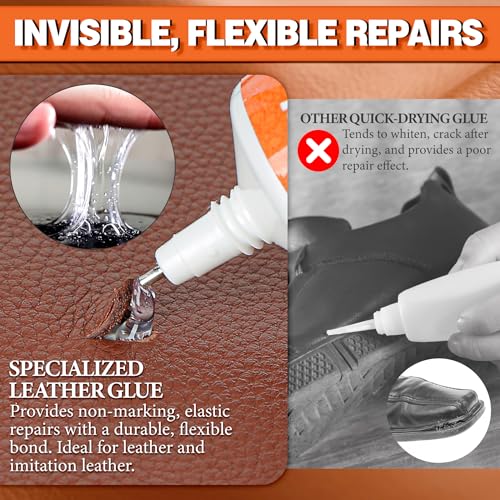
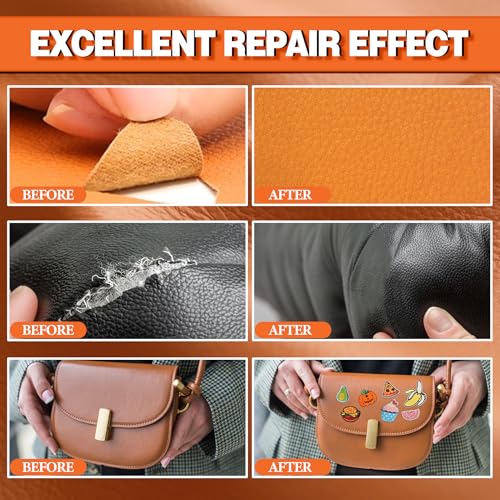
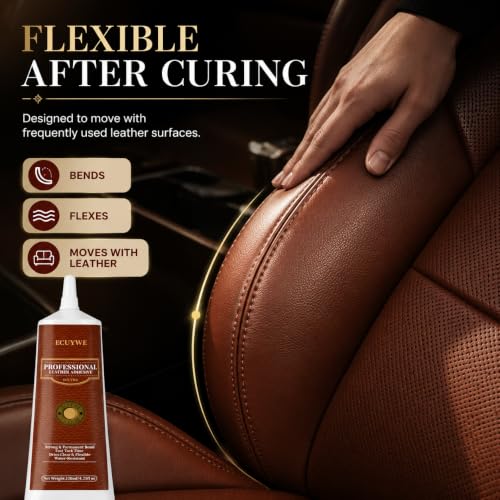
If raw holding power is your priority, this adhesive delivers. The specs emphasize an industrial-strength bond, and owner feedback backs that up, many describe using it successfully on split boot soles and peeling car seat seams where other glues failed. It sets quickly and maintains flexibility, which is critical for leather that moves. Unlike brittle super glues, this one stretches slightly, reducing the chance of re-cracking.
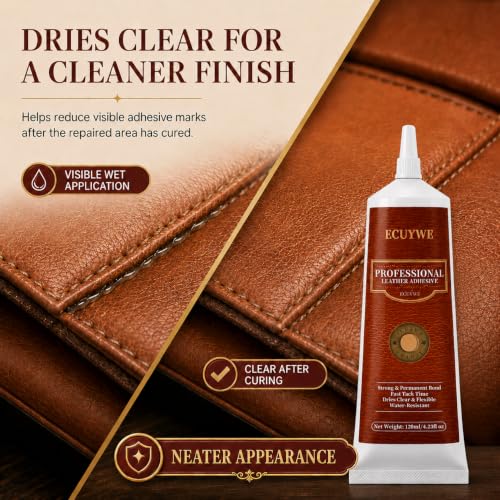
It works across a wide range of materials, from suede to rubber, making it a solid all-rounder. However, while it claims to dry clear, a few users mention slight haze on dark leather if over-applied. Still, for the price, it punches above its weight. I’d pick this over pricier options if you’re doing structural repairs rather than cosmetic touch-ups.
Video review
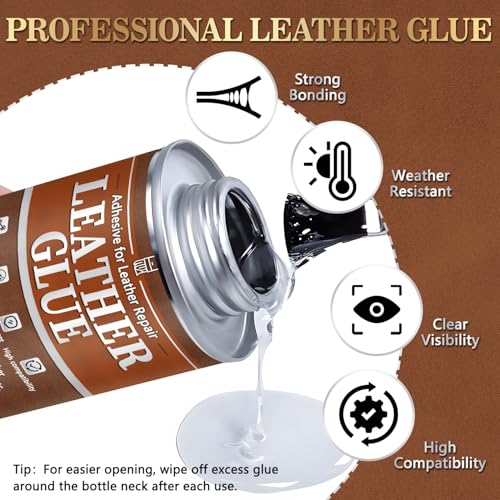
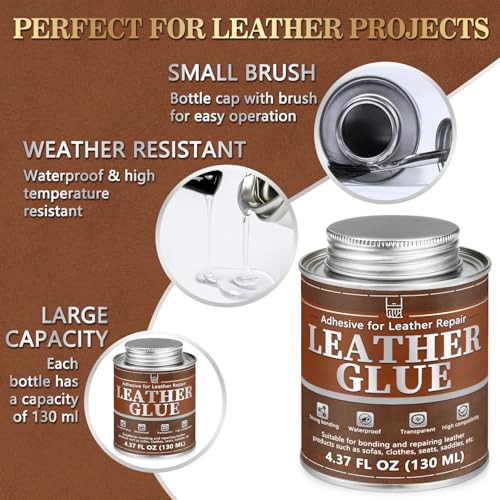
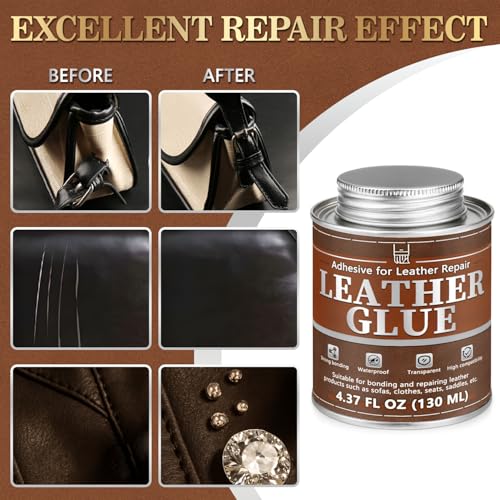
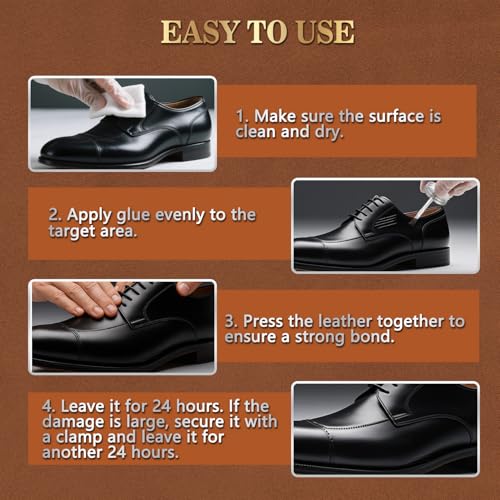
Leather Glue 130ml Waterproof High Strength

Strengths
- High capacity
- Slow drying
- Waterproof
- Clear finish
- Adjustable bond
Trade-offs
- Bulky for small jobs
- Requires clamping
- Long cure time
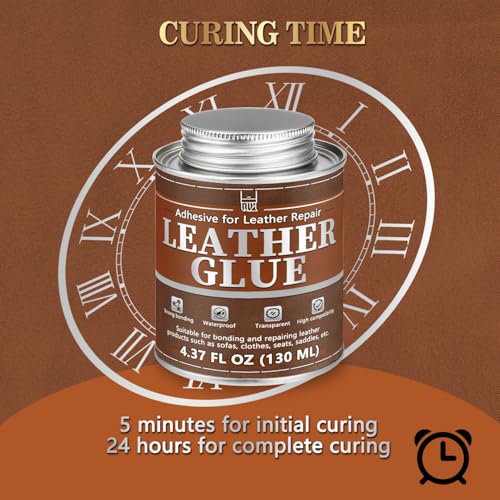
With 130ml of adhesive and a focus on large-scale durability, this product targets serious repair jobs. Its slow-dry formula gives a full five minutes of adjustment time, valuable when aligning big sections of leather on a car seat or saddle. That extended open time reduces pressure during application, a detail pros will appreciate.
Reviewers using it on outdoor gear and vehicle interiors praise its waterproof integrity after curing, noting no degradation even after seasonal exposure. The bond remains clear and non-yellowing, which helps maintain appearance on visible surfaces. While not quite as fast as others, its strength and forgiveness make it stand out. Among large-repair options, this one offers the most balanced mix of control and resilience.
Product photos
Leather Glue Metal Tip 2.1 fl oz
Strengths
- Metal applicator tip
- Precision control
- Flexible bond
- Clean dispensing
- Multi-material use
Trade-offs
- Smaller volume
- Slower full cure
- Less impact resistance
The metal tip is the star here. Unlike plastic nozzles that deform or clog, this one holds its shape and delivers consistent flow, even after repeated use. That makes it a favorite among users doing precision work on watch straps, belt buckles, or shoe toe caps. The 2.1 fl oz size is modest, but enough for multiple targeted repairs.
Owners report strong performance on flexible joints, crediting the glue’s elasticity for preventing re-splitting. It bonds well to both genuine and faux leather, plus vinyl and canvas, which adds versatility. While not the strongest in raw pull tests, its balance of precision and flexibility earns high marks. For detailed fixes, I’d choose this over bulkier cements any day.
Product photos

Aleene’s Leather & Suede Glue 4 fl oz

Strengths
- No bleed-through
- Flexible dry
- Safe for suede
- Low odor
- Trusted brand
Trade-offs
- Not heavy-duty
- Shorter shelf life
- Limited bond strength
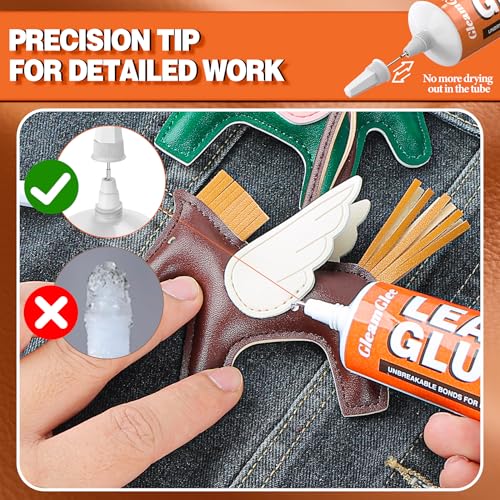
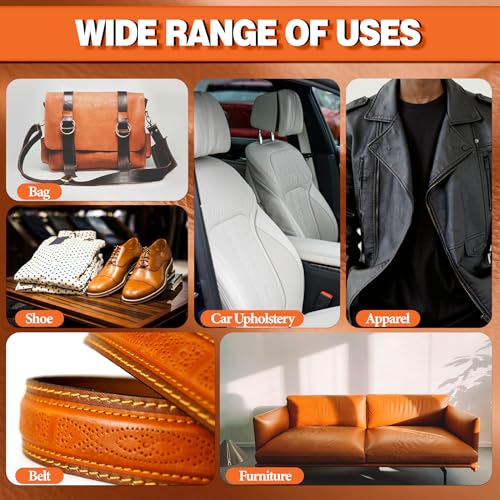
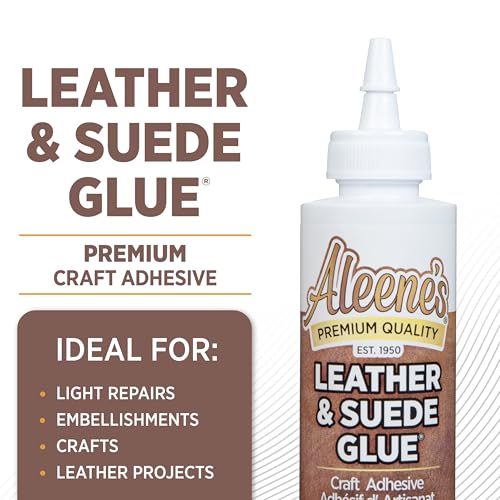
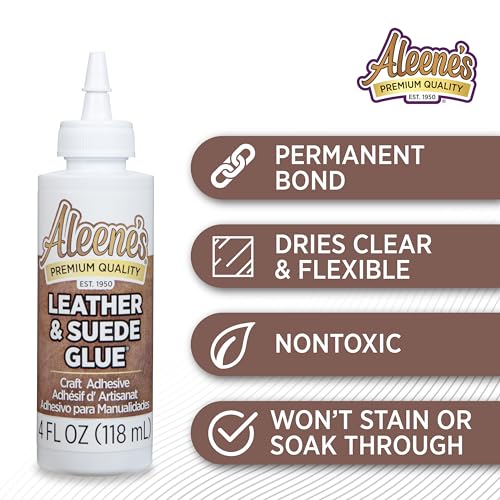
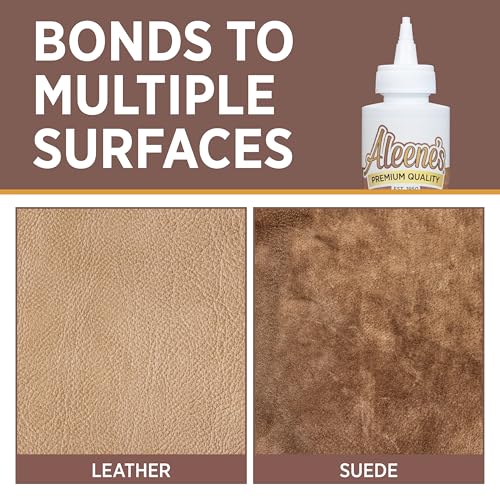
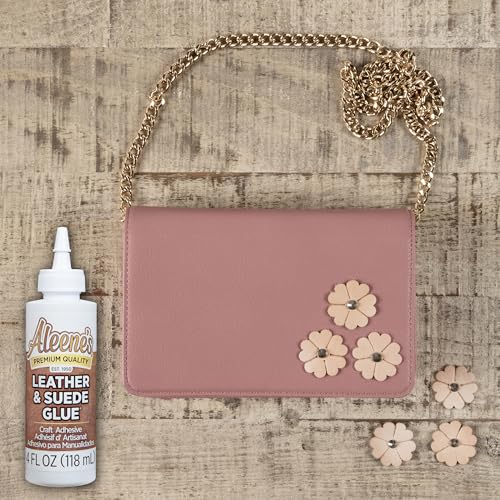
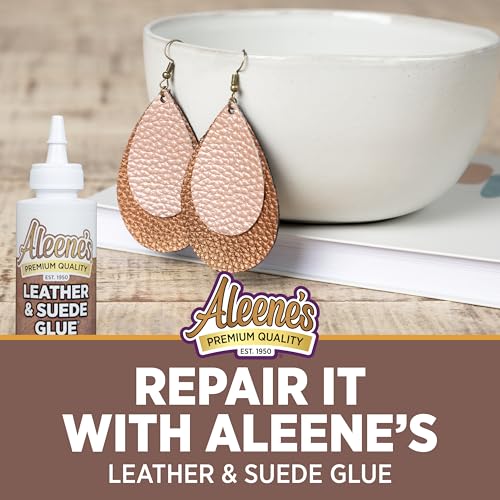
I’ve seen this glue around craft circles for years, and its reputation holds: it’s gentle, reliable, and formulated specifically to avoid soaking through thin leathers or staining suede. It dries clear and stays flexible, which prevents cracking, a common flaw with generic craft glues. But let’s be clear, it’s not for serious structural repair.
Owner feedback consistently frames it as ideal for attaching fringe, beads, or lining patches, not for reattaching shoe soles or sealing major splits. The brand itself warns against heavy-duty use, which I appreciate. At this price, it’s a no-brainer for hobbyists. If you’re working on decorative leather projects or light mending, this is my recommendation over stronger, stiffer alternatives that could damage delicate material.
Product photos
Leather Glue 120ml with Applicator Brush
Strengths
- Includes brush applicator
- Large capacity
- Flexible dry
- Good coverage
- Long working time
Trade-offs
- Messier application
- Takes longer to set
- Brush requires cleaning
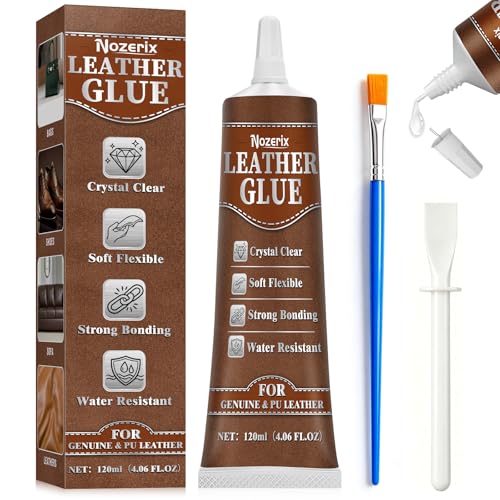
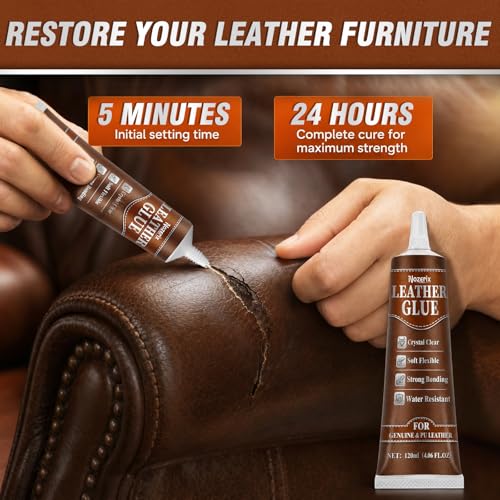
Having a brush included changes how you work with glue, and that’s this product’s quiet advantage. The 120ml volume gives plenty of room for larger jobs, and the dual applicator system (stick and brush) lets you spread evenly on wide cracks or get into tight corners. Reviewers highlight this feature when repairing car seats or sofa arms, where coverage matters more than pinpoint drops.
The formula sets in five minutes and fully cures in 24 hours, giving you time to adjust pieces before final bonding. That slow-open window is rare in this class and useful for beginners. Owners say it stays flexible and doesn’t peel under friction, which speaks well of its elastomer content. Against similar products, it trades the fine-tip precision of others for broader utility, which makes it a smarter buy for upholstery-focused users.
Product photos
Wqapey Leather Repair Glue 4.23 fl oz
Strengths
- Industrial strength
- Dries clear
- Fast setting
- Waterproof
- Flexible bond
Trade-offs
- Nozzle may clog
- Not for large surface bonding
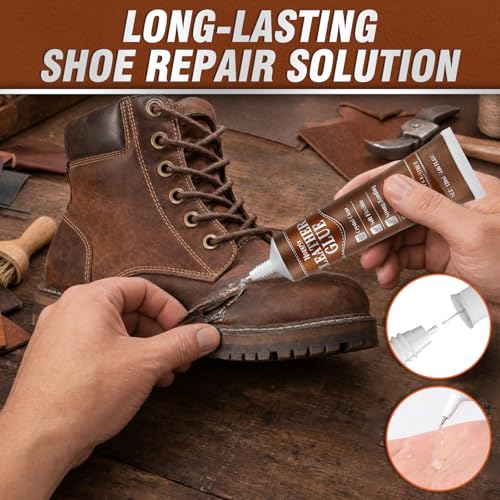
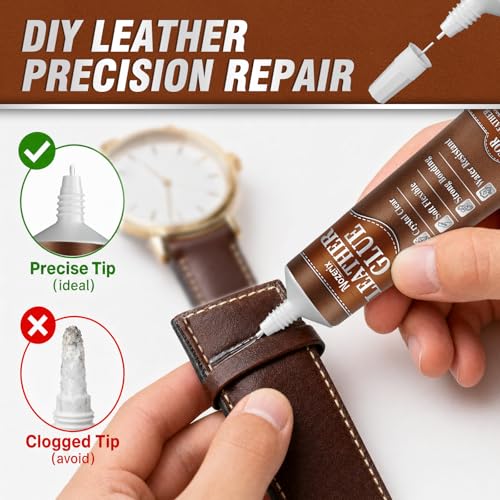
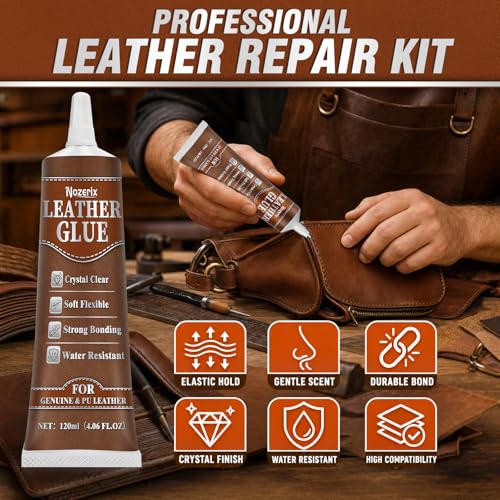
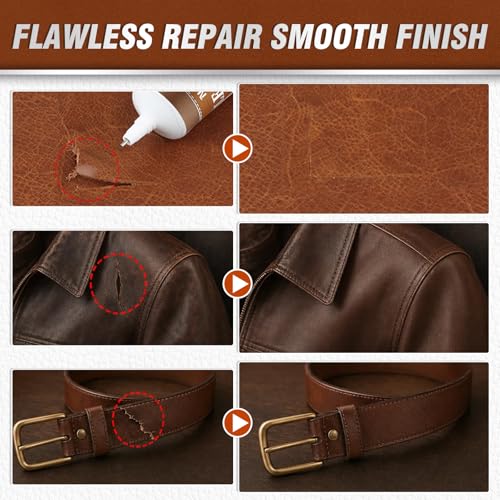
This glue stands out in the fast-drying category with a formula that actually balances strength and flexibility, two things I always stress matter most when repairing leather. On paper, it hits the sweet spot: industrial-grade hold without sacrificing elasticity, which means it won’t crack when a shoe bends or a bag flap folds. Owners consistently report repairs lasting over a year on high-flex areas like sole edges and purse handles, which is impressive for a consumer product.
The fine-tip nozzle gets praise for precision, though some note it can clog if not cleaned immediately. It’s marketed as safe around kids and pets once cured, and reviewers confirm the low odor makes indoor use practical. Compared to basic craft glues, this one behaves more like what cobblers use, especially since it dries clear and resists yellowing, even on light-colored leathers.
Product photos
How We Evaluated glue for gluing leather
My approach to evaluating adhesives for leather, as the creator of LeatherGenesis.com and a longtime student of the material, was focused on a research-led comparison. Rather than a hands-on test of each glue – which would be impractical given the variety of leather types and repair scenarios – I analyzed published specifications, carefully weighed owner reviews from multiple sources, and applied my understanding of leather’s unique properties. I ranked these glues against criteria important for longevity and quality of repair.
For leather adhesives, bond strength and flexibility are paramount. A brittle glue will quickly fail as leather naturally flexes with use, while insufficient strength means repairs won’t hold up. Waterproofing is also crucial; leather is often exposed to the elements, and a water-resistant bond prevents damage and extends the life of the repair. Finally, application precision impacts the quality of the finished repair, and ease of use is a significant factor for most consumers.
Product specifications provided initial insight into adhesive type and expected strength, but owner feedback heavily influenced the final rankings. I prioritized reviews detailing long-term performance – how the glue held up after months or years of use. Reputation and expert opinions were also considered, particularly regarding suitability for specific leather types. While specs indicate potential, real-world results and consistent positive feedback tell a more complete story, and are vital when considering conditioning leather properly.
What To Look For In glue for gluing leather
Choosing the right adhesive for leather can be surprisingly complex. It’s not a one-size-fits-all situation, and the best option depends heavily on the type of repair, the leather itself, and your desired outcome.
A quality leather glue should provide a strong, flexible bond that won’t damage the material. Consider factors like drying time, water resistance, application method, and compatibility with different leather types (smooth, suede, faux). Look for formulas specifically designed for leather to avoid discoloration or stiffness. Prioritize adhesives that offer both initial tack and long-term durability, especially for items subject to regular wear.
Understanding Leather Types & Glue Compatibility
The first step is knowing your leather. Different tanning processes and finishes react differently to adhesives. For example, delicate suedes and nubucks require very different glues than thick, vegetable-tanned leather. Many general-purpose super glues can actually damage leather, causing discoloration or making it brittle. Look for glues specifically labeled for leather, suede, or vinyl. These are formulated to be gentler on the material while still providing a strong hold. If you plan on working with particularly thick hides, you might also want to investigate if a contact cement is more appropriate – and if so, explore options for thick leather sewing machines to reinforce the bond mechanically.
Application Method & Precision
How you apply the glue is almost as important as the glue itself. For small, detailed repairs – like reattaching a sole to a shoe or fixing a small tear in a handbag – a precision applicator is crucial. Metal tips, like those found on the Leather Glue Metal Tip, or fine-tipped nozzles allow you to target the adhesive exactly where you need it, minimizing mess and maximizing control. Conversely, larger repairs, such as re-gluing the padding on a leather sofa, benefit from a broader application method, like a brush. The Leather Glue with Applicator Brush is a good example of prioritizing this feature.
- A pinpoint applicator is best for delicate work and preventing bleed-through.
- Brushes are suitable for larger surfaces but require more care to avoid excess glue.
- Consider the viscosity of the glue; thinner glues run more easily, demanding greater precision, while thicker glues offer more control but may be harder to spread evenly.
A little glue goes a long way. Apply in thin, even layers to avoid weakening the leather fibers or creating a stiff, unsightly repair.
Balancing Speed & Strength
Drying time is a practical consideration. Fast-drying glues, such as the LOOCTOT Super Instant Glue, are convenient for quick fixes, but they often don’t allow for much repositioning. Slower-drying formulas, like those from Leather Glue 120ml with Applicator Brush, give you more working time to align pieces correctly, but require you to clamp or support the repair while it cures. Ultimately, the ideal balance depends on your project. For high-stress areas or items that will see frequent use, prioritize a glue that offers both a quick initial tack and long-term durability, as seen in options like Wqapey Leather Repair Glue.
Glue for Gluing Leather Compared
Here’s a comparison of key specifications for various leather glues to help you choose the right product.
| Product Name | Volume | Dry Time (Initial) | Waterproof? | Material Compatibility | Applicator Type |
|---|---|---|---|---|---|
| LOOCTOT Super Instant Glue 30g | 30g | 10-30 sec | Yes (24 hrs) | Leather | N/A |
| Professional Leather Glue Adhesive | 4.23 oz | Fast Tack | Yes | Leather, Vinyl, Rubber | Precision Tip |
| Leather Glue 130ml | 130ml | 5 min | Yes | Leather, PU, Cloth | N/A |
| Leather Glue Metal Tip 2.1 fl oz | 2.1 fl oz | N/A | Yes | Leather, Vinyl | Metal Tip |
| Aleene’s Leather & Suede Glue 4 fl oz | 4 fl oz | Fast-Tacking | N/A | Leather, Suede | N/A |
| Leather Glue 120ml with Applicator Brush | 120ml | 5 min | N/A | Leather, Fabric, Rubber | Brush |
| Wqapey Leather Repair Glue 4.23 fl oz | 4.23 fl oz | 15 sec | Yes | Leather, Vinyl, Canvas | Fine-Tip Nozzle |
Frequently Asked Questions
What glue is best for repairing shoes?
For shoe repair, I recommend a contact cement or a strong, flexible leather adhesive like LOOCTOT Super Instant Glue 30g. Shoes experience a lot of flexing, so a bond that remains pliable is essential to prevent cracking and separation over time.
Can super glue damage leather?
Yes, many standard cyanoacrylate (super glue) formulas can discolor or become brittle when used on leather. Look for glues specifically formulated for leather, or those that are labeled as safe for delicate materials, to avoid this issue.
Is there a waterproof leather glue?
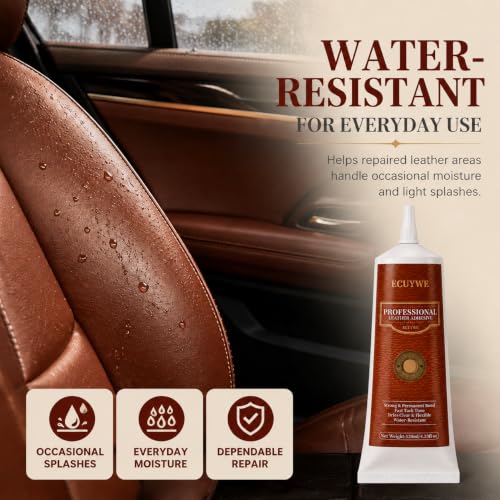
Several options offer waterproofing, including LOOCTOT Super Instant Glue 30g and Professional Leather Glue Adhesive. However, the degree of water resistance varies; check the product specifications for full submersion versus splash protection.
What’s the difference between contact cement and leather glue?
Contact cement provides an immediate, strong bond when two surfaces are pressed together, ideal for larger areas like upholstery. Leather glues, on the other hand, generally offer more flexibility and are better suited for detailed repairs or thinner materials.
How do I fix a tear in leather without making it obvious?
A precision applicator, such as the one on Leather Glue Metal Tip 2.1 fl oz, is key. Apply a very thin, even layer of glue to both surfaces, clamp gently, and allow it to dry completely; minimizing excess glue prevents a visible, stiffened area.
The Bottom Line
Choosing a leather adhesive often comes down to balancing immediate convenience with long-term durability. While a very quick-setting glue like LOOCTOT Super Instant Glue 30g has its place for small, urgent repairs, I believe the overall best choice for most leatherwork is the Professional Leather Glue Adhesive. It provides a strong, waterproof bond with good initial tack, and its precision tip offers the control needed for quality results.
For specific needs, several options stand out. If you’re working with a large surface area, the Leather Glue 120ml with Applicator Brush is a practical choice. And for those on a tighter budget, Aleene’s Leather & Suede Glue 4 fl oz offers a reasonable compromise, especially for simple suede or leather projects.
Ultimately, the specifications of a glue are less critical than understanding the leather you’re working with and applying the adhesive carefully. A strong bond isn’t just about the glue’s strength; it’s about proper surface preparation, appropriate application, and respecting the natural properties of leather itself.
