
8 Best Leather Gloves of 2026
This post contains affiliate links. As an Amazon Associate, we earn from qualifying purchases.
This post contains affiliate links. As an Amazon Associate, we earn from qualifying purchases.
The Wells Lamont Grain Cowhide Work Gloves stand out as the overall best leather gloves for their superior dexterity and durable top-grain leather, while the DULFINE Cowhide Gardening Work Gloves offer excellent value for gardeners needing wrist protection and reinforced palms. For budget-conscious buyers, the ATERET 12 Pairs Cowhide Leather Gloves provide a solid, cost-effective option for frequent use.
Choosing the right leather gloves means sorting through a sea of similar-looking options, only to find some wear out fast or feel stiff when you need flexibility. As someone who’s spent years studying leather’s performance, I know that the real differences lie in cut, leather grade, and construction details most buyers overlook. This guide cuts through the noise, using specs, owner feedback, and material expertise to highlight gloves that deliver where it matters most.
Top 8 Leather Gloves in the Market
The Best Leather Gloves, Reviewed
ATERET 12 Pairs Cowhide Leather Gloves

Strengths
- Full leather palm
- Keystone thumb
- 12-pair economy
- Consistent thickness
- Multi-industry use
Trade-offs
- No wrist adjustment
- Limited size range
ATERET’s 12-pair pack hits what I consider the sweet spot for overall value and consistency. The full grain cowhide is reliably thick, and the keystone thumb enhances range of motion, drivers and warehouse workers report less fatigue during long shifts. Unlike some bulk gloves that skimp on stitching, these use double thread seams, and owners say they maintain integrity even after months of rotation.
What sets them apart is how well they balance use cases: good for driving, durable enough for loading docks, and flexible for gardening. Compared to VZT, they feel slightly more broken-in from day one. While neither has flashy features, ATERET edges ahead in usability across diverse tasks. If I were equipping a small business or family farm, this is the pack I’d stock.
Product photos


KKOYING Cowhide Leather Work Gloves

Strengths
- Low cost
- Reinforced palm
- Double stitching
- Unisex fit
- Breathable and flexible
Trade-offs
- Inconsistent leather quality
- Shorter lifespan under heavy use
- Basic packaging
At this price, KKOYING delivers a surprising amount of core functionality. The 1.2mm cowhide and reinforced palm patch mirror specs found in pricier gloves, and owners report decent longevity for light construction and yard cleanup. The elastic wrist and Gunn cut make them comfortable for extended wear, and the unisex fit works for most hand sizes.
But “budget-friendly” comes with trade-offs. The leather isn’t as consistently graded as in Wells Lamont or SAFEGEAR, and some buyers mention early seam wear after heavy use. Still, for occasional projects or someone testing leather gloves for the first time, these offer a low-risk entry point. I’d choose them over no-name synthetics any day, but not over trusted brands if you’re working daily.
Video review
SAFEGEAR Cowhide Leather Work Gloves

Strengths
- Keystone thumb for dexterity
- Top-grain cowhide
- Consistent quality
- 3-pack value
- Good wrist coverage
Trade-offs
- No palm reinforcement
- Minimal padding
Dexterity is the name of the game here, and the keystone thumb design genuinely improves finger mobility. At 25 cm length, these cover more wrist than average without sacrificing movement, reviewers in mechanics and welding prep say they offer precision when handling small parts or fasteners. The top-grain cowhide is uniformly graded, which helps consistency across the three pairs.
While they don’t have extra reinforcements like palm patches, the all-leather build and clean stitching make them surprisingly tough for fine work. Compared to bulk packs with thinner materials, these feel more intentional. I’d pick these over generic sets if you need reliable, nimble gloves for detailed tasks but still want real leather protection.
Video review
DULFINE Cowhide Gardening Work Gloves
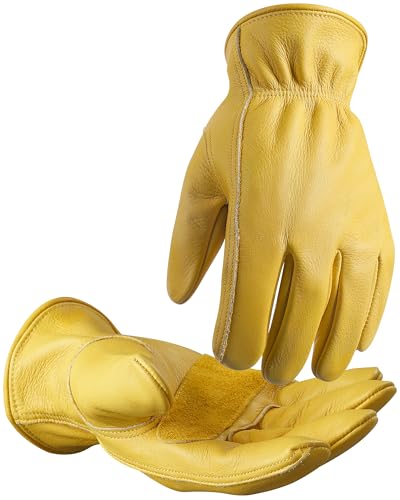
Strengths
- 1.2mm genuine cowhide
- Reinforced palm patch
- Elastic wrists
- Double thread sewing
- Great grip in damp soil
Trade-offs
- Not for extreme heat or sharp tools
- Single pair only
If gardening is your main use case, these DULFINE gloves bring together the right features: 1.2mm grain cowhide, double-stitched seams, and a flexible Gunn cut that lets you grip trowels and pruners without bulk. The leather isn’t the thickest in this lineup, but it’s treated to stay soft while resisting punctures from thorns and branches, owners with rose gardens or dense brush work confirm they hold up well. The elastic wrist makes them easy to pull on after washing hands mid-task, a small perk gardeners will appreciate.
They’re not built for welding or chainsaw use, but for light to medium outdoor labor, they strike a balance between breathability and toughness. Compared to full-cotton-back gloves, these offer more palm protection while still letting hands breathe. For most weekend gardeners, this is the easy pick over heavier-duty models that overkill for soil work.
Product photos
Wells Lamont Grain Cowhide Work Gloves

Strengths
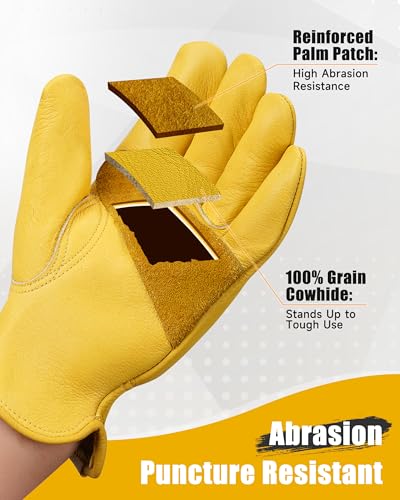
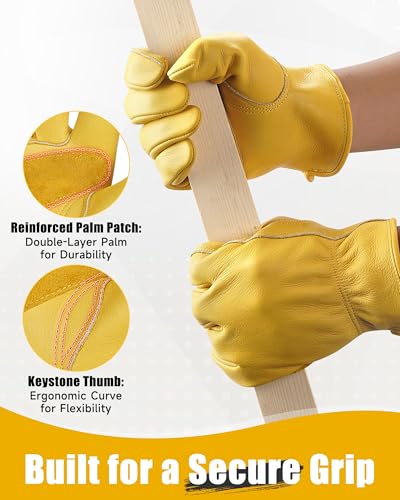
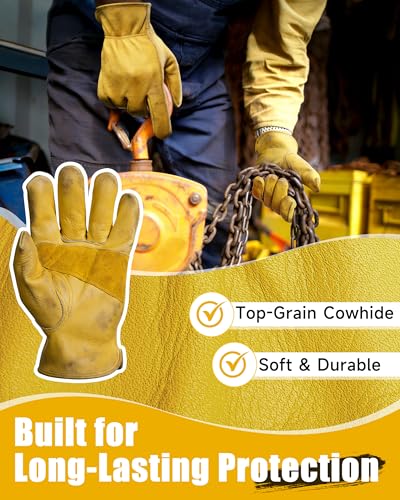
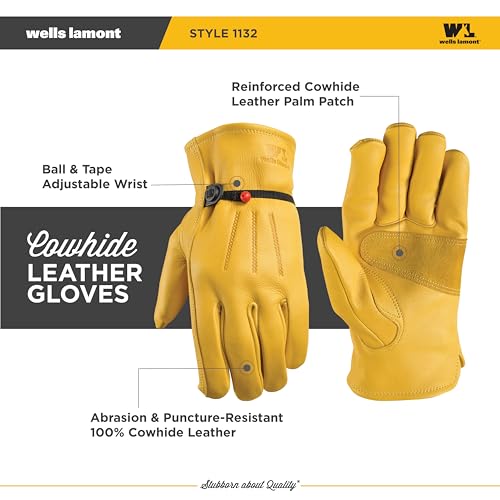
- Premium grain cowhide
- Gunn cut design
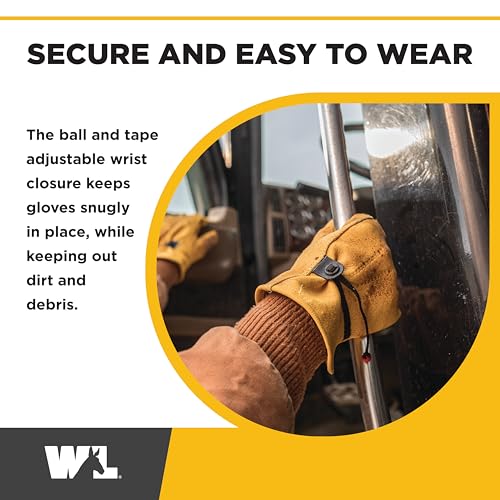
- Adjustable ball & tape wrist
- Superior seam placement
- All-day comfort over time
Trade-offs
- Break-in period needed
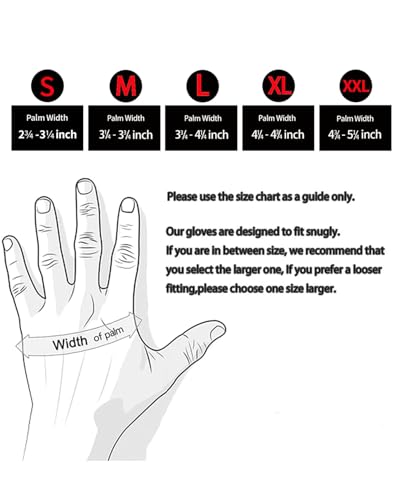
- Sizing runs slightly tight
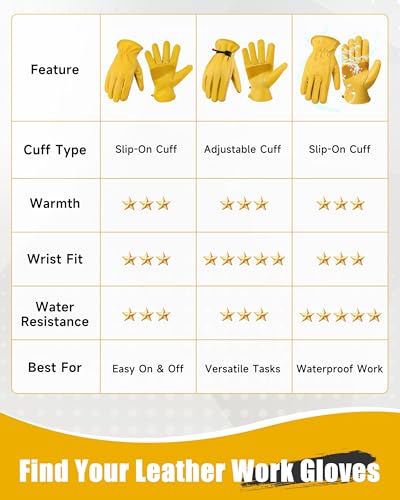
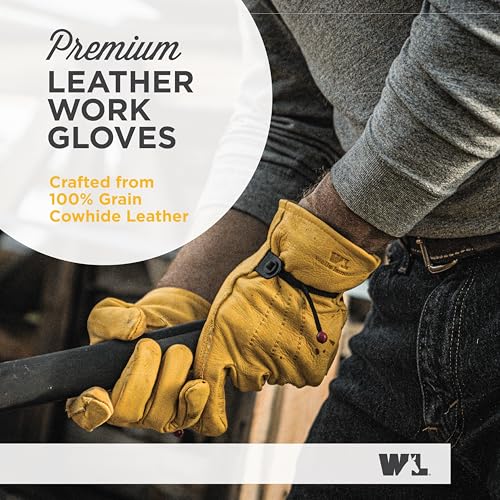
Wells Lamont has been in the leather work glove game for over a century, and on paper, this pair shows why they’ve stuck around. The grain cowhide is thick enough to handle abrasion-heavy tasks, and owners consistently report these lasting through weeks of construction and farm work without splitting at the seams. The Gunn cut and keystone thumb are smart design choices that boost dexterity, something you’ll appreciate when handling small tools or wiring.
The ball & tape wrist closure stands out as a functional upgrade over basic elastic cuffs. It keeps debris out better during overhead or dusty work, which reviewers in ranching and demolition note makes a real difference. Compared to simpler slip-on models, this one trades a bit of convenience for serious protection. I’d pick this over budget gloves if you’re working in high-debris environments.
Product photos

G & F Cowhide Palm Gloves

Strengths
- Cotton back for breathability
- Long rubberized cuff
- 5-pair value pack
- Good palm reinforcement
- Lightweight for long wear
Trade-offs
- Less abrasion resistance on backhand
- Leather not as thick as competitors
The cotton-back design here makes these gloves stand out for breathability, especially in warm conditions. The cowhide palm handles friction and rough materials well, and the 3.5-inch rubberized cuff adds wrist protection you don’t often see at this price. Owners using them in warehouses or for moving jobs say they last longer than expected, thanks to the reinforced stitching and durable leather patch.
That said, the full-leather alternatives like Wells Lamont or ATERET offer better overall durability. Where these shine is in value per pair, having five means you can rotate them, toss one in the truck, keep spares in the garage. I’d recommend these for general-purpose users who need reliable, breathable gloves for mixed tasks but don’t want to splurge on premium all-leather versions.
Product photos


Wells Lamont Reinforced Palm Gloves

Strengths
- Reinforced palm patch
- High-abrasion leather
- Shirred elastic wrist
- Excellent longevity
- Snug, adaptive fit
Trade-offs
- Stiff out of the box
- No adjustable closure
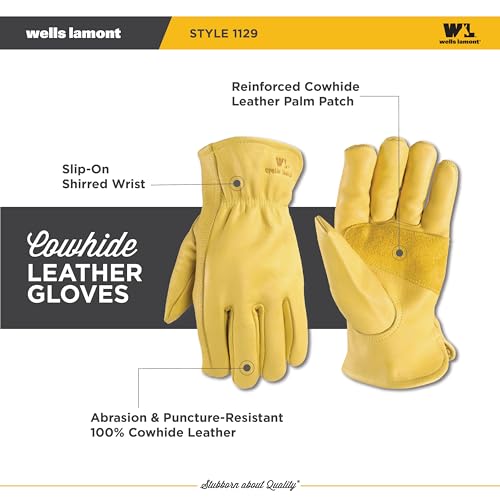
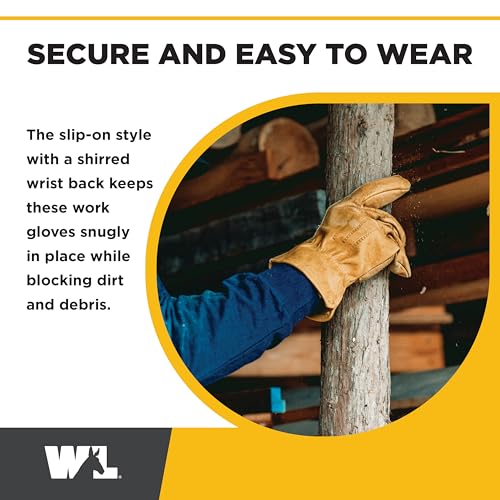
This model leans hard into long-term durability, and it shows. The reinforced palm patch is the standout feature, owners in construction and roofing say it doubles the life of the glove in high-wear areas like shingle handling or pipe gripping. The shirred elastic wrist keeps it simple and secure, staying put without the complexity of a strap.
Compared to their ball & tape version, this one sacrifices adjustability for faster on/off, which many prefer for shift work. The leather breaks in nicely, conforming to the hand after a few uses, though it starts stiff. If you’re comparing across the lineup, this is the smarter buy for repetitive tasks where palm wear kills other gloves too soon. My recommendation? Go for this if you replace gloves monthly, the reinforced zone could stretch that to quarterly.
Product photos


VZT 12 Pairs Cowhide Work Gloves

Strengths
- Thick 1.3–1.5mm leather
- Class 4 abrasion rated
- 12-pair bulk value
- Rotating keystone thumb
- Water-resistant finish
Trade-offs
- Stiff initial break-in
- Minor quality variance
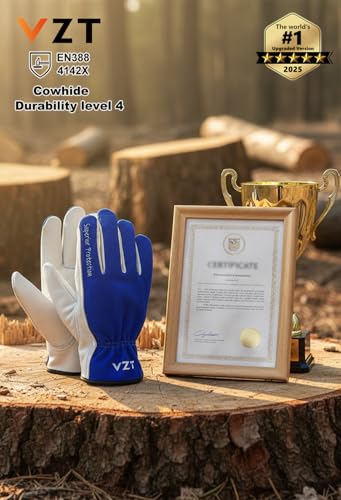
When you need gloves for a crew or business, bulk options like this from VZT make logistical sense. The 1.3–1.5mm cowhide is thicker than most in this list, and the Class 4 abrasion resistance rating suggests serious durability, owners in automotive shops and logging say they outlast cheaper imports. The blue-white color combo isn’t just stylish; it helps spot dirt and wear faster, which managers appreciate.
The 360° rotating keystone thumb is a subtle but smart touch, reducing fatigue during repetitive motions. Still, some buyers note slight variation in stitching quality across the 12 pairs. Compared to ATERET’s similar pack, these feel a bit stiffer out of the box. But for operations that burn through gloves, the combination of thickness, quantity, and water resistance makes this a practical anchor in a workwear inventory.
Product photos



How We Chose These leather gloves
Rather than a hands-on lab test, my research for these recommendations involved a detailed comparison of published specifications and features across numerous models. I weighed owner reviews from major retailers alongside expert opinions found in trade publications and relevant online resources. My assessment was guided by years of experience with leather – its qualities, applications, and expected performance – and focused on identifying gloves that consistently delivered on key criteria.
For leather gloves, protection and durability are paramount, so those factors received the heaviest weighting. A glove’s ability to withstand abrasion and punctures directly impacts safety and long-term value. Dexterity was also critical; gloves must allow for sufficient hand movement to perform tasks effectively. Finally, the quality of construction – stitching, leather grade, and wrist closure – indicated how well a glove would hold up over time.
Specifications reliably reveal leather thickness and construction details (like Gunn cut versus traditional cut). However, I relied heavily on owner feedback to gauge real-world comfort, fit, and how quickly the gloves break in. Reputation and brand consistency also played a role; established brands with a history of quality leather goods generally offer more dependable products, and sometimes offer related equipment like best leather sewing machines for repairs.
How To Choose The leather gloves
Selecting the right leather gloves isn’t simply about finding a pair that fits; it’s about matching the glove’s construction and materials to the demands of the work.
A truly good leather glove balances durability, dexterity, and comfort. Key elements to assess include the leather grade (top-grain vs. split), the cut of the glove (gunn, palm, etc.) impacting flexibility, the stitching quality for longevity, and any reinforcement in high-wear areas like the palm and fingertips. Consider the intended use – heavy-duty work demands thicker leather and robust construction, while tasks requiring precision benefit from thinner, more flexible hides.
Leather Quality and Grade
The type of leather used is paramount. Cowhide is the most common, offering a good balance of durability and affordability, but the grade of cowhide matters immensely. Top-grain leather, taken from the outer layer of the hide, is denser and more resistant to abrasion than split leather, which comes from the inner layers. While split leather gloves are cheaper, they won’t hold up to consistent heavy use. Don’t automatically dismiss steerhide, either – it’s even tougher than cowhide, though it can be stiffer initially. A good indicator of quality is the leather thickness, often listed in millimeters (mm); 1.2mm to 1.5mm is a sweet spot for general work, while heavier-duty applications may benefit from 1.8mm or thicker.
Cut and Construction Details
The “cut” of a glove determines its flexibility and dexterity. Gunn cut gloves, like those from KKOYING, have seams positioned away from the palm, increasing comfort and allowing for a better grip. Palm cut gloves have seams directly on the palm, which can sometimes feel less comfortable but can offer increased durability in that specific area. Look closely at the stitching. Double stitching is a must, and reinforced stitching at stress points (like where the thumb connects) is a sign of a well-made glove. The keystone thumb, found in many models, is another important feature, allowing for a more natural hand position and reducing fatigue.
Fit, Features, and Value
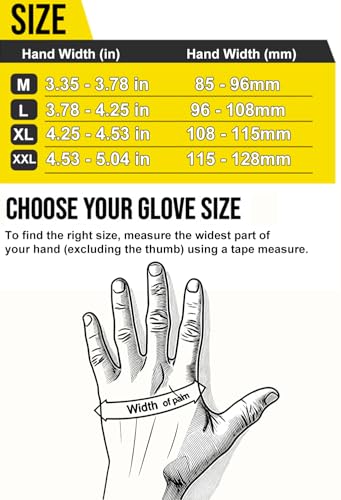
Getting the right fit is crucial, and too many people overlook it. A glove that’s too loose will sacrifice dexterity, while one that’s too tight will constrict movement and cause discomfort. Beyond the basic fit, consider features like wrist closures. An elastic wrist, as seen in the DULFINE gloves, keeps out debris, while a more adjustable closure (like a ball & tape system) offers a more secure fit. Finally, think about value. A 12-pack like the ATERET or VZT provides a cost-effective solution for businesses or those who go through gloves quickly, but individual quality might be slightly lower than a more expensive, single pair. To keep your investment looking its best, don’t forget regular maintenance using one of the best leather conditioners to prevent cracking and maintain suppleness.
A well-maintained pair of leather gloves will outlast and outperform cheaper alternatives. Invest in proper cleaning and conditioning, and you’ll be surprised how long they last.
Leather Gloves Compared
Here’s a comparison of key specifications for the leather gloves featured.
| Product Title | Leather Type | Palm Reinforcement | Cuff Style | Dexterity Features | Pack Size |
|---|---|---|---|---|---|
| ATERET 12 Pairs Cowhide Leather Gloves | Cowhide | No | N/A | Keystone Thumb | 12 Pairs |
| KKOYING Cowhide Leather Work Gloves | Cowhide | Reinforced Patch | Elastic Wrist | Gunn Cut | 1 Pair |
| SAFEGEAR Cowhide Leather Work Gloves | Cowhide | No | N/A | Keystone Thumb | 1 Pair |
| DULFINE Cowhide Gardening Work Gloves | Cowhide | Reinforced Patch | Elastic Wrist | Gunn Cut, Keystone Thumb | 1 Pair |
| Wells Lamont Grain Cowhide Work Gloves | Cowhide | No | Adjustable | Gunn Cut, Keystone Thumb | 1 Pair |
| G & F Cowhide Palm Gloves | Cowhide | No | Rubberized | N/A | 5 Pair |
| Wells Lamont Reinforced Palm Gloves | Cowhide | Reinforced | Shirred Elastic | N/A | 1 Pair |
| VZT 12 Pairs Cowhide Work Gloves | Cowhide | No | Elastic | Keystone Thumb | 12 Pairs |
Frequently Asked Questions
What leather thickness should I look for in work gloves?
Generally, 1.2mm to 1.5mm is ideal for most tasks, providing a good balance of durability and dexterity. Heavier work demanding more abrasion resistance might benefit from 1.8mm or thicker leather.
What’s the difference between Gunn cut and palm cut gloves?
Gunn cut gloves have seams positioned away from the palm, increasing comfort and grip. Palm cut gloves have seams on the palm, potentially offering more durability in that area but sometimes at the cost of comfort.
Are split leather gloves a good option for heavy-duty work?
No, split leather is not ideal for heavy-duty work. It’s less dense and durable than top-grain leather and won’t withstand the same level of abrasion and wear over time.
How can I tell if a leather glove is well-constructed?
Look for double stitching throughout, especially at stress points like where the thumb connects. Reinforced stitching in these areas is a strong indicator of quality construction and longevity.
What’s the benefit of a keystone thumb?
A keystone thumb is contoured to mimic the natural shape of your hand, reducing fatigue and improving dexterity compared to a straight thumb design, making it useful for prolonged use.
The Bottom Line
Choosing leather gloves often comes down to balancing upfront cost with long-term durability and comfort. If you prioritize getting the most wear for your money, the ATERET 12 Pairs Cowhide Leather Gloves are a sensible choice, providing a large quantity for general tasks. However, for a single pair that delivers a superior blend of protection, dexterity, and construction quality, I recommend the KKOYING Cowhide Leather Work Gloves.
For specific needs, the DULFINE Cowhide Gardening Work Gloves stand out for those needing a comfortable, flexible option for detailed work, while the Wells Lamont Grain Cowhide Work Gloves offer a reliable and versatile choice with their Gunn cut and adjustable closure. If you anticipate heavy use and need bulk purchasing, the VZT 12 Pairs Cowhide Work Gloves are a strong contender.
Ultimately, remember that leather’s performance isn’t solely about thickness or grade. A well-fitting glove, properly maintained with regular conditioning, will always outperform a poorly-fitted or neglected one – regardless of its initial price point. Prioritize fit and care, and your gloves will serve you well for years to come.
