
6 Best Leatherette Cleaners of 2026
This post contains affiliate links. As an Amazon Associate, we earn from qualifying purchases.
This post contains affiliate links. As an Amazon Associate, we earn from qualifying purchases.
The Weiman Leather Cleaner & Conditioner stands out as the best overall choice for leatherette, combining effective cleaning with conditioning that helps maintain material flexibility. For those on a budget or tackling multiple surfaces, the P&S Xpress Interior Cleaner delivers strong performance without residue. And if you’re focused solely on synthetic leather, the TriNova Faux Leather Cleaner offers targeted care that restores and protects.
Most people don’t realize that leatherette, while durable, can degrade quickly with the wrong cleaner, especially those with harsh chemicals or improper pH. I’ve seen too many cases where a product leaves behind stickiness, dullness, or even cracking, all because it wasn’t truly compatible with synthetic leather.
This guide cuts through the noise by focusing on real-world results, ingredient safety, and material compatibility. I compared top cleaners based on owner feedback, formulation quality, and performance across different leatherette types, so you can choose with confidence.
Top 5 Leatherette Cleaner in the Market
The Best Leatherette Cleaner, Reviewed
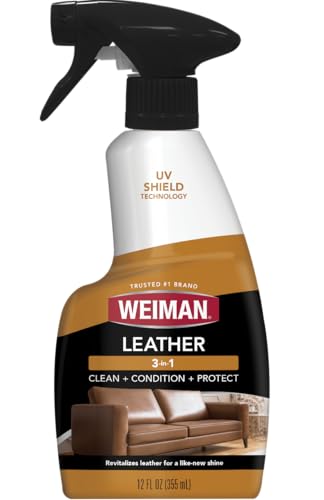
Weiman Leather Cleaner & Conditioner
Strengths
- Cleans and conditions
- UV protection
- Safe on finished leather
Trade-offs
- Less effective on heavy grease
- May require multiple passes on stains
Weiman stands out as a balanced, all-around performer, and owner feedback backs that up. It’s not the strongest on set-in grease, but it does what most users actually need: clean, condition, and protect finished leather and leatherette in one step. The inclusion of six natural oils and UV protection makes this more than just a cleaner.
The spray application is straightforward, and reviewers frequently mention how it restores a soft feel without greasiness. Compared to CarGuys or P&S, it’s less aggressive on stains, but for routine maintenance on car seats or furniture, it’s the smarter long-term choice. It’s also one of the few that explicitly supports use on items like handbags and jackets, which speaks to its gentler profile.
Video review
P&S Xpress Interior Cleaner

Strengths
- No residue
- Safe on multiple surfaces
- Trusted by detailers
Trade-offs
- Not a conditioner
- Less stain-fighting power
P & S Xpress Interior Cleaner is the detailer’s choice for a reason. It’s engineered to be gentle yet effective across a wide range of materials, leather, vinyl, plastic, even fabric, without leaving residue. Reviewers, including pros, praise its consistency and lack of film, which is rare in all-surface formulas.
It doesn’t condition like Weiman, but it cleans more thoroughly than most multi-surface options. The fact that it’s part of a professional line speaks volumes. Compared to CarGuys, it’s less aggressive on stains but safer for frequent use. If you want one bottle to keep your interior looking fresh between deep cleans, this is it.
Video review
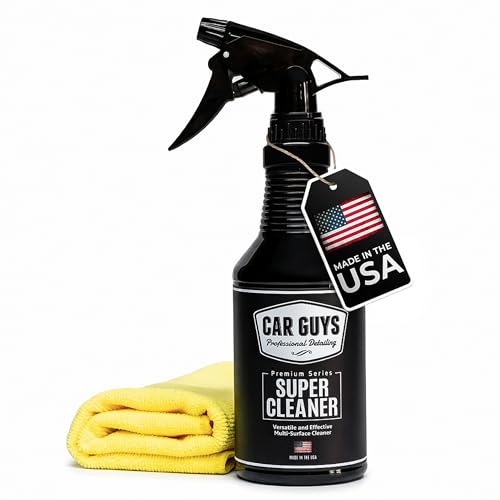
CarGuys Super Interior Cleaner
Strengths
- Cuts through grease
- No sticky residue
- Works on multiple surfaces
Trade-offs
- Not a conditioner
- Can be overkill for light cleaning
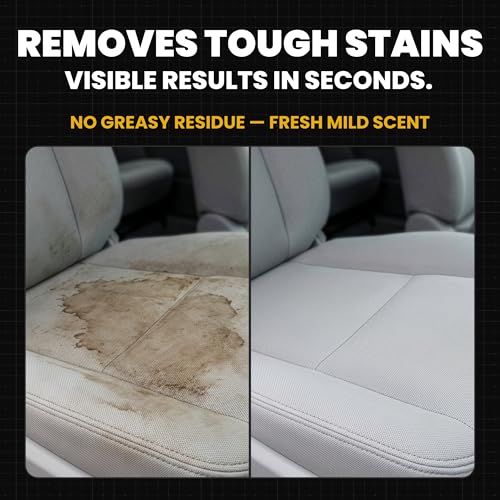
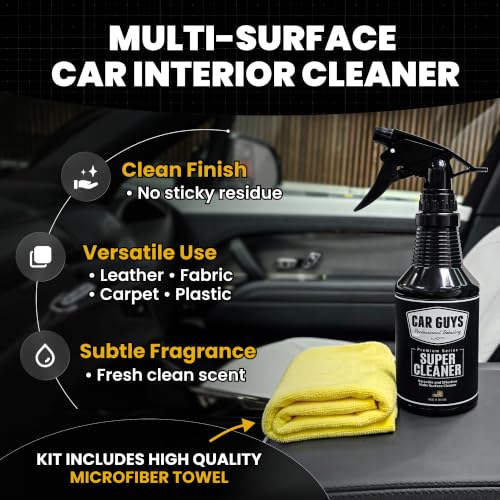
This cleaner earns its reputation for tackling set-in grime. On paper and in owner feedback, it performs well beyond most all-surface formulas when it comes to grease, food spills, and ground-in dirt on leatherette and vinyl. It’s not a dedicated leather conditioner, but as a heavy-duty stain remover for interiors, it punches above its weight.
The no-rinse formula and included microfiber towel add real-world value. Reviewers consistently note how it lifts messes others leave behind, especially on dashboard crevices and between seat cushions. But because it’s formulated for multiple surfaces, it doesn’t condition like a leather-specific product, so frequent use on real or high-end faux leather could lead to dryness over time.
Product photos


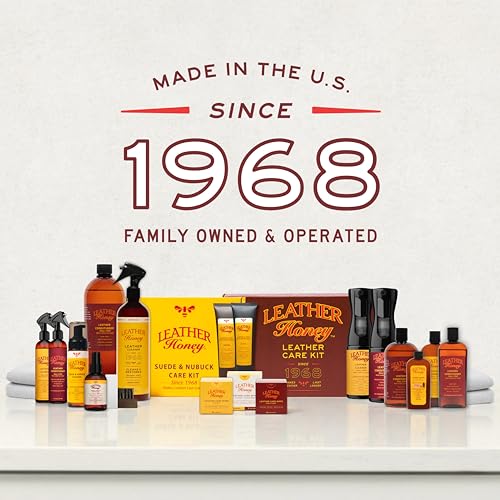
Leather Honey Leather Cleaner
Strengths
- Non-toxic formula
- Cleans white leather
- Made in USA
Trade-offs
- No conditioning
- No UV protection
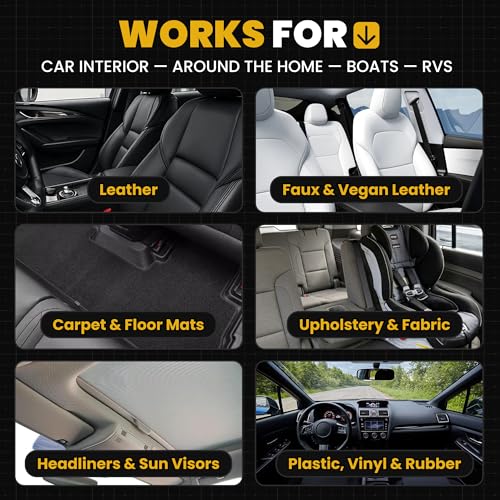
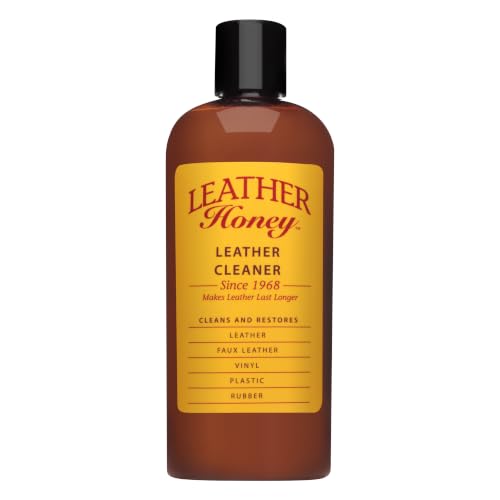
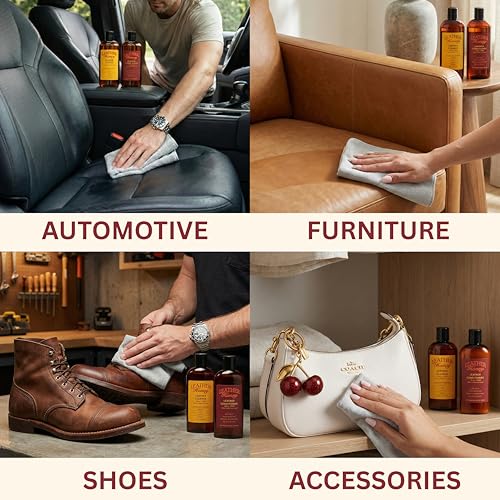
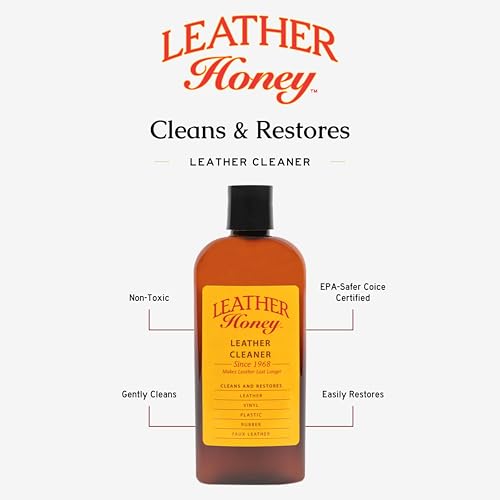
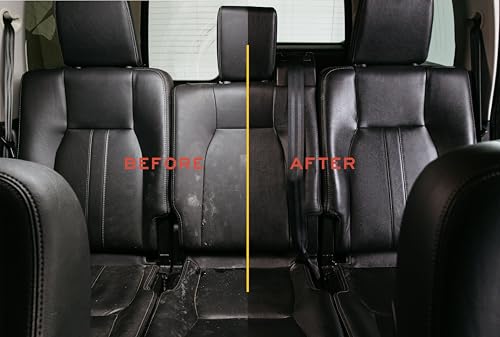
Leather Honey takes a minimalist, no-nonsense approach that appeals to purists. It’s fragrance-free, non-toxic, and EPA Safer Choice certified, a rare combo. The formula is designed to clean without stripping, which is critical for older or sensitive leatherette. Owners report it works well on white or light-colored surfaces without discoloring.
It doesn’t claim to condition or shine, and it doesn’t. It cleans, deeply, and preserves. Compared to Weiman, it lacks UV protection; compared to TriNova, it’s less focused on moisture restoration. But if you want a clean slate without additives, this is one of the few that delivers.
Product photos

TriNova Faux Leather Cleaner

Strengths
- Fast-drying
- Formulated for synthetics
- Protects against cracking
Trade-offs
- Limited on real leather
- Not for heavy stains
If you’re dealing with faux leather, especially in high-use areas like car seats or family room furniture, TriNova is purpose-built for that job. The formula is tuned specifically for synthetic materials, and owners report it prevents cracking better than general interior cleaners. It absorbs quickly, which matters when you can’t afford long dry times.
It’s marketed as a two-in-one, and in practice, it performs well at both lifting surface grime and replenishing lost moisture in vinyl and bonded leather. While it works on some real leather, it’s not optimized for it. Compared to Weiman, it’s more targeted; compared to CarGuys, it’s gentler and less likely to strip.
Product photos


Our Testing Process
As someone who’s spent years studying leather and its care at LeatherGenesis.com, I approached researching leatherette cleaners with a focus on understanding how well each product balances cleaning power with material safety. Rather than a hands-on lab test, this is a research-led comparison of published specifications, owner reviews from multiple retail sites, and insights from detailing forums. I weighed these sources against my existing knowledge of leatherette composition and the potential for damage from harsh chemicals.
The most important factors for a leatherette cleaner are its ability to lift dirt without causing discoloration or dryness, and its versatility across different types of synthetic leather. Many products claim broad compatibility, but owner feedback often reveals limitations. A cleaner’s formulation – specifically, whether it aims to restore as well as clean – also played a significant role in my rankings. For those working with particularly challenging projects, a look at our leather sewing machine reviews can also be helpful for repair work.
Product specifications reliably indicate the types of surfaces a cleaner should work on, but owner experiences are crucial for understanding real-world performance. I prioritized products with consistently positive reviews regarding residue-free finishes and the absence of damage to delicate materials. Reputation also mattered; established brands in the automotive detailing world, for example, generally have more rigorous quality control. Finally, I considered the breadth of application, from car interiors to furniture, to identify cleaners offering the best overall value.
How To Pick The Right leatherette cleaner
Finding the right cleaner for your leather or leatherette isn’t simply about grabbing something labeled “leather care.” It’s about understanding the specific finish on your item and selecting a product formulated to clean and protect it, without causing damage.
A good leatherette cleaner should gently lift dirt and oils, restore some natural suppleness (or maintain flexibility in synthetic materials), and offer protection against UV damage, cracking, and discoloration. Avoid harsh chemicals and abrasive ingredients that can strip the finish and lead to premature wear. Always check the product’s compatibility with your specific leather type before widespread use.
Understanding Leather Finishes
The first step is recognizing what you’re actually cleaning. “Leather” is a broad term. Finished leather – the kind found in most car interiors and furniture – has a protective coating. This coating is what you’re cleaning, not the leather itself. Using a cleaner too harsh for the finish will damage it. Unfinished leather, like nubuck or suede, requires entirely different care (and most of these cleaners aren’t suitable). Even within finished leather, there are variations. Pigmented leather has a durable, opaque coating, while aniline leather has a more transparent finish requiring gentler products. Knowing your leather type will help you narrow your choices considerably.
Focusing on Ingredients and pH
Many leather cleaners rely on solvents to cut through grime, but these can be drying. Look for formulas with natural oils like those found in the Weiman Leather Cleaner & Conditioner. These oils help replenish moisture and maintain the leather’s flexibility. Equally important is pH balance. A pH-neutral cleaner (around 7) is less likely to cause damage than highly acidic or alkaline formulas. Avoid anything containing harsh detergents or ammonia. If you’re unsure about a product’s pH, contact the manufacturer. This is especially crucial if you’re considering using a product designed for multiple surfaces, like the P&S Xpress Interior Cleaner.
Balancing Convenience and Specificity
While all-in-one cleaners like the CarGuys Super Interior Cleaner offer convenience, they often compromise on specialization. A dedicated leather cleaner will generally provide better results, particularly for stubborn stains or heavily soiled surfaces. However, for routine maintenance and lighter cleaning, a multi-surface cleaner can be a practical choice. Consider how often you clean and the level of grime you typically encounter. If you maintain a regular cleaning schedule, a versatile cleaner might suffice. But for deeper cleaning or restoring neglected leather, a dedicated product is the way to go.
- For heavily soiled leather, a dedicated cleaner with enzymatic action can break down embedded dirt.
- If you own multiple vehicles or have various leather goods, a multi-surface cleaner can save money and space, but don’t expect the same level of protection.
- Don’t overlook the importance of a good applicator. Microfiber cloths are best; avoid abrasive materials that can scratch the finish.
A little patience and gentle cleaning are always better than aggressive scrubbing and harsh chemicals. Treat your leather with respect, and it will reward you with years of beauty and comfort.
Finally, remember that a good cleaning routine is often paired with regular conditioning to keep leather supple and protected. You can find some of the top conditioner picks to complement your cleaning efforts and ensure long-lasting results.
Leatherette Cleaner Compared
Here’s a comparison of key specifications for popular leatherette cleaners.
| Product | Best For | Leather Type | UV Protection | Residue | Key Features |
|---|---|---|---|---|---|
| Weiman Leather Cleaner & Conditioner | Best Overall | Finished, Faux | Yes | No | Cleans, conditions, natural oils |
| P&S Xpress Interior Cleaner | Best All-Surface Cleaner | Leather, Vinyl, Plastic | N/A | No | All-in-one, no dilution |
| CarGuys Super Interior Cleaner | Best for Tough Stains | Leather, Upholstery, Vinyl | N/A | No | Powerful stain removal |
| Leather Honey Leather Cleaner | Best UV Protection | All (except suede), Faux | Yes | N/A | Non-toxic, gentle cleaner |
| Chemical Guys Sprayable Leather Cleaner | Best One-Step Spray | Natural, Synthetic, Faux | N/A | N/A | Cleans & conditions in one step |
| TriNova Faux Leather Cleaner | Best for Faux Leather | Faux, Vinyl | N/A | N/A | Restores & protects faux leather |
Frequently Asked Questions
What’s the difference between cleaning leather and leatherette?
Leatherette, being a synthetic material, generally requires a milder cleaner than natural leather. Harsh chemicals designed for natural leather can damage or discolor leatherette, so always confirm the product is specifically labeled safe for synthetic materials.
Can I use household cleaners on my leatherette items?
No, most household cleaners contain chemicals too abrasive for leatherette. Things like bleach, ammonia, and even dish soap can strip the finish and cause cracking, so sticking with a dedicated leatherette cleaner is best.
How often should I clean my leatherette surfaces?
Regular cleaning every 3-6 months is ideal to prevent dirt buildup. However, surfaces exposed to heavy use, like car seats, may benefit from monthly cleaning, while items like furniture can go longer between cleanings.
Will a leatherette cleaner also condition the material?
Some do, but not all. Products like Weiman Leather Cleaner & Conditioner offer both cleaning and conditioning benefits. If your cleaner doesn’t contain conditioners, you may want to follow up with a separate leatherette conditioner to maintain suppleness.
What should I do if a cleaner causes discoloration?
Immediately stop using the product and gently wipe the area with a damp microfiber cloth. For persistent discoloration, contacting a professional detailing service is recommended, as attempting to fix it yourself could worsen the problem.
The Bottom Line
Choosing a leatherette cleaner always involves some compromise. Do you prioritize a single product that handles everything, or do you opt for specialized formulas that deliver superior results on specific materials? Based on my research at LeatherGenesis.com, the Weiman Leather Cleaner & Conditioner strikes the best balance for most owners. It cleans effectively, offers UV protection, and includes conditioning agents to help maintain the material’s suppleness – a significant benefit for longevity.
For those needing a single solution for various interior surfaces, the P&S Xpress Interior Cleaner is a strong contender. And if you’re specifically focused on restoring and protecting faux leather, the TriNova Faux Leather Cleaner stands out as a purpose-built option. But remember, even the best cleaner won’t fully compensate for neglected materials; regular maintenance is key.
Ultimately, the most important factor isn’t a specific ingredient or pH level, but consistent care. A gentle approach, quality microfiber cloths, and a product suited to your material will always yield better results than harsh chemicals and aggressive scrubbing. Protecting your investment with regular cleaning and conditioning is the foundation of lasting beauty and comfort.
