
7 Best Auto Leather Conditioners of 2026
This post contains affiliate links. As an Amazon Associate, we earn from qualifying purchases.
This post contains affiliate links. As an Amazon Associate, we earn from qualifying purchases.
The best overall auto leather conditioner is Leather Honey Leather Conditioner, it deeply nourishes without residue and works on nearly all real leathers. For a budget-friendly, easy-to-use option, Weiman Leather Cleaner, Conditioner & Protector delivers solid performance with added UV protection. If you want something gentle that won’t darken leather, Bick 4 Leather Conditioner & Cleaner is a trusted choice among owners.
As the creator of LeatherGenesis.com, I’ve seen how improper care ruins even the finest automotive leather. Most people focus on cleaning, but conditioning is what keeps seats supple and crack-free over time. The wrong product can do more harm than good, especially on sensitive finishes.
This guide cuts through the noise by ranking conditioners based on formula quality, UV protection, compatibility across leather types, and consistent owner feedback. I looked at specs, ingredient lists, and real-world results to find the ones that actually protect and preserve.
Top 7 Auto Leather Conditioner in the Market
The Best Auto Leather Conditioner, Reviewed
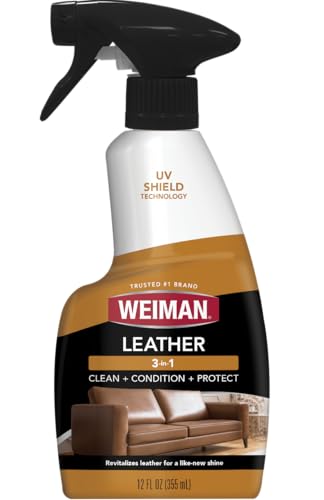
Weiman Leather Cleaner, Conditioner & Protector
Strengths
- Cleans and conditions in one
- UV protection included
- Works on faux leather
Trade-offs
- Can leave buildup if overused
- Not as deep as dedicated conditioners
Weiman’s formula pulls double duty as a cleaner and conditioner, which sets it apart. The six natural oils provide solid moisture, and the UVX-15 sunscreen is a real asset for vehicles in sunny climates. Owners consistently report that it lifts light grime while leaving leather soft, something few combo products manage without residue.
It’s also one of the few that explicitly works on faux leather, which expands its usefulness. The spray is convenient, but over-application can lead to buildup if not wiped well. Still, for a single-product solution, it delivers broad performance. My recommendation is to use it between deeper conditioning sessions with a dedicated product like Leather Honey.
Video review
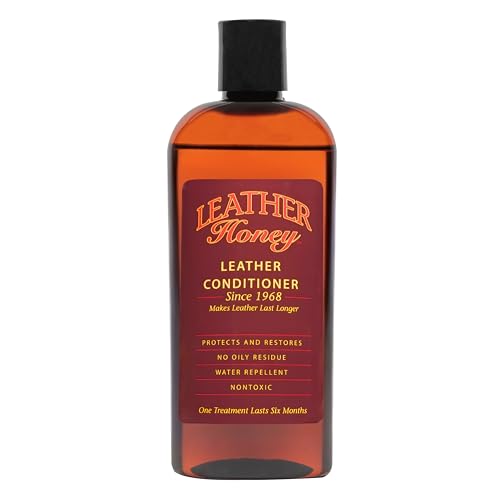
Leather Honey Leather Conditioner
Strengths
- Long-lasting (6+ months per use)
- Deeply penetrates dry leather
- Non-toxic, no silicones
Trade-offs
- Thick formula needs thorough wiping
- Not for faux leather or suede
Leather Honey has a cult reputation for a reason: owners repeatedly say one application lasts six months or more, which sets it apart in a category where monthly reapplication is common. The formula is thick and oil-based, designed to penetrate deeply, ideal for leather that’s lost flexibility over time. Reviewers using it on vintage car seats and old furniture often describe it as a ‘rescue’ product.
It’s also one of the few conditioners that’s truly odorless and free of silicones, which I appreciate for light-colored or sensitive leathers. But it’s not for everyone, its heavy penetration means overuse can leave a surface tacky if not wiped well. I’d choose this over lighter sprays when dealing with aged, thirsty leather.
Video review
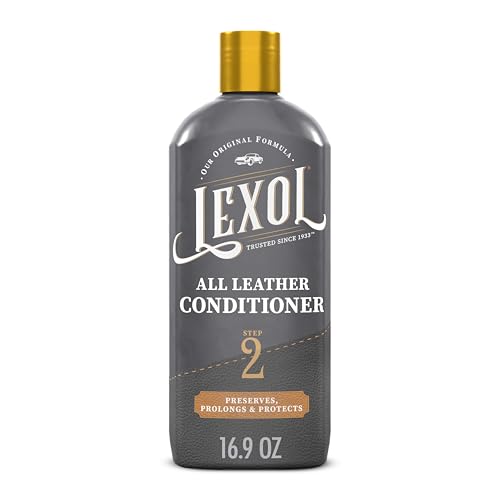
Lexol All Leather Conditioner 16.9 Oz
Strengths
- Large capacity
- Fast absorption
- Multi-surface use
Trade-offs
- Average performance on dry leather
- Requires prior cleaning
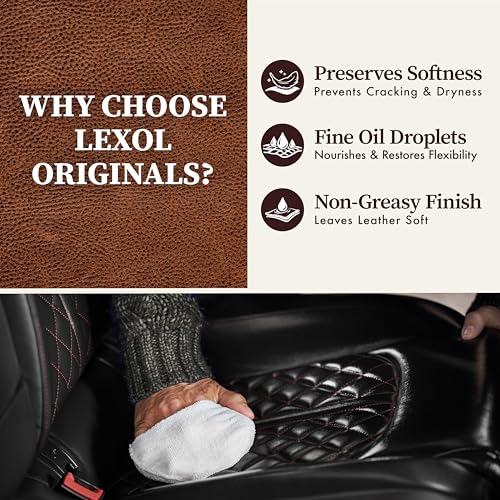
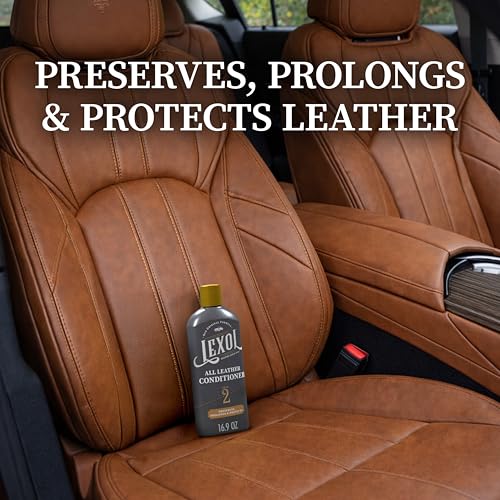
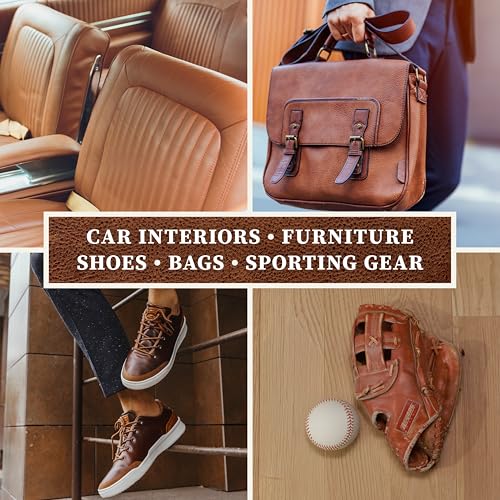
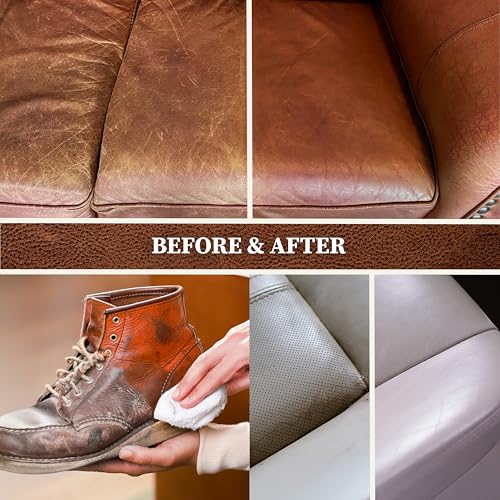
Lexol’s large 16.9 oz bottle gives you more product per dollar than almost any other on this list, making it a value standout. The fine oil droplets absorb quickly, according to users, and it’s commonly used on everything from car seats to baseball gloves. It’s not the most intense conditioner, but it’s reliable for routine care.
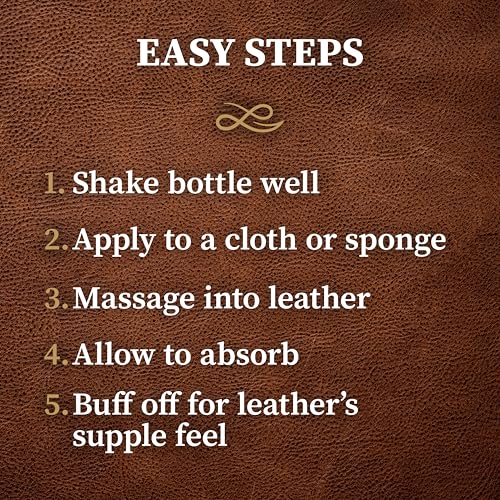
It’s best used as step two after cleaning, and owners who follow the two-step Lexol system report the longest-lasting results. While it doesn’t have the cult status of Leather Honey, it’s a dependable mid-tier option. I’d recommend it for regular maintenance, not deep restoration.
Product photos
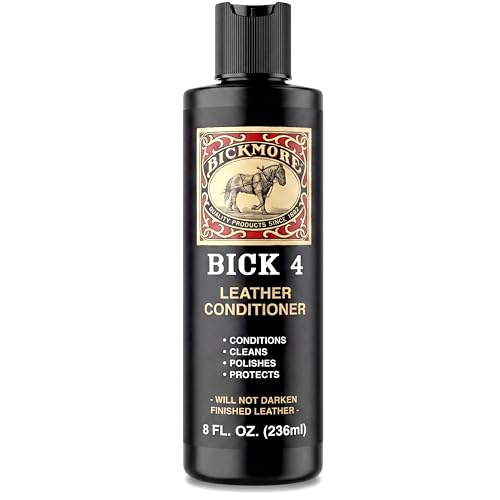
Bick 4 Leather Conditioner & Cleaner
Strengths
- Will not darken leather
- Wax-free formula
- Safe for all smooth leathers
Trade-offs
- Smaller bottle size
- Minimal restoration for dry leather
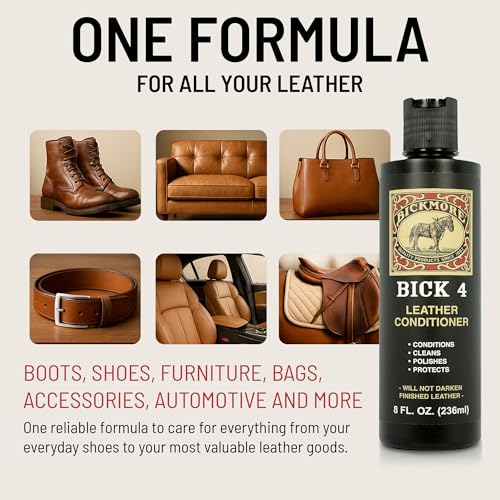
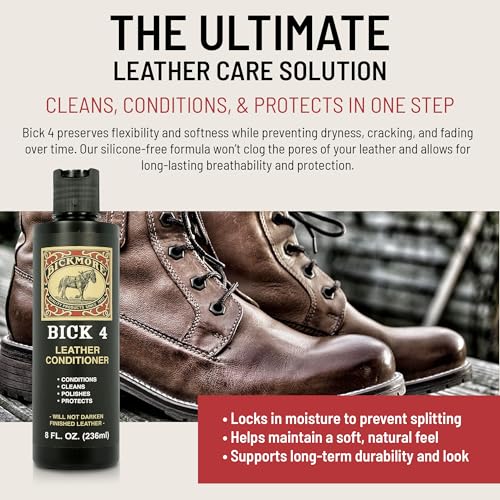
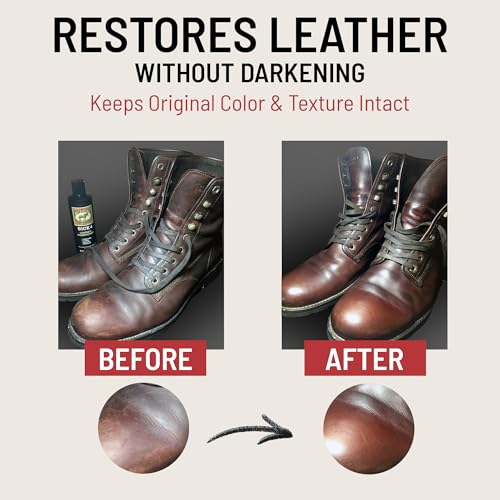
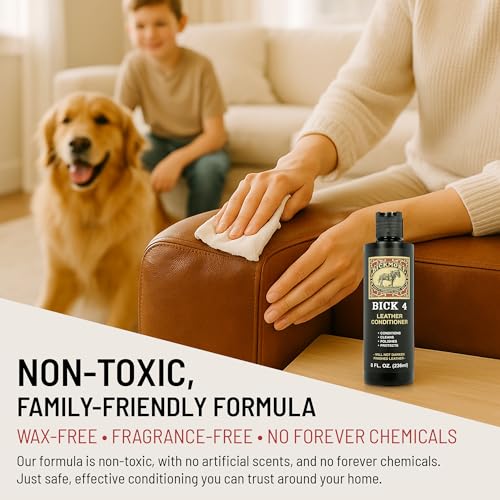
Bick 4 is a benchmark in leather care for one key reason: it conditions without darkening, which is critical for light or white leather. That’s a major advantage over oil-heavy conditioners that can leave a shadowed, uneven look. The wax-free formula also means it won’t clog pores, preserving breathability, a detail often cited by long-term users on forums and reviews.
At 8 oz, it’s smaller than most competitors, and while the price per ounce is higher, the precision matters. I’d recommend this for luxury interiors or light-colored seats where color integrity is essential. It won’t revive leather that’s already cracked, but it’s excellent for consistent, safe maintenance.
Product photos

Meguiar’s Gold Class Leather Conditioner Spray
Strengths
- Fast spray application
- No residue or greasy feel
- UV protection
Trade-offs
- Light conditioning only
- Multiple coats often needed
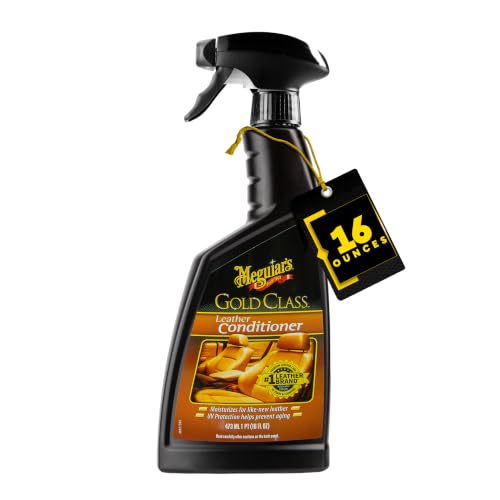
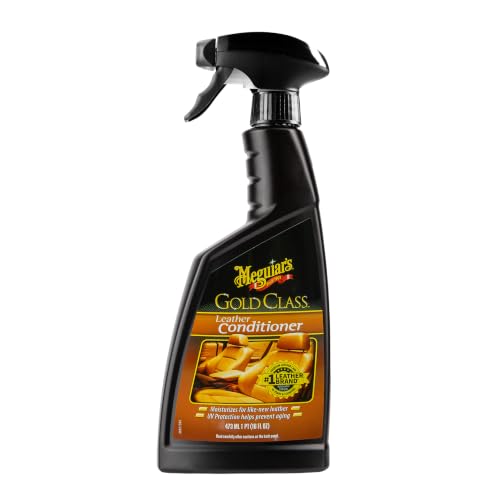
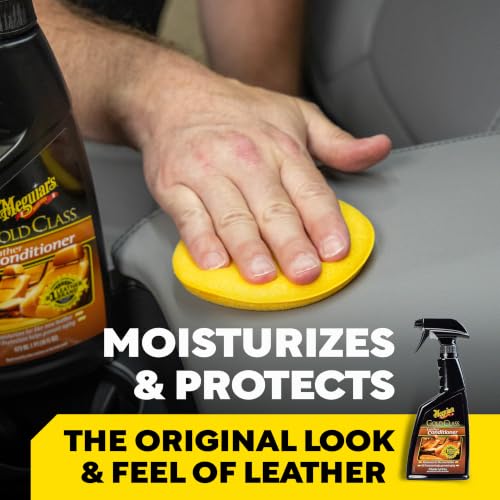
The spray format makes this one of the fastest conditioners to apply, and reviewers consistently praise how quickly it absorbs without leaving a slick or shiny finish. It’s clearly designed for convenience, ideal for quick detailing between deeper cleanings. The aloe and oil blend offers mild conditioning, and the UV protection is a real benefit for daily drivers parked in the sun.
But it’s not a heavy-duty product. On older or dry leather, owners report needing multiple applications just to see results. Compared to deeper-penetrating conditioners, this one sits a bit closer to the surface. I’d use it as a maintenance step, not a revival treatment.
Product photos
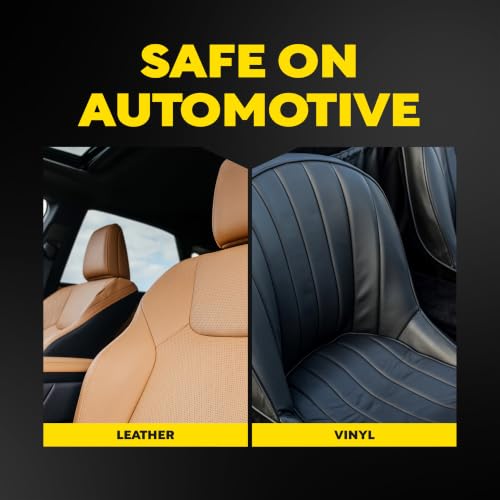
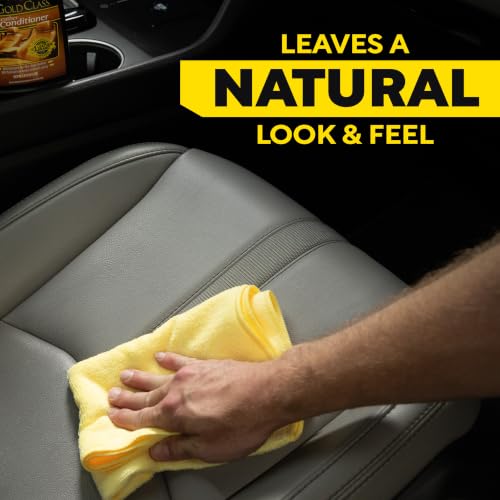
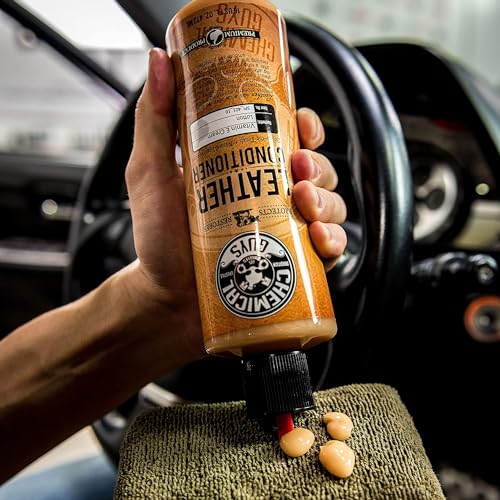
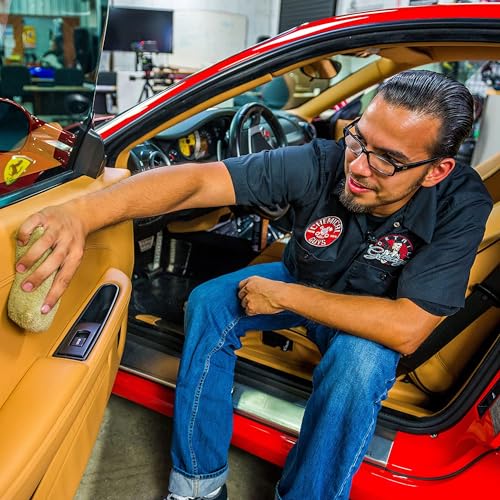
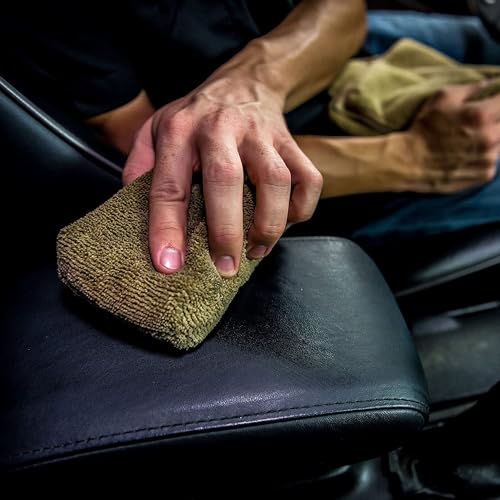
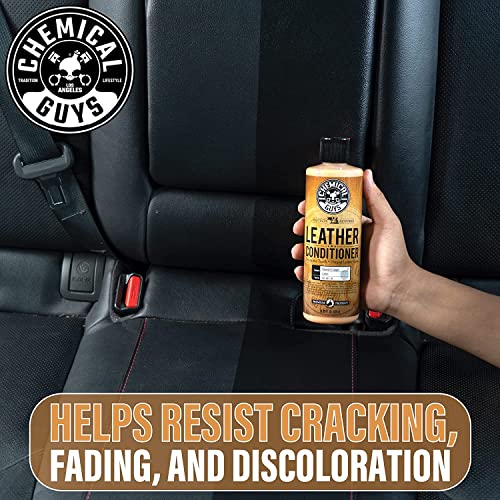
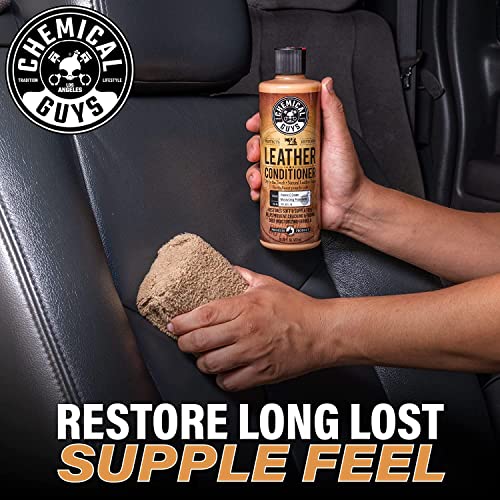
Chemical Guys Vintage Leather Conditioner
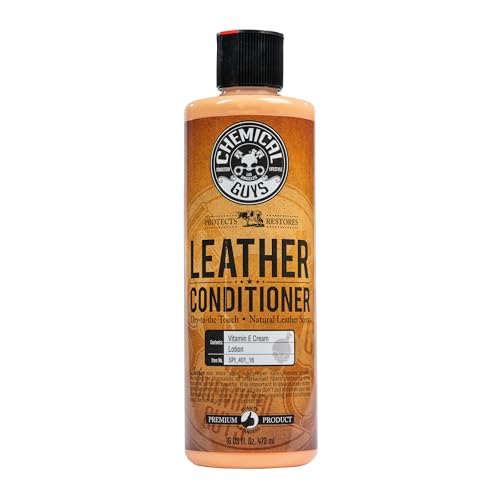
Strengths
- Deep penetration
- Restores flexibility
- Safe on synthetic leather
Trade-offs
- May darken light leather slightly
- Requires buffing
This conditioner is built for heavy lifting. The formula is designed to penetrate deep into leather pores, and owner feedback confirms it brings back flexibility in seats that have gone stiff. It’s often compared to Leather Honey in performance, but with a slightly easier application process. The lack of greasy residue is a big plus, especially on perforated or textured surfaces.
It works on both real and synthetic leather, which broadens its appeal. But some users note a slight color enhancement, fine for dark interiors, but something to watch on lighter shades. I’d pick this over lighter sprays when you need real conditioning power without sacrificing finish quality.
Product photos
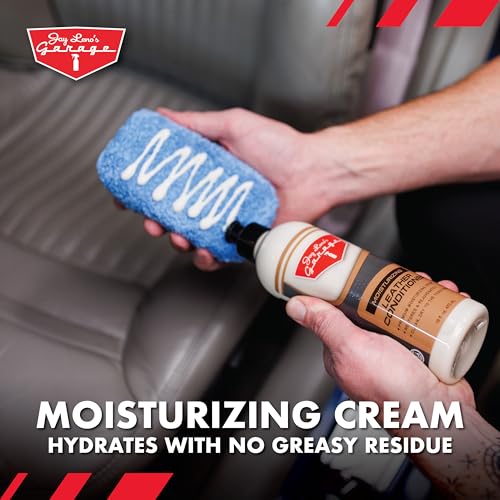
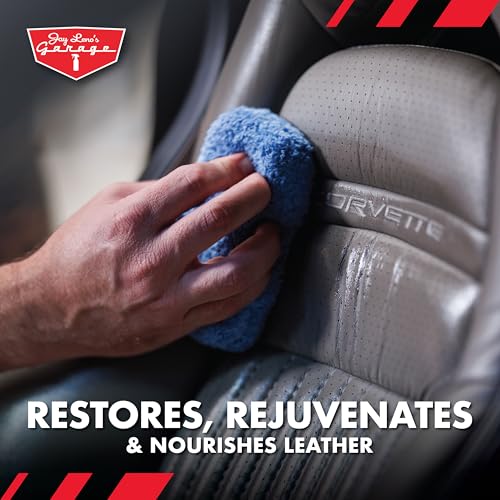
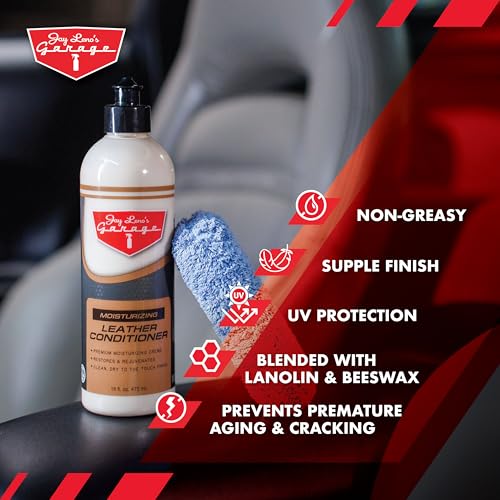
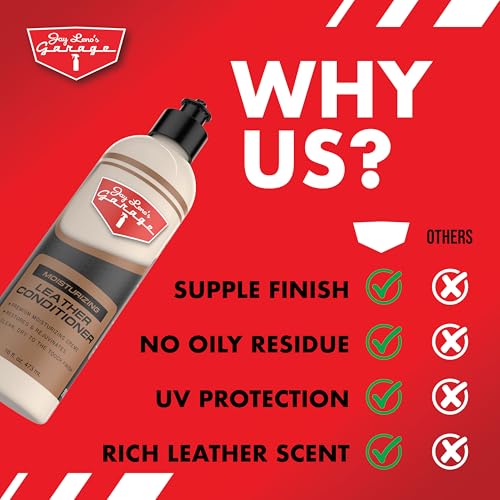
Jay Leno’s Garage Leather Conditioner

Strengths
- Lanolin and beeswax blend
- UV damage protection
- Non-greasy finish
Trade-offs
- Less effective on severely dry leather
- Requires buffing for best results
This formula stands out because of its lanolin and beeswax blend, which on paper mimics the natural oils found in leather. Owners consistently report that it leaves seats feeling supple without a slick or greasy finish, which is rare for a product with wax in it. The emphasis on UV protection lines up with real-world feedback from drivers in sunny climates, where fading and surface cracking are common issues.
Still, while it works on both genuine and faux leather, some users note it requires more effort on older, parched surfaces compared to deeper-penetrating conditioners. I’d pick this for newer interiors needing maintenance rather than full restoration. It’s a solid performer if you prioritize protection over heavy rehab.
Product photos

How We Picked These auto leather conditioner
Rather than a hands-on lab test, my research focused on a detailed comparison of published specifications and features across numerous auto leather conditioner products. I weighed owner reviews from multiple sources – including Amazon, automotive forums, and detailing websites – alongside assessments from reputable automotive care experts. This allowed me to build a ranking based on real-world feedback and the stated capabilities of each product, applying my years of experience with leather types and care.
For auto leather conditioners, the most significant factors were a formula’s ability to deeply condition without residue, the level of UV protection offered, and the breadth of leather types supported. Deep conditioning is critical for preventing cracking and maintaining suppleness, while UV protection guards against fading and deterioration. A product effective on a wide range of leathers (including potentially delicate or exotic hides) adds versatility, and good owner reviews regarding long-term effects were heavily considered.
Product specifications reliably indicate the ingredients and intended use, but I relied on owner feedback to gauge the actual performance. For example, a formula boasting “deep conditioning” needs to be verified by users reporting restored suppleness, not just a temporary sheen. Reputation and consistency of positive reviews were vital in determining which conditioners consistently delivered on their promises, and where to look for best leather sewing machines if repairs are needed.
How To Pick The Right auto leather conditioner
Choosing the right auto leather conditioner can be surprisingly complex. It’s not just about making leather look nice; it’s about preserving a valuable investment and maintaining the comfort of your vehicle.
Quality auto leather conditioners go beyond surface-level shine. They penetrate the hide to replenish oils, offering UV protection to prevent cracking and fading. Look for pH-balanced formulas free of harsh chemicals, waxes, and silicones that can damage leather over time. Consider the type of leather (finished, semi-aniline, or aniline) and choose a product specifically designed for it.
Understanding Leather Types & Finishes
The biggest mistake I see people make is using the wrong conditioner for their leather. Not all leather is created equal. Finished leather, the most common type found in cars, has a protective coating, meaning it’s more durable and can handle a wider range of conditioners. However, even within finished leather, there are variations. Aniline and semi-aniline leathers are much more delicate and require specialized products. Using a harsh cleaner or a conditioner with silicone on aniline leather can permanently damage it. Always check your vehicle’s manual or a trusted source to identify your leather type before purchasing anything.
Assessing Conditioning Frequency & Application
How often you condition your leather depends on your climate and how much the vehicle is exposed to the elements. In hot, dry climates, you’ll need to condition more frequently, perhaps every three months. In milder climates, twice a year might suffice. More important than frequency is how you apply the conditioner. Avoid applying liberally and then wiping off the excess. Instead, use a clean microfiber applicator and work the conditioner into the leather in circular motions, allowing it to absorb.
Here’s a quick guide to application amounts: * A tiny dab (pea-sized) is sufficient for smaller areas like steering wheel grip. * A golf ball-sized amount works well for a single seat. * For an entire interior (all seats, console, door panels), you’ll likely need a full ounce or more, but it’s better to start with less and add more as needed – over-conditioning is a common problem.
A little goes a long way. It’s far better to apply multiple thin coats than one heavy coat, allowing the leather to absorb the conditioner properly.
Balancing Protection with Value
There’s a wide price range for auto leather conditioners, and more expensive doesn’t always mean better. Many excellent products, like those from Leather Honey, provide substantial benefits at a reasonable cost. However, if you’re looking for long-term protection and live in an area with intense sunlight, investing in a product with strong UV inhibitors is wise. I often recommend checking out top-rated leather conditioners to see which products consistently perform well in independent testing and owner reviews. Ultimately, the best conditioner is one that suits your needs, your vehicle’s leather, and your budget, and you can find detailed best conditioner rankings to help narrow down your choices. Don’t forget to consult our 2026 leather conditioner guide for the latest information and leading conditioning products.
Auto Leather Conditioner Compared
Here’s a comparison of key specifications for popular auto leather conditioners.
| Product Title | Size (oz) | Leather Types | UV Protection | Residue | Key Features |
|---|---|---|---|---|---|
| Weiman Leather Cleaner, Conditioner & Protector | N/A | All Finished | Yes | No | Natural oils, trigger spray |
| Leather Honey Leather Conditioner | N/A | All Types (not suede/faux) | N/A | No | Long-lasting, non-sticky |
| Lexol All Leather Conditioner 16.9 Oz | 16.9 | All Finished | N/A | No | Fast absorbing, part of 2-step system |
| Bick 4 Leather Conditioner & Cleaner | N/A | All Types | N/A | No | Won’t darken leather, wax-free |
| Meguiar’s Gold Class Leather Conditioner Spray | N/A | Finished | Yes | No | Aloe & oils, easy spray application |
| Chemical Guys Vintage Leather Conditioner | 16 | Natural/Synthetic | N/A | No | Deep conditioning, restores color |
| Jay Leno’s Garage Leather Conditioner | N/A | Genuine/Faux | Yes | No | Lanolin & beeswax, protects from UV |
Frequently Asked Questions
What if my car’s leather is very faded?
A conditioner with strong UV protection and restorative oils is your best bet. While no conditioner can fully reverse severe fading, products containing lanolin or natural oils can help replenish the leather and improve its appearance significantly.
Can I use leather conditioner on faux leather?
Generally, no. Most conditioners are designed for genuine hides and can damage or leave a residue on synthetic materials. Always check the product label, and if in doubt, test a small, inconspicuous area first or use a dedicated vinyl/faux leather cleaner and protectant.
How can I tell if my leather is aniline or finished?
Aniline leather will absorb water almost immediately, darkening the area. Finished leather will bead up water on the surface. If you’re unsure, consult your vehicle’s owner’s manual or contact the manufacturer.
Will auto leather conditioner change the color of my leather?
Some conditioners can temporarily darken leather, especially if it’s very dry. Look for conditioners specifically labeled as “non-darkening” or “colorless” if you want to avoid this effect, and always test in a hidden area first.
What’s the best way to remove old conditioner buildup?
Avoid using harsh chemicals. A gentle leather cleaner, applied with a soft microfiber cloth, is the safest approach. Work in small sections and avoid excessive scrubbing, which can damage the leather.
The Bottom Line
Choosing an auto leather conditioner often comes down to balancing how much effort you want to put in versus the level of protection and restoration you desire. For overall performance and consistent positive feedback, I believe Leather Honey Leather Conditioner strikes the best balance. It’s a versatile product suitable for most leather types and consistently receives high marks from owners for its conditioning properties and lack of residue.
If you’re on a tighter budget, Weiman Leather Cleaner, Conditioner & Protector provides a solid level of care at an accessible price point. For those wanting a convenient spray application with UV protection, Meguiar’s Gold Class Leather Conditioner Spray is a good choice. And if you have more delicate, natural leather, Chemical Guys Vintage Leather Conditioner is a favorite for its restorative qualities.
Ultimately, the specific product matters less than establishing a consistent conditioning routine and understanding your leather type. Prioritize a pH-balanced formula, avoid harsh chemicals, and always test in an inconspicuous area first. Consistent, gentle care will always yield better results than infrequent use of even the most expensive conditioner.
