
4 Best Automotive Leather Cleaner Conditioners of 2026
This post contains affiliate links. As an Amazon Associate, we earn from qualifying purchases.
The Chemical Guys Leather Cleaner & Conditioner Kit is our top pick for overall performance, delivering a thorough two-step clean and effective conditioning. For a budget-friendly one-step option, the Bick 4 Leather Conditioner & Cleaner works well on light-colored hides, while the Meguiar’s Gold Class Leather Conditioner Spray stands out for its strong UV protection.
Most drivers don’t realize how hard the sun and daily use are on their car’s leather. It’s not just about stains, it’s about preventing long-term damage like cracking and fading. I’ve seen too many interiors ruined by the wrong products.
This guide cuts through the hype. I compared formulas based on pH balance, ingredient quality, UV protection, and real-world feedback. These picks are backed by specs and user reports, chosen to keep your leather looking good and lasting longer.
Top 4 Automotive Leather Cleaner Conditioner in the Market
The Best Automotive Leather Cleaner Conditioner, Reviewed
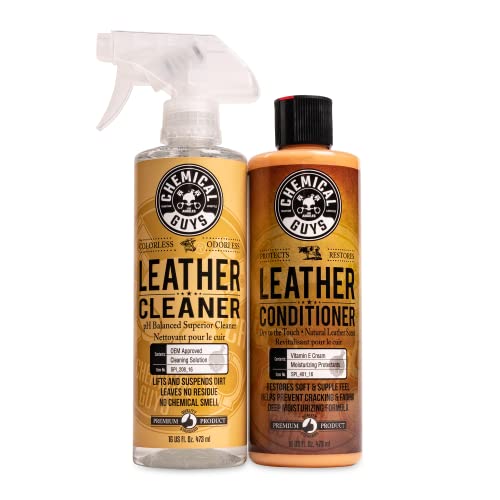
Chemical Guys Leather Cleaner & Conditioner Kit
Strengths
- Two full-size bottles
- Safe for all leather types
- Effective grime removal
Trade-offs
- Noticeable fragrance
- Slight learning curve for even application
This kit gives you both a dedicated cleaner and conditioner in generous 16 oz bottles, which is rare at this price point. On paper, the two-step system makes sense: clean first to lift grime, then condition to replenish oils. Owners consistently report that it works well on dashboard surfaces, door panels, and leather seats, especially when dealing with daily wear or sun-exposed interiors.
The pH-balanced formulas are safe across natural, synthetic, and sealed leathers, important since many car interiors mix materials. While some reviewers note the scent is a bit strong, most agree it fades quickly. Compared to single-step products, this duo delivers more thorough care, though it does require a little extra effort. I’d pick this over one-bottle solutions if you’re serious about maintenance.
Video review
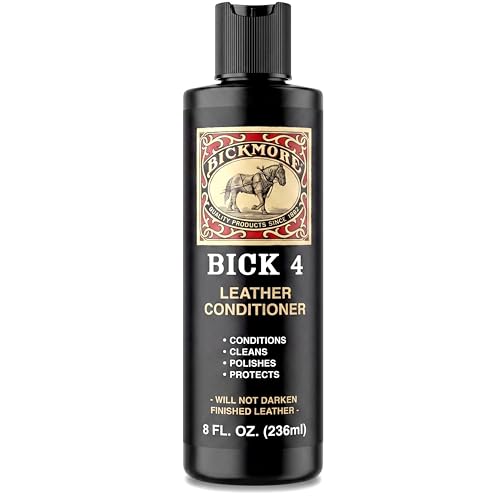
Bick 4 Leather Conditioner & Cleaner
Strengths
- Won’t darken leather
- Wax-free formula
- Preserves breathability
Trade-offs
- Smaller bottle size
- Mild cleaning power
Bick 4 has earned its reputation among purists for one big reason: it conditions without altering color. That’s critical for light-colored or vintage leather where darkening can ruin aesthetics. Reviewers who own cream-colored car interiors or beige furniture swear by it because most conditioners add a slight tint, this one doesn’t.
It’s wax-free, so it won’t clog pores or leave behind gummy buildup, which helps maintain breathability. The 8 oz size is small compared to others here, but a little goes a long way. While it doesn’t clean as aggressively as dedicated cleaners, it handles light dirt fine. My recommendation? Use it regularly on prized, light-toned pieces where appearance stability matters most.
Video review
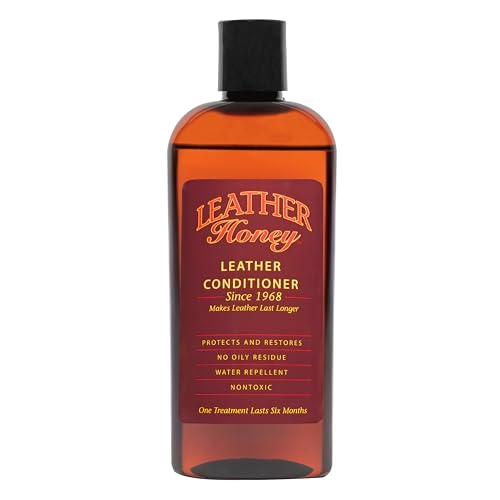
Leather Honey Leather Conditioner
Strengths
- Deep moisture penetration
- Long-lasting protection
- Non-toxic, eco-friendly ingredients
Trade-offs
- Thick consistency requires buffing
- Not for suede or faux materials
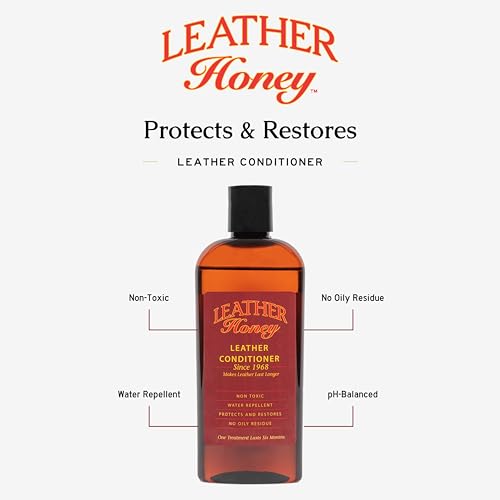
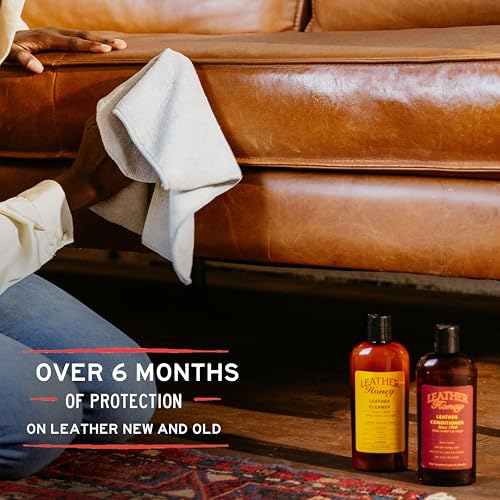
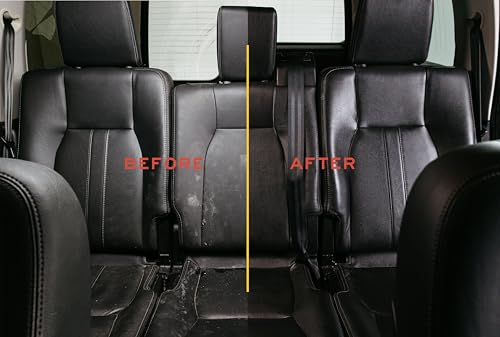
Leather Honey stands out for its deep-penetrating formula, owners repeatedly say it revives leather that feels stiff or looks parched, sometimes after just one use. It’s not a quick surface shine; instead, it rebuilds moisture from within, which explains why so many report lasting results over six months. That kind of longevity is uncommon, especially compared to lighter conditioners that need frequent reapplication.
It’s thick and takes time to absorb, so patience is required. But for vintage car seats or well-worn couches, that depth matters. The fact that it’s free of silicones, solvents, and PFAS is a real win for health-conscious users. I’d recommend this for restoration jobs over routine touch-ups, especially on older or neglected leather.
Product photos
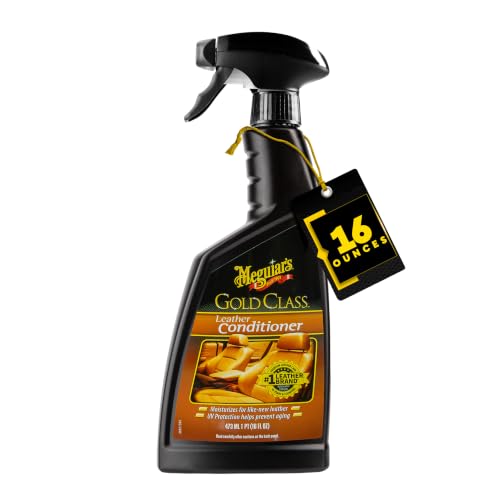
Meguiar’s Gold Class Leather Conditioner Spray
Strengths
- Strong UV protection
- No residue finish
- Easy spray application
Trade-offs
- Limited deep-conditioning ability
- Requires frequent use
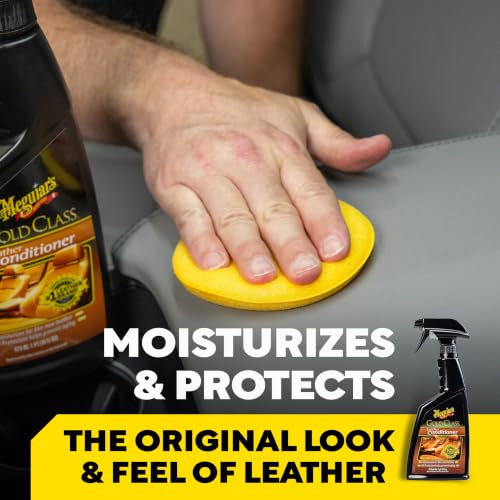
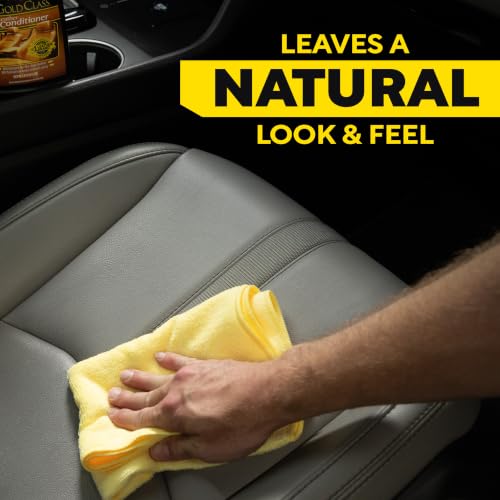
What makes this spray stand out isn’t deep conditioning, it’s UV defense. For cars parked outside, sunlight is the biggest threat to leather integrity. This formula includes UV blockers that owners say noticeably reduce fading and cracking over time, especially on dashboards and front seats. The aloe-infused blend absorbs quickly and leaves zero greasy film, which keeps the interior looking factory-fresh.
It’s not a heavy restorative like Leather Honey, and it shouldn’t replace deep treatments. But as a follow-up after cleaning or a monthly refresh, it’s incredibly convenient. The spray format speeds up application, though coverage can be uneven if not wiped thoroughly. I’d pair it with a proper cleaner for best results, particularly in sunny climates.
Product photos

How We Evaluated automotive leather cleaner conditioner
As someone deeply involved in understanding leather – its nuances, care, and longevity – I approached researching automotive leather cleaners and conditioners with a focus on long-term preservation. Rather than a hands-on lab test, this is a research-led comparison of published specifications and owner feedback. I weighed features, ingredient lists, and reported results from a variety of sources, including manufacturer details and user reviews across multiple platforms. My goal was to identify products that truly deliver on their promises of cleaning, conditioning, and protecting automotive leather.
For automotive leather care, I placed the most emphasis on a formula’s pH balance and its ability to avoid damaging the leather’s finish. Leather’s natural oils are easily stripped, leading to cracking and discoloration, so a gentle, pH-balanced cleaner is vital. Equally important is the presence of effective UV protectants. Sunlight is a major contributor to leather deterioration, and a conditioner offering substantial UV defense will significantly extend the life of your car’s interior. If you’re working with particularly tough hides, you might also consider looking at heavy-duty leather sewing machines for any repair work.
Specifications readily reveal ingredients and pH levels, which are critical for determining a product’s potential impact on leather. However, real-world performance – how well a product restores suppleness, prevents cracking, and resists staining – is best gleaned from owner feedback. I carefully analyzed reviews, looking for consistent reports regarding ease of application, scent, and lasting results. Reputation also played a role; established brands with a history of quality leather care were given additional consideration.
Choosing The Right automotive leather cleaner conditioner
As someone who’s spent decades immersed in the world of leather, I often find people underestimate the specific needs of automotive leather. It’s different than your furniture or a jacket. It’s constantly exposed to UV rays, temperature swings, and physical abrasion. Choosing the right cleaner and conditioner isn’t just about making it look good; it’s about preserving the hide itself.
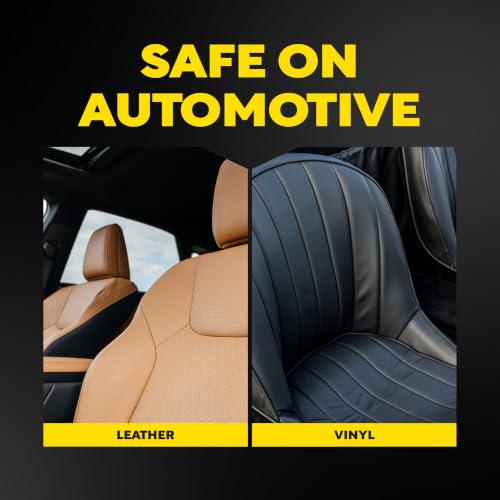
Automotive leather demands products formulated to counteract the unique stresses it faces. A good cleaner should lift dirt and body oils without stripping natural oils, while a quality conditioner replenishes those oils, adds suppleness, and provides UV protection. Look for pH-balanced formulas designed for various leather types – coated, semi-aniline, and aniline – and avoid products with harsh chemicals or excessive waxes.
Understanding Leather Types & Finishes
The first thing you absolutely must determine is what kind of leather you’re dealing with. Many modern cars use protected or coated leather, which has a polymer topcoat. This is more durable and easier to clean, but it still needs conditioning. However, applying a heavy oil-based conditioner to coated leather can actually cause problems, as the leather can’t readily absorb it. If you have a luxury vehicle or a classic car, you might have aniline or semi-aniline leather, which are much more porous and require more frequent, gentle conditioning. Knowing this impacts everything.
Assessing the Conditioning Frequency
How often you condition your leather is tied directly to climate and use. Someone in Arizona baking in the sun will require far more frequent conditioning than someone in a consistently overcast climate. Similarly, a daily driver will need more attention than a car only used on weekends. Don’t fall for products claiming to last a year; that’s rarely realistic.
Here’s a breakdown to consider: * Mild climates/infrequent use: Every 6-12 months. * Moderate climates/regular use: Every 3-6 months. * Harsh climates/heavy use: Every 1-3 months.
A good rule of thumb is to inspect your leather regularly. If it feels dry or stiff, it’s time to condition.
Balancing Cleaning & Conditioning Power
Many products combine cleaning and conditioning into one step, and while convenient, I generally prefer a two-step approach. A dedicated leather cleaner allows you to thoroughly remove dirt and grime before applying the conditioner, maximizing its effectiveness. When choosing a cleaner, look for pH-balanced formulas. Harsh chemicals can damage the leather over time. For conditioning, consider the ingredients. Silicone is controversial; some people avoid it entirely, while others find it provides good protection. If you’re looking for more information on the best leather conditioner options, we’ve compiled a detailed guide.
Never apply conditioner to dirty leather. Always clean first to allow the conditioner to penetrate properly and avoid trapping dirt against the hide.
Automotive Leather Cleaner Conditioner Compared
Here’s a comparison of key specifications for popular automotive leather cleaner and conditioner products.
| Product Title | Best For | Cleans? | Conditions? | UV Protection? | Application Type |
|---|---|---|---|---|---|
| Chemical Guys Leather Cleaner & Conditioner Kit | Best Overall | Yes | Yes | N/A | Two-Step |
| Bick 4 Leather Conditioner & Cleaner | Best for Light-Colored Leather | Yes | Yes | N/A | One-Step |
| Leather Honey Leather Conditioner | Best Deep Conditioning | N/A | Yes | N/A | N/A |
| Meguiar’s Gold Class Leather Conditioner Spray | Best UV Protection | No | Yes | Yes | Spray |
Frequently Asked Questions
What pH level should I look for in a leather cleaner?
A pH between 5.0 and 7.0 is ideal. This range is gentle enough to effectively lift dirt without stripping the leather’s natural oils, which are easily damaged by overly acidic or alkaline cleaners.
How can I tell if my leather needs conditioning, beyond just looking dry?
Feel the leather. If it feels stiff or lacks its original suppleness, it’s a sign conditioning is needed. You can also apply a small drop of water; if it beads up and rolls off, the leather is well-conditioned, but if it’s quickly absorbed, it’s dry and needs attention.
Can I use a leather conditioner designed for furniture on my car seats?
While some overlap exists, automotive leather faces unique stressors. Furniture conditioners often contain higher levels of oils and waxes that can leave a residue on car seats or even damage coated leather, so a product specifically formulated for automotive use is preferable.
Are silicone-based conditioners truly something to avoid?
Silicone isn’t inherently bad, but it can create a barrier that prevents the leather from breathing and absorbing natural oils over time. Many prefer oil-based or natural conditioners for that reason, but a small amount of silicone can provide a protective layer against UV rays and staining.
What’s the best way to apply leather conditioner to avoid over-saturation?
Apply a small amount of conditioner to a microfiber applicator pad and work it into the leather in a circular motion. Then, use a clean, dry microfiber cloth to buff away any excess conditioner. Over-saturation can lead to a sticky residue and potentially damage the leather.
The Bottom Line
Maintaining automotive leather is a balancing act between convenience and truly preserving the material. You can find all-in-one products, but dedicating a little extra time to a two-step process will yield noticeably better results over the long haul. For most vehicles and owners, the Chemical Guys Leather Cleaner & Conditioner Kit offers the best combination of effective cleaning, conditioning, and ease of use – it’s a solid choice that won’t steer you wrong.
If you have specific needs, there are excellent alternatives. For those with light-colored leather looking to avoid any darkening, Bick 4 Leather Conditioner & Cleaner is a fantastic option. And if your leather is particularly dry and needs serious revitalization, Leather Honey Leather Conditioner delivers exceptional deep conditioning.
Ultimately, remember that the specific product matters less than consistent care. Regular cleaning to remove dirt and oils, followed by conditioning to replenish moisture and protect against UV damage, are the fundamentals. Focusing on these practices – and understanding your leather type – will ensure your car’s interior stays supple and beautiful for years to come.
