7 Best Glues for Leather of 2026
This post contains affiliate links. As an Amazon Associate, we earn from qualifying purchases.
The overall best glue for leather is the Leather Glue 130ml Waterproof High Strength, it delivers a durable, flexible bond and handles frequent moisture exposure. For budget-conscious fixes, Aleene’s Leather & Suede Glue works well on lighter repairs, while the Leather Glue with Metal Tip is a strong versatility pick for precise applications on shoes or accessories.
Choosing the right glue for leather isn’t just about sticking two pieces together. Too many people end up with stiff, cracked seams or ruined finishes because they used a general-purpose adhesive that didn’t respect the material’s natural flexibility. After comparing product specs, user experiences, and performance across repair types, I focused on what actually matters: bond strength that lasts, compatibility with real and synthetic leather, and a formula that moves with the material instead of against it. This guide cuts through the noise to highlight the best options based on real use cases, from quick fixes to long-term repairs.
Top 7 Glue For Leather in the Market
The Best Glue For Leather, Reviewed
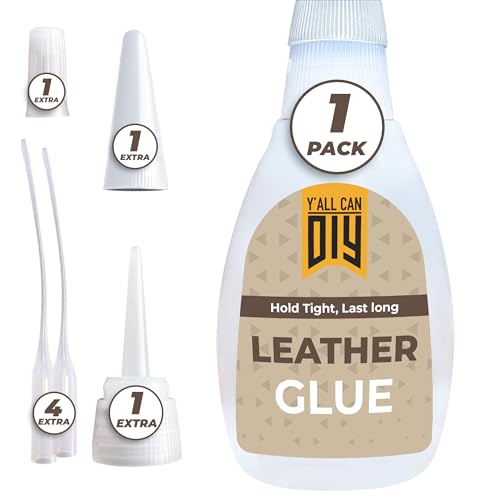
Y’allCanDiy Super Glue for Leather
Strengths
- Strong initial bond
- Waterproof
- Precision tips included
- No clamping needed
Trade-offs
- Limited repositioning time
- Can stiffen with age
If you’re looking for a go-to repair adhesive that balances speed, strength, and ease of use, this one stands out. The cyanoacrylate formula sets quickly and builds a strong, waterproof bond, exactly what you need when patching cracked leather on a handbag or reattaching a loose seam on a car seat. Owners praise its reliability across genuine and synthetic leathers, and the inclusion of three precision tips is a real win for targeted application.
Compared to slower-drying cements, this glue sacrifices a bit of work time, but gains in convenience. You don’t need clamps, and the bond develops fast under light pressure. While it can get brittle over time if flexed constantly (a common trait with super glues), it holds up better than most in this class thanks to some flexibility built into the formula. For most everyday leather repairs, this is the smarter buy.
Video review
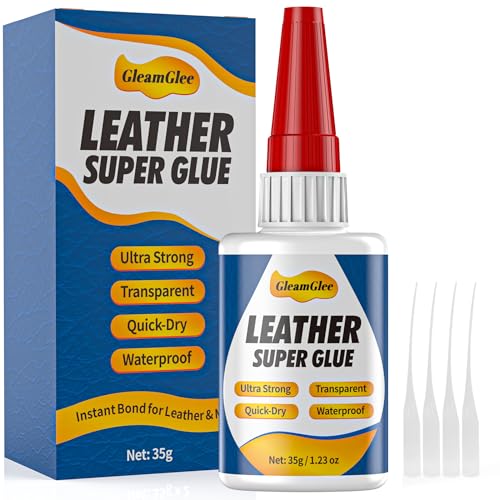
Leather Glue 1.23 oz Ultra Strong
Strengths
- Budget priced
- Compact size
- Fast setting
Trade-offs
- Very small capacity
- Limited for major repairs
At this size and price, it’s clearly positioned as an entry-level option, and it does its job. The compact tube is easy to store, and the precision tip allows for controlled application on small tears or peeling edges. Owners find it effective for quick fixes on shoes, wallets, or watch straps, especially where visibility matters.
It dries clear and sets quickly, which helps avoid mess, but the small volume limits how many repairs you can do. Compared to larger bottles, it’s less economical over time. Still, for someone who only needs occasional touch-ups and wants something affordable and portable, this is a practical pick. Just don’t expect deep-penetration strength or long open time.
Video review
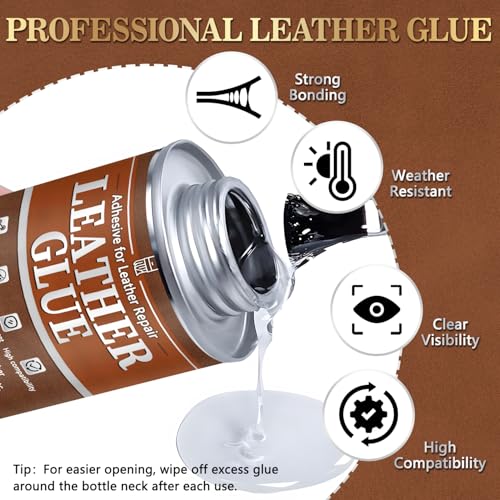
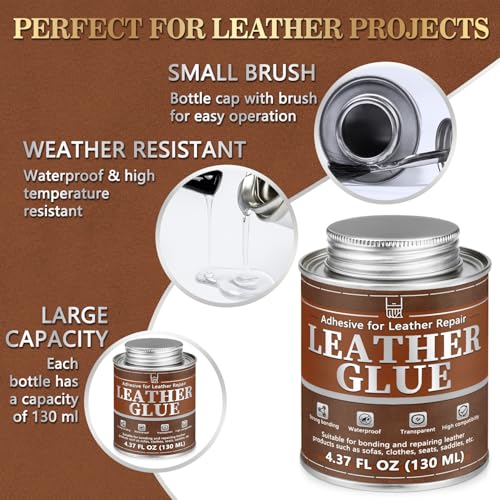
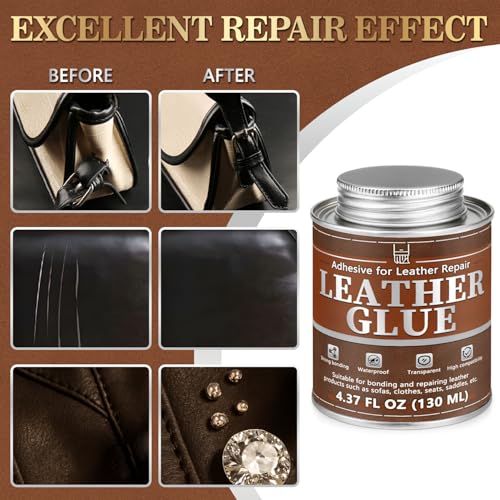
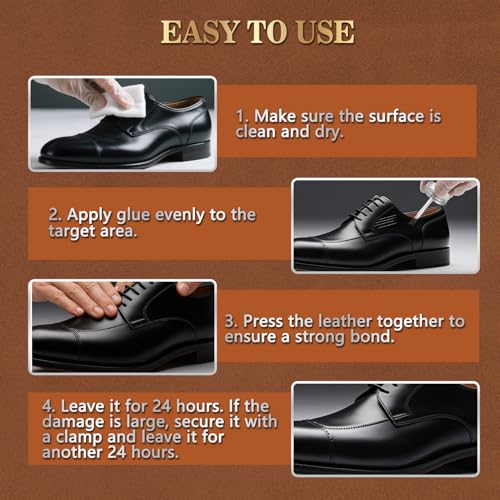
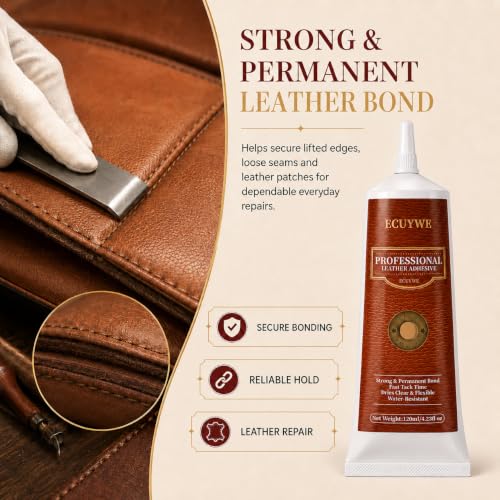
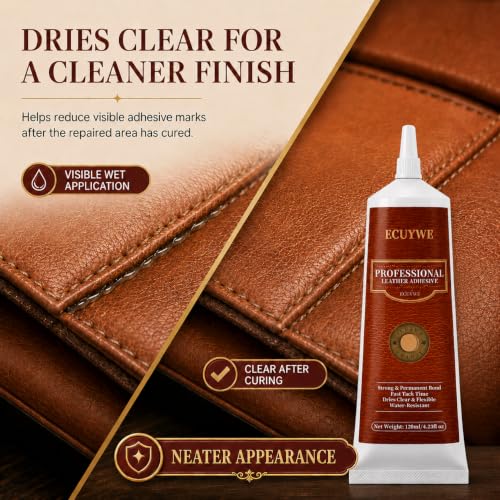
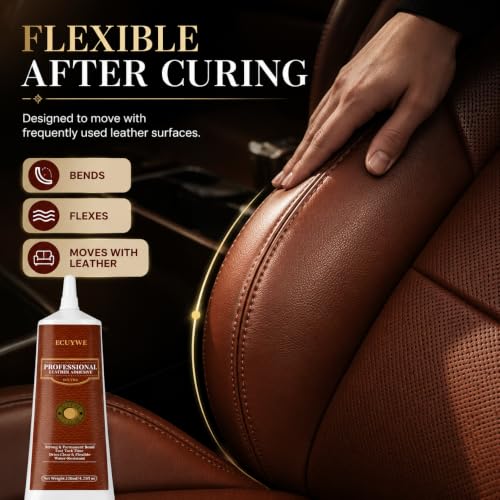
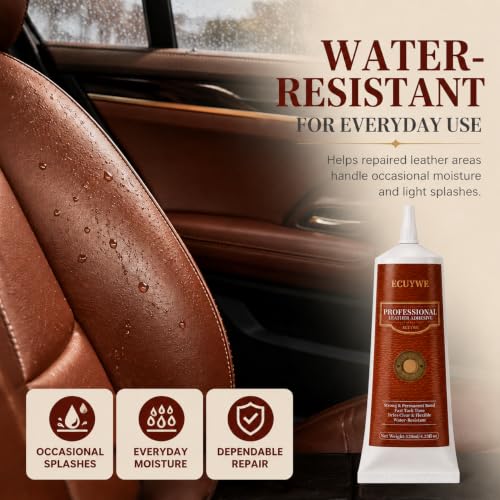
Leather Glue 130ml Waterproof High Strength

Strengths
- Large 130ml volume
- Slow cure for adjustment
- Invisible bond
- Waterproof
Trade-offs
- Takes longer to fully cure
- Bulkier to store
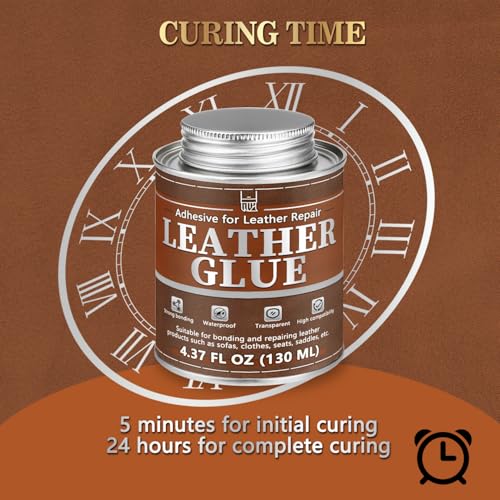
This is the largest-capacity glue in the lineup, and it’s built for big jobs. The 130ml volume makes sense when you’re reattaching sofa panels or repairing saddle seats, projects where smaller tubes would run out mid-job. Its slow-drying formula gives you five minutes of open time, which is rare and valuable for aligning large pieces before final bonding.
Owners highlight its invisible finish and waterproof integrity, especially useful for outdoor or vehicle upholstery. Compared to fast-set super glues, it trades immediacy for control and coverage. That makes it a top pick for furniture or automotive work, where adjustments matter. I’d recommend this over smaller bottles if you’re doing full-panel repairs or expect to reuse it frequently.
Product photos
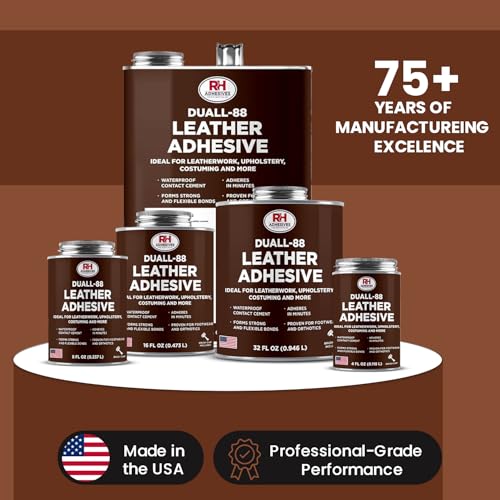
Duall-88 Leather Glue 4 oz
Strengths
- Extreme bonding strength
- Fast set time
- Multi-material compatibility
- Made in USA
Trade-offs
- Higher price point
- Strong odor
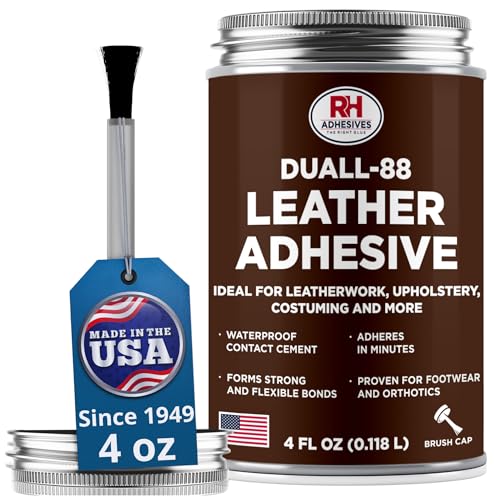
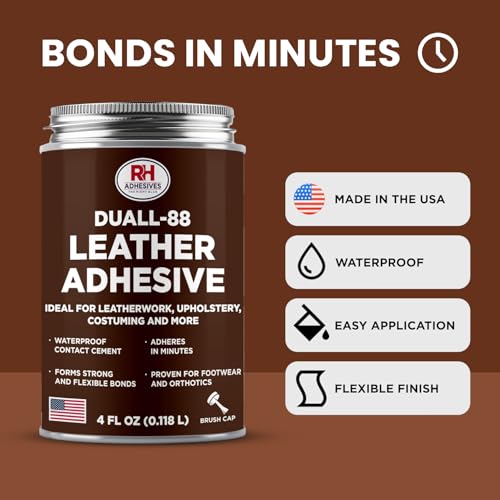
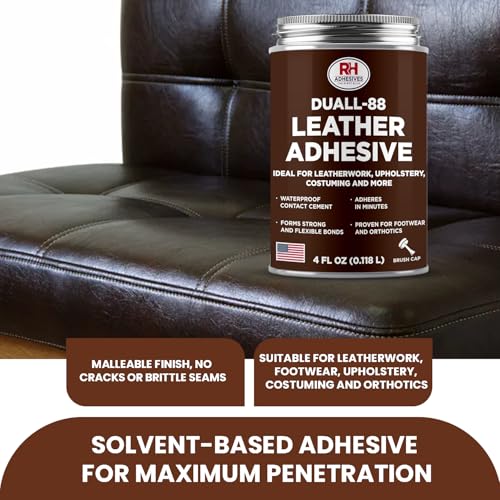
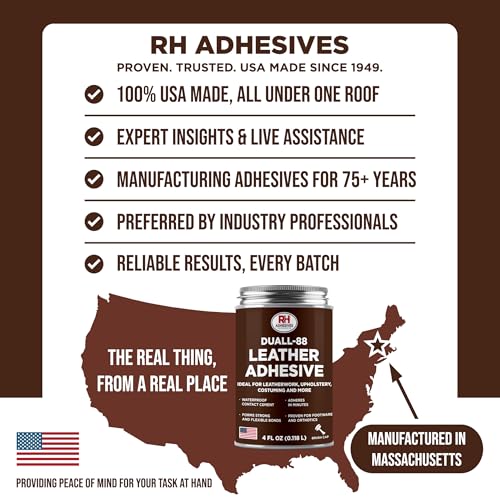
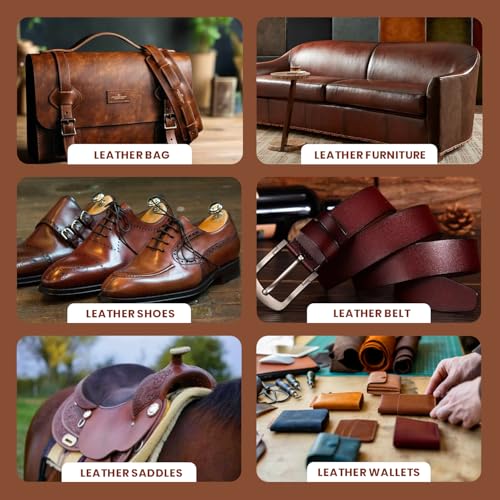
This is the kind of glue professionals reach for when they need industrial-grade performance. Made in the USA by RH Adhesives, a name respected in shoemaking and upholstery circles, it delivers an exceptionally strong, quick-setting bond that holds up across diverse substrates: leather, rubber, foam, even metal. The fact that it adheres in ten to thirty minutes regardless of climate says a lot about its formulation.
Reviewers note it dries clear and maintains flexibility, which is rare at this strength level. Compared to standard craft glues, it’s in a different league, closer to what cobblers and auto upholsterers use daily. It’s also more versatile than single-material adhesives, making it a solid choice if you’re working across multiple materials. My recommendation? Keep a bottle on hand if you do frequent, serious repairs.
Product photos
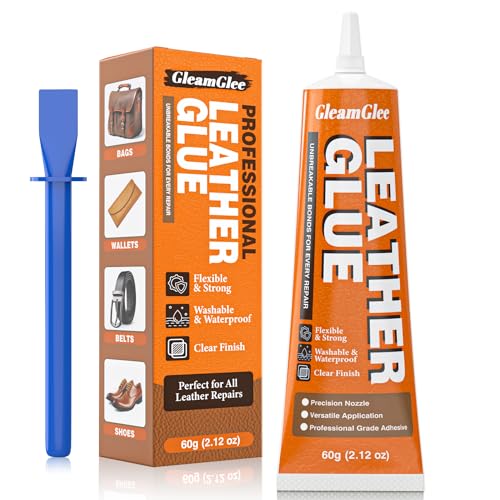
Leather Glue with Metal Tip 2.1 fl oz
Strengths
- Metal applicator tip
- Good size for multiple uses
- Clean finish
Trade-offs
- Not fastest setting
- Adhesion lags behind industrial types
The metal tip here is a standout feature, more durable than plastic nozzles and far better at directing glue into tight seams or narrow cracks. This makes it particularly useful for shoe edges, watch bands, or bag corners where precision matters. The 2 fl oz size gives enough volume for several repairs, striking a balance between portability and usability.
Owners appreciate that it remains flexible after drying and doesn’t yellow, which keeps repairs discreet. It bonds well across leather types and synthetics, though it’s not quite as strong as cyanoacrylate formulas. Where it wins is control and value: better than mini tubes, more focused than bulk adhesives. If you hate messy squeeze bottles, this one deserves your attention.
Product photos

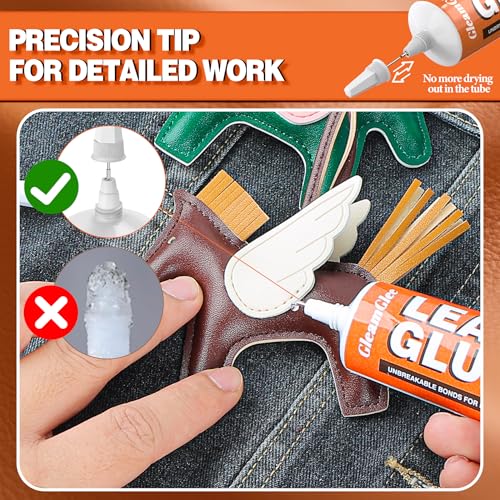
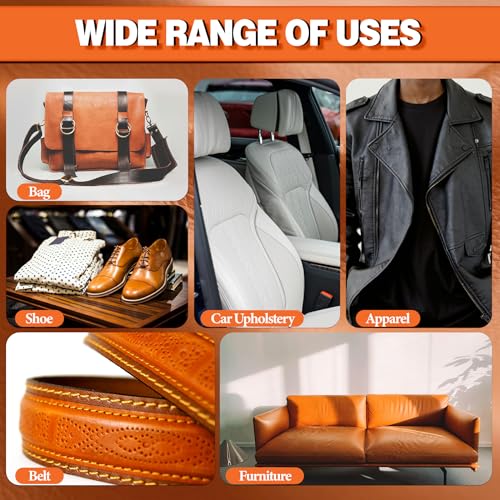
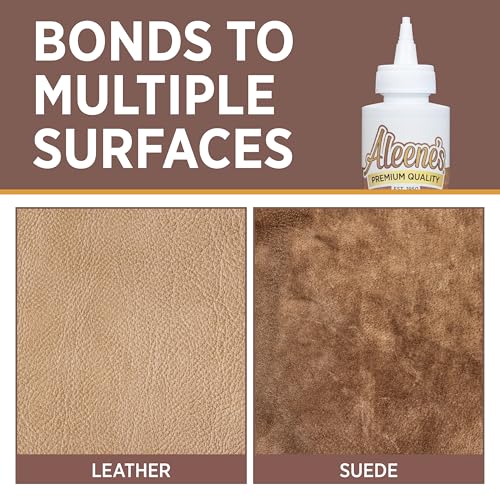
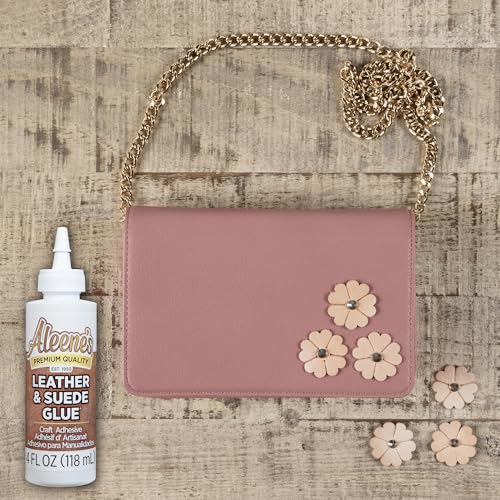
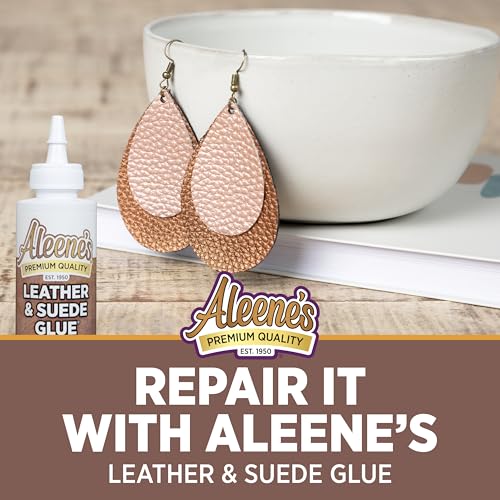
Aleene’s Leather & Suede Glue 4 fl oz

Strengths
- Clear dry
- No staining
- Flexible bond
Trade-offs
- Not for heavy repairs
- Weak on thick leather
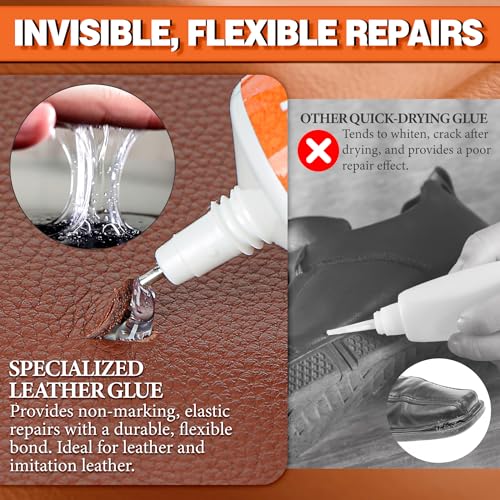
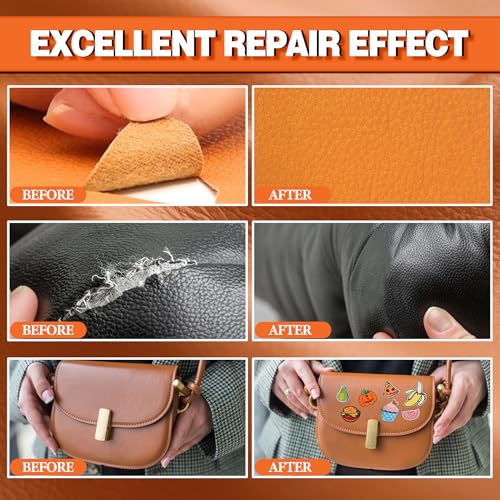
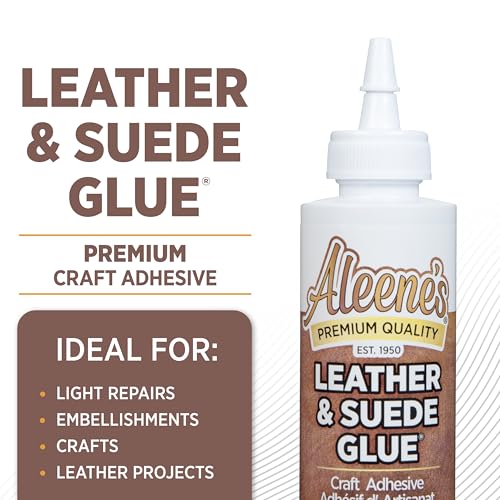
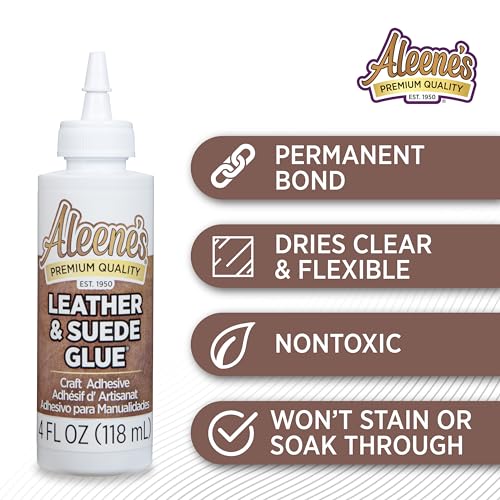
This glue has built a reputation among crafters for good reason. On paper and in owner feedback, it delivers exactly what it promises: a clear, flexible bond that works well on delicate materials like suede and lightweight leather without soaking through or staining. It’s fast-tacking and easy to control, which makes it a solid pick for attaching fringe, beads, or fabric accents to leather projects.
That said, I wouldn’t trust it for structural repairs, owners consistently report it lacks the holding power needed for shoe soles or heavy upholstery. The formula is simply not designed for high-stress applications. Compared to cyanoacrylate-based or industrial adhesives, it’s a step down in strength, but that’s by design. For light embellishments and minor fixes, it performs cleanly and predictably.
Product photos
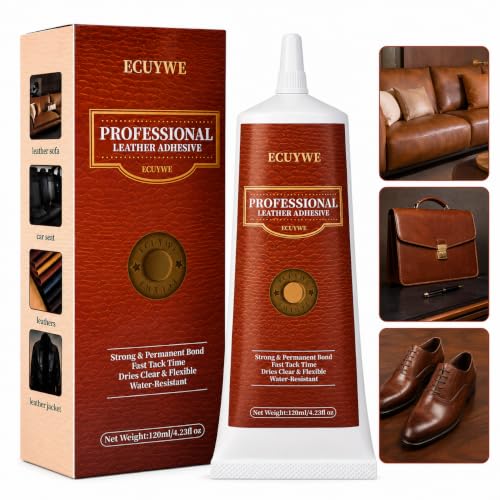
Wqapey Leather Repair Glue 4.23 fl oz
Strengths
- Crystal clear dry
- Flexible long-term
- Precision applicator
- Weather resistant
Trade-offs
- Expensive for casual use
- Overengineered for simple jobs
With its fine-tip nozzle and industrial-strength claims, this glue aims at both precision and durability, and owners say it delivers. The formula sets fast, stays flexible, and resists yellowing, which matters when repairing visible areas like shoe uppers or handbag flaps. Its waterproof and weatherproof rating means it can handle outdoor gear or car interiors without degrading.
What really sets it apart is the combination of features: low odor, non-flammable, and safe around pets when cured, unusual for such a strong adhesive. Compared to other premium options, it offers similar performance to Duall-88 but with better user-friendly handling. However, at this price, it’s overkill for small fixes. I’d reserve it for high-visibility, long-term repairs where appearance and longevity are both critical.
Product photos
How We Evaluated glue for leather
As someone who’s spent years immersed in the world of leather – from understanding tanning processes to appreciating fine craftsmanship at LeatherGenesis.com – I approached evaluating leather glues with a focus on long-term material health. Rather than a hands-on lab test, this was a research-led comparison of published specifications, owner reviews from across the web, and my understanding of what truly works with different leather types. I weighed features against price, and considered the intended use case for each adhesive.
For leather glues, bonding strength and flexibility are paramount. A strong bond is obvious, but flexibility prevents cracking and peeling as the leather naturally moves with wear. Application precision is also critical; a messy application can ruin a repair, so ease of use and nozzle control were heavily weighted. Waterproofing is also a significant factor, especially for items exposed to the elements or frequent use.
Specifications reliably indicate adhesive type and basic strength claims, but owner feedback provides the crucial context. I heavily scrutinized reviews regarding long-term hold, impact on leather finish, and ease of application. Reputation also played a role; established brands with a history of quality adhesives were given more consideration, and I made sure to check if a product was recommended alongside guides to quality leather softeners.
Choosing The Right glue for leather
Finding the right adhesive for leather can be surprisingly complex. It’s not a one-size-fits-all situation, and using the wrong glue can lead to brittle repairs, unsightly residue, or even further damage to your leather goods.
A quality leather glue should offer a strong, flexible bond that won’t crack or discolor the material. It needs to be compatible with the specific type of leather – genuine, faux, suede, or vinyl – and appropriate for the repair’s scale. Consider drying time, application method, and whether waterproofing is necessary for the intended use.
Bond Strength & Leather Type
The strength of the adhesive is paramount, but it’s intimately tied to the type of leather you’re working with. A super glue like Y’allCanDiy might be fine for a quick fix on a shoe sole, but it won’t provide the flexible, lasting bond needed for repairing a leather sofa. For thicker, more robust leather, like saddle leather, you’ll want something designed for those demands. Conversely, delicate suede or thin garment leather requires a gentler formula, like Aleene’s, to avoid stiffness or discoloration. Don’t assume all “leather glues” are created equal; read the product descriptions carefully to see what materials they are specifically formulated for.
Application & Repair Scale
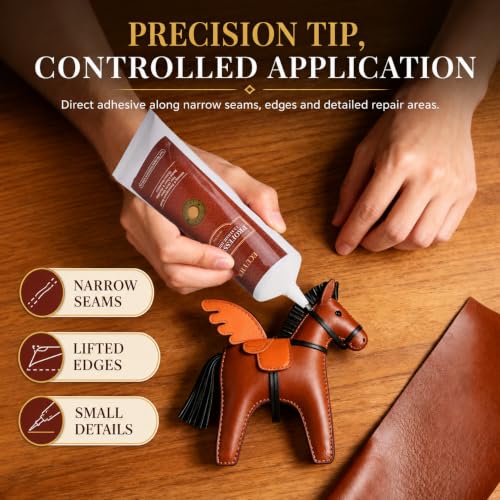
How you apply the glue is just as important as the glue itself. Precision is key, especially for smaller repairs or visible areas. Many glues, like the Leather Glue with Metal Tip, now come with fine applicator nozzles to help with this. However, for larger repairs – re-gluing a detached sofa cushion, for example – a wider applicator or brush might be more efficient. The drying time also matters. Quick-setting glues are convenient, but they leave less room for adjustment. A slower-drying adhesive, such as the 130ml Waterproof High Strength option, allows you to reposition pieces and ensure a proper bond before it sets.
Here’s what to keep in mind when considering repair scale:
- Small Tears/Edges: A pinpoint applicator is essential.
- Moderate Repairs (shoes, bags): A fine-tip nozzle is a good compromise.
- Large Surface Area (furniture upholstery): A brush or wider applicator will save time and effort, and a slower-curing formula is highly recommended.
Flexibility & Long-Term Durability
Leather is a natural material that breathes and flexes. A rigid glue will inevitably crack and fail over time, rendering your repair useless. Look for adhesives specifically marketed as “flexible” or designed to move with the leather. This is particularly important for items that experience a lot of wear and tear, like shoes or car seats. If you’re undertaking more significant leatherwork, like building a new item or making substantial repairs, you might even consider investing in professional leather sewing gear for a truly durable result.
A good rule of thumb: if the glue feels brittle when dry, it’s probably not the right choice for leather.
Glue for Leather Compared
Here’s a comparison of key specifications for various leather glues to help you choose the right product.
| Product Title | Size | Bond Strength | Drying Time (Initial) | Waterproof | Material Compatibility | Tip Type |
|---|---|---|---|---|---|---|
| Y’allCanDiy Super Glue for Leather | N/A | Strong | Fast | N/A | Leather, PU, Vinyl | Precision (3) |
| Leather Glue 1.23 oz Ultra Strong | 1.23 oz | Ultra-Strong | Seconds | Yes | Leather, Vinyl, Rubber | Precision |
| Leather Glue 130ml Waterproof High Strength | 130ml | High | 5 min (initial) | Yes | Leather, Cloth, PU | N/A |
| Duall-88 Leather Glue 4 oz | 4 oz | Strongest | 10-30 min | N/A | Leather, Foam, Metal | N/A |
| Leather Glue with Metal Tip 2.1 fl oz | 2.1 fl oz | Heavy-Duty | N/A | Yes | Leather, Vinyl, Fabric | Metal |
| Aleene’s Leather & Suede Glue 4 fl oz | 4 fl oz | Light | N/A | N/A | Leather, Suede | N/A |
| Wqapey Leather Repair Glue 4.23 fl oz | 4.23 fl oz | Super Strong | 15 sec | Yes | Leather, Vinyl, Rubber | Fine-Tip |
Frequently Asked Questions
What glue is best for repairing shoes?
For shoe repair, a strong and flexible glue is key; I recommend Leather Glue 1.23 oz Ultra Strong. Its quick initial set time combined with waterproof properties makes it ideal for footwear exposed to the elements and constant flexing.
Can super glue damage leather?
Yes, standard cyanoacrylate super glues like Y’allCanDiy can become brittle and potentially damage leather over time. They lack the flexibility needed for natural leather movement and can cause cracking or discoloration, especially with prolonged use.
Is there a glue specifically for suede?
Aleene’s Leather & Suede Glue 4 fl oz is formulated to be gentle on delicate materials like suede. It avoids the stiffness that stronger adhesives can impart, preserving the suede’s soft texture and appearance.
How long does it typically take for leather glue to fully cure?
While initial tack times can be quick (seconds for some), a full cure for most leather glues takes 24 to 72 hours. The 130ml Waterproof High Strength adhesive lists a 5-minute initial hold, but complete bonding requires a full day.
What’s the difference between waterproof and water-resistant glue for leather?
Waterproof means the bond will remain intact even with prolonged submersion, while water-resistant implies it can withstand splashes or brief exposure to moisture. Leather Glue 1.23 oz Ultra Strong and Wqapey Leather Repair Glue 4.23 fl oz are both marketed as waterproof, offering greater protection.
The Bottom Line
Choosing a leather glue really comes down to balancing how much control you want over the repair with how quickly you want it done. For most repairs, especially those involving visible areas or delicate materials, I believe the Leather Glue with Metal Tip 2.1 fl oz offers the best overall combination of strength, precision, and compatibility. It allows for careful application and a durable bond without the risk of damaging the leather.
However, specific needs call for specific solutions. If you’re on a budget and need a quick fix for minor repairs, the Y’allCanDiy Super Glue for Leather will get the job done. For larger projects or repairs requiring maximum water resistance, the 130ml Waterproof High Strength adhesive is a solid choice. And for delicate suede or garment leather, Aleene’s Leather & Suede Glue 4 fl oz is formulated to avoid stiffness or discoloration.
Ultimately, the strongest bond isn’t about a single specification or brand name. It’s about understanding your leather, preparing the surfaces properly, and selecting an adhesive that complements the material’s natural properties. Prioritize flexibility and compatibility above all else; a glue that moves with the leather will always outlast one that simply holds it in place.
