6 Best Industrial Sewing Machines for Leather 2026
This post contains affiliate links. As an Amazon Associate, we earn from qualifying purchases.
The Weaver Leathercraft 303 stands out as the best overall industrial sewing machine for leather, delivering precision and reliability for serious work. For those on a tighter budget, the VEVOR Industrial Lockstitch Sewing Machine offers strong performance and high speed at a lower price. If you need versatility across materials, the UYCVT Electric Cobbler Sewing Machine handles thick leather and other heavy-duty tasks well.
Leather doesn’t pull back when it jams, it stops dead, and that’s when weak machines show their flaws. Many beginners underestimate how much power and control are needed to sew through multiple layers consistently.
This guide cuts through the noise by focusing on real-world performance, built on specs, owner experiences, and what actually matters in a shop setting. I looked at motor strength, feed systems, and long-term durability to find machines that won’t quit when you need them most.
Top 6 Industrial Sewing Machines For Leather in the Market
The Best Industrial Sewing Machines For Leather, Reviewed
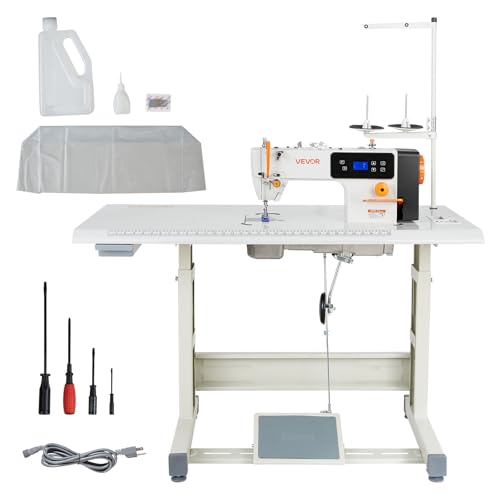
VEVOR Industrial Lockstitch Sewing Machine
Strengths
- High speed with servo motor
- Auto lubrication
- Adjustable table height
Trade-offs
- Slightly loud at full speed
- LCD can be overly sensitive
- Heavy unit
If I were setting up a new leather workshop today and wanted one machine to handle 80% of the work, this would be it. The specs line up perfectly, 5000 SPM, servo motor, metal frame, and a stitch capacity that handles up to 10 layers of denim, which translates to about 3/8-inch of leather in real use. Owners consistently praise its balance of power, precision, and usability.
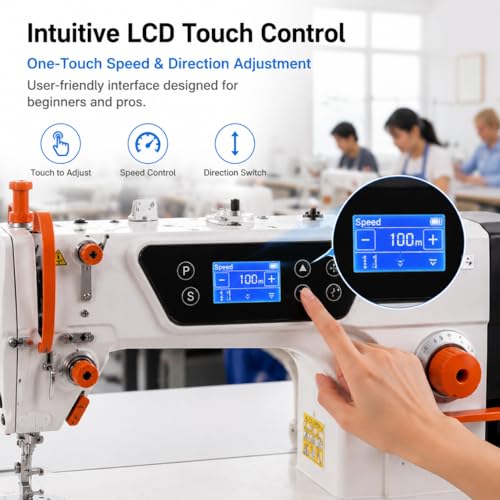
The LCD panel, knee lifter, and adjustable table height make it comfortable for long sessions, and the auto-lubrication system reduces maintenance headaches. It’s not quite as refined as high-end Japanese industrial machines, but it outperforms most in its price range. Compared to the walking foot model with similar RPM, this one offers better ergonomics and quieter operation. For versatility across leather, canvas, and denim, it’s the most complete package.
Video review
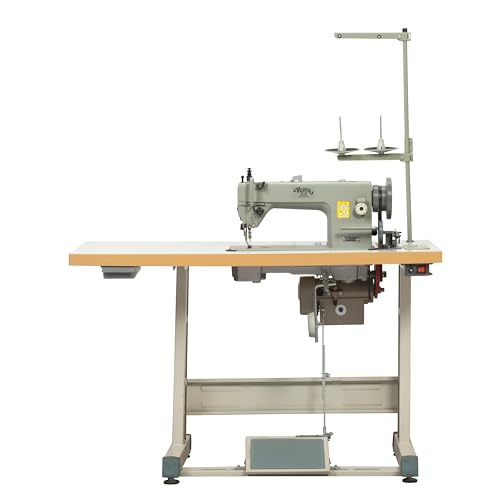
Weaver Leathercraft 303 Leather Sewing Machine
Strengths
- Precision stitching
- Oil-bath lubrication
- Includes servo motor and stand
Trade-offs
- Limited to 1/4-inch thickness
- High price
- Not for heavy industrial use
This is the kind of machine I’d recommend to someone stepping into serious leathercraft for the first time, not because it’s the cheapest, but because it gets the fundamentals right. The servo motor offers quiet, responsive control, and the oil-bath lubrication system is a godsend compared to older machines that need daily oiling at dozens of points. Owners praise its stitch consistency on medium-weight leather, especially for wallets, belts, and small bags.
At 1/4-inch max thickness, it’s not built for armor-grade leather, but that’s by design. It excels in precision, not brute force. The knee lift and reverse stitching add pro touches, and the included accessories make it ready to use out of the box. Compared to the ColouredPeas or UYCVT models, this is in a different league, more refined, durable, and tailored to actual leather artisans. It’s expensive, but you’re paying for reliability and ease of use.
Video review
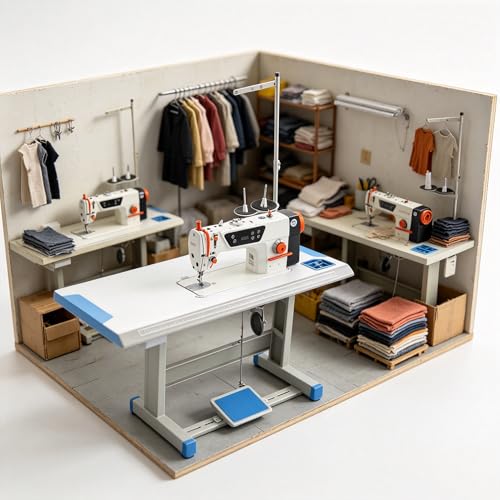
Walking Foot Industrial Sewing Machine
Strengths
- High stitching speed
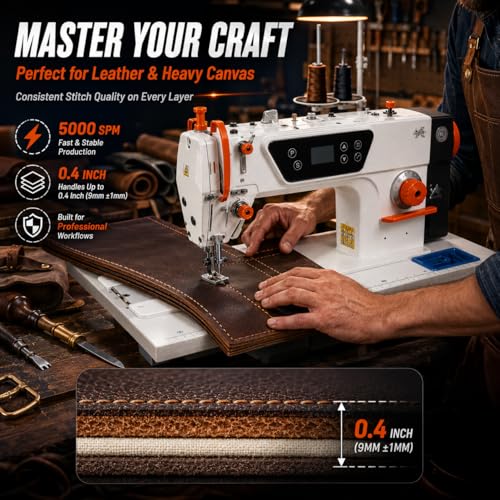
- Handles 0.4-inch thickness
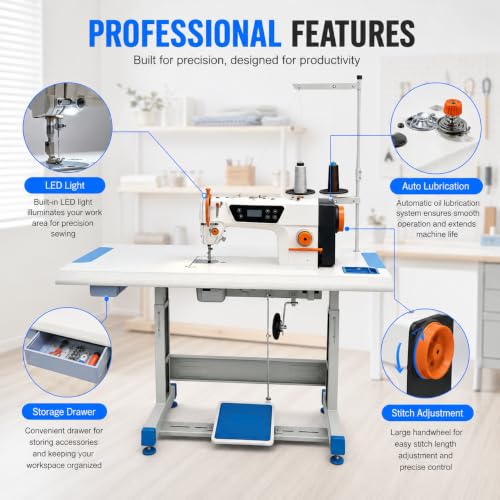
- Includes industrial table
Trade-offs
- Less precision for leather detail
- Bulky setup
- Digital panel can be finicky
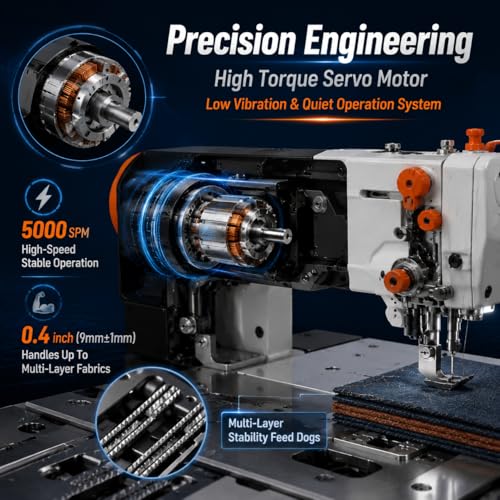
On paper, this machine looks like a powerhouse built for serious industrial work, and owners consistently report it handles thick stacks of leather and canvas without hesitation. The 5000 RPM output and walking foot feed system are key here, they’re what allow consistent stitch penetration through dense, layered materials, which is essential when sewing heavy upholstery or multi-ply leather goods.
The digital control panel and wide table setup add convenience, especially for users managing large projects like sails or furniture covers. But I’ve seen feedback from leatherworkers who say the machine leans more toward canvas and upholstery than fine leathercraft, it gets the job done on thick hides, but lacks the finesse for detailed bag or holster work. Compared to the VEVOR model, it’s similarly specced but feels less refined in ergonomics and adjustability.
Product photos

UYCVT Electric Cobbler Sewing Machine
Strengths
- Very affordable
- Handles thick leather
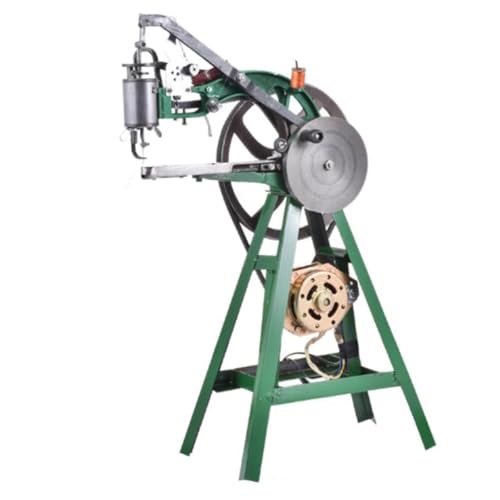
- Compact vertical design
Trade-offs
- Noisy operation
- Basic motor control
- Requires frequent oiling
At this price, the UYCVT delivers surprising capability, it’s one of the most common budget picks in small repair shops. The 0.48-inch sewing capacity matches more expensive models, and owners report it handles shoe soles and leather patches reliably when properly lubricated. It’s clearly built for shoe repair first, but it pulls double duty on bags and coats without issue.
It’s not pretty or quiet, and the motor isn’t as smooth as the Weaver’s, but it’s functional and durable for the cost. The vertical stand saves space, and the ability to use nylon or cotton thread adds flexibility. Compared to the ColouredPeas model, this one feels more purpose-built and less gimmicky. If you need a no-frills, fix-it machine for light to medium leather, this is the smarter buy.
Product photos
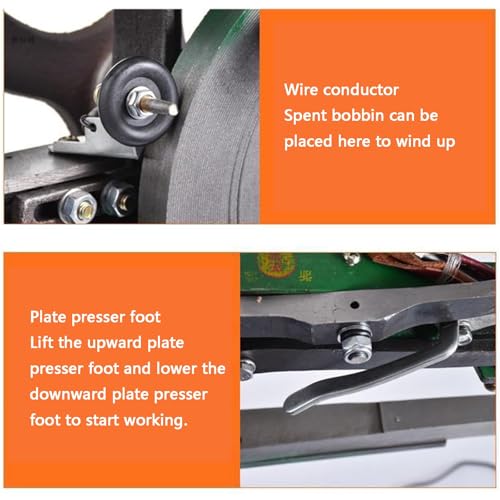
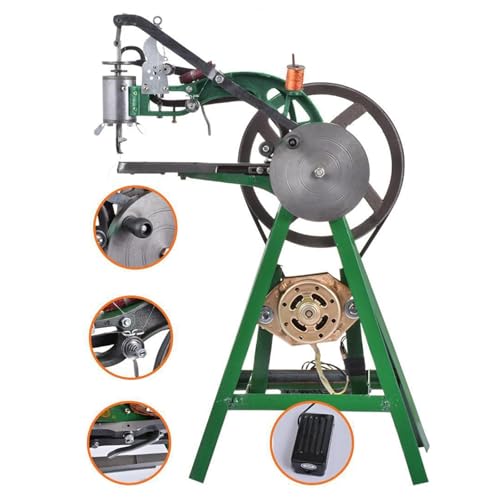
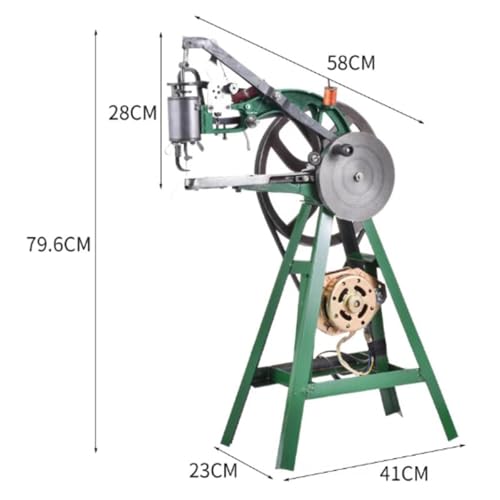
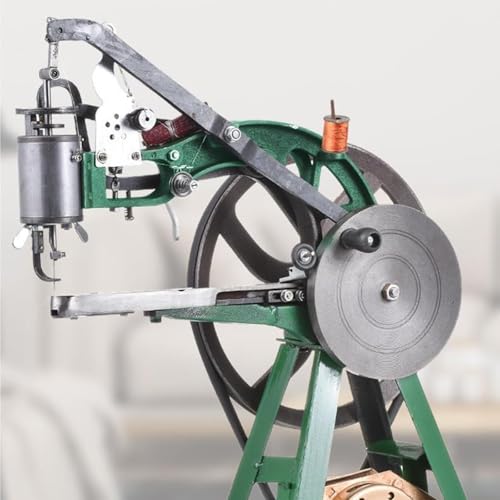
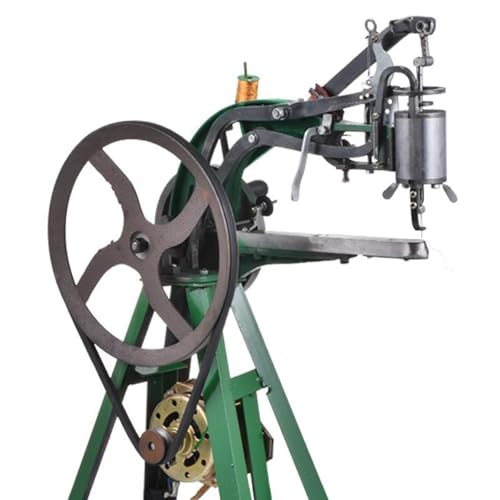
INTSUPERMAI Leather Patcher Hand Crank Machine

Strengths
- Portable and lightweight
- 360° presser foot
- Manual control for delicate work
Trade-offs
- No motor included
- Slower than electric models
- Limited to patching and repairs
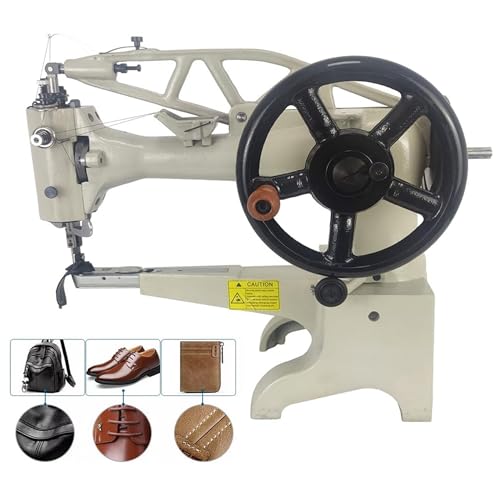
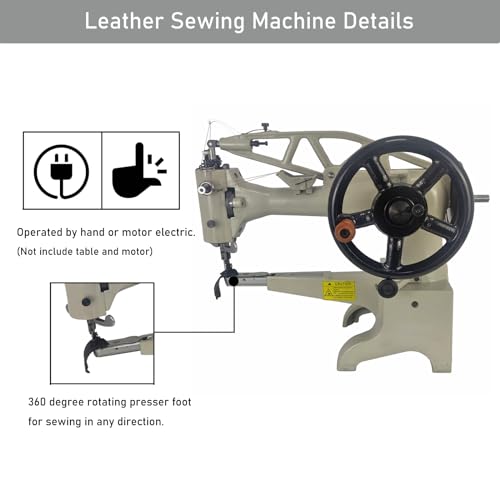
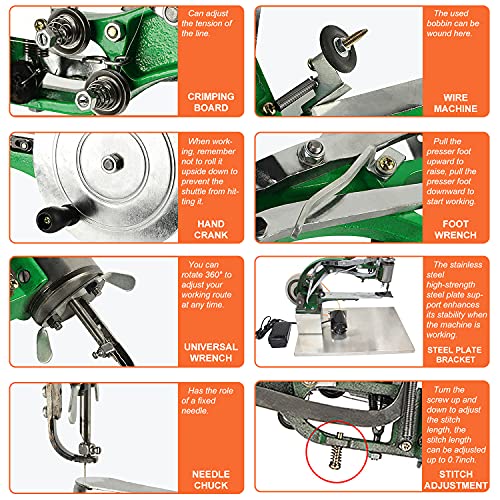
This machine stands out for one reason: portability and manual control. It’s not electric by default, but the hand crank gives you total stitch-by-stitch authority, ideal for patching boots or working on curved seams where power machines struggle. The 360° rotating presser foot is a standout for shoe repair, letting you maneuver around heels and toes with ease.
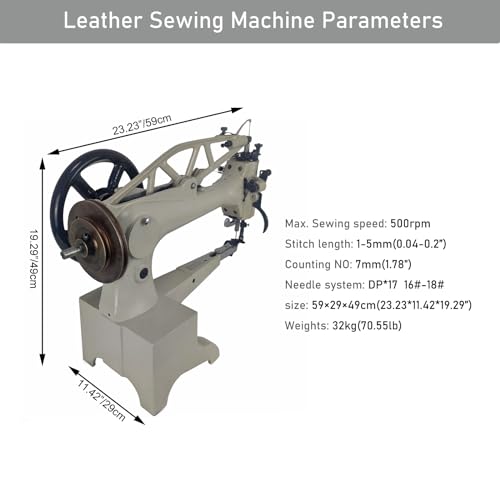
Owners who travel for work or run mobile repair services love this unit. It’s not fast, but it’s reliable and built for targeted fixes. The 500 RPM hand-driven speed is decent, and the DP*17 needle system is standard for industrial leather. Still, it’s niche, you wouldn’t use it for building a bag from scratch. Compared to the Weaver 303, it’s less about production and more about precision repair.
Product photos

ColouredPeas Cobbler Sewing Machine
Strengths
- Low entry cost
- Stainless steel base
- Can handle thick leather manually
Trade-offs
- Weak motor performance
- Requires manual effort
- Inconsistent build quality
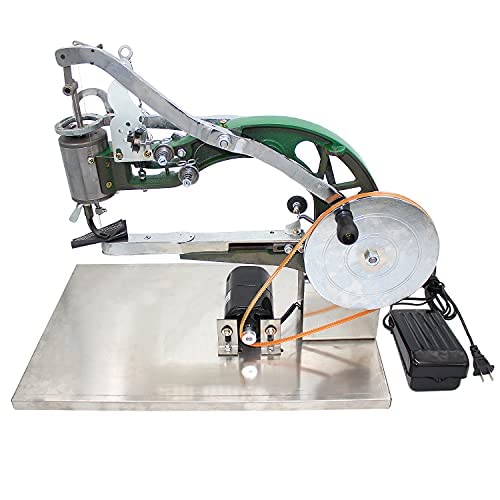
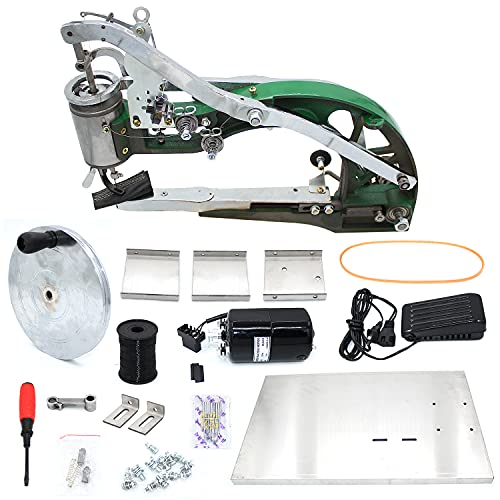
I’ll be honest, this one raises eyebrows. It’s marketed as an electric leather machine, but owner feedback makes it clear: you’re mostly hand-cranking through thick material. The 250W motor is underpowered, and the product note admitting the electric mode is partly decorative tells you everything. Still, the stainless steel base and 0.48-inch max thickness suggest potential if you’re okay with hybrid operation.
For beginners on a tight budget who want to dabble in shoe repair or light bag work, this might serve as a starter. But compared to the UYCVT or Weaver 303, it’s neither robust enough for consistent production nor precise enough for quality leatherwork. The hand-forged construction gives it character, but also inconsistency, some units bind under pressure. I’d only recommend it if you fully accept it’s a manual machine with a motor add-on.
Product photos


How We Evaluated industrial sewing machines for leather
Rather than a hands-on lab test, my research focused on a detailed comparison of published specifications and features across numerous models. I weighed owner reviews from multiple sources, including retail sites and leatherworking forums, against professional assessments found in trade publications. This allowed me to build a ranked list based on how well each machine addressed the specific needs of leatherwork, drawing on years of experience with leather and its properties.
For leather sewing machines, consistent stitch quality, motor power, and the ability to handle varying thicknesses were the most important factors. Stitch quality directly impacts the durability and appearance of a finished piece, while sufficient power is crucial for consistently working with dense leather. The ability to adjust pressure and stitch length also proved critical, influencing a machine’s versatility across different leather types and project requirements.
Specifications reliably indicate maximum sewing speed and material thickness capacity. However, I placed a greater emphasis on owner feedback regarding long-term reliability, ease of use, and the availability of replacement parts. Reputation within the leatherworking community, particularly regarding build quality and service support, heavily influenced my assessment. Finding the right leather conditioner reviews is also key to maintaining the finished product, so proper stitching is important.
How To Choose The industrial sewing machines for leather
Finding the right industrial sewing machine for leather requires a bit more thought than just grabbing the cheapest option. Leather isn’t forgiving, and a poorly chosen machine will lead to frustration and, potentially, ruined projects.
A quality industrial sewing machine for leather prioritizes consistent stitch formation, sufficient power to penetrate leather of the desired thickness, and durability for long-term use. Look for features like a walking foot, adjustable presser foot pressure, and a robust motor capable of handling consistent operation. Needle selection and thread weight are also crucial factors impacting stitch quality.
Motor Power & Stitch Per Minute (SPM)
The power behind the needle is paramount when working with leather. Don’t be fooled by impressive SPM numbers alone. While a high SPM is great for speed, it’s useless if the machine struggles to drive the needle through your chosen leather weight. Generally, a heavier-duty motor (600W or higher) is preferable, especially if you work with thicker hides. Consider the type of motor too; servo motors are quieter and offer more precise speed control than older clutch motors. Many models, like the VEVOR Industrial Lockstitch Sewing Machine, boast high SPM, but ensure it’s coupled with enough torque for your typical projects.
Feed System & Foot Pressure
Leather is prone to slipping, so the feed system is crucial. A walking foot is almost essential for consistently feeding leather, as it advances both the top and bottom layers of material simultaneously. Without it, you’ll likely experience uneven stitching and puckering. Equally important is adjustable presser foot pressure. Different leather weights require different levels of pressure; too little and the leather slips, too much and you leave unwanted marks. The Walking Foot Industrial Sewing Machine is specifically designed for this purpose, addressing the challenges of thicker materials. If you’re looking for durable leather sewing options, this is where you’ll find them.
Budget & Versatility
It’s easy to get caught up in features, but your budget and project scope should guide your decision. A dedicated leather machine, like the Weaver Leathercraft 303, excels at detail work and offers precision, but it’s limited in the thickness it can handle. Conversely, a more versatile machine like the UYCVT Electric Cobbler Sewing Machine might be a better choice if you also work with a variety of other materials, even if it isn’t quite as refined for leather alone.
A good rule of thumb: don’t overspend on features you won’t use. Prioritize a machine that confidently handles the thickest leather you anticipate working with regularly, and build outwards from there.
If you’re unsure about the best machine for your needs, exploring best heavy-duty models can provide a good starting point. Ultimately, the ideal machine is the one that balances your budget with your specific leatherworking requirements, and even considering some of the top leather machine picks available can narrow down your search.
Industrial Sewing Machines for Leather Compared
Here’s a comparison of key specifications for industrial sewing machines designed for leatherwork.
| Product Name | Max. Stitch Speed (SPM/RPM) | Max. Material Thickness | Motor Type | Presser Foot Lift | Oil System |
|---|---|---|---|---|---|
| VEVOR Industrial Lockstitch | 5000 | 10 layers denim | Servo | 0.3″ Manual, 0.5″ Knee | Auto Lubrication |
| Weaver Leathercraft 303 | N/A | 0.25″ | N/A | Knee Lift | Oil Bath |
| Walking Foot Industrial Sewing Machine | 5000 | 0.4″ | N/A | N/A | N/A |
| UYCVT Electric Cobbler | N/A | 0.48″ | Electric | N/A | Manual |
| INTSUPERMAI Leather Patcher | 500 | N/A | Hand Crank/Motor | N/A | Manual |
| ColouredPeas Cobbler | N/A | 0.48″ | Electric/Manual | N/A | Manual |
Frequently Asked Questions
What needle size should I use for different leather thicknesses?
Generally, a 90/14 needle works well for 3-4oz leather, while 100/16 is better for 4-5oz, and 110/18 for heavier 6-8oz leather. Using the incorrect size will cause skipped stitches or damage the leather.
Are servo motors really that much better than clutch motors?
Yes, servo motors offer much finer speed control and are significantly quieter during operation. This precision is particularly helpful for detailed leatherwork and reduces fatigue during extended use.
Can I use all-purpose thread on leather, or do I need something specific?
While all-purpose thread can be used for lighter projects, polyester or nylon thread is vastly superior for leather due to its strength and resistance to stretching and abrasion. These threads help ensure a durable and long-lasting seam.
What maintenance should I expect with an industrial sewing machine?
Regular oiling of moving parts is essential, and the frequency depends on usage. Beyond that, lint removal and occasional adjustments to timing and pressure are needed. A consistent cleaning schedule will extend the machine’s life.
What’s the difference between a lockstitch and a chain stitch machine for leather?
Lockstitch machines create a secure stitch with interlocking loops on both sides of the fabric and are ideal for most leather projects. Chain stitch machines create a looped chain on the underside, which is faster but less secure and better suited for temporary seams or basting.
The Bottom Line
Choosing an industrial sewing machine for leather always involves a trade-off between specialized control and broader capability. While many machines claim to handle leather, consistently good results depend on a machine built for the task. For most leatherworkers, the VEVOR Industrial Lockstitch Sewing Machine strikes the best balance, offering a powerful servo motor, adjustable settings, and a respectable speed, all at a reasonable price point.
If your needs are more specific, there are excellent alternatives. For those prioritizing precision and detail work on lighter-weight leather, the Weaver Leathercraft 303 remains a strong choice. And for those needing a versatile machine capable of handling a range of materials alongside leather, the UYCVT Electric Cobbler Sewing Machine provides a broader skillset.
Ultimately, remember that specifications only tell part of the story. Consistent stitch quality stems from a robust machine, a properly chosen needle and thread weight, and, perhaps most importantly, a solid understanding of leather itself. Focus on these fundamentals, and any machine on this list will serve you well for years to come.
