
8 Best Leather Belts of 2026
This post contains affiliate links. As an Amazon Associate, we earn from qualifying purchases.
This post contains affiliate links. As an Amazon Associate, we earn from qualifying purchases.
The Carhartt Saddle Leather belt stands out as the overall best choice for durability and long-term wear, thanks to its full-grain leather and rugged harness buckle. For those on a budget, the MILORDE Leather Dress belt offers solid value in a two-pack, while the KEMISANT Ratchet delivers versatile adjustability for changing outfits or waistlines.
Most people don’t think much about their belt until it breaks or starts to crack. But a poor-quality belt does more than fail, you end up with a limp strap, a wobbly buckle, or leather that won’t last a season. As someone who’s spent years studying leather and its performance, I know how much material quality and construction matter in everyday items.
This guide cuts through the marketing hype. I compared top-selling leather belts based on leather type, build quality, and real-world feedback to find the ones that truly deliver. You’ll see how full-grain leather outperforms lower grades, why hardware matters, and what details actually affect longevity.
Top 8 Leather Belts in the Market
The Best Leather Belts, Reviewed
Carhartt Saddle Leather Belt

Strengths
- Full-grain saddle leather
- Heavy-stitched reinforcement
- Develops rich patina
Trade-offs
- Break-in period needed
- Higher initial stiffness
- Limited color options
This is what a work belt should be, built from full-grain saddle leather that only gets better with wear. Unlike bonded or corrected grain alternatives, this leather resists abrasion and develops a rich, natural patina over time. The heavy-stitched tab at the keeper end is a small detail that speaks volumes: Carhartt knows where stress concentrates, and they reinforce it.
Owners report these belts lasting 5+ years even with daily job site use. The harness buckle is minimalist but rugged, and the 1.5-inch width clears all standard loops without binding. Compared to fashion-forward belts, this one doesn’t try to impress, it just performs. I’d pick this over nearly any other in this list for long-term value, even if the upfront cost is higher.
Video review
wolksprong Full Grain Leather Belt

Strengths
- Extra thick full-grain leather
- High-hardness buckle
- Work-to-weekend capable
Trade-offs
- Stiff out of the box
- Bulky for slim fits
- Overkill for light use
With a 5mm thickness and full-grain construction, this belt is engineered for load-bearing durability. The brass-toned buckle has high hardness, meaning it resists bending under pressure, critical if you’re wearing tools or gear. Owners working in trades say it holds up far better than department store belts, and the leather remains flexible despite its density.
It’s one of the few in this lineup that genuinely competes with Carhartt in raw toughness. The vintage-style buckle adds a touch of class, letting it transition from site to street. However, the break-in is stiffer than average, and the gift box packaging doesn’t change that this is a work-first accessory. If you need a belt that won’t sag or crack after months of abuse, this is a top contender.
Video review
Timberland Classic Leather Belt
Strengths
- Well-finished reversible design
- Durable genuine leather
- Timeless hardware look
Trade-offs
- Not full-grain leather
- Slight color mismatch
- Average aging potential
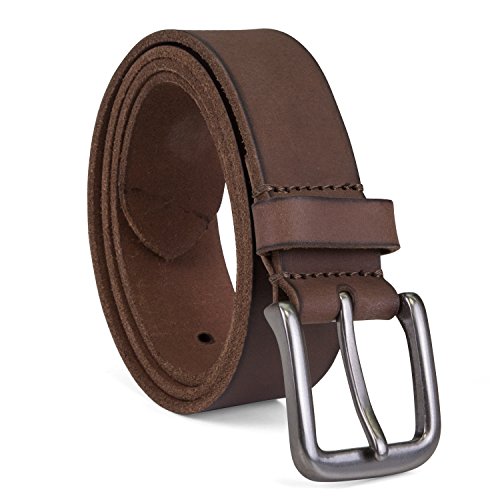
Timberland’s reputation for durable footwear carries into this reversible belt, solidly built with genuine leather and an antique-finish buckle that resists tarnishing. The reversible feature is well-executed: both sides (usually black and brown) are finished cleanly, unlike cheaper models where one side feels like an afterthought. It’s become a go-to for guys who want one belt for multiple outfits without sacrificing structure.
Owners note it pairs especially well with jeans and boots, and the single loop keeps it from flopping. While not full-grain like the Carhartt, it’s more robust than Levi’s offering and priced reasonably. For versatility across casual, work, and semi-formal settings, this strikes a better balance than most.
Product photos


CHAOREN Reversible Leather Belt

Strengths
- True reversible design
- Ultra-budget price
- Easy self-trimming
Trade-offs
- Thin leather build
- Artificial edge coating
- Shorter lifespan expected
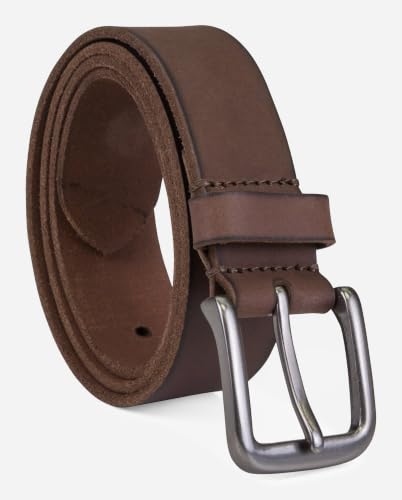
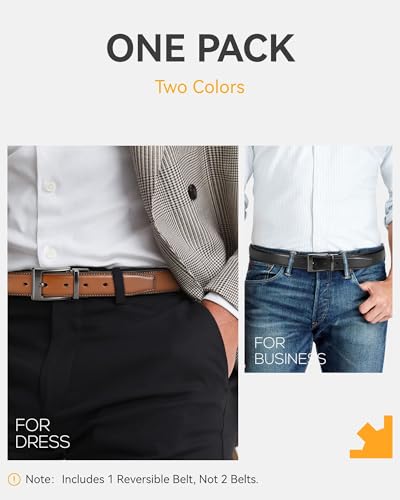
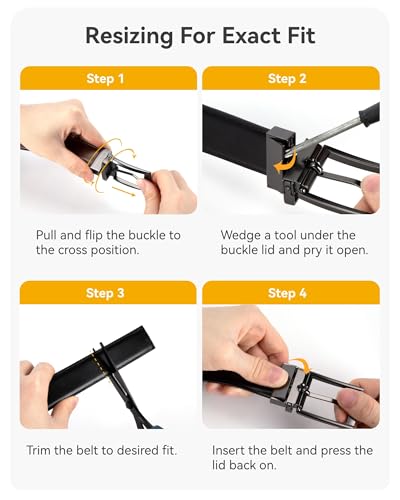
At under $8, this reversible belt delivers on versatility. One side black, one brown, both finished with hand-rubbed coloring that mimics higher-end treatments. The 1.25-inch width is slim enough for dress pants but still functional for chinos. Owners praise how easy it is to cut down to size, no tools needed, and the anti-crack tech seems to hold up in short-term use.
But let’s be honest: at this price, the leather is never going to rival full-grain. It’s genuine leather, reinforced with layers of edge paint, which helps prevent fraying but also masks lower-quality substrate. Compared to the Timberland reversible, it lacks the same structural heft, but for occasional wear or travel minimalism, flipping sides beats packing two belts.
Product photos

KEMISANT Ratchet Leather Belt 2Pack
Strengths
- Ratcheting micro-adjustment
- Trim-to-fit strap
- Good value 2-pack
Trade-offs
- Thin leather feel
- Buckle finish scratches
- Less aging character
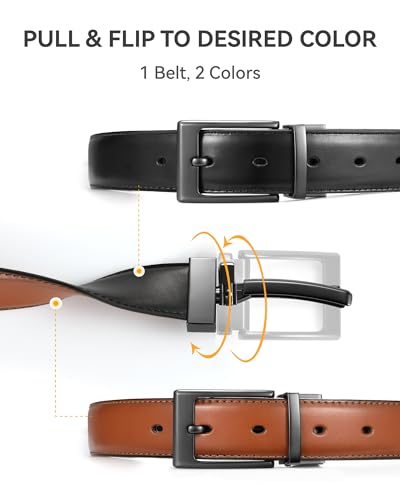
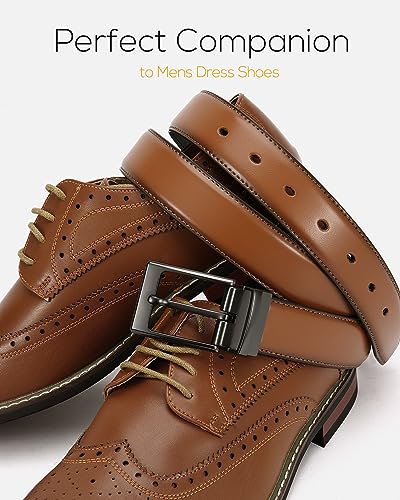
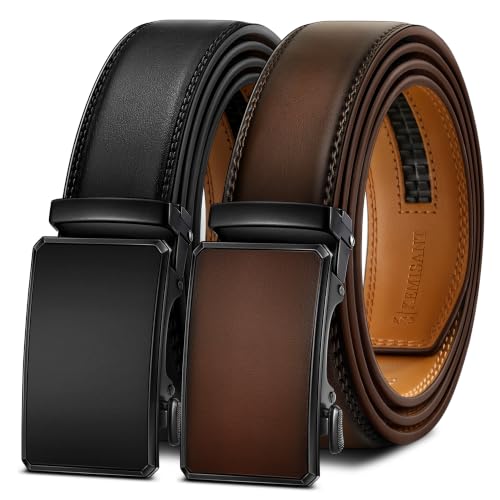
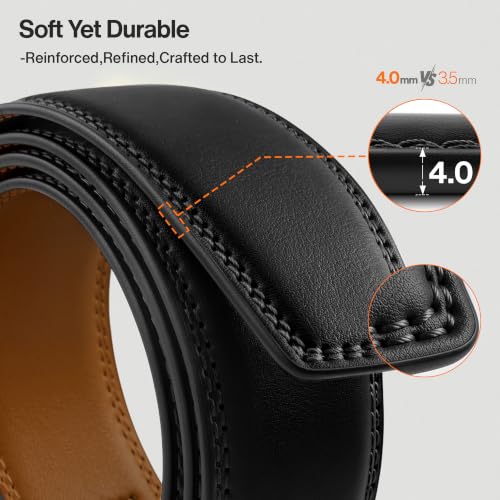
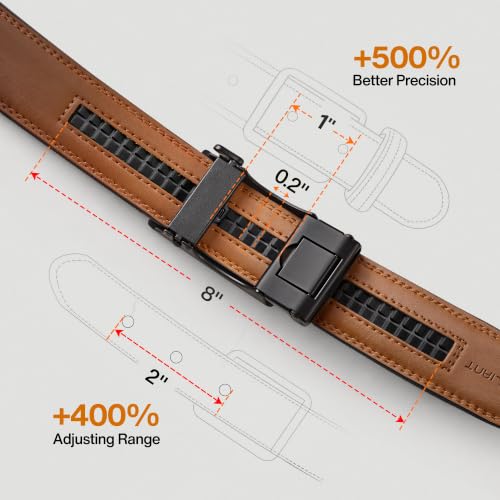
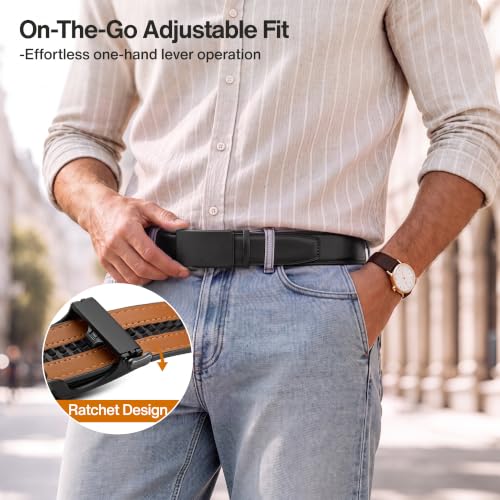
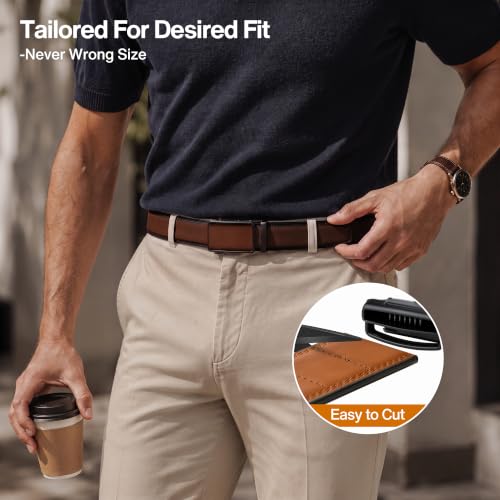
The ratchet mechanism here solves a real problem, getting that exact fit without wrestling with holes, but I’ve seen owners report the leather feels thin next to full-grain belts. On paper, it’s genuine leather and zinc alloy hardware, which is fair for the price, but it doesn’t develop a patina like higher-end leathers do. The ability to trim it to size is a strong plus, especially if you’re between standard sizes.
Still, this is clearly built for convenience over longevity. The dual-color buckle looks sharp in product photos, but reviewers note the finish can scratch with daily belt-loop friction. Compared to traditional belts, this one trades classic break-in for immediate adjustability, one hand tweak at a time.
Product photos
DOOPAI Full Grain Leather Belt
Strengths
- Affordable full-grain claim
- Solid metal buckle
- Nine adjustment holes
Trade-offs
- Leather grade inconsistent
- Edge finish varies
- Not as dense as premium
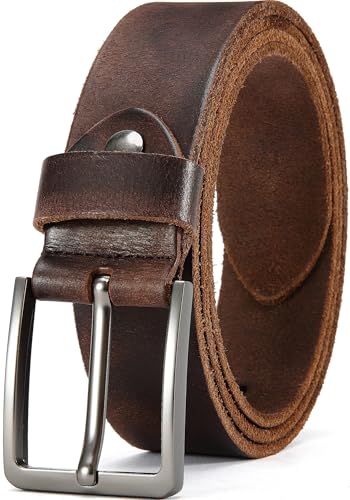
For under $15, claiming full-grain leather is bold, and while the specs say ‘genuine’, owner feedback suggests it’s a step above typical bonded leather, with decent thickness and grain visibility. It’s marketed as handmade, and the edge finishing appears cleaner than expected at this price. The single prong buckle is solid zinc alloy, which helps avoid corrosion over time.
It has nine adjustment holes, giving more flexibility than fixed-hole belts, though not as precise as ratcheting models. When compared to the Carhartt or wolksprong, it’s clearly a tier below in material density, but for someone testing the waters with quality leather without overspending, it’s a smart entry point. Just don’t expect the same depth of aging.
Product photos


Levi’s Casual Leather Belt
Strengths
- Classic Levi’s styling
- Fits jeans perfectly
- Sturdy matte buckle
Trade-offs
- Not full-grain leather
- Minimal aging character
- Basic construction
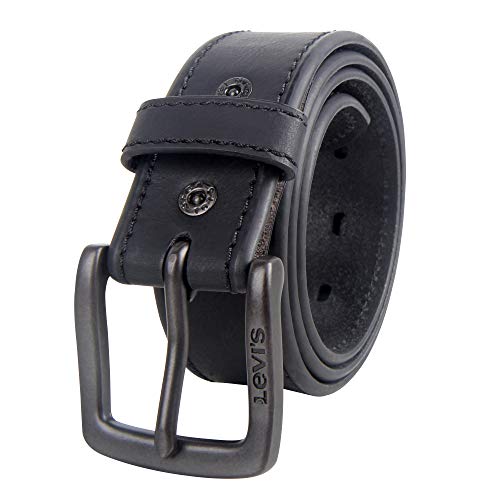
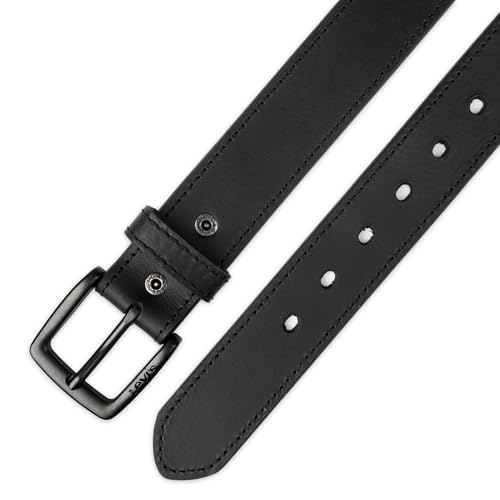
Levi’s knows denim, and this belt reflects that heritage, simple, functional, and styled to match their jeans perfectly. The gunmetal buckle with the embossed logo gives it just enough brand identity without being loud. Owners consistently say it wears in well, though it’s not full-grain leather, so don’t expect deep patina development. It’s sturdy enough for daily wear but won’t last decades like a Carhartt or handmade piece.
At 1.5 inches wide, it fits most loops cleanly, and the rivet near the keeper adds a subtle touch of workwear DNA. But compared to belts made from full-grain hides, this one leans more accessory than heirloom. If you’re building a casual wardrobe around jeans and boots, it makes sense. If you want a belt that outlives your jeans? Look elsewhere.
Product photos


MILORDE Leather Dress Belt 2Pack

Strengths
- Two-belt value pack
- Slender 1.25” profile
- Nickel-free buckle option
Trade-offs
- Moderate leather quality
- Inconsistent hole spacing
- Minimal patina development
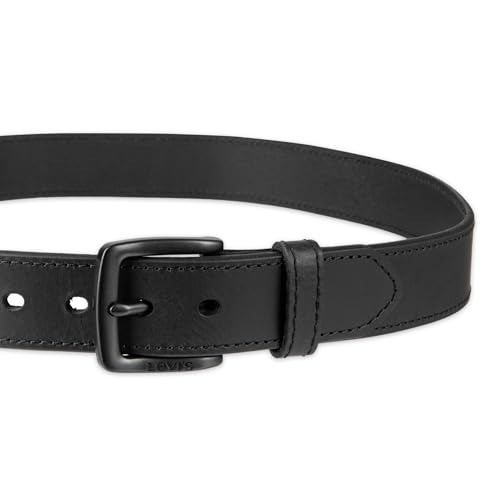
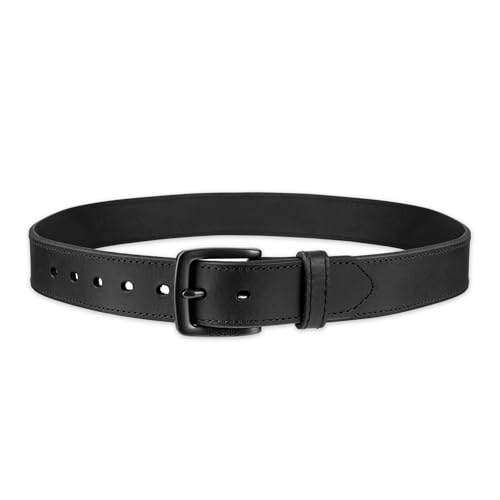
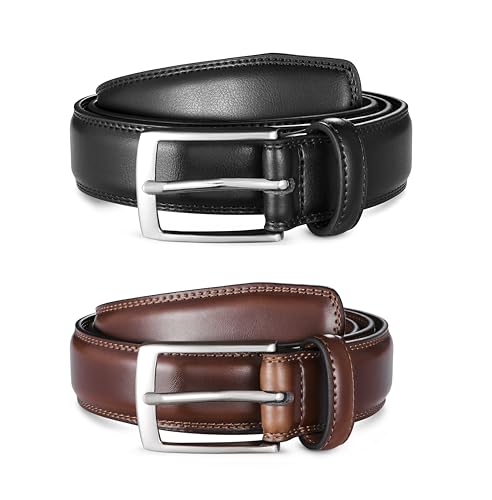
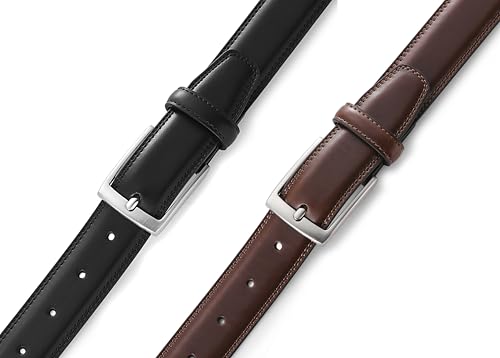
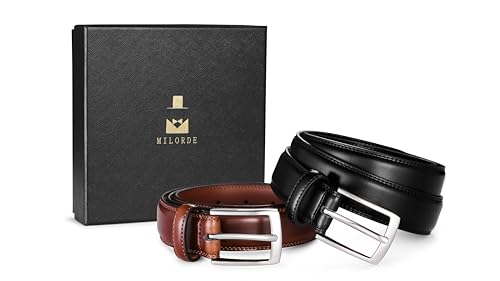
A two-pack of dress belts at this price is hard to ignore. Both belts are made from 100% cow leather with nickel-free zinc buckles, and owners confirm they arrive neatly boxed and consistent in quality. The 1.25-inch width is ideal for slimmer trousers, and the classic single-prong design keeps things clean under a suit.
While not full-grain, the leather holds polish well and works for business-casual environments. Compared to buying two separate belts, this set saves money and simplifies rotation. The downside? Some buyers report slight variation in hole alignment, and the leather doesn’t develop deep character over time. But as a practical, no-drama solution for regular wear, it fills a real niche.
Product photos


How We Picked These leather belts
To arrive at our recommendations, I focused on a research-led comparison of available leather belts. Rather than a hands-on lab test, I analyzed published specifications, paying close attention to leather type, construction details, and buckle quality. I then weighed owner reviews from across multiple retailers alongside assessments from respected style and gear publications. This process allowed me to build a holistic understanding of each belt’s strengths and weaknesses, evaluating them against clear criteria for material quality, durability, and value.
For leather belts, the most important factors are undeniably the leather itself and the quality of construction. Full-grain leather consistently emerged as the key indicator of longevity and how well a belt will age (developing patina rather than simply falling apart). Beyond that, robust stitching and a solid buckle are vital; a belt is only as strong as its weakest link, and those are often the points of stress.
Specifications reliably indicate leather thickness and buckle material, which are good starting points for assessing potential durability. However, owner feedback proved crucial for understanding real-world performance. Comments about how a belt holds up to daily wear, how comfortably it fits, and whether it truly matches the advertised color were all carefully considered. Reputation also factored in – brands with a long history of quality leather goods naturally carried more weight in my assessment.
—– INTERNAL LINKS (MANDATORY) —– …For serious leatherwork beyond just belt maintenance, exploring best leather sewing machines can unlock a world of possibilities….
Choosing The Right leather belts
A good leather belt is more than just a fastener; it’s a foundational piece of any well-considered wardrobe.
A quality leather belt should prioritize full-grain leather construction for longevity, possess robust stitching to withstand daily stress, and feature hardware appropriate for its intended use (work vs. dress). Look for belts with a consistent thickness throughout the strap and a buckle securely attached to the leather. Avoid belts described as “genuine” or “bonded” leather, as these are lower grades.
Leather Quality & Construction
The single biggest determinant of a belt’s lifespan and how it ages is the leather itself. Full-grain leather, as seen in options like the Carhartt and Wolksprong belts, is the gold standard. It retains the natural grain, making it stronger and more resistant to wear than corrected or top-grain leathers. Don’t be fooled by marketing terms; always verify the specific type of leather used. While top-grain can be acceptable, full-grain will develop a beautiful patina over time, becoming more characterful with each wear.
Buckle & Hardware Considerations
The buckle isn’t just for show; it’s a critical point of stress and a signal of overall quality. For work belts, a heavy-duty harness buckle (like those on the Carhartt and Timberland models) offers superior durability. Reversible belts, such as the CHAOREN, will naturally have simpler buckles to accommodate the dual functionality. Pay attention to how the buckle attaches to the strap. Riveted construction is preferable to glued or simply slotted attachments.
Adjustability and Value
Not every belt needs to be a perfect, custom fit, but a degree of adjustability is incredibly useful. Ratchet belts (like the KEMISANT) allow for precise sizing, accommodating fluctuations in weight or layering of clothing. If you prefer a traditional belt, be sure to follow sizing recommendations – many brands, like Levi’s and DOOPAI, advise ordering up a size from your waist measurement. Speaking of value, don’t dismiss two-packs like the MILORDE option; they can offer significant savings, especially if you wear belts frequently. If you’re looking to extend the life of any leather belt, consulting a leather conditioner guide can help keep it supple and prevent cracking.
- A simple prong buckle is fine for casual wear but may not hold up under heavy use.
- Ratchet buckles provide a very precise fit, but some find the mechanism less durable long-term.
- Harness buckles are the most robust option, ideal for work or heavy-duty applications and often found on belts designed for demanding tasks.
A belt should fit snugly, not tightly. You should be able to comfortably slide two fingers between the belt and your waist.
Leather Belts Compared
Here’s a comparison of key specifications for the leather belts featured.
| Product Name | Leather Type | Width (in) | Buckle Type | Reversible | Pack Count |
|---|---|---|---|---|---|
| Carhartt Saddle Leather | Full-Grain | 1.5 | Harness | No | 1 |
| wolksprong Full Grain | Full-Grain | 1.5 | Vintage Brass | No | 1 |
| Timberland Classic | Genuine | N/A | Antique | Yes | 1 |
| CHAOREN Reversible | Genuine | N/A | N/A | Yes | 1 |
| KEMISANT Ratchet | Genuine | 1.375 | Ratchet | No | 2 |
| DOOPAI Full Grain | Genuine | 1.5 | Single Prong | No | 1 |
| Levi’s Casual | N/A | 1.5 | Harness | No | 1 |
| MILORDE Leather Dress | Genuine | 1.25 | Single Prong | No | 2 |
Frequently Asked Questions
What leather type offers the best long-term value in a belt?
Full-grain leather is the best choice for durability and aging, as it retains the natural grain and develops a patina over time. While other options exist, belts made with full-grain leather, like the Carhartt and Wolksprong models, will simply outlast those made with corrected or bonded leather.
How should a leather belt fit?
A leather belt should fit snugly, but not tightly, allowing you to comfortably slide two fingers between the belt and your waist. An improperly sized belt will not only be uncomfortable but can also stress the leather and hardware, reducing its lifespan.
Are ratchet belts as durable as traditional buckle belts?
Ratchet belts offer a precise fit, but some owner feedback suggests the ratcheting mechanism may be less durable long-term compared to a solid harness buckle. For everyday wear, they are generally acceptable, but for heavy-duty use, a traditional buckle is recommended.
What buckle type is best for work or rugged use?
A heavy-duty harness buckle, as found on the Carhartt and Timberland belts, provides the greatest durability for work or demanding applications. These buckles are designed to withstand significant stress and are far more robust than simpler prong buckles.
Is buying a two-pack of belts a good value?
Two-packs, like the MILORDE or KEMISANT options, can offer significant savings, especially if you wear belts frequently or like to have one for different outfits. This is a practical approach for those who want multiple belts without a substantial investment.
The Bottom Line
Choosing a leather belt often comes down to balancing upfront cost with long-term durability. If you want a belt that will truly last and develop character, the Carhartt Saddle Leather belt stands out as the strongest overall choice with its full-grain construction and reliable harness buckle. It represents a smart investment in quality.
For those with specific needs, we have a few clear recommendations. The KEMISANT Ratchet belt is ideal if a precise, adjustable fit is your priority, while the CHAOREN Reversible belt offers excellent versatility for different outfits. If you’re looking for value, the MILORDE Leather Dress belt (in a two-pack) provides a practical and economical option.
Ultimately, remember that the type of leather matters more than any single feature. Prioritize full-grain leather whenever possible, and look for solid construction, a well-made belt, even a simpler one, will always outperform a poorly constructed one made from inferior materials.
