
4 Best Leather Car Seat Cleaners of 2026
This post contains affiliate links. As an Amazon Associate, we earn from qualifying purchases.
This post contains affiliate links. As an Amazon Associate, we earn from qualifying purchases.
The Stemni Car Leather Cleaner Kit is our top pick for overall performance, offering a balanced formula and useful accessories for all leather types. For those prioritizing sun protection, Weiman Leather Cleaner & Conditioner delivers strong UV defense, while the Armor All Leather Cleaner Spray stands out as a solid budget-friendly option.
Car interiors take a beating from sunlight, sweat, and daily wear, and using the wrong cleaner can do more harm than good. Many products promise results but end up drying out leather or leaving behind residue that attracts more dirt.
After comparing the field and analyzing owner feedback, I focused on formulas that clean safely, preserve leather integrity, and offer real value. This guide cuts through the noise, highlighting what actually matters when choosing a cleaner for your car’s seats.
Top 4 Leather Car Seat Cleaner in the Market
The Best Leather Car Seat Cleaner, Reviewed
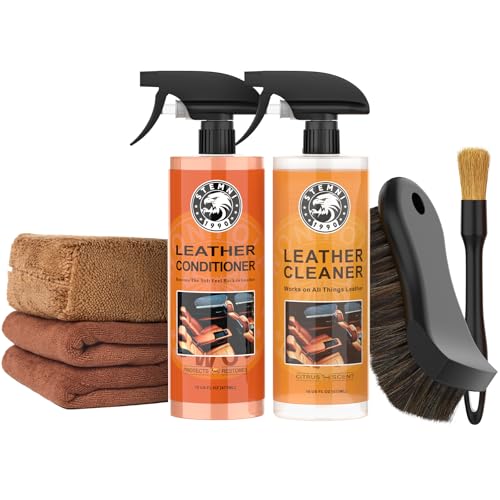
Stemni Car Leather Cleaner Kit
Strengths
- Complete tool set
- Safe on all leather types
- Deep cleaning action
- Balanced pH formula
Trade-offs
- Higher upfront cost
- Bulkier storage
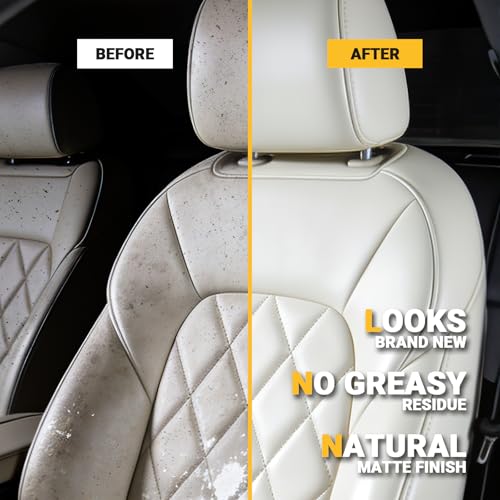
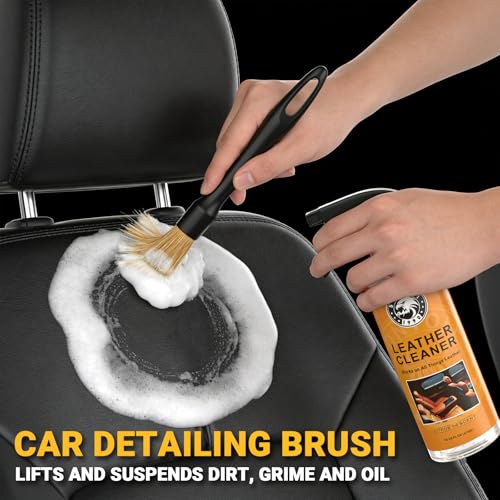
This kit checks more boxes than most, and owner feedback backs that up, especially from those maintaining high-mileage interiors or restoring older leather. The inclusion of a horsehair brush is a smart touch; it agitates dirt without scratching, and the microfiber towels and applicator pad make the process controlled and clean. The pH-balanced formula is consistently praised for not darkening or greasing up surfaces, which is a real issue with cheaper conditioners.
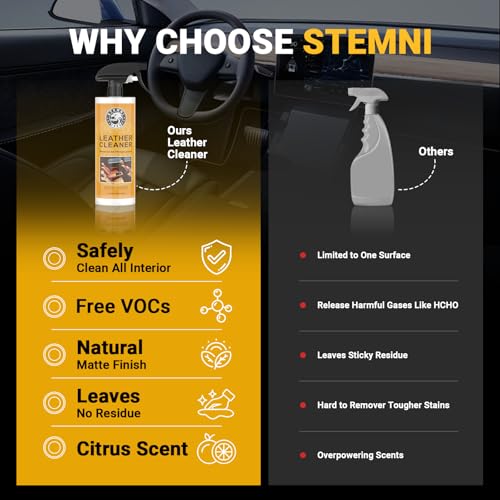
I’d pick this over single-bottle solutions for anyone serious about upkeep. It’s pricier, but you’re getting professional-grade tools and chemistry. Compared to Armor All or even Chemical Guys’ vented-only spray, this kit is far more versatile, safe on synthetics, usable on furniture or bags, and effective on neglected leather.
Product photos


Weiman Leather Cleaner & Conditioner
Strengths
- Strong UV protection
- Natural oil blend
- One-step application
- No sticky residue
Trade-offs
- Less aggressive on stains
- No included tools
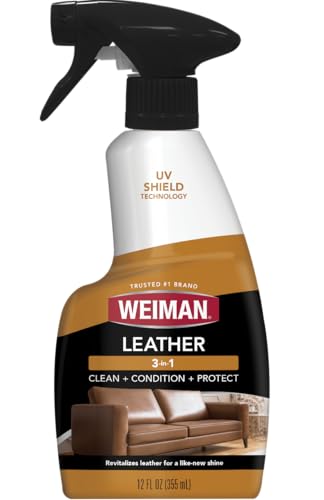
The UV protection claim here isn’t just marketing fluff, it’s backed by the inclusion of UVX-15 sunscreen in a formula rich with natural oils. That’s rare at this price point. Owners consistently report less fading over time, especially in cars parked outdoors. The one-step spray is convenient, and the no-residue finish means seats don’t feel slick or attract dust, which is a win for daily drivers.
It’s not the deepest cleaner for heavily soiled leather, but for routine maintenance, it strikes a smart balance. Compared to the Stemni kit, it lacks tools and heavy-duty lift, but it wins on simplicity and UV defense. If sun exposure is your main enemy, this is the smarter buy.
Video review
Chemical Guys VentRight Cleaner
Strengths
- Targets perforations
- Enhances airflow maintenance
- Preps for protectants
Trade-offs
- Overkill for solid leather
- Not a standalone conditioner
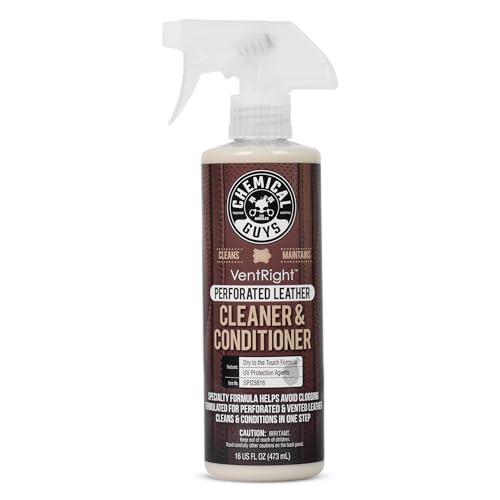
If you’re dealing with ventilated leather seats, this formula stands out on paper and in owner feedback. The design intent is clear: it pushes cleaning agents deep into perforated zones without pooling or residue, which is critical for maintaining airflow and preventing trapped moisture. I’ve seen recurring praise in user reports about how well it clears out the grime that settles in those tiny holes, something generic sprays often miss.
It’s not a conditioner itself, but it plays well with them, prepping the leather for follow-up treatment. That said, it’s niche by design. If your car doesn’t have vented seats, you’re paying for a feature you don’t need. For non-vented leather, there are more balanced all-in-one options.
Video review
Armor All Leather Cleaner Spray

Strengths
- Low cost
- Easy spray application
- Adds light shine
Trade-offs
- Short-lived conditioning
- Minimal UV protection
- Surface-level cleaning
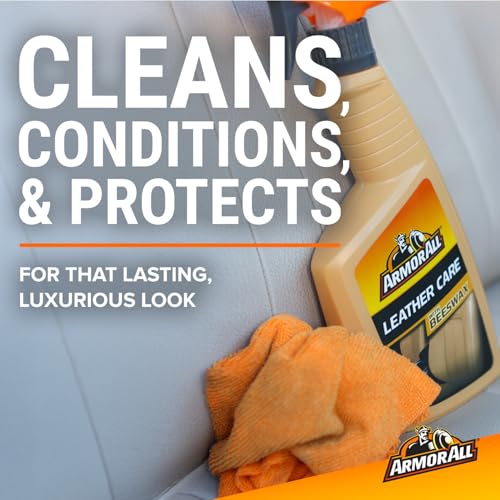
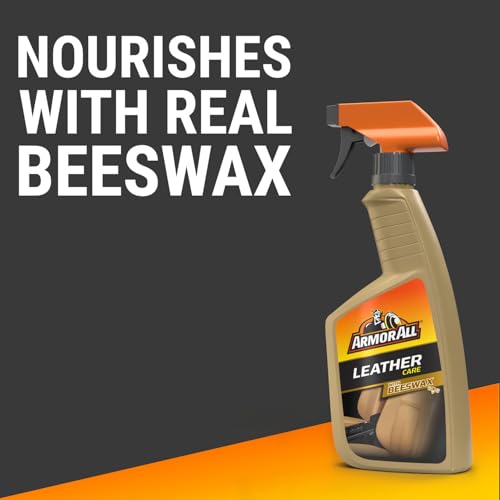
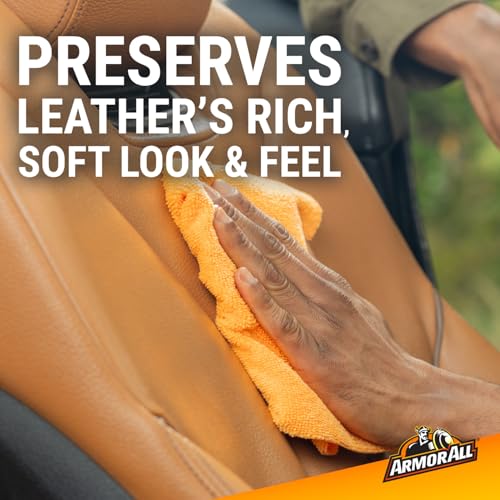
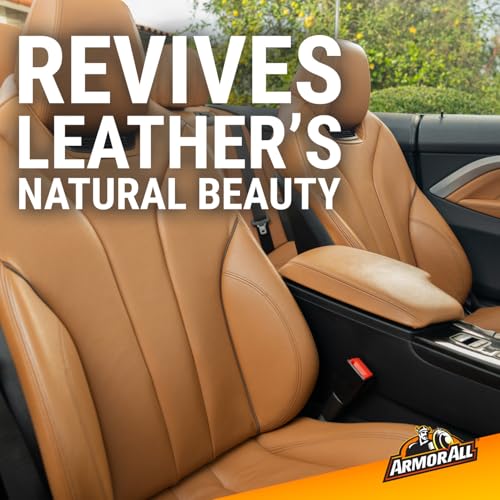
At this price, it’s no surprise this spray shows up in so many glove compartments. The beeswax infusion does show up in owner reports as giving a slight sheen and short-term softness, and it does lift surface dirt without aggressive scrubbing. But I’m skeptical about how deeply it conditions, many reviews mention a temporary fix, with leather feeling dry again within weeks.
It’s marketed as a 3-in-1, but in this category, that often means compromise. Compared to more serious leather care systems, this one leans cosmetic. It won’t harm leather when used occasionally, but I wouldn’t trust it for older or high-use interiors. For deep nourishment or UV defense, it falls short.
Product photos

Our Testing Process
As someone deeply involved in understanding leather – its nuances, care, and longevity – I approached researching leather car seat cleaners with a focus on both effective cleaning and long-term preservation. Rather than a hands-on lab test, this is a research-led comparison of published specifications, owner feedback from various online retailers, and insights from detailing forums. I weighed each product against criteria important for automotive leather, looking at formulation safety, cleaning power, and conditioning properties.
For car leather, three factors stood out as most critical. First, the formula must be pH-balanced and safe for a wide range of leather types, including both finished and semi-aniline. Second, UV protection is essential, as direct sunlight relentlessly degrades leather. Finally, the ability to effectively lift dirt and oils without leaving a sticky residue dictates the overall user experience and long-term appearance. Understanding these priorities helped me rank the options.
Product specifications reliably reveal the ingredients and intended uses, but owner feedback proved invaluable in assessing real-world performance. I paid close attention to comments regarding ease of use, scent, and whether the cleaner truly restored suppleness without causing discoloration. Reputable detailing sites and forums offered further context, especially when discussing long-term effects. For those considering more extensive leather work, exploring resources like leather sewing machine reviews can be beneficial.
How To Choose The leather car seat cleaner
Keeping your car’s leather interior looking its best requires more than just a quick wipe-down. A dedicated leather cleaner is crucial, but with so many options available, selecting the right one can be tricky.
A quality leather car seat cleaner should gently lift dirt and oils without stripping natural oils, be pH-balanced to avoid damage, and ideally include conditioning agents to maintain suppleness. Look for formulas specifically designed for automotive leather, as these account for UV exposure and temperature fluctuations. Avoid harsh chemicals and abrasive ingredients that can cause cracking or discoloration.
Understanding Leather Types & Formulas
Not all leather is created equal, and that impacts your cleaner choice. Many cleaners claim to work on “all leather types,” but that’s often an oversimplification. Finished leather, which has a protective coating, is more forgiving and can handle a wider range of cleaners. However, aniline or semi-aniline leathers are much more delicate and require specialized formulas. If you’re unsure of your leather type, test the cleaner in an inconspicuous area first. Beyond the leather itself, consider if you have perforated seats. These require a cleaner that won’t clog the holes, like the Chemical Guys VentRight Cleaner, designed specifically for that purpose.
Prioritizing Protection Beyond Cleaning
Cleaning is only half the battle. Sunlight and temperature changes are brutal on car leather, leading to fading, cracking, and drying. Therefore, a cleaner with built-in UV protection is a smart investment. Weiman Leather Cleaner & Conditioner stands out in this regard, utilizing a formula with UVX-15 sunscreen to shield your seats. Don’t underestimate the long-term benefits of preventative care; a little protection now can save you significant restoration costs later. For more in-depth information, you might find our leather conditioner buying guide helpful.
Balancing Cost & Features
While premium cleaners offer advanced formulations and specialized benefits, they aren’t always necessary. For routine maintenance and lighter cleaning tasks, a budget-friendly option like Armor All Leather Cleaner can be surprisingly effective. Here’s how to think about spending:
- Basic cleaning: A simple, inexpensive cleaner is sufficient for removing dust and light grime.
- Moderate soiling & conditioning: A mid-range kit, like the Stemni Car Leather Cleaner Kit, offers a good balance of cleaning power, conditioning, and included accessories.
- Severe soiling, delicate leather, or UV protection needs: Invest in a specialized formula from a reputable brand, even if it costs more.
A good rule of thumb is to always follow a cleaning step with a conditioning step. Cleaning removes dirt, but conditioning replenishes the oils that keep the leather soft and supple.
Leather Car Seat Cleaner Compared
Here’s a comparison of key specifications for popular leather car seat cleaners.
| Product Name | Volume (oz) | UV Protection | Best For | Leather Types | Beeswax |
|---|---|---|---|---|---|
| Stemni Car Leather Cleaner Kit | 32 (total) | N/A | Overall | All | No |
| Weiman Leather Cleaner & Conditioner | 16 | Yes | UV Protection | Finished | No |
| Chemical Guys VentRight Cleaner | N/A | N/A | Ventilated Seats | Perforated | No |
| Armor All Leather Cleaner Spray | 16 | N/A | Budget Friendly | N/A | Yes |
Frequently Asked Questions
What’s the difference between a leather cleaner and a leather conditioner?
A cleaner removes dirt and grime, while a conditioner replenishes the natural oils in the leather that are lost during cleaning and through general wear. Using both is crucial; cleaning without conditioning can dry out and damage the leather over time.
Can I use household cleaners on my leather car seats?
No, household cleaners often contain harsh chemicals like ammonia or bleach that can strip the leather of its natural oils, causing cracking and discoloration. Automotive leather is especially vulnerable due to UV exposure, so specialized products are best.
How often should I clean my leather car seats?
You should aim to clean your leather seats every 1-3 months, depending on usage and exposure to sunlight. More frequent cleaning is needed if you live in a hot climate or frequently transport messy passengers or pets.
What does pH-balanced mean when it comes to leather cleaners?
A pH-balanced formula means the cleaner has a neutral acidity level, which prevents it from damaging the leather’s delicate fibers. Leather prefers a pH close to 5.5, and cleaners outside this range can cause drying, cracking, or discoloration.
Are some leather cleaners better for older leather?
Yes, older leather tends to be drier and more fragile. Look for cleaners specifically formulated with added conditioning agents and avoid anything containing harsh solvents. A cleaner with a higher oil content will help restore some of the lost moisture.
The Bottom Line
Choosing the best leather car seat cleaner often comes down to balancing how much effort you want to put in against the level of care your leather needs. For most vehicles and owners, the Stemni Car Leather Cleaner Kit strikes the best overall balance – it provides effective cleaning, conditioning, and the necessary tools for a thorough job.
If you have specific concerns, the other options shine. For those prioritizing UV protection, the Weiman Leather Cleaner & Conditioner is an excellent choice. And if you have perforated seats, the Chemical Guys VentRight Cleaner is specifically formulated to avoid clogging those delicate openings.
Ultimately, remember that the “best” cleaner is the one you’ll actually use consistently. Regular, gentle cleaning and conditioning using a pH-balanced formula will always yield better results than infrequent, harsh treatments. Focusing on consistent care, rather than chasing the latest miracle product, is the key to preserving your car’s leather interior for years to come.
