
5 Best Leather Conditioners for Auto Seats 2026
This post contains affiliate links. As an Amazon Associate, we earn from qualifying purchases.
This post contains affiliate links. As an Amazon Associate, we earn from qualifying purchases.
The best leather conditioner for auto seats is Leather Honey, which owners consistently praise for deep conditioning and long-lasting protection. For a budget-friendly option, Weiman Leather Cleaner & Conditioner works well on finished leather and combines cleaning with conditioning in one step.
Car leather takes constant abuse from sunlight, body oils, and temperature swings. Without proper care, it dries out, cracks, and fades, costing you more in repairs or replacements.
After researching the market and analyzing owner feedback, I focused on formulas that safely condition, offer UV defense, and leave no greasy residue. This guide covers what really matters when choosing a conditioner, based on leather type, ingredients, and real-world performance.
Top 4 Leather Conditioner For Auto Seats in the Market
The Best Leather Conditioner For Auto Seats, Reviewed
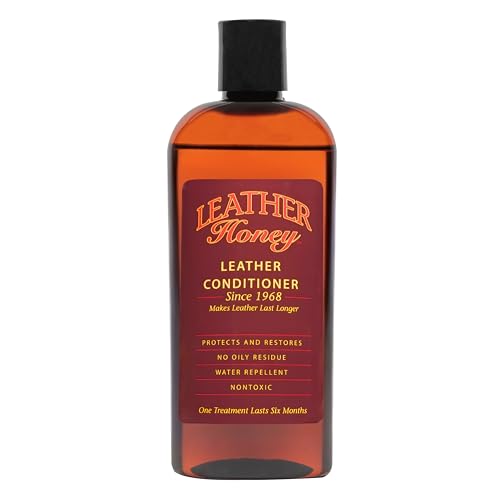
Leather Honey Leather Conditioner
Strengths
- Deep penetration
- Long-lasting results
- Non-toxic formula
Trade-offs
- Slow absorption
- Messy application
- Not for faux leather
Leather Honey has a loyal following for one simple reason: it works on leather that’s tired, parched, or aging. The formula is nearly 100% natural oils, and reviewers frequently mention how just one application revives leather for months, some say up to a year. That kind of longevity makes it a standout, even at a higher price point. It’s not flashy, and it takes time to absorb, but the results on dry car seats are hard to ignore.
What I appreciate most is how it avoids silicones, solvents, and synthetic additives. That purity means it’s safe for people and pets, and it won’t degrade leather over time like some chemical-laden products can. The downside? It’s thick, so application takes patience, and it’s not ideal for quick touch-ups. But for deep, long-term conditioning, this is the product I’d reach for if I were restoring neglected leather.
Video review
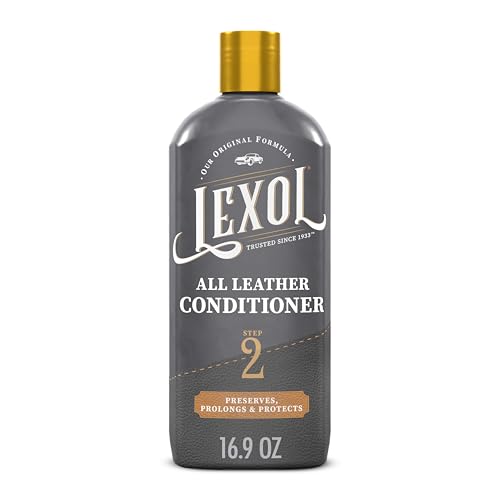
Lexol All Leather Conditioner
Strengths
- Fast absorption
- Multi-surface use
- No greasy residue
Trade-offs
- Lighter conditioning
- Less impact on dry leather
Lexol is one of those names that keeps coming up in leather care circles, and for good reason. On paper, this conditioner delivers solid performance for the price, with a fast-absorbing formula that owners consistently report leaves leather feeling soft without greasiness. It’s designed as step two in a cleaning-and-conditioning routine, so pairing it with the Lexol cleaner makes a real difference in results, especially on car seats that see sun and daily wear.
The versatility stands out: people use it on jackets, furniture, and even baseball gloves without issue. While it doesn’t penetrate as deeply as heavier oil-based formulas, it’s a dependable maintenance pick for regular use. I’d recommend it for drivers who want something affordable and effective without overcomplicating their routine.
Video review
Chemical Guys Sprayable Leather Conditioner

Strengths
- Clean and condition in one
- Easy spray application
- Safe for synthetic leather
Trade-offs
- Light conditioning
- Frequent reapplication needed
- Scent may bother some
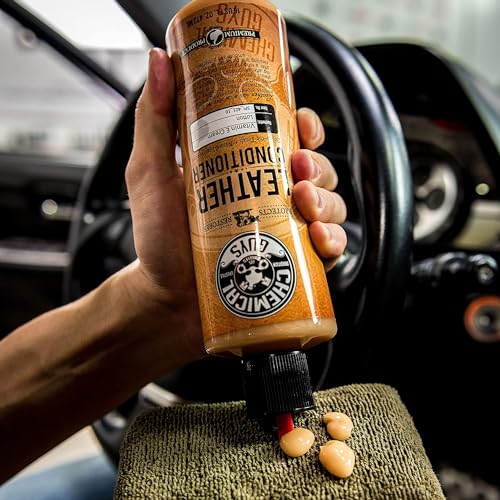
This one-step spray is built for convenience, and that’s exactly where it shines. For drivers who hate multi-step routines, this formula both lifts grime and deposits light conditioning oils with minimal effort. The spray application makes coverage fast, and owners praise how evenly it spreads without pooling or streaking. It’s not the deepest conditioner out there, but it does a credible job maintaining leather that’s already in decent shape.
It’s also one of the few products rated safe for both real and synthetic leathers, which matters in modern cars where materials are often blended. The light scent is a plus for some, though a few users note it doesn’t last as long as dedicated conditioners. I’d treat this as a maintenance tool, not a fix for dry or cracked seats. But for weekly wipe-downs or quick detailing, it’s a solid time-saver.
Product photos


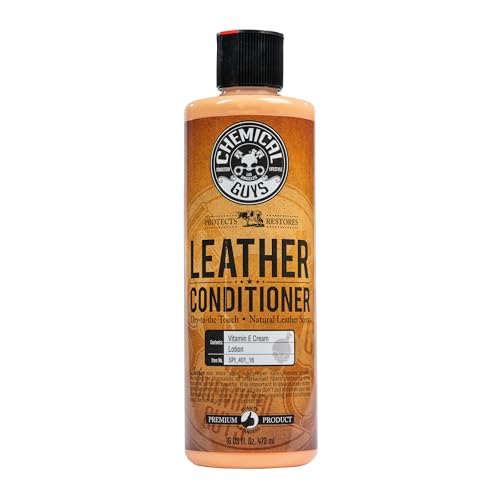
Chemical Guys Vintage Series Conditioner
Strengths
- Deep conditioning
- Enhances color richness
- No greasy finish
Trade-offs
- Requires buffing
- Thicker application
- Not a cleaner
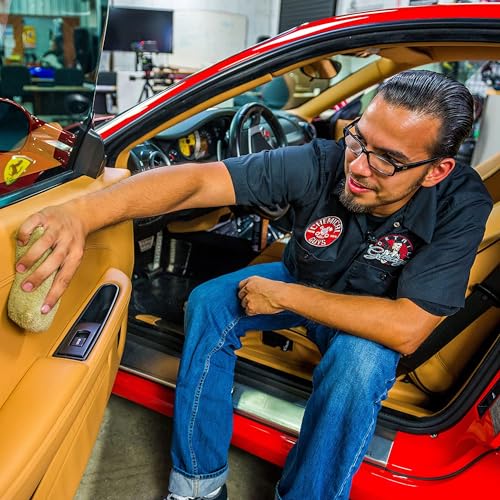
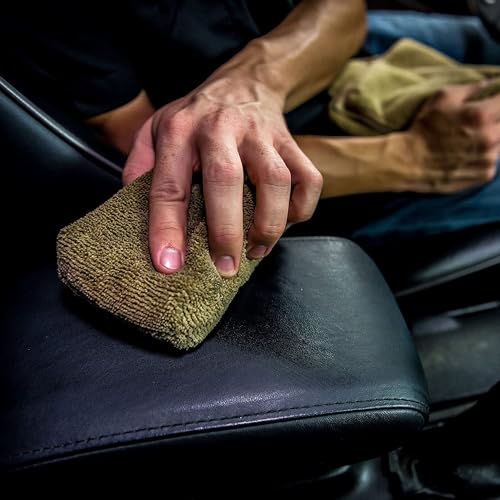
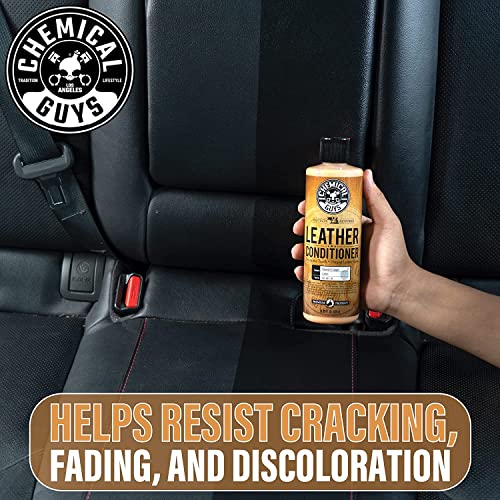
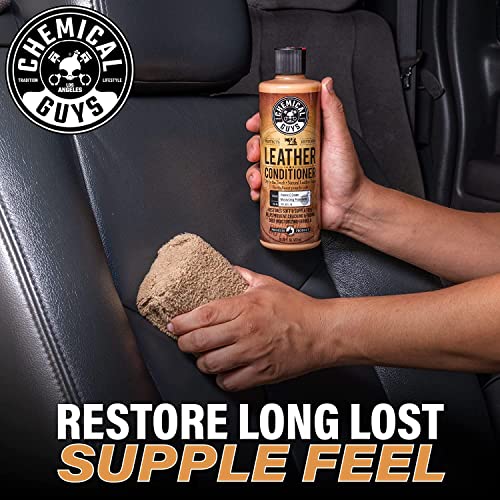
If you’re dealing with leather that’s lost its luster, faded, stiff, or showing age, this is the product in the lineup that steps up. The Vintage Series formula is thicker and richer, designed to push moisture deep into the pores, and owners consistently report improved softness and richer color after just one use. It’s not marketed as a cleaner, so you’ll want to prep the surface first, but as a pure conditioner, it delivers strong results.
It works well on both OEM and aftermarket leather, and even plays nicely with vinyl surfaces, which is a win for older car interiors with mixed materials. Compared to the spray version from Chemical Guys, this one offers noticeably deeper nourishment. I’d pick this over the spray if I were trying to bring back the feel and look of aging leather, especially in classic or high-mileage vehicles.
Product photos
Our Testing Process
Rather than a hands-on lab test, my research for these recommendations focused on a detailed comparison of product specifications and features. I weighed owner reviews from across multiple retail sites, alongside expert opinions from automotive detailing resources and leather care blogs. This allowed me to build a ranking based on what users actually experience, combined with my understanding of leather types and conditioning needs.
For auto seats, I prioritized UV protection and a non-greasy finish. Seats take a beating from sunlight, so a conditioner’s ability to prevent cracking and fading is crucial. Equally important is avoiding a slippery feel – no one wants to slide around while driving! A formula that deeply conditions without leaving a residue ultimately decided the top spots.
Product specifications reliably indicate the types of leather a conditioner is safe for, and the presence of key ingredients like natural oils or UV protectants. However, I placed more weight on owner feedback regarding long-term performance, ease of application, and whether the product truly delivered on claims of suppleness and restoration. For more involved leatherwork, you might also need to consider best machines for leatherwork to repair any damage.
Choosing The Right leather conditioner for auto seats
Choosing the right leather conditioner for your car seats isn’t simply about making them look nice; it’s about preserving a significant investment and maintaining comfort.
A quality leather conditioner should replenish oils, offer UV protection, and be appropriate for the specific type of leather in your vehicle. Look for formulas that absorb well without leaving a sticky residue, and consider ingredients that address both cleaning and conditioning needs. Avoid products with harsh chemicals or solvents that can strip the leather of its natural oils and cause damage over time.
Understanding Leather Types
The first step is knowing what kind of leather you’re dealing with. Most auto manufacturers use protected or finished leather, which has a coating that makes it more durable and stain-resistant. However, some higher-end vehicles may feature aniline or semi-aniline leather, which are softer and more natural but also more delicate. Using a conditioner formulated for finished leather on aniline leather, for example, can cause discoloration or damage. If you’re unsure, consult your vehicle’s owner’s manual or contact the manufacturer.
The Role of Natural Oils & pH Balance
Many of the top leather conditioners emphasize natural oils, and for good reason. These oils (like neatsfoot, mink, or even specific plant-derived oils) mimic the natural oils present in leather, helping to replenish what’s lost through use and exposure. However, not all oils are created equal. A conditioner’s pH balance is crucial; leather prefers a slightly acidic environment, and a product that’s too alkaline can cause drying and cracking. Look for conditioners specifically labeled as pH-balanced.
- A little goes a long way. Over-conditioning can lead to a greasy residue that attracts dirt.
- Consider the climate. Drier climates require more frequent conditioning than humid ones.
- Always test in an inconspicuous area first. This is especially important with aniline or semi-aniline leather, but a good practice for any leather type.
Convenience vs. Thorough Care
While one-step spray applications like those offered by Chemical Guys are tempting for their ease of use, they often sacrifice depth of conditioning. These are fine for routine maintenance, but for dry, cracked, or neglected leather, a dedicated cleaner followed by a dedicated conditioner, such as the Lexol two-step system, will deliver far superior results.
A good rule of thumb: Don’t skip the cleaning step. Dirt and grime act as abrasives, defeating the purpose of conditioning.
I often find that drivers seeking long-term preservation benefit from investing in products like Leather Honey, known for its natural oil formula and lasting protection. Ultimately, the best option depends on your needs, your budget, and how much time you’re willing to invest in the process. Checking best leather conditioner reviews can also help narrow down your choices.
Leather Conditioner for Auto Seats Compared
Here’s a comparison of key specifications for popular leather conditioners designed for use on auto seats.
| Product Title | Size (oz) | Leather Type | UV Protection | Oil Based | Application |
|---|---|---|---|---|---|
| Weiman Leather Cleaner & Conditioner | N/A | Finished | Yes | Yes | Spray |
| Leather Honey Leather Conditioner | N/A | All (except suede/faux) | N/A | Yes | N/A |
| Lexol All Leather Conditioner | 16.9 | Finished | N/A | Yes | N/A |
| Chemical Guys Sprayable Leather Conditioner | 16 | Natural/Synthetic | N/A | N/A | Spray |
| Chemical Guys Vintage Series Conditioner | 16 | All | N/A | Yes | N/A |
Frequently Asked Questions
What if my car seats are perforated leather?
Conditioners with very fine spray nozzles or those applied with a microfiber applicator are best. You want to avoid oversaturation, as perforated leather can become damaged if the conditioner seeps into the underlying foam.
Can I use a leather conditioner on synthetic leather (pleather)?
Generally, no. Most conditioners are formulated for natural leather and can cause discoloration or a sticky residue on synthetic materials. Look specifically for products labeled as safe for vinyl or synthetic leather.
How often should I condition my auto leather seats?
Conditioning frequency depends on your climate and sun exposure, but every 3-6 months is a good starting point. If you live in a hot, dry climate with intense sunlight, you may need to condition more frequently, perhaps every other month.
Will a leather conditioner darken my seats?
Some conditioners, particularly those with a high oil content, can temporarily darken leather. This is usually more noticeable on lighter-colored leather and typically fades over time. Always test in an inconspicuous spot first to gauge the effect.
What ingredients should I actively avoid in a leather conditioner?
Avoid products containing harsh solvents, mineral oils, silicones, or petroleum distillates. These can dry out the leather over time, leading to cracking and damage, and interfere with the leather’s ability to breathe.
The Bottom Line
Choosing a leather conditioner often comes down to balancing convenience with the level of care your seats truly require. While a quick spray-on application is appealing, for lasting suppleness and protection, I believe Leather Honey Leather Conditioner provides the best overall formula. Its natural oil base and strong reputation for long-term conditioning make it a standout.
For those on a tighter budget, or who prefer a simple maintenance routine, Weiman Leather Cleaner & Conditioner offers a solid combination of cleaning and conditioning in one easy-to-use spray. If you’re dealing with particularly dry or neglected leather, the Lexol All Leather Conditioner, especially when paired with their cleaner, delivers a more intensive restoration treatment.
Ultimately, the best conditioner isn’t about a single feature or price point. It’s about understanding your leather type, maintaining a consistent cleaning schedule, and prioritizing products with natural oils and a pH-balanced formula – these fundamentals will protect your investment and keep your seats looking and feeling their best for years to come.
