
4 Best Leather Conditioners for Boots 2026
This post contains affiliate links. As an Amazon Associate, we earn from qualifying purchases.
This post contains affiliate links. As an Amazon Associate, we earn from qualifying purchases.
The best overall leather conditioner for boots is Leather Honey Leather Conditioner, it deeply nourishes without waxes or silicones and works across most leather types. For a heavy-duty option built to withstand extreme conditions, Obenauf’s Heavy Duty LP stands out, while Bick 4 is the top choice if you want a lightweight, wax-free formula that won’t darken leather.
Boots are an investment, and neglecting their care leads to dryness, cracking, and premature wear. Many conditioners promise results but deliver greasy residues, color changes, or short-lived protection. As someone who’s studied leather for years, I know the right product must do more than just moisturize, it has to preserve the material’s integrity over time.
This guide cuts through the noise by focusing on formulations proven to condition effectively, resist water, and maintain breathability. Our picks are based on ingredient quality, real-world feedback from long-term users, and compatibility with common boot leathers like full-grain and chrome-tanned hides.
Top 4 Leather Conditioner For Boots in the Market
The Best Leather Conditioner For Boots, Reviewed
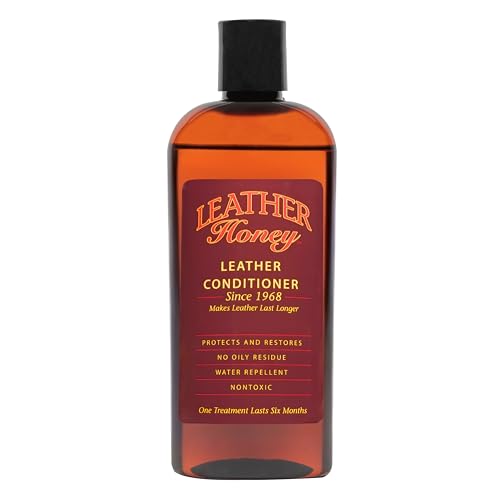
Leather Honey Leather Conditioner
Strengths
- Deep, long-lasting penetration
- Water and salt resistant
- Safe for light-colored leather
Trade-offs
- Thick, slow absorption
- Requires thorough buffing
- Over-application risks greasiness
Leather Honey delivers on its bold claim: one application lasts months. That longevity isn’t marketing fluff, it’s confirmed across hundreds of owner reports, from truckers treating seat covers to motorcyclists protecting jackets. The formula penetrates deeply, reviving leather that’s gone stiff or faded, and once it sets, it resists water, salt, and drying better than almost any competitor. It’s also one of the few conditioners safe for white and light leathers without staining, provided it’s buffed well.
It’s thicker than Bick 4 or Frye’s offering, so it demands patience during application. Some users note a temporary darkening until it fully absorbs. But compared to Obenauf’s, it leaves less stiffness and no waxy buildup. For me, this strikes the best balance between deep restoration and long-term defense. If I had to pick one bottle to cover boots, furniture, and car interiors, this would be it.
Video review
Obenauf’s Heavy Duty LP Leather Conditioner

Strengths
- Extreme water resistance
- Long-lasting protection
- Natural, non-toxic ingredients
Trade-offs
- Can darken leather
- Heavy application
- Slight stiffness if overused
When durability is the mission, Obenauf’s isn’t just an option, it’s a benchmark. This is the go-to for people who work in wet, abrasive environments: firefighters, ranchers, loggers. The beeswax and propolis formula creates a moisture-resistant barrier while feeding oils deep into the fiber, and owners consistently report boots lasting years longer with regular use. Unlike silicone-based conditioners that sit on top, this one works from within and keeps working thanks to its slow-release action.
It’s heavy, yes. It can darken leather slightly, and it takes effort to apply evenly. But that’s the trade-off for armor-like protection. Compared to Bick 4, it’s the opposite philosophy: not preservation through neutrality, but through fortification. I’d use this on work boots, hiking gear, or anything regularly exposed to rain, mud, or UV. Just don’t expect finesse, this is functional excellence.
Video review
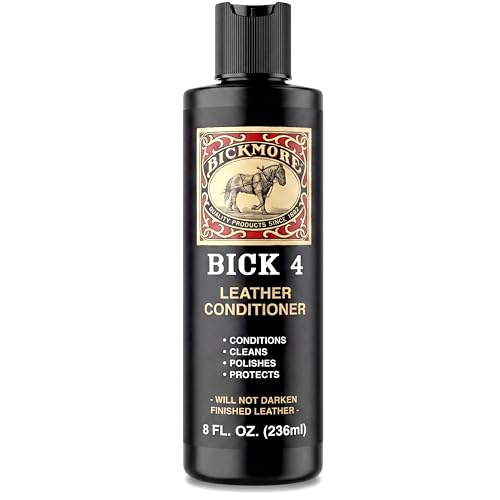
Bick 4 Leather Conditioner & Cleaner 8 oz
Strengths
- Won’t darken leather
- Wax-free formula
- Easy one-step use
Trade-offs
- Mild conditioning effect
- Not for severely dry leather
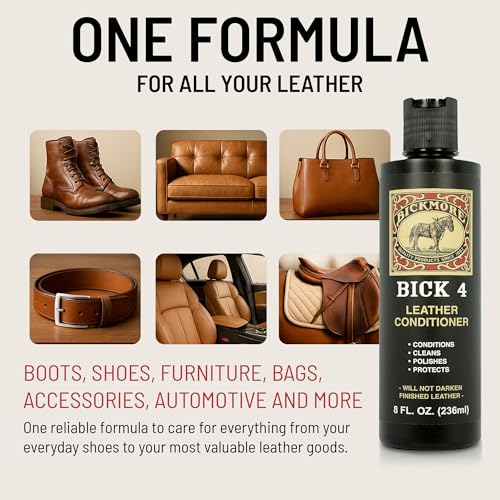
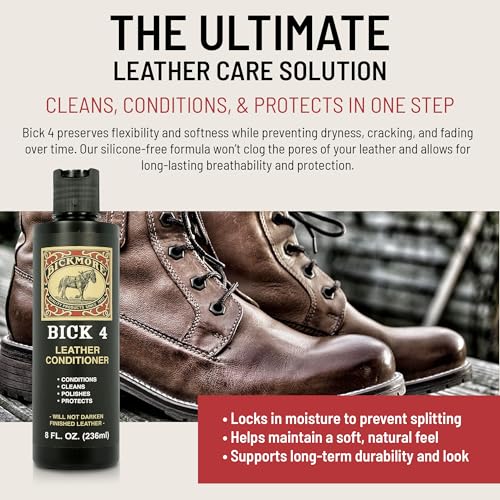
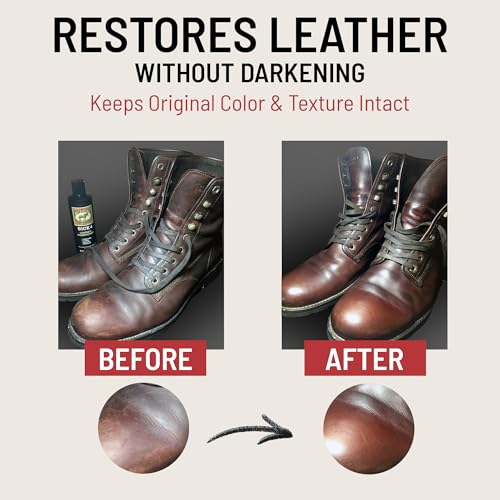
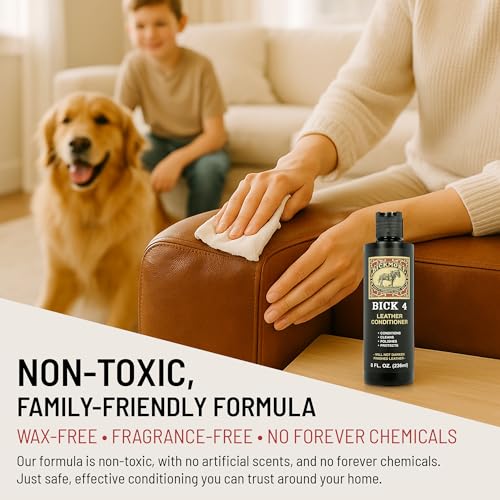
I’ve seen Bick 4 come up again and again in conversations among leather owners who want something safe, predictable, and effective without altering their leather’s look. The big selling point here, its refusal to darken leather, is backed by consistent owner feedback, especially from those maintaining lighter-colored boots or premium finishes where even slight tinting would be a dealbreaker. It’s not the most aggressive conditioner on the market, but that’s by design. For routine upkeep on smooth, finished leathers, it does exactly what it promises: cleans lightly, conditions moderately, and stays invisible.
Where it really stands out is breathability and compatibility. Because it’s completely wax-free, it won’t clog pores or build up over time, which matters for leather that needs to flex and breathe, like boot uppers or glove-soft jackets. Compared to heavier options like Obenauf’s or Leather Honey, it’s less of a deep rescue and more of a long-term wellness plan. I’d reach for this as a daily driver conditioner, not a triage treatment.
Product photos

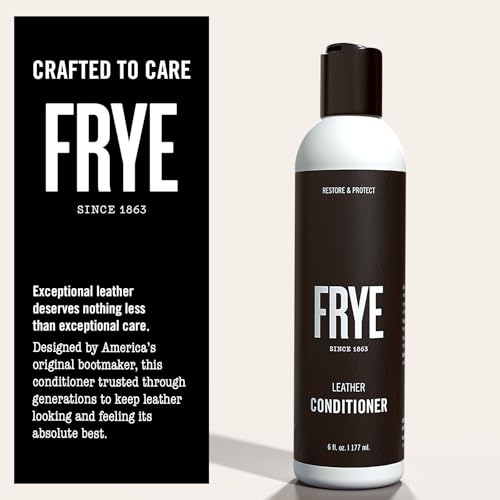
Frye Leather Conditioner 6oz

Strengths
- Clean, non-greasy finish
- Safe for vintage leather
- Non-toxic, made in USA
Trade-offs
- Limited penetration
- Brand-specific branding
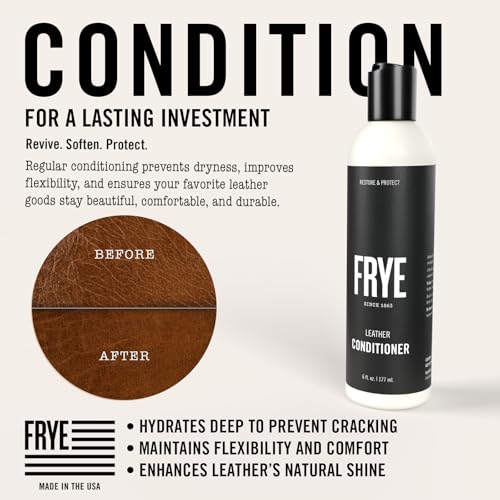
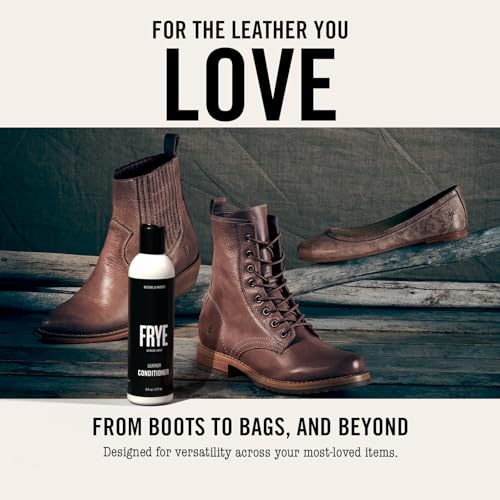
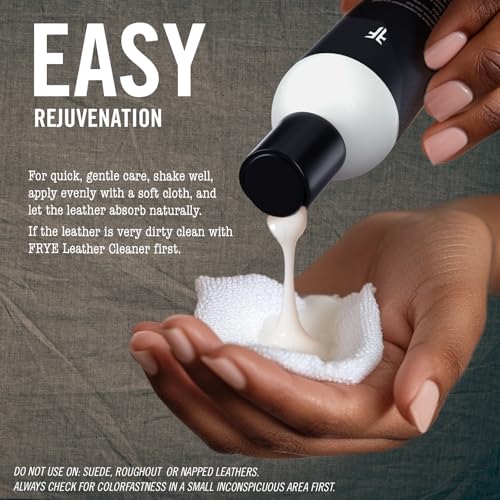
Frye’s conditioner feels like a brand-specific solution that works well beyond its namesake. While it’s marketed toward FRYE products, owners report strong results on other premium full-grain leathers, particularly dress boots and vintage pieces where finish integrity matters. It conditions without greasiness, which is critical when you’re dealing with polished surfaces that could lose their sheen under heavier treatments. The formula is non-toxic and residue-free, aligning with modern expectations for household-safe care.
That said, it’s not a miracle worker on damaged leather. It smooths minor scuffs and dry patches but doesn’t have the penetrative power of Leather Honey or the protective bulk of Obenauf’s. Paired with Frye’s cleaner, it makes a solid maintenance duo, ideal for regular use rather than emergency rehab. I’d pick this if I were rotating between a light conditioner and a heavier one seasonally.
Product photos
How We Picked These leather conditioner for boots
As someone who’s spent years studying leather at LeatherGenesis.com, I approached researching boot conditioners by looking beyond marketing claims. My method involved a thorough comparison of published specifications – ingredient lists, application details, and stated benefits – alongside a careful review of owner experiences and expert opinions from bootmakers and leather care professionals. I ranked products based on their potential to deliver lasting conditioning, protection, and restoration, rather than a hands-on test of each.
For boot conditioners, the most crucial factors are the formula’s ability to replenish oils without damaging the leather, and its level of water resistance. Boots take a beating, so a conditioner that simply offers short-term softening isn’t enough. Long-term preservation and the ability to withstand the elements are paramount. Finally, a conditioner’s suitability for various leather types – from full-grain to finished – is a significant consideration.
Specifications clearly show ingredient differences and potential impacts (like wax content affecting breathability). However, I relied heavily on owner feedback to gauge real-world performance. Reviews reveal whether a conditioner truly lasts as claimed, if it alters the leather’s color or texture, and how easily it absorbs. For those undertaking more serious leather work, exploring options for leather stitching machines can be a beneficial next step. Ultimately, a conditioner’s reputation and consistent positive feedback were strong indicators of its quality.
How To Pick The Right leather conditioner for boots
Choosing the right leather conditioner can seem daunting, but understanding a few key aspects will make all the difference in preserving your investment.
A quality leather conditioner should penetrate the hide to replenish oils, offer some degree of water resistance, and maintain the leather’s breathability. Avoid products with high silicone content, as these create a surface barrier that prevents the leather from ‘breathing’ and can eventually lead to cracking. Look for formulas designed for the specific type of leather you’re treating – not all conditioners are created equal.
Understanding Leather Types
As I’ve discussed extensively on LeatherGenesis.com, different leathers require different approaches. A heavy-duty work boot made of full-grain leather will need a much more robust conditioner than a delicate Italian handbag. Many conditioners advertise versatility, but truly understanding the leather’s tanning process (oil-tanned, chrome-tanned, vegetable-tanned) is crucial. Chrome-tanned leather, common in many modern boots and jackets, benefits from conditioners that replenish the oils stripped away during the tanning process. Vegetable-tanned leather, often used in saddlery and belts, requires conditioning to maintain its structure and prevent drying. Don’t assume a one-size-fits-all approach will work; read labels carefully and, if unsure, test in an inconspicuous area.
Balancing Protection and Breathability
The best conditioners strike a balance between protecting the leather and allowing it to breathe. Leather is, after all, a skin, and it needs to release moisture to stay healthy. Products that create a thick, plastic-like coating may offer initial water resistance, but they ultimately suffocate the leather, leading to stiffness and cracking over time. I often recommend looking for conditioners with natural ingredients like beeswax or lanolin, which provide protection without completely sealing the pores. You’ll find many of the top conditioner picks emphasize this balance.
Assessing Value and Application
Price isn’t always an indicator of quality, but it’s a factor to consider. A small amount of highly concentrated conditioner can often be more economical than a larger bottle of a diluted formula. Application method also matters. Some conditioners are best applied with a cloth, while others benefit from a brush.
Here’s what to think about when judging value: * Concentration: A little goes a long way with some products, making them cost-effective. * Coverage: How much area does a single container realistically cover? Consider the size of your leather items. * Frequency: If a product requires monthly application, the long-term cost adds up. I’ve found that a good conditioner should ideally last six months or longer with a single application.
A little patience goes a long way. Apply conditioner sparingly and allow it to fully absorb before buffing. Multiple light coats are always better than one heavy application.
For those looking to stay up-to-date on the latest information, check out our 2026 conditioner guide for the most current recommendations and reviews of the best leather conditioners.
Leather Conditioner for Boots Compared
Here’s a comparison of key specifications for popular leather conditioners designed for boots.
| Product Title | Size (oz) | Leather Types | Water Repellent | Wax Free | Made in USA |
|---|---|---|---|---|---|
| Leather Honey Leather Conditioner | 8 | All (except suede) | Yes | Yes | Yes |
| Obenauf’s Heavy Duty LP | N/A | All | Yes | No | Yes |
| Bick 4 Leather Conditioner & Cleaner | 8 | All | N/A | Yes | Yes |
| Frye Leather Conditioner | 6 | All | N/A | N/A | Yes |
Frequently Asked Questions
What’s the difference between leather conditioner and leather oil?
Conditioner and oil both replenish moisture, but conditioners contain additional ingredients like waxes and emollients to protect and soften leather. Oils penetrate deeply, while conditioners create a protective layer, making conditioners generally better suited for regular boot maintenance.
Can I use just any leather conditioner on my expensive boots?
No, you shouldn’t. Different leathers require different care; using the wrong conditioner can damage the material. Always check the product label to ensure it’s suitable for your boot’s specific leather type (full-grain, suede, etc.).
How often should I condition my leather boots?
Typically, conditioning every six months is sufficient for boots worn regularly. However, boots exposed to harsh conditions (water, salt, extreme temperatures) may benefit from more frequent conditioning, perhaps every 3-4 months, to maintain their protection.
Will conditioning my boots change their color?
Some conditioners can temporarily darken leather, especially if it’s very dry. To avoid this, always test the conditioner on an inconspicuous area first. Look for conditioners specifically labeled as “colorless” or “neutral” if you want to avoid any color alteration.
What should I do if my boots are already cracked?
While a conditioner can help prevent cracking, it won’t fully repair existing damage. Severely cracked leather may require professional restoration. However, a good conditioner can help slow further deterioration and improve the appearance of minor cracks.
The Bottom Line
Choosing a leather conditioner for boots always involves a trade-off between intensive restoration and ease of use. While some products require more effort to apply, they offer deeper conditioning and longer-lasting protection. For an excellent all-around performer that strikes this balance well, I consistently see positive feedback regarding Leather Honey Leather Conditioner.
If you’re on a tighter budget, Bick 4 Leather Conditioner & Cleaner provides a solid level of care without breaking the bank. For those needing maximum protection against harsh elements, Obenauf’s Heavy Duty LP is a reliable choice, even if it doesn’t offer the same level of suppleness as other options. And for owners of Frye boots specifically, Frye Leather Conditioner is formulated to complement their leather beautifully.
Ultimately, the best conditioner isn’t necessarily the most expensive or feature-rich. It’s the one you’ll consistently apply, understanding that regular maintenance – replenishing oils and protecting against the elements – is far more crucial than any single product’s specifications. Prioritize consistent care, and your boots will reward you with years of dependable wear.
