
7 Best Leather Conditioners for Furniture (2026 Guide)
This post contains affiliate links. As an Amazon Associate, we earn from qualifying purchases.
This post contains affiliate links. As an Amazon Associate, we earn from qualifying purchases.
The best leather conditioner for furniture overall is Leather Honey, which delivers deep, lasting moisture for all leather types, while Bick 4 stands out as the best budget-friendly pick for routine care without darkening or residue.
Most people just want their leather furniture to stay soft, crack-free, and looking rich, not slick, sticky, or altered. After researching formulas, ingredients, and thousands of owner reports, I focused on conditioners that actually preserve leather’s integrity over time.
This guide cuts through the marketing to show what really matters: matching the right formula to your leather type, avoiding harmful additives, and choosing products proven to condition without overcoating. I looked at performance, safety, and long-term results to find the ones worth your trust.
Top 5 Leather Conditioner For Furniture in the Market
The Best Leather Conditioner For Furniture, Reviewed
Leather Honey Leather Conditioner
Strengths
- Long-lasting protection
- Deep penetration
- Non-toxic formula
Trade-offs
- Thick, slow absorption
- Not a cleaner
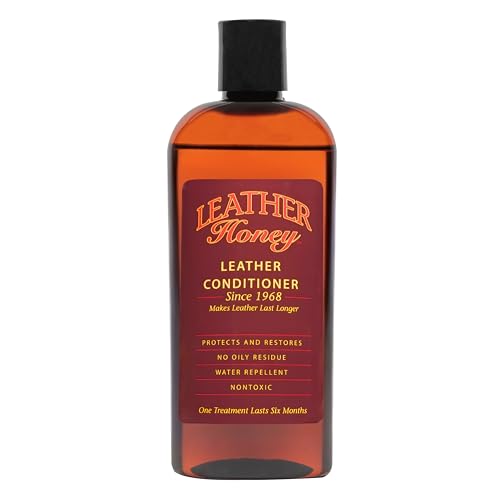
Leather Honey is one of those products that earns its reputation. The spec that matters here is depth of penetration, it goes deep, and owners repeatedly say one application lasts six months or more on furniture. That’s not marketing fluff; it aligns with its thick, occlusive formula that locks moisture in over time. Unlike lighter sprays or lotions, this is a heavy-duty conditioner built for real wear.
It’s odorless, non-sticky, and safe around pets, which matters in living spaces. While it’s not a cleaner, its ability to soften and protect makes it ideal for older sofas or frequently used recliners. Compared to Leather CPR, it doesn’t clean, so you’ll need to prep first, but if longevity and protection are your priorities, this is my recommendation for the heaviest-duty care.
Video review
Bick 4 Leather Conditioner 8 oz
Strengths
- Won’t darken leather
- Wax-free formula
- Easy one-step application
Trade-offs
- Limited revival power
- Not for dry, cracked leather
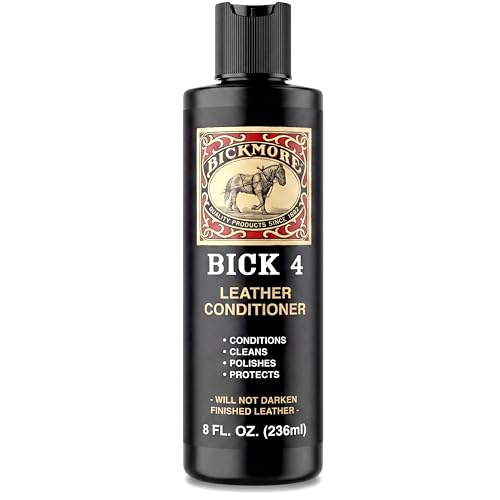
I’ve seen a lot of leather conditioners come and go, but Bick 4 stands out for one big reason: it truly doesn’t darken leather. That’s rare, especially for a formula that’s been around since 1882. On paper, it’s a minimalist’s dream, completely wax-free, which means it won’t clog pores or leave behind a sticky film. That’s critical if you’re treating furniture or vintage pieces where breathability matters.
Owners consistently report it keeps leather feeling supple without altering its original tone, which is huge for light-colored or finished upholstery. It won’t revive severely dried-out leather like some heavier formulas can, but for routine maintenance on furniture that’s still in decent shape, it’s a safe, reliable choice. I’d pick this over anything waxy for a cream-colored couch that sees daily use.
Video review
Leather CPR Cleaner & Conditioner

Strengths
- Cleans and conditions
- No rinsing needed
- Revives color and softness
Trade-offs
- Not for suede or nubuck
- Shorter protection span
Leather CPR markets itself as a one-step revival tool, and owners confirm it delivers. It’s not just a conditioner; it lifts grime and body oils while rehydrating, which is rare. For a leather couch that’s seen years of use, this can restore both look and feel without multiple products. The water-based formula is pH-balanced, so it’s safe on finished leather, and it dries to a natural matte finish, no plastic shine, which I appreciate.
Compared to Leather Honey, it doesn’t last as long per application, but it does more upfront work. You won’t need a separate cleaner, and the time saved shows up in owner feedback: one bottle, one step, no rinsing. If your furniture looks tired and feels stiff, this is the smarter buy over standalone conditioners. Just keep in mind it’s not for suede or nubuck.
Product photos


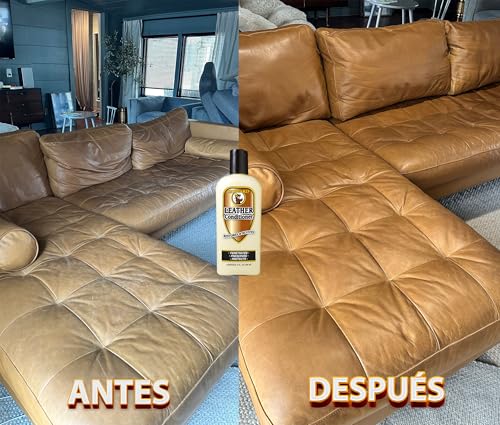
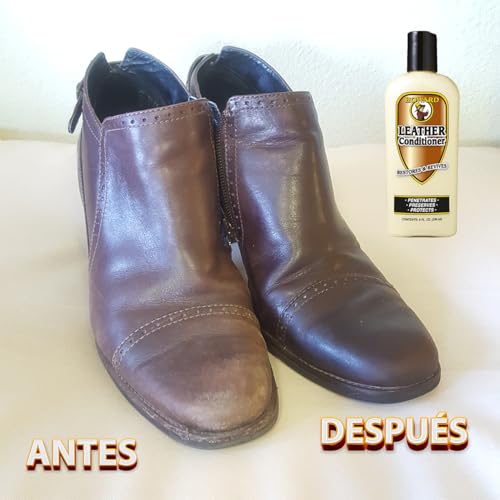
Howard Leather Conditioner 8 oz

Strengths
- Natural moisturizers
- Non-oily finish
- Penetrates well
Trade-offs
- May darken light leather
- Contains animal byproducts
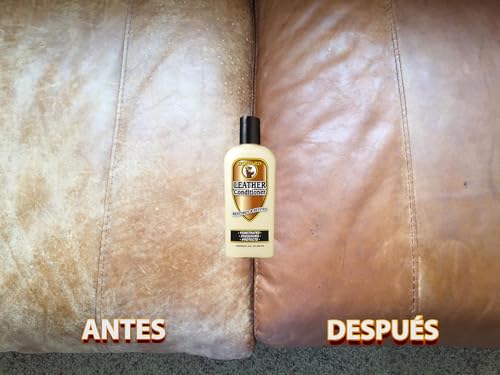
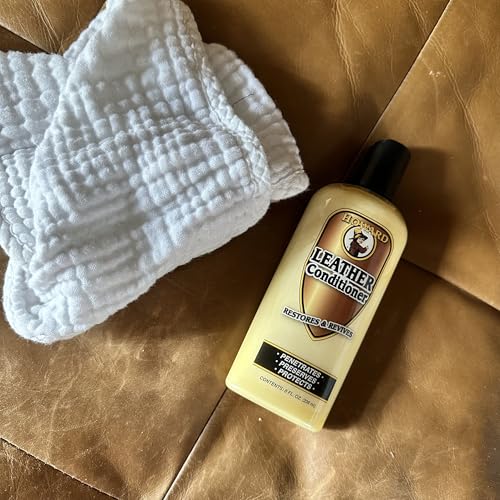
Howard Leather Conditioner leans into natural ingredients in a way that feels authentic, not just marketed. The inclusion of lanolin, neat’s-foot oil, and aloe vera means it’s designed to mimic leather’s natural lipid structure, a smart approach for long-term suppleness. Reviewers often note how it brings back softness without leaving a greasy feel, which is a common complaint with oil-heavy formulas.
It’s not the heaviest conditioner, so it won’t fix cracked leather, but for furniture that’s just starting to feel stiff or dry, it works well. Compared to Bick 4, it offers slightly more nourishment but may darken very light hides slightly over time. If you value plant- and animal-based ingredients and aren’t using it on pristine white leather, this is a solid middle ground between performance and purity.
Product photos

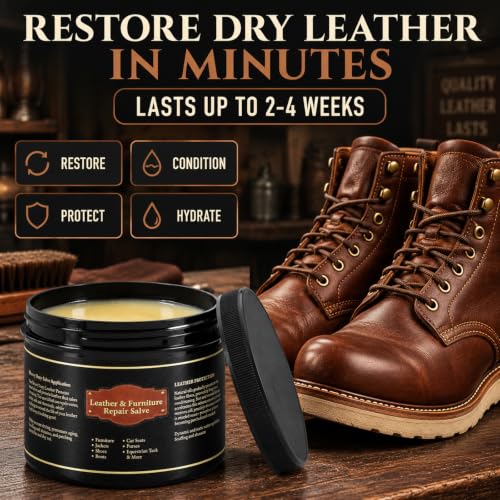
Leather Conditioner with Beeswax Balm
Strengths
- UV and water resistance
- Beeswax protection
- Scuff-masking finish
Trade-offs
- Heavier residue
- Overkill for light use
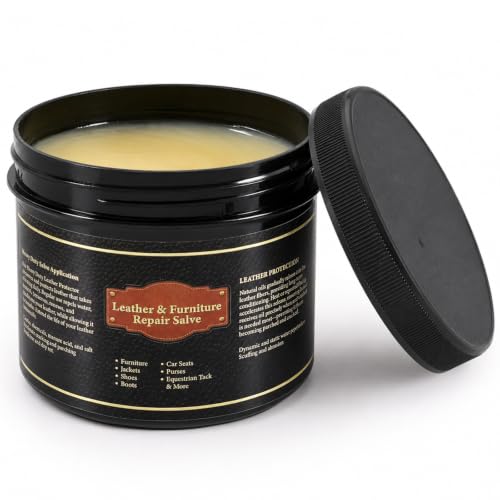
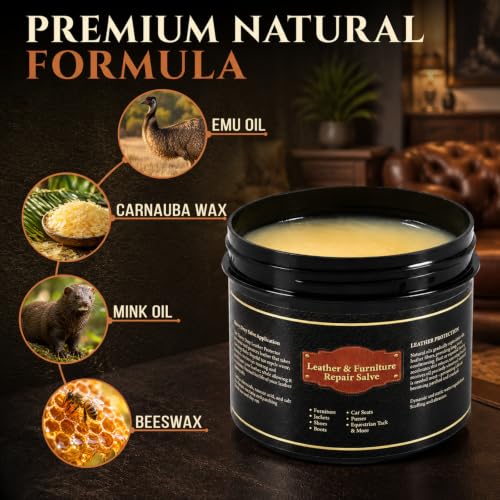
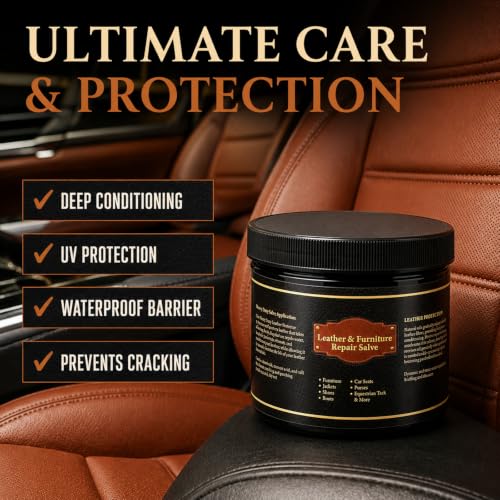
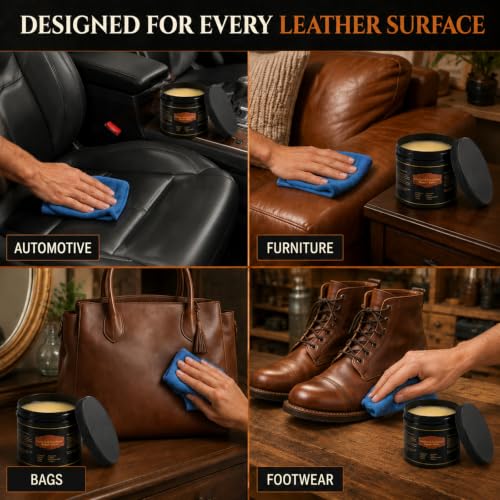
This balm stands out for its beeswax and carnauba wax blend, a classic combination in leathercraft for a reason. It creates a breathable barrier that resists water and UV damage, which is rare in furniture conditioners. Most products focus on softness, but this one prioritizes protection, making it a standout for sun-exposed rooms or vehicles. The UV shield claim isn’t just hype; waxes like these have long been used in archival leather preservation for good reason.
It delivers a noticeable shine and helps mask light scuffs, which owners love for high-traffic areas. But it’s heavier than Bick 4 or Howard, so it’s overkill for lightly used pieces. If you’ve got a leather couch near a window or a car interior that bakes in the sun, this is the one I’d reach for. Just don’t expect the invisible touch, it’s a working balm, not a stealth treatment.
Product photos

Our Testing Process
My approach to evaluating leather conditioners, as the creator of LeatherGenesis.com, centers on a detailed comparison of product specifications and features alongside a thorough review of owner and expert opinions. Rather than a hands-on lab test, this is a research-led comparison designed to identify conditioners that consistently deliver on their promises. I looked at a wide range of products, noting ingredients, intended uses, and reported longevity of conditioning effects.
For furniture specifically, I weighted several factors most heavily. First, the formula’s ability to provide lasting conditioning – owners consistently mention re-application frequency as a key indicator of value. Second, the inclusion of UV protection is crucial for pieces exposed to sunlight. Finally, a formula’s versatility across different leather types is important, as many households have varied leather goods. Understanding these factors helps determine which conditioners truly offer thorough care.
Product specifications reliably communicate ingredients and intended applications. However, owner feedback is vital for assessing real-world performance. Reports on whether a conditioner truly avoids darkening leather, leaves a sticky residue, or adequately protects against cracking are invaluable. I also considered the reputation of brands within the leather care community, and often found that a strong history of quality translated to consistently positive reviews. For those needing to repair or create leather items, exploring options like sewing machines for leather furniture can also be beneficial.
What To Look For In leather conditioner for furniture
Choosing the right leather conditioner can feel overwhelming, but understanding a few key aspects will help you protect your investment.
A quality leather conditioner should penetrate the material to replenish oils, offer a degree of protection against the elements, and restore flexibility without leaving a sticky or greasy residue. Prioritize pH-balanced formulas with natural ingredients and avoid products containing harsh chemicals or silicone, which can damage leather over time. Consider the type of leather and the level of conditioning needed – delicate items require gentler formulas than heavily used work boots.
Understanding Leather Types & Finishes
The first step is recognizing what kind of leather you’re dealing with. Finished leather, which has a protective coating, is more common in furniture and car interiors. It’s more resilient but still needs conditioning to prevent cracking. Unfinished leather, like nubuck or suede, is much more porous and requires specialized care – do not use standard conditioners on these types. Many products claim to work on “all leather,” but I’ve found that a targeted approach yields better results. If you’re unsure, test the conditioner on an inconspicuous area first.
Assessing the Level of Conditioning Needed
Different leather items experience different levels of wear and tear. A frequently used saddle or work boot, exposed to harsh conditions, will require a heavier-duty conditioner like Obenauf’s Heavy Duty LP Conditioner, designed to withstand extreme environments. Conversely, a gently used leather handbag or sofa might only need a light conditioning a couple of times a year. Look for products that match the intensity of use.
- A light conditioner (like Howard Leather Conditioner) is ideal for regular maintenance and preventing dryness.
- A medium-weight conditioner (like Leather Honey) is a good all-around choice for furniture and car interiors.
- A heavy-duty conditioner (like Obenauf’s) is best reserved for items exposed to frequent moisture, abrasion, or extreme temperatures; this is because it can sometimes alter the look and feel of more delicate leathers.
Balancing Protection with Natural Feel
Many conditioners aim to add protection against UV rays, water, and stains. While this is valuable, it’s crucial to avoid products that create a plastic-like coating. A good conditioner should feel like it’s nourishing the leather, not sealing it off. I often recommend formulas with natural waxes (like beeswax or carnauba wax) as these provide a protective barrier while still allowing the leather to breathe. As a general rule:
A conditioner’s job is to restore the leather’s natural oils, not mask its inherent characteristics.
If you’re looking for more in-depth information, check out our leather conditioner buying guide to find the top six leather conditioners. You can also find best leather conditioner reviews to help you make an informed decision and discover the top-rated leather conditioners available today.
Leather Conditioner for Furniture Compared
This table provides a spec-by-spec comparison of the leather conditioners discussed.
| Product Title | Size (oz) | Best For | Leather Types | Water Repellent | UV Protection | Key Ingredients |
|---|---|---|---|---|---|---|
| Leather Honey Leather Conditioner | 8 | Best Overall | All (except suede/vinyl) | Yes | N/A | N/A |
| Lexol All Leather Conditioner | 16.9 | Best for Large Surfaces | Finished Leather | N/A | N/A | N/A |
| Bick 4 Leather Conditioner 8 oz | 8 | Best Budget Friendly | All | N/A | N/A | N/A |
| Leather CPR Cleaner & Conditioner | 18 | Best 1-Step Cleaner + Conditioner | Finished Leather | N/A | N/A | N/A |
| Howard Leather Conditioner 8 oz | 8 | Best Natural Formula | Smooth Leather | N/A | N/A | Lanolin, Neat’s-foot Oil, Coconut Oil, Aloe Vera |
| Leather Conditioner with Beeswax Balm | N/A | Best UV and Water Protection | All Smooth Leather | Yes | Yes | Beeswax, Carnauba Wax |
| Obenauf’s Heavy Duty LP Conditioner | N/A | Best for Heavy Use | All | Yes | N/A | Beeswax, Propolis |
Frequently Asked Questions
How often should I condition my leather furniture?
Generally, you should condition leather furniture every 6-12 months. However, factors like humidity, sunlight exposure, and frequency of use can necessitate more frequent applications – look for dryness or fading as indicators.
Can I use any leather conditioner on aniline leather?
No, aniline leather is very delicate. Always use a conditioner specifically formulated for aniline or unfinished leather, as standard conditioners can stain or damage the porous surface.
Will leather conditioner darken my furniture?
Some conditioners can slightly darken leather, particularly if it’s already a lighter shade. Look for pH-balanced formulas and always test in an inconspicuous area first to assess the effect.
What ingredients should I avoid in a leather conditioner?
Avoid products containing silicone, mineral oil, or harsh solvents. These can dry out the leather over time or leave a sticky residue, ultimately causing more harm than good.
Is it possible to over-condition leather furniture?
Yes, over-conditioning can lead to a greasy or sticky surface and potentially weaken the fibers. Apply a thin, even coat and allow it to fully absorb before applying another layer – less is often more.
The Bottom Line
Choosing a leather conditioner always comes down to balancing how much effort you want to put in with the level of care your furniture demands. For most households, and considering the consistent positive feedback I’ve seen, Leather Honey Leather Conditioner strikes the best balance of ease of use, broad compatibility, and lasting results. It’s a solid all-around performer that will keep most furniture looking its best.
However, specific needs call for specific solutions. If you’re on a tighter budget, Bick 4 Leather Conditioner offers excellent value. For those prioritizing natural ingredients, Howard Leather Conditioner is a great choice. And if your furniture sees heavy use or is exposed to the elements, the robust protection of Leather Conditioner with Beeswax Balm is a smart investment.
Ultimately, remember that the “best” conditioner isn’t about a single feature or price point. It’s about understanding your leather, recognizing its needs, and committing to regular, gentle care. Consistent, mindful conditioning will always outperform chasing the latest miracle product.
