6 Best Leather Couch Conditioners of 2026
This post contains affiliate links. As an Amazon Associate, we earn from qualifying purchases.
The Weiman Leather Cleaner & Conditioner is the best overall pick for most couches, combining cleaning and conditioning in one reliable formula. For those in sunny climates, Leather Honey offers the best UV protection at a fair price, while Bick 4 stands out as the top budget-friendly option that won’t darken or damage finished leather.
Leather couches look great, but they dry out, fade, and crack without proper care. Choosing the wrong conditioner can do more harm than good – some leave greasy residues, others darken the leather or attract dust.
As the founder of LeatherGenesis.com, I’ve spent years studying leather chemistry and care. This guide is based on a deep explore product specs, ingredient profiles, and real-world feedback from owners who’ve used these conditioners long-term. We focused on formulas that truly nourish leather, protect it from environmental damage, and preserve its original look and feel.
Top 6 Leather Couch Conditioner in the Market
The Best Leather Couch Conditioner, Reviewed
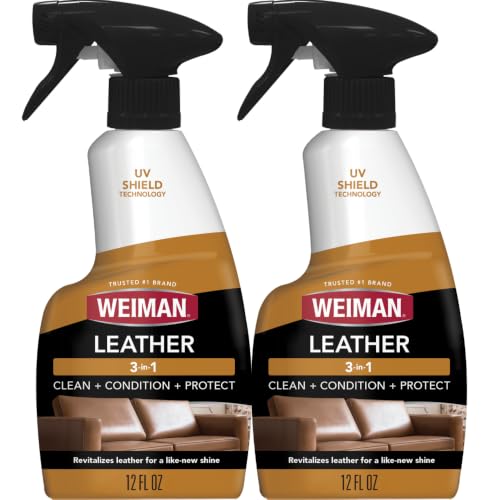
Weiman Leather Cleaner & Conditioner 2 Pack
Strengths
- Dual-action clean and condition
- UV protection included
- Safe for multiple leather items
Trade-offs
- Not for deep restoration
- May require frequent reapplication
- Light impact on dry leather
I appreciate when a leather conditioner pulls double duty without cutting corners, and Weiman delivers that in a straightforward way. On paper, the inclusion of UVX protection stands out, this isn’t just about moisturizing, it’s about shielding your couch from sun damage over time, which matters if it sits near a window. Owners consistently report that it leaves leather feeling softer after just one use, and the fact that it’s safe for furniture, car interiors, and accessories makes it a practical household staple.
Still, while it conditions well, it’s not a deep restorative for severely dried leather. The formula is more maintenance-focused than transformative. Compared to heavier natural oil blends, it lacks the long-term penetration some vintage or heavily used leathers need. But for regular upkeep on finished leather surfaces, especially in sunny rooms, it holds its own. I’d reach for this between deeper treatments, not as a one-and-done solution for neglected pieces.
Video review
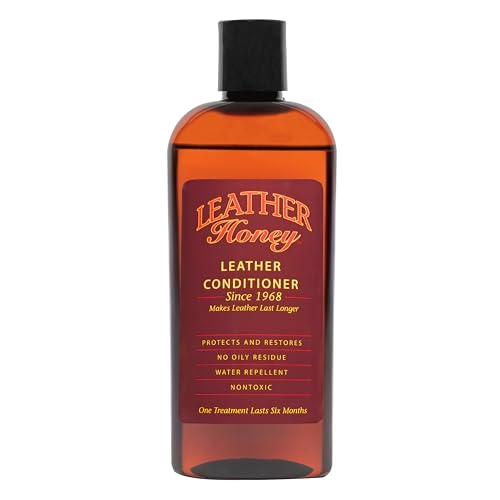
Leather Honey Leather Conditioner 8 oz
Strengths
- Long-lasting single application
- Deep fiber penetration
- Non-toxic, no harmful chemicals
Trade-offs
- Can darken light leather
- Dense, slower drying
- No added UV protection
What sets Leather Honey apart is longevity, one application reportedly lasts six months or more, which reviewers confirm anecdotally across boots, bags, and couches. That kind of staying power comes from its dense, penetrating formula, which goes deep into fibers rather than sitting on the surface. It’s also one of the few conditioners here that explicitly avoids PFAS and silicones, making it a cleaner choice for homes with kids or pets.
It does tend to darken leather slightly, so caution is needed on lighter shades. And while it’s excellent for moisture retention, it doesn’t include UV filters like Weiman does. Still, for sheer conditioning depth and duration, it’s hard to beat. If you hate constant reapplication, this is the product worth stretching your budget for.
Video review
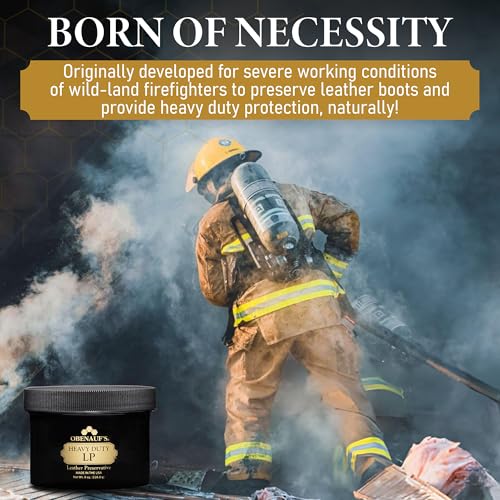
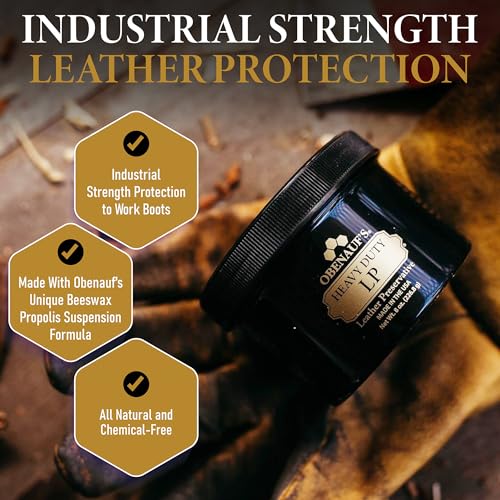
Obenauf’s Heavy Duty LP Leather Conditioner

Strengths
- Extreme water resistance
- Long-lasting protection
- Natural, non-toxic ingredients
Trade-offs
- Can darken light leather
- Thick, slow absorption
- Overkill for indoor furniture
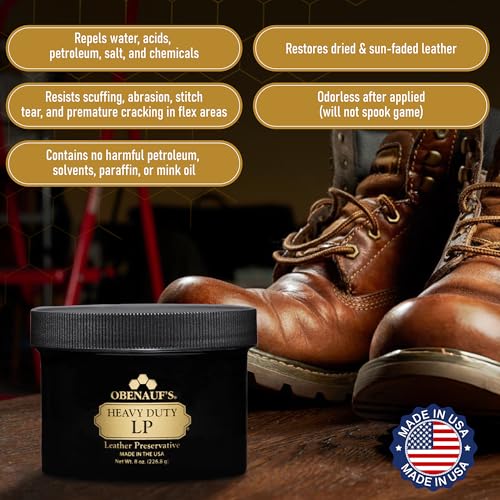
If you’re dealing with leather that faces real punishment, think workshop aprons, outdoor furniture, or garage-used car seats, Obenauf’s Heavy Duty LP is built for that world. The beeswax and propolis blend isn’t subtle; it creates a breathable barrier that resists water, salt, and chemicals, which explains why wild-land firefighters helped develop it. This isn’t a slick polish, it’s armor. Reviewers note their leather stays flexible even after months outdoors, and the slow-release oils mean fewer applications over time.
That said, it’s not the move for a light-colored living room sofa. It can darken leather slightly, and the waxy finish might feel stiff at first. It’s also thicker than most, so application takes patience. But for maximum protection in harsh environments, nothing else here matches its grit. My recommendation? Use this where durability trumps aesthetics.
Product photos

Bick 4 Leather Conditioner 8 oz
Strengths
- Won’t darken leather
- Wax-free and breathable
- Gentle on fine finishes
Trade-offs
- Slow for dry leather
- Mild conditioning effect
- Multiple apps sometimes needed
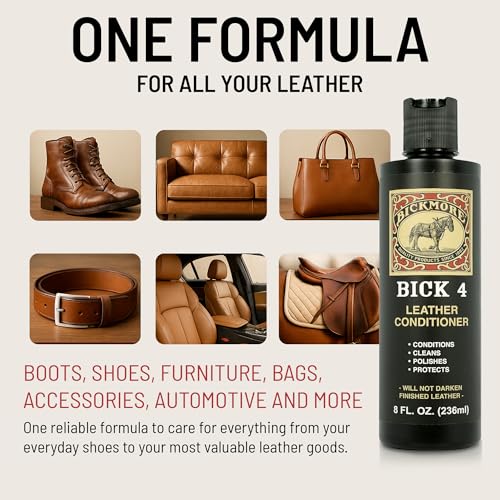
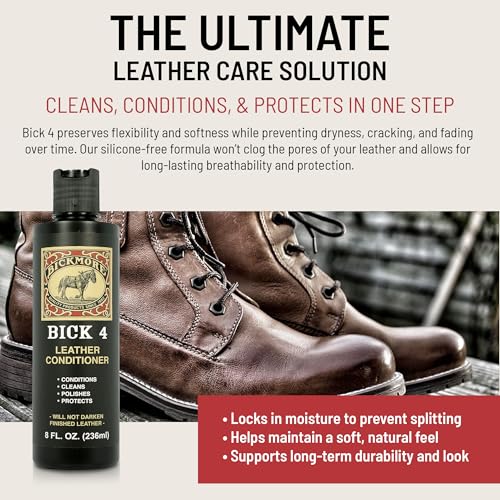
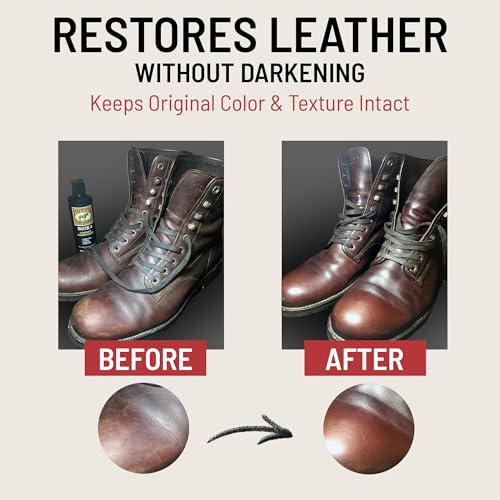
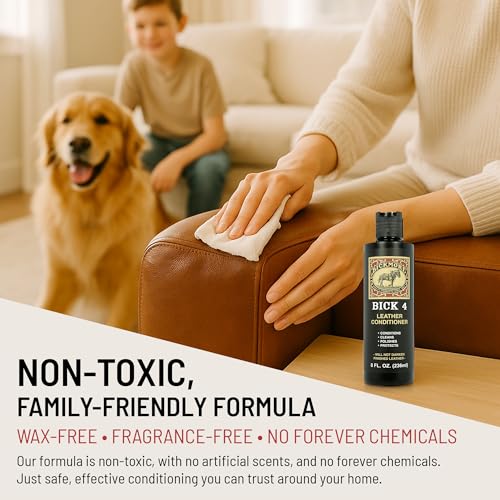
Bick 4 has earned its cult status for one big reason: it doesn’t alter the look of your leather. That’s huge. If you’ve ever ruined a pair of tan boots or a cream couch by applying a conditioner that darkens or stains, you’ll appreciate how Bick 4 conditions without changing color. Its wax-free formula means pores stay open, preserving breathability, a detail purists like me don’t overlook. Plus, being made in the USA with a heritage dating back to 1882 adds credibility.
It’s not the fastest-acting option, and deeply parched leather may need multiple rounds. But for maintaining new or lightly worn furniture, it’s the smarter buy. Compared to richer oil-based formulas, Bick 4 errs on the conservative side, which is exactly what most daily users need. I’d pick this for a modern living room where consistency in appearance matters.
Product photos

Leather CPR Cleaner & Conditioner 18oz

Strengths
- One-step clean and condition
- Revives dull, dry leather
- Large capacity per bottle
Trade-offs
- Expensive upfront cost
- Too strong for new leather
- Not for damaged surfaces
Leather CPR lives up to its name when you’re rescuing something that’s seen better days. The 18oz bottle is generous, and the one-step process, no rinsing, no buffing, is a win for anyone tired of multi-stage routines. Owners of older sofas or family hand-me-downs often say it brought back softness and depth they thought were lost. The pH-balanced, water-based formula lifts grime while rehydrating, which is rare in a single product.
But it’s not magic. On leather that’s already flaking or structurally compromised, results are limited. And because it’s designed to revive, it’s overkill for well-maintained pieces. Still, for a full-size couch in need of revival, the efficiency here beats splitting cleaning and conditioning into two separate steps. I’d use this when your leather looks tired but still intact.
Product photos


Howard Leather Conditioner 8-Ounce

Strengths
- Natural oil and wax blend
- Penetrates without greasiness
- Protects against dry rot
Trade-offs
- Slight learning curve on amount
- Not for suede or nubuck
- May darken very light hides
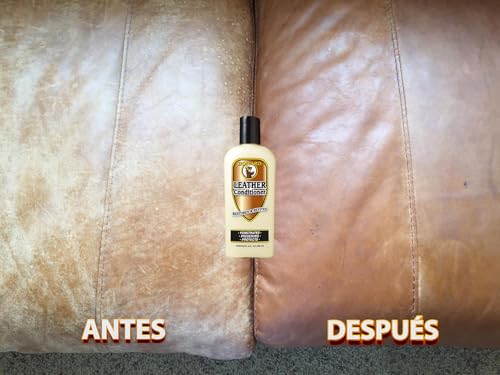
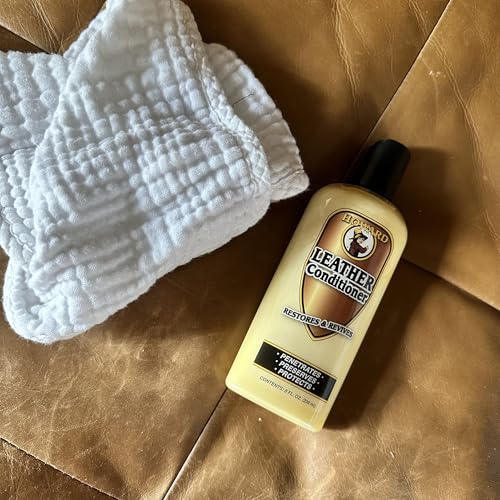
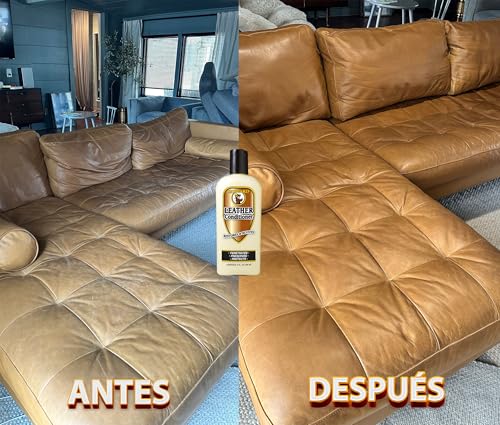
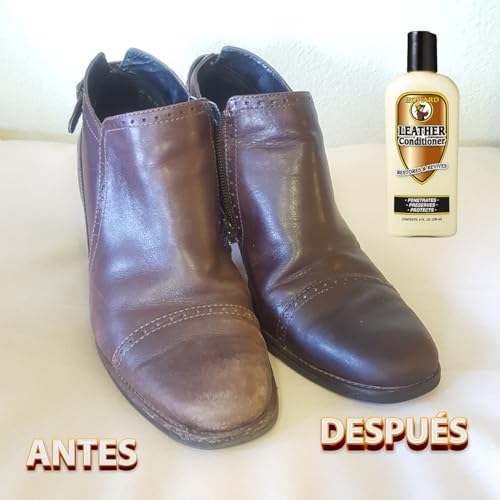
Howard’s formula stands out for its ingredient list: lanolin, neat’s-foot oil, coconut oil, and aloe vera, all things that mimic leather’s natural chemistry. This isn’t synthetic fill; it’s nourishment. The creamy texture spreads easily and sinks in without leaving a greasy film, which reviewers consistently praise. It’s particularly effective on smooth leather furniture that’s starting to feel stiff but isn’t yet cracking.
Compared to single-note oils, Howard strikes a balance, it conditions deeply but doesn’t overwhelm. It’s not as heavy as Obenauf’s, nor as minimal as Bick 4, making it a solid middle ground. The Brazilian carnauba and beeswax add a touch of protective sheen without sealing off the surface. For most buyers, this is the easy pick when you want real conditioning power without risk.
Product photos

How We Chose These leather couch conditioner
As someone deeply involved in understanding leather – from its origins to its upkeep – I approached evaluating leather couch conditioners by combining detailed specification comparisons with a careful review of owner experiences and expert opinions. Rather than a hands-on lab test, this is a research-led comparison of formulations and reported results. I looked at ingredients, application methods, and intended use cases to build a picture of each product’s strengths and weaknesses.
For leather conditioning, three factors stood out as most important: the depth of conditioning, the level of protection offered (especially against UV damage and water), and the formula’s impact on the leather’s finish. A conditioner that only masks dryness isn’t useful long-term; genuine nourishment is key. Similarly, protection matters – a beautiful couch is easily damaged by sunlight or spills. Finally, avoiding darkening or altering the leather’s original appearance is crucial for many owners.
Product specifications reliably indicate ingredient quality and the type of conditioning offered (oils, waxes, etc.). However, judging long-term performance and real-world effects requires looking at owner feedback. I paid close attention to comments regarding how each conditioner affected the leather’s feel, its resistance to cracking, and whether it left a sticky residue. Owners frequently discuss issues like darkening or altered texture, which are difficult to predict from a label. For more demanding leatherwork, you might also consider exploring resources like our best leather sewing machines guide.
Choosing The Right leather couch conditioner
Choosing the right conditioner can extend the life and beauty of your leather furniture.
Quality leather conditioners penetrate the material to replenish oils, maintain flexibility, and protect against cracking and fading. Look for pH-balanced formulas free of harsh chemicals, waxes, and silicones. Prioritize products suited to your leather type (finished, unfinished, nubuck, etc.) and consider climate – drier environments demand more frequent conditioning. A good conditioner should restore, not mask, the leather’s natural qualities.
Understanding Leather Types & Finishes
The first step is knowing what kind of leather you’re dealing with. “Leather” is a broad term; different tanning and finishing processes create drastically different materials. A conditioner designed for heavily oiled work boots (like those Obenauf’s Heavy Duty LP is suited for) will likely ruin delicate furniture leather. Finished leathers, which have a protective coating, benefit from gentle hydration. Unfinished leathers (like nubuck or aniline) require different care altogether, often needing specialized products that don’t add surface residue. If you’re unsure, test the conditioner in an inconspicuous area first.
Frequency & Formulation
Many conditioners promise miraculous results with a single application, but consistent, moderate conditioning is far more effective. Leather, like skin, needs regular hydration. However, over conditioning can lead to a sticky residue or a breakdown of the leather fibers. The frequency depends on your climate and usage; drier climates and heavily used furniture will need more attention. Look for pH-balanced formulas. A pH that’s too high or too low can damage the leather over time. For those seeking a detailed breakdown of options, our top leather conditioner list provides a thorough overview.
Balancing Protection & Value
The “best” conditioner isn’t always the most expensive. While high-end options like Leather Honey offer excellent UV protection and longevity, a budget-friendly choice like Bick 4 can provide sufficient conditioning for everyday maintenance. Consider your needs and priorities.
- If you live in a sunny climate, UV protection is paramount.
- For occasional touch-ups and general maintenance, a simple, wax-free formula may suffice.
- If you have a significant investment in high-quality leather furniture, a premium conditioner with a robust formula and long-lasting effects is a worthwhile investment.
A little goes a long way. Always apply conditioner sparingly and evenly, using a clean microfiber cloth. Avoid applying excessive amounts, which can leave a sticky residue and attract dirt.
Ultimately, researching your leather type and understanding your specific needs will guide you to the best leather couch conditioner. Don’t hesitate to explore a leather conditioner comparison to find the perfect fit, or check out our 2026 conditioner recommendations for the latest insights and options in the market.
Leather Couch Conditioner Compared
Here’s a comparison of key specifications for popular leather couch conditioners to help you choose the right product.
| Product Title | Size (oz) | Best For | UV Protection | Water Repellent | Wax Free | Oil Blend |
|---|---|---|---|---|---|---|
| Weiman Leather Cleaner & Conditioner | 2 x 8 | Best Overall | Yes | N/A | N/A | N/A |
| Leather Honey Leather Conditioner | 8 | Best UV Protection Value | Yes | Yes | N/A | N/A |
| Obenauf’s Heavy Duty LP | N/A | Best for Heavy-Duty | N/A | Yes | N/A | Beeswax |
| Bick 4 Leather Conditioner | 8 | Best Budget Friendly | N/A | N/A | Yes | N/A |
| Leather CPR Cleaner & Conditioner | 18 | Best One-Step Clean & Cond | N/A | N/A | N/A | N/A |
| Howard Leather Conditioner | 8 | Best Natural Oil Blend | N/A | N/A | N/A | Yes |
Frequently Asked Questions
What’s the difference between leather conditioner and leather cleaner?
Conditioner replenishes oils within the leather to keep it supple and prevent cracking, while cleaner removes dirt and grime from the surface. Many products combine both, but for heavily soiled leather, a dedicated cleaner followed by a conditioner is best.
Can I use any oil on my leather couch?
Avoid using general-purpose oils like olive or vegetable oil. These can go rancid and attract mold, ultimately damaging the leather. Leather conditioners use specifically refined oils and waxes formulated for leather’s unique structure.
How often should I condition my leather couch?
Generally, conditioning every 6-12 months is sufficient, but this varies with climate and use. Drier climates and frequently used couches benefit from more frequent conditioning (every 3-6 months), while less-used furniture may only require annual treatment.
Will leather conditioner change the color of my couch?
Some conditioners can temporarily darken leather, especially aniline or nubuck. Always test in an inconspicuous area first. Look for pH-balanced, dye-free formulas to minimize this risk, and avoid over-application.
What does “wax-free” mean in a leather conditioner?
A wax-free formula means the conditioner relies on oils to penetrate and nourish the leather, rather than creating a surface barrier with waxes. Wax-free options are generally preferred for finer furniture leather as they don’t alter the texture or breathability of the material.
The Bottom Line
Choosing a leather couch conditioner often comes down to balancing how much control you want over the process against how much fuss you’re willing to tolerate. For most owners, Weiman Leather Cleaner & Conditioner strikes that balance beautifully – it’s a reliable, widely-available option that delivers solid conditioning and protection without demanding specialized knowledge.
If you have very specific needs, though, the right choice becomes clearer. For those prioritizing maximum UV protection, Leather Honey Leather Conditioner is a standout. And for those on a tighter budget, Bick 4 Leather Conditioner offers a surprisingly effective conditioning treatment.
Ultimately, remember that the specification sheet isn’t everything. Consistent, gentle care – applying a quality conditioner regularly and avoiding harsh chemicals – will do more to preserve your leather’s beauty and longevity than any single product’s feature set. Focus on understanding your leather and its needs, and the right conditioner will follow.
