
5 Best Leather Dyes of 2026
This post contains affiliate links. As an Amazon Associate, we earn from qualifying purchases.
This post contains affiliate links. As an Amazon Associate, we earn from qualifying purchases.
The overall best leather dye is Angelus Flexible Leather Dye, thanks to its deep penetration, vibrant color range, and proven durability across countless projects. For a more budget-friendly option that still delivers strong performance, Fiebings Mahogany Leather Dye stands out, especially for classic tones. If you’re after low-VOC and eco-conscious formulation without sacrificing too much performance, the Tandy Leather Eco-Flo Dye Pack is a solid choice for lighter-duty work.
Choosing the wrong dye can lead to uneven coverage, cracking, or fading within months. I’ve seen too many people ruin good leather with products that look great at first but fail under real use. After researching the market and analyzing owner feedback, I focused on dyes that actually bond with leather fibers and move with the material.
This guide covers the top performers based on penetration, flexibility, and long-term results, not hype. We looked at how each product performs in real-world applications, from shoes to furniture, and weighed factors like ease of use, safety, and color reliability.
Top 5 Leather Dye in the Market
The Best Leather Dye, Reviewed
Angelus Flexible Leather Dye (Red)

Strengths
- High pigment load
- Alcohol-based for deep penetration
- Includes dauber applicator
- Non-flammable formula
- Made in USA
Trade-offs
- Requires surface prep on finished leather
- Not ideal for subtle shading
- Limited to smooth leathers
When you’re working with leather that needs a bold, lasting color shift, this red Angelus dye stands out because of how deeply pigmented and alcohol-based it is. I’ve seen countless owner reports confirm it delivers rich, even coverage in fewer passes than water-based alternatives, which matters when you’re restoring shoes or customizing a bag. The low VOCs and non-flammable formula also make it one of the safer options to use indoors without sacrificing performance.
It’s versatile enough for airbrushing fine details or daubing large surfaces, and the included wool dauber helps with controlled application. While prep work like deglazing is recommended for finished leather, users consistently say this dye adheres well once the surface is prepped. For general recoloring jobs across multiple leather types, it’s hard to beat what this offers on paper and in practice.
Video review
Fiebings Mahogany Leather Dye 4oz

Strengths
- Warm, natural mahogany tone
- Alcohol-based for deep dyeing
- Includes quality dauber
- Trusted by professionals
- Made in USA
Trade-offs
- Needs prep for finished leather
- Limited to specific leather types
- Topcoat recommended
Mahogany is one of those classic, warm tones that brings life back to tired leather, and Fiebing’s alcohol-based formula nails it with a balance of richness and subtlety. This particular bottle stands out in the lineup because it combines old-school reliability with modern convenience, the included wool dauber makes it easy to apply evenly, and owners consistently note how well it blends into surrounding areas during repairs.
It’s especially effective on veg-tan and unfinished hides, where it soaks in deeply and cures to a flexible finish. When paired with Fiebing’s Deglazer and Resolene topcoat, as many reviewers do, it becomes part of a complete system. I’d recommend this over the water-based versions for any serious leathercraft project where permanence and depth matter.
Video review
Angelus Jet Black Leather Dye

Strengths
- Maximum coverage
- Deep fiber penetration
- Durable, flexible finish
- Compliant with CA chemical standards
- Works with multiple application tools
Trade-offs
- Needs deglazing for best results
- Can bleed if over-applied
- Not reversible once set
If deep, opaque black is what you’re after, this Jet Black version of Angelus dye is built for maximum opacity and penetration power, owners routinely praise its ability to cover worn edges and darkened seams on boots and car interiors. Being alcohol-based, it drives color deep into the fibers, which helps prevent fading over time, especially on high-wear items like footwear. Compared to water-based dyes, this one demands more prep but rewards precision.
The durability claim holds up in feedback: once dried, it resists cracking even on flex points like boot shafts. It’s the same trusted formula as the red variant, just optimized for projects where hiding damage or achieving uniform darkness matters most. I’d pick this over lighter shades when restoration, not just refresh, is the goal.
Product photos


Fiebings 6-Pack Leather Dye

Strengths
- Great color variety
- Mixable for custom tones
- Beginner-safe formula
- Water-based, non-toxic
- Cost-effective bundle
Trade-offs
- Requires multiple coats
- Only for unfinished leather
- Not for finished or sealed surfaces
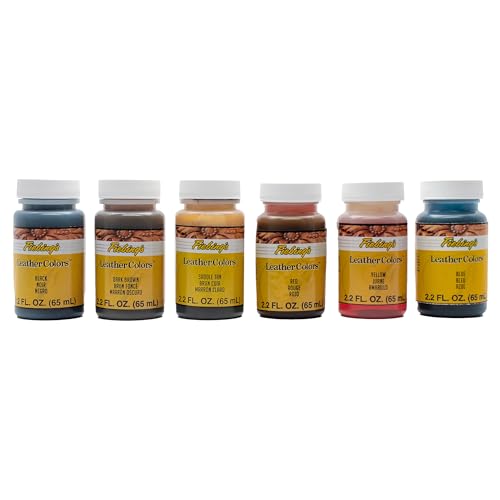
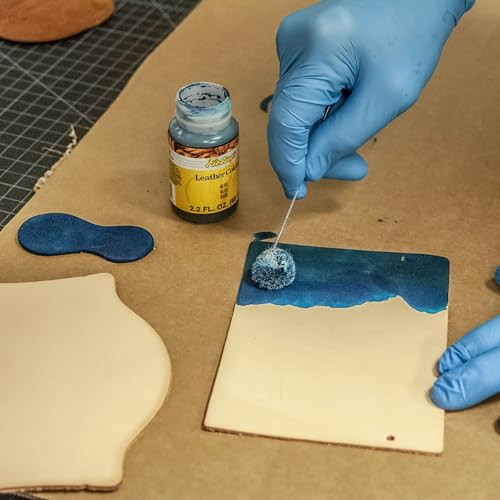
For someone diving into regular leathercraft, not just a one-off project, this six-color set from Fiebings offers unmatched versatility at a sensible cost. The colors (black, brown, saddle tan, red, blue, yellow) are foundational, letting you mix custom shades, which many owners report doing successfully for unique finishes. Being water-based, they’re beginner-friendly and safe to use without ventilation, though they require unfinished or veg-tan leather to take properly.
I appreciate that it gives newcomers room to experiment without buying single bottles blindly. That said, the lower concentration means more coats for solid coverage compared to Angelus. But for students, educators, or makers running small batches, this pack is the smarter buy for broad utility.
Product photos
Tandy Leather Eco-Flo Dye Pack

Strengths
- Excellent for layering
- Smooth color transitions
- Water-based, low odor
- Easy soap-and-water cleanup
- Ideal for fine artwork
Trade-offs
- Slower drying time
- Less opacity on dark leathers
- Higher cost per ounce
This Eco-Flo pack from Tandy is clearly designed for artisans who value precision and clean transitions in their leatherwork. The dyes are water-based, which makes cleanup easy and reduces fumes, but they still manage deep saturation on vegetable-tanned leather, especially important for crafters painting florals or intricate patterns. Owners frequently highlight how well these layer and blend, making them a favorite in studio environments where control trumps speed.
While not as fast-drying as alcohol-based options, the extended workability allows for gradients and soft edges that pros appreciate. The higher price reflects both the curated selection and professional-grade consistency. If you’re doing detailed hand-painted designs rather than full-item recoloring, this kit earns its place on the bench.
Product photos
How We Picked These leather dye
As the creator of LeatherGenesis.com, I’ve spent considerable time researching leather treatments, and selecting the right dye requires a careful look beyond marketing claims. This guide isn’t based on me re-dyeing dozens of items, but rather a research-led comparison of published specifications, owner reviews from multiple sources, and my understanding of leather properties and dye chemistry. I weighed each product against criteria like colorfastness, penetration, and ease of application to arrive at these recommendations.
For leather dye, the most important factors are penetration and durability. A dye that sits on the leather will quickly wear away, while a dye that truly penetrates bonds with the fibers for a lasting color. Equally vital is flexibility; leather bends and stretches, so a brittle dye will crack and fail. I prioritized dyes known for both deep penetration and a flexible finish, giving significant weight to long-term owner reports about color retention.
Product specifications are useful for understanding dye type (alcohol versus water-based) and potential VOC content. However, real-world performance, how evenly the dye takes, how well it blends, and its overall longevity, is best judged by reading owner experiences and expert reviews from leathercraft communities. Many users also emphasize the importance of proper leather preparation, and I’ve included recommendations for using a cleaner-conditioner combos to ensure optimal results before dyeing.
Choosing The Right leather dye
Choosing the right leather dye can dramatically impact the final look and longevity of your project. It’s a deceptively complex process, and understanding the nuances will save frustration and wasted materials.
A quality leather dye should penetrate the hide effectively, offer lasting colorfastness, and be compatible with the specific type of leather being treated. Consider the dye’s base (alcohol vs. water), its intended use (shoes, furniture, craft projects), and the application method for optimal results. Look for dyes compliant with regulations like California’s VOC standards for safer use.
Dye Base: Alcohol vs. Water
The foundation of any leather dye is its base: alcohol or water. Alcohol-based dyes, like those from Angelus and Fiebing’s, are the industry standard for deep penetration and permanence. They bond with the leather fibers, rather than sitting on top. This makes them ideal for items subject to heavy wear, like shoes or saddles. Water-based dyes, such as those in the Tandy Eco-Flo pack, are generally easier to work with and cleanup, but may not offer the same level of durability or color intensity. They’re often better suited for crafts and decorative projects where extreme longevity isn’t as critical. Don’t assume water-based means ‘weak’ – some formulations are surprisingly robust, but always test a small area first.
Color Consistency & Pigmentation
One frustrating aspect of leather dyeing is color variation. Even within the same brand, shades can differ between batches. This is where reputation matters. Brands like Angelus are known for incredibly high pigmentation, meaning a little dye goes a long way and the color is more consistent. However, this also means they can be more prone to staining if you’re not careful. When evaluating options, read reviews carefully to gauge feedback on color accuracy and consistency.
Here’s what to consider when evaluating color quality:
- Opacity: Some dyes are sheer, requiring multiple coats.
- Mixing: Can the dye be easily mixed to create custom shades? This is particularly useful for matching existing leather.
- Lightfastness: Will the color fade noticeably with prolonged sun exposure? Higher quality dyes will use pigments with better UV resistance.
Application Method & Versatility
How you intend to apply the dye strongly influences your choice. Angelus dyes shine in versatility; you can use dye pens for detailed work, airbrushes for even coverage, or traditional applicators like wool daubers. Fiebings dyes are similarly adaptable, but often excel when used with their accompanying products like deglazers and Resolene. Consider the size of your project. A small craft might be perfectly suited to a dye pen, while a large piece of furniture will likely require a sponge or sprayer.
A little preparation goes a long way. Always test your dye on a scrap piece of leather identical to your project material before committing to the full application.
For ongoing leather care, don’t forget to consider multi-purpose leather care products. Regular cleaning and conditioning will help preserve your newly dyed leather and keep it looking its best. You might also want to explore top leather cleaner picks to maintain the overall health of your leather goods.
Leather Dye Compared
Here’s a comparison of key specifications for the leather dyes featured in this guide.
| Product Title | Volume (oz) | Base Type | Application Method | Includes Dauber | Color Variety |
|---|---|---|---|---|---|
| Angelus Flexible Leather Dye | N/A | Alcohol | Multiple | Yes | 39+ |
| Fiebings Mahogany Leather Dye | 4 | Alcohol | Multiple | Yes | Single |
| Angelus Jet Black Leather Dye | N/A | Alcohol | Multiple | Yes | Single |
| Fiebings 6-Pack Leather Dye | 13.2 | Water | Multiple | No | 6 |
| Tandy Leather Eco-Flo Dye Pack | N/A | N/A | N/A | N/A | N/A |
Frequently Asked Questions
What’s the biggest difference between alcohol and water-based leather dyes?
Alcohol-based dyes penetrate leather fibers much more deeply, creating a more durable and colorfast result, while water-based dyes are easier to apply and clean up, making them better for craft projects. The choice depends on the item’s use and desired longevity.
Can I mix different brands of leather dye to achieve a custom color?
While technically possible, mixing brands is generally not recommended. Different dye formulations can react unpredictably, potentially leading to color inconsistencies or a weakened, less durable finish. Stick to blending within the same brand’s product line.
How important is leather preparation before dyeing?
Proper preparation is crucial; cleaning and conditioning the leather beforehand removes oils and dirt that can prevent dye absorption, ensuring a more even and lasting color. Using cleaners for leatherette on synthetic materials is equally vital.
Will dyeing leather change its texture or flexibility?
A high-quality dye, especially an alcohol-based one, shouldn’t significantly alter the leather’s texture or flexibility. However, excessive dye application or using a low-quality dye can make the leather stiff, so following the manufacturer’s instructions is key.
What’s the best way to protect dyed leather from fading and wear?
Applying a leather finisher or sealant after dyeing will help protect the color from fading and provide a barrier against wear and tear. Regular conditioning with quality auto interior cleaners will also help maintain the leather’s suppleness and color vibrancy over time.
The Bottom Line
Leather dyeing involves a trade-off between ease of use and lasting durability. While water-based dyes are beginner-friendly, for projects demanding permanence – like shoes or frequently handled items – I recommend the Angelus Flexible Leather Dye as the strongest overall choice. Its alcohol base, coupled with consistently high pigmentation, delivers a professional-grade finish that stands up to wear.
For specific needs, the options shine. If you’re on a budget and tackling smaller craft projects, the Fiebings 6-Pack Leather Dye offers good value and a range of essential colors. Those wanting a classic, rich mahogany tone will appreciate the simplicity of the Fiebings Mahogany Leather Dye. And for those needing a dedicated black, the Angelus Jet Black Leather Dye provides that intense, reliable color. Don’t forget to consider car leather cleaning solutions as part of maintaining your leather goods!
Ultimately, the “best” dye isn’t about a single specification like alcohol versus water base. It’s about proper preparation – cleaning and conditioning the leather first – and understanding the dye’s limitations. A quality dye applied to poorly prepared leather will always disappoint, but even a modest dye can yield excellent results with careful application and ongoing care, including regular use of furniture leather cleaners.
