
3 Best Leather for Car Seats of 2026
This post contains affiliate links. As an Amazon Associate, we earn from qualifying purchases.
The CAR PASS Universal FIT Piping Leather Covers stand out as the best overall choice for their balance of style, protection, and ease of use, with the CAR PASS Luxury Faux Leather Full Set offering a solid budget-friendly option for those wanting full-row coverage without the higher cost of genuine leather.
Choosing the right leather for your car seats means more than just picking a look you like. You’re up against daily wear, sun exposure, spills, and the need for safety features like airbag compatibility. I know from years of studying leather materials that not all “leather” delivers the same performance in a car environment.
This guide cuts through the marketing by focusing on what actually matters: material durability, real-world feedback, and proper fit. I compared specs and user experiences across top options to help you find the right balance between protection, comfort, and value, so you can keep your car’s interior looking sharp and lasting longer.
Top 3 Leather For Car Seats in the Market
The Best Leather For Car Seats, Reviewed
CAR PASS Universal FIT Piping Leather Covers

Strengths
- Airbag compatible
- Wrinkle-resistant
- Includes headrest covers
- Breathable material
- Easy installation
Trade-offs
- PU leather only
- Piping may peel over time
- Limited color options
This set stands out as a balanced pick, it covers both front seats fully, includes separate headrest covers, and has reserved openings for airbags, which is a critical safety detail many budget options skip. The 5mm soft sponge layer under the PU leather adds comfort without trapping heat, and owners note the breathability makes a difference on longer drives.
The black-red combo gives a sporty touch, and the wrinkle-resistant material holds up well in feedback across sedans and SUVs. While it’s not real leather by any measure, the build quality for the price tier is consistent with what I’d expect from a reliable aftermarket cover. Compared to the bottom-only model, this one offers far better value for most drivers. My recommendation? This is the smarter buy if you want full protection without overpaying.
Video review
CAR PASS Luxury Faux Leather Full Set
Strengths
- Full seat coverage
- Armrest compatible
- Airbag safe
- Diamond stitching
- Ergonomic fit
Trade-offs
- Expensive for PU leather
- Wrinkles need time to settle
- Heavy for universal fit
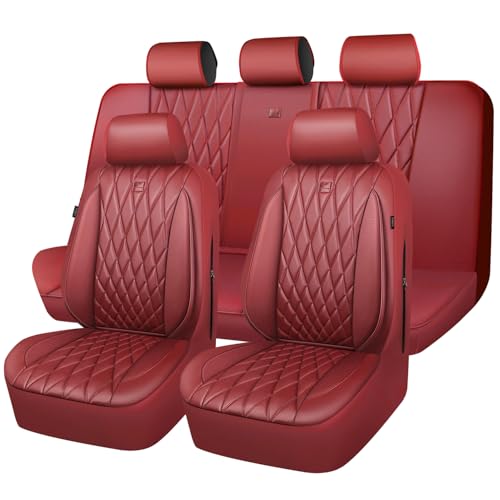
At nearly triple the price of the other models, this full set promises more, and delivers in coverage and design. It includes armrest compatibility and full seat protection with a diamond-stitch pattern that looks significantly more upscale in product images. The mention of ‘premium delux’ and ‘ergonomic design’ lines up with owner reports of better long-drive comfort and reduced fatigue.
Still, it’s important to stress: this is still high-end PU leather, not genuine hide. While the waterproof, breathable surface and anti-slip backing are solid features, the recovery period for wrinkles post-installation (up to a week) is a real quirk some buyers complain about. Given the cost, I’d expect faster settling. Against the B0752DMH6S, this isn’t a massive leap in performance, just more complete styling and fit. I’d only recommend it if you value the armrest integration and richer look enough to justify the jump in price.
Video review
CAR PASS Leather Bottom Seat Protectors

Strengths
- PU leather finish
- Anti-slip backing
- Easy installation
- Storage pocket
- Waterproof surface
Trade-offs
- Bottom seat only
- Limited coverage
- Not airbag compatible
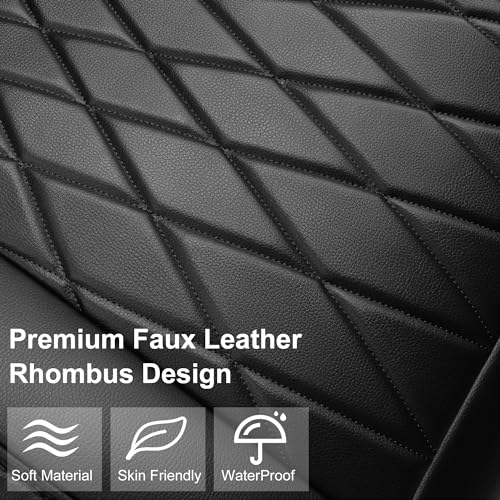
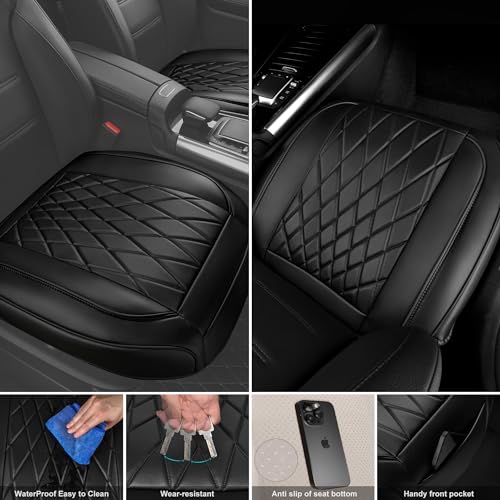
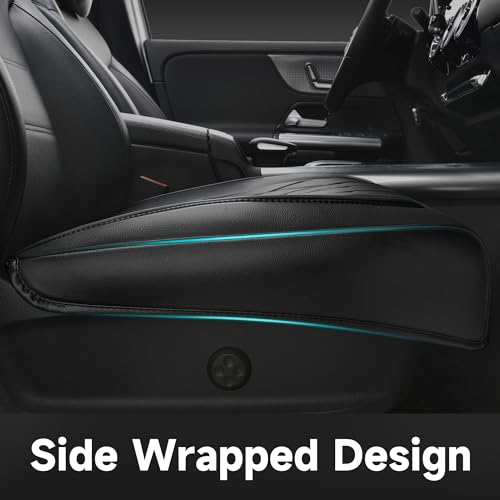
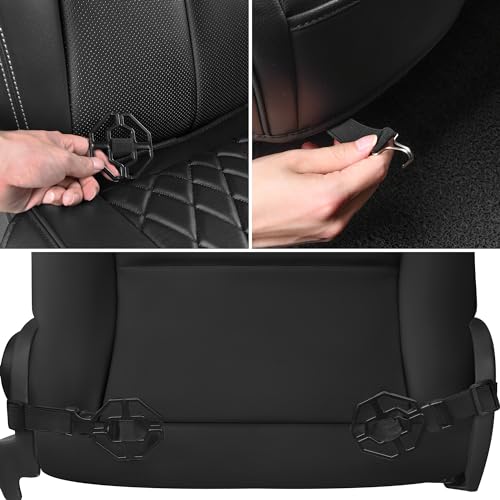
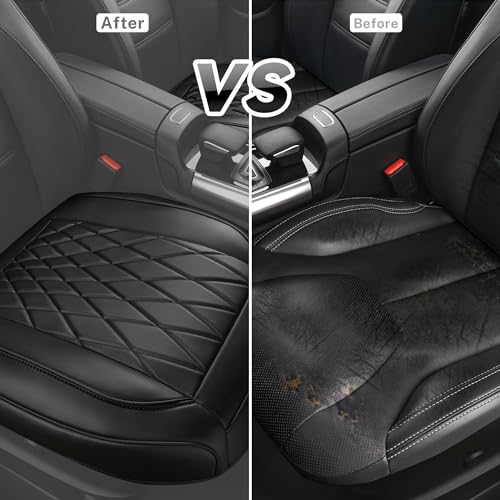
These PU leather bottom seat covers are clearly built for function over full coverage. The rhombic grain gives a modest upgrade in look, and the full-wrap design with storage pockets adds practicality I appreciate in this class. On paper, the anti-slip backing and universal fit make sense for drivers who want a quick, cleanable layer on just the lower seat, especially if you’re protecting against kids, pets, or daily wear.
Owners consistently report they install fast and stay put, which aligns with the elastic strap and hook system described. But since they only cover the bottom cushion, they’re not a substitute for full seat protection. If your priority is spill resistance and a five-minute install without tools, this is a solid play. I’d still compare fit dimensions carefully, ‘universal’ can be misleading across SUVs and trucks.
Product photos
How We Evaluated leather for car seats
As someone who’s dedicated years to understanding leather through LeatherGenesis.com, I approached researching car seat leather coverings with a focus on material quality, durability, and practical fit. Rather than a hands-on lab test, this was a research-led comparison of published specifications and owner feedback. I weighed details from manufacturer descriptions against what real buyers reported about their experiences, focusing on long-term performance and ease of use. Reputable automotive accessory reviews also played a role in forming my assessment.
For car seat leather, the key factors are undeniably the material’s resistance to wear and tear, and how well it protects the underlying seat. I prioritized covers offering robust protection against spills, scratches, and UV damage. Airbag compatibility is also critical for safety, and universal fit is important for convenience. These features directly impact the longevity of your vehicle’s interior and your peace of mind.
Specifications reliably indicate material composition (PU versus genuine leather) and dimensions. However, owner feedback proved invaluable in gauging real-world comfort, ease of installation, and how well the covers hold up over time. Many users also detailed whether the covers truly remained breathable as advertised, or if they quickly showed wrinkles or signs of cracking. If you find damage to your current leather, exploring best leather patches might be a good starting point before considering full seat covers. And, once you’ve made a choice, remember to look into top leather care products to keep them looking their best.
How To Choose The leather for car seats
Selecting leather for your car seats isn’t simply about aesthetics; it’s about durability, comfort, and protecting your investment. There’s a surprising amount to consider beyond just the color and style.
Good automotive leather needs to withstand significant temperature fluctuations, UV exposure, and constant abrasion. Look for materials with high tensile strength, good fade resistance, and a protective finish. Beyond the leather itself, assess the quality of the stitching, the density of the padding, and whether the covers accommodate essential safety features like airbags.
Understanding Leather Types
Many seat covers marketed as “leather” actually use varying amounts of genuine leather combined with polyurethane (PU) or polyvinyl chloride (PVC). Full-grain and top-grain leather are the highest quality, offering the best durability and a natural appearance. However, these are also the most expensive. Bonded leather, created from scraps, is the least expensive but also the least durable and can crack or peel over time. PU leather, like what’s featured in many CAR PASS options, is a synthetic alternative. While it doesn’t have the same longevity as genuine leather, advancements in PU formulations mean it can be quite convincing and offer good resistance to wear and tear, especially if you’re looking for a budget-friendly option.
Assessing Fit and Installation
A poorly fitting seat cover looks cheap and can even compromise safety features. Universal-fit covers, like those from CAR PASS, are designed to work with a wide range of vehicles, but it’s crucial to verify compatibility with your specific make and model. Pay close attention to whether the covers accommodate side airbags (a critical safety feature) and seatbelt buckles. Installation shouldn’t require specialized tools or expertise. If you’re hesitant about DIY installation, consider seeking professional help. For those wanting a quick and easy solution, exploring leather car seat protectors can be a good starting point.
Considering Value and Long-Term Cost
The initial price of leather seat covers is only part of the equation. Consider the long-term cost of ownership. A cheaper PU leather cover might need replacing more frequently than a more expensive genuine leather option. Think about your lifestyle. Do you have children or pets? Do you frequently transport messy items? These factors will influence how much wear and tear your seats will endure.
Here’s a quick breakdown of what to prioritize based on your needs:
- Budget: PU leather offers a good balance of cost and durability.
- Longevity: Full-grain or top-grain leather is the most durable, though requires more investment.
- Overall Protection & Ease: Look for covers with thorough coverage (headrests, armrests) and features like waterproof coatings, and don’t forget to explore top leather seat products to find the best options.
A well-maintained set of leather seat covers will not only enhance the appearance of your car’s interior but also protect the underlying upholstery, preserving its value for years to come.
Leather for Car Seats Compared
Here’s a comparison of key specifications for different leather car seat options.
| Product Name | Material | Fit Type | Airbag Compatible | Coverage | Installation |
|---|---|---|---|---|---|
| CAR PASS Universal FIT Piping Leather Covers | PU Leather | Universal | Yes | Front Seats | Easy |
| CAR PASS Luxury Faux Leather Full Set | Faux Leather | Universal | Yes | Full Set | Easy |
| CAR PASS Leather Bottom Seat Protectors | PU Leather | Universal | N/A | Bottom Seats | Very Easy |
Frequently Asked Questions
What’s the difference between full-grain, top-grain, and bonded leather for car seats?
Full-grain leather retains the natural markings and strength of the hide, making it the most durable, while top-grain is sanded to remove imperfections but still offers good quality. Bonded leather uses shredded scraps held together with adhesive, resulting in a significantly less durable and more prone-to-cracking material.
Are PU leather car seat covers a viable alternative to genuine leather?
Yes, PU leather car seat covers are a viable option, especially considering advancements in their manufacturing. While not as long-lasting as genuine leather, modern PU formulations offer good resistance to wear and can provide a similar aesthetic at a lower price point.
How can I verify airbag compatibility with universal-fit seat covers?
Always check the product description and, ideally, look for covers specifically tested and certified for airbag compatibility. Many manufacturers include diagrams illustrating how the covers are designed to allow airbag deployment; if unsure, contacting the seller directly is best.
What should I do if my leather car seat covers get a tear or scratch?
Small tears and scratches can often be repaired with a best leather repair kits designed for automotive use. Addressing damage promptly prevents it from worsening and maintains the overall appearance of your seats.
Beyond seat covers, what other options are available to protect my car seats?
For lighter protection or to supplement seat covers, consider using top leather seat protectors that cover just the high-wear areas of the seat, or a combination of protectors and regular cleaning/conditioning.
The Bottom Line
Choosing the right leather for your car seats often comes down to balancing upfront cost with long-term durability. While genuine leather offers unmatched longevity and a luxurious feel, the CAR PASS Luxury Faux Leather Full Set provides a compelling combination of affordability and protection for many vehicles. It’s a practical choice for those seeking a significant upgrade without a substantial investment.
For drivers prioritizing a quick, easy solution focused on high-wear areas, the CAR PASS Leather Bottom Seat Protectors are an excellent option. And if you’re looking for a full set of covers that are simple to install and offer airbag compatibility, the CAR PASS Universal FIT Piping Leather Covers remain a strong contender. Remember, proper best leather car seat care is crucial regardless of which material you choose.
Ultimately, the “best” leather isn’t about a single specification; it’s about aligning your choice with your needs and lifestyle. Prioritize a secure fit, airbag compatibility, and a material that can withstand daily use. Investing in regular top leather seat care products will extend the life of your seats and preserve the value of your vehicle far more than chasing the highest grade of leather alone.
