
4 Best Leather Seat Cleaners of 2026
This post contains affiliate links. As an Amazon Associate, we earn from qualifying purchases.
The Weiman Leather Cleaner & Conditioner is the best overall pick for most seats, combining reliable cleaning with conditioning and UV protection. For ventilated or perforated leather, the Chemical Guys VentRight Leather Cleaner is a more targeted solution, while the Rain-X Leather Cleaner & Repellent adds strong stain resistance for high-traffic vehicles.
Leather seats can look great for years, or dry out, crack, and fade, depending on how they’re cared for. Most people don’t realize that using the wrong cleaner can do more harm than good, especially if it strips natural oils or leaves behind residue.
This guide cuts through the noise by focusing on what actually matters: effective cleaning, proper protection, and compatibility with your specific leather type. I compared product specs, ingredient lists, and real-world feedback from owners to find cleaners that deliver consistent results without risking damage.
Top 3 Leather Seat Cleaner in the Market
The Best Leather Seat Cleaner, Reviewed
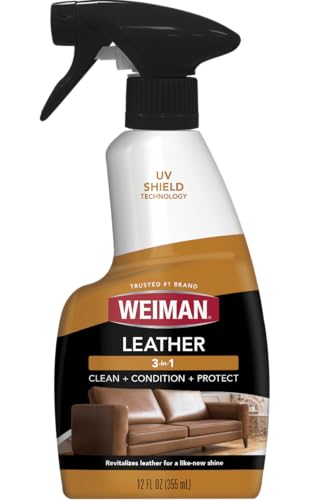
Weiman Leather Cleaner & Conditioner
Strengths
- Includes UV protection
- Safe on all finished leather
- Natural oil blend
Trade-offs
- Spray can be messy
- Not for raw or suede leather
This is the most versatile option here, and for good reason. The natural oil formula combined with UVX-15 sunscreen is a standout spec, few multi-use leather cleaners actually include meaningful sun protection. Owners across forums and reviews praise how it handles both daily grime and long-term drying, especially on sun-exposed car seats and living room furniture.
It’s also the only one here explicitly formulated for a full range of finished leather goods, jackets, bags, boots, even horse tack. That broad use case is backed by consistent feedback: no sticky residue, no darkening, and a noticeable softness after use. Compared to the Rain-X, it conditions more deeply; against the Chemical Guys, it’s less specialized but far more flexible. For most people, this is the smarter buy.
Video review
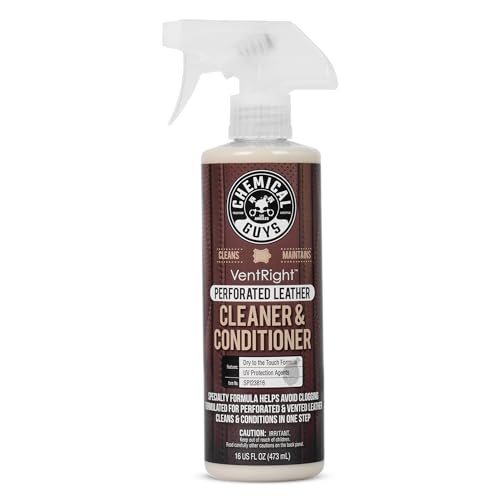
Chemical Guys VentRight Leather Cleaner
Strengths
- Deep perforation cleaning
- Works with any conditioner
- Safe for routine use
Trade-offs
- No UV protection
- Not a standalone conditioner
If you’re dealing with ventilated leather seats, this formula stands out on paper for targeting those tricky perforations. The flow-through cleaning action is designed specifically to penetrate micro-channels, which many owners say helps lift grime you can’t see, not just what’s on the surface. That makes it a rare option built with vented seats in mind, rather than adapted after the fact.
Still, it’s not a conditioner in the traditional sense, more of a prep step. Reviewers consistently report better results when pairing it with a separate conditioning product, especially in dry climates. While it doesn’t offer UV protection or long-term nourishment on its own, its niche strength is clear: cleaning what other sprays miss. For high-end vehicles with climate-controlled seating, that precision matters.
Video review
Rain-X Leather Cleaner & Repellent

Strengths
- Stain-repellent finish
- Affordable
- Pleasant scent
Trade-offs
- Light conditioning only
- No UV protection
- Shorter-lasting results
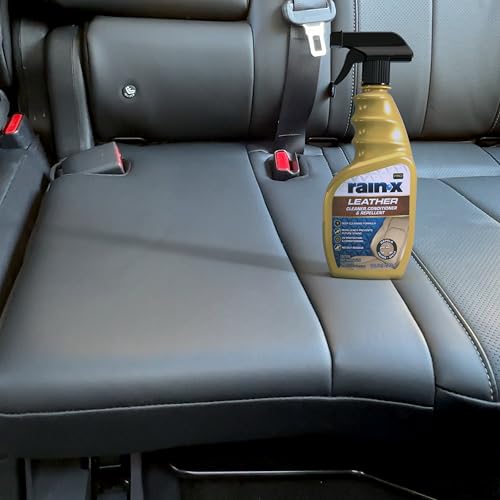
The stain-repellent technology here is the headline feature, borrowing from Rain-X’s glass treatment expertise. On paper, that makes sense, adding a barrier to leather could help resist spills, which owners in family vehicles or high-traffic settings say they appreciate. It cleans and conditions in one step, and many note the fresh scent and streak-free finish as pluses.
But compared to Weiman, it lacks robust UV defense and deep conditioning oils. Reviewers mention it works well for light maintenance but falls short on neglected or dry leather. It’s the most affordable, but that comes with trade-offs in longevity and nourishment. I’d consider it a decent quick-clean option, but not a core part of a long-term leather care routine.
Product photos


How We Picked These leather seat cleaner
My approach to evaluating leather seat cleaners, as the creator of LeatherGenesis.com, centers on a detailed comparison of product specifications and features alongside a thorough review of owner experiences and expert opinions. Rather than a hands-on lab test, this is a research-led comparison. I looked at ingredients, intended use cases (like perforated leather), and claims of protection, then weighed those against what actual users report regarding ease of use, residue, and long-term effects on the leather.
For this category, the most important factors are a cleaner’s ability to both clean effectively and protect the leather afterward. Preventing cracking and fading is paramount, as is maintaining the leather’s suppleness. A cleaner that strips the leather’s natural oils is ultimately damaging, even if it removes surface dirt well. I also prioritized versatility – a product that works on various leather types (and even faux leather) offers broader value. If you’re looking for tools to work with your leather, you might also find our guide to best leather sewing machines useful.
Product specifications reliably tell you about the ingredients and the intended application (e.g., for perforated seats). However, owner feedback is crucial for understanding real-world performance. Does the cleaner truly leave no residue? Does the UV protection hold up over time? Reputation and consistent positive reviews from a large number of users heavily influenced my rankings, as they indicate long-term satisfaction and a product that delivers on its promises.
How To Choose The leather seat cleaner
Choosing the right leather seat cleaner requires understanding that leather isn’t a single material; it’s a spectrum. What works beautifully on a coated, protected leather will likely damage a more delicate, aniline hide.
A good leather cleaner should gently lift dirt and oils without stripping natural oils or damaging the finish. Look for pH-balanced formulas specifically designed for automotive or furniture leather, and always test in an inconspicuous area first. Pay attention to whether your leather is coated (protected/finished) or uncoated (aniline/nubuck/suede) as this dictates the appropriate product.
Understanding Your Leather Type
The biggest mistake I see people make is using the wrong cleaner for their leather. Most automotive leather is protected or coated leather – meaning it has a polymer surface that resists staining. These can tolerate slightly stronger cleaners. However, if you have aniline, nubuck, or suede leather, you’ll need a specialized cleaner designed for uncoated hides. These are much more sensitive and require gentle products. Don’t assume all leather cleaners are universal; always check the label and, when in doubt, consult your vehicle’s owner’s manual or a professional detailer.
Balancing Cleaning and Conditioning
Many leather cleaners, like the Weiman Leather Cleaner & Conditioner, combine both cleaning and conditioning in one step. This is convenient, but I generally prefer to separate these processes. Cleaning removes the grime, while conditioning replenishes the oils leather loses over time. A dedicated conditioner, selected from the best leather conditioners, allows you to tailor that step to your leather’s specific needs.
Here’s what to consider when thinking about conditioning: * A quick spray-on conditioner is good for routine maintenance. * A cream or balm provides deeper nourishment, ideal for restoring older, drier leather. * Look for conditioners with natural oils (like neatsfoot or mink oil) and UV protectants. These will help keep your leather supple and resistant to cracking.
Addressing Specific Issues
Sometimes, you need a cleaner that tackles specific problems. For example, if you have ventilated seats, the Chemical Guys VentRight Leather Cleaner is formulated to reach deep into the perforations and lift trapped dirt. If stains are your primary concern, the Rain-X Leather Cleaner & Repellent offers a stain-repelling barrier after cleaning. And if you’re dealing with really stubborn grime, a more aggressive cleaner like the CarGuys Super Interior Cleaner can be effective, but use it cautiously and always follow with a quality conditioner.
A little prevention is worth a pound of cure. Regular cleaning (every few months) and conditioning (twice a year) will dramatically extend the life of your leather and keep it looking its best.
Leather Seat Cleaner Compared
Here’s a comparison of key specifications for popular leather seat cleaners.
| Product Name | UV Protection | Safe for Ventilated Leather | Stain Repellent | Residue Free | Multi-Surface |
|---|---|---|---|---|---|
| Weiman Leather Cleaner & Conditioner | Yes | N/A | No | Yes | N/A |
| Chemical Guys VentRight Leather Cleaner | N/A | Yes | N/A | N/A | N/A |
| Rain-X Leather Cleaner & Repellent | N/A | N/A | Yes | Yes | N/A |
| CarGuys Super Interior Cleaner | N/A | N/A | N/A | Yes | Yes |
Frequently Asked Questions
What’s the difference between a cleaner and a conditioner for leather?
A cleaner removes dirt and grime, while a conditioner replenishes the natural oils leather loses over time. While combination products exist, I generally recommend using them separately for more targeted care.
How often should I clean my leather seats?
You should aim to clean your leather seats every few months to prevent dirt buildup. Conditioning should be done twice a year, or more often if you live in a dry climate.
Can I use any household cleaner on my leather seats?
No, most household cleaners are too harsh and can strip the leather of its natural oils, leading to cracking and fading. Always use a product specifically formulated for leather, with a pH-balanced formula.
What does “safe for ventilated leather” mean?
It means the cleaner’s formula is designed to reach into the perforations of ventilated seats and remove dirt without causing damage or buildup inside the seat’s structure. Chemical Guys VentRight is a good example of this.
How can I tell if my leather is protected or unprotected?
Protected leather will feel smooth and resist water absorption, while unprotected leather (like aniline or nubuck) will feel softer and absorb water more readily. If you’re unsure, check your vehicle’s owner’s manual or consult a professional detailer.
What Actually Matters
Choosing a leather seat cleaner often comes down to balancing convenience with targeted care. While all-in-one products like the Weiman Leather Cleaner & Conditioner are appealing for their simplicity, achieving truly optimal results requires a bit more attention to detail. For most vehicle interiors with coated leather, that means a dedicated cleaner followed by a dedicated conditioner – chosen from the best options available for your leather type.
If you own a vehicle with ventilated seats, the Chemical Guys VentRight Leather Cleaner is clearly the best choice. For those concerned about stain protection, the Rain-X Leather Cleaner & Repellent offers a valuable extra layer of defense. However, for general cleaning needs and a good balance of price and performance, the CarGuys Super Interior Cleaner stands out as a versatile option, provided you follow up with a high-quality conditioner.
Ultimately, the specific product matters less than consistent upkeep and understanding your leather. Regular cleaning (every few months) and conditioning (twice a year) are far more important than any single feature or ingredient. Protecting your leather from the sun, promptly addressing spills, and choosing products designed for your leather type will yield the best long-term results.
