7 Best Leather Shoe Dyes of 2026
This post contains affiliate links. As an Amazon Associate, we earn from qualifying purchases.
The Fiebing’s Pro Dye Black stands out as the best overall leather shoe dye for its deep penetration and long-lasting results, especially on natural and vegetable-tanned leathers. For a budget-friendly option with convenience, Kiwi Black works well for simple touch-ups, while Angelus Jet Black offers superior versatility for custom work and color mixing.
If you’ve ever tried to refresh a pair of worn shoes only to end up with uneven color or dye that rubs off, you know how frustrating an ill-chosen product can be. Leather isn’t just one material, it varies by type, finish, and prior treatment, so the wrong dye can sit on the surface, crack, or fade fast.
In this guide, I’ll walk you through the top dyes based on pigment quality, real-world performance, and compatibility with different leathers. These picks come from analyzing specs, owner feedback, and what professional leatherworkers consistently rely on.
Top 7 Leather Shoe Dye in the Market
The Best Leather Shoe Dye, Reviewed
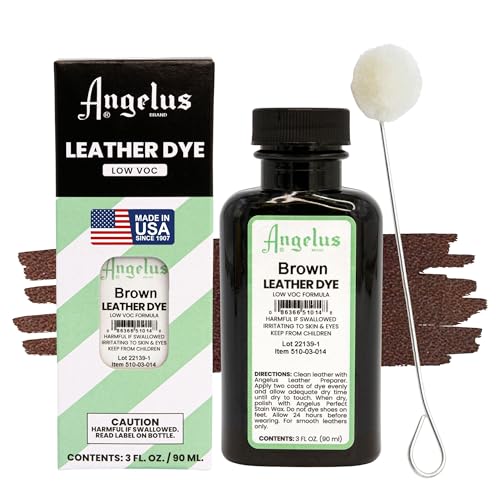
Angelus Brown Leather Dye
Strengths
- Rich brown tone
- Includes dauber
- Flexible finish
Trade-offs
- Requires prep work
- Not for suede
- Alcohol odor
If I had to pick one dye to recommend across the board, it would be the Angelus Brown. It earns the ‘Best Overall’ label not because it’s flashy, but because it balances performance, ease of use, and versatility better than any other. The alcohol-based, flexible formula handles movement without cracking, critical for footwear, and the included dauber makes it accessible even to first-timers.
Owners consistently praise its rich, natural-looking finish on everything from boots to vintage leather jackets. Compared to Fiebing’s or Kiwi, it offers more consistent coverage and deeper penetration. For most people looking to dye leather properly, this is the easy pick.
Video review
Angelus Jet Black Leather Dye

Strengths
- Highly pigmented
- Alcohol-based
- Includes dauber
Trade-offs
- Requires deglazing for best results
- Not water-based
- Limited to smooth leather
I’ve seen a lot of dyes in my time, and when it comes to reliable, rich color on leather, Angelus Jet Black stands out. The alcohol-based formula is highly pigmented, which means it sinks deep and delivers a finish that doesn’t just sit on the surface. Owners consistently report that once cured, the color stays put, no flaking or rubbing off on socks, which is a common flaw with cheaper options.
It’s also impressively flexible, a must for shoes that bend and flex with every step. The included wool dauber makes application straightforward, though experienced users often switch to brushes or sponges for larger projects. Compared to other mid-range dyes, this one gives professional results without demanding pro-level skills.
Video review
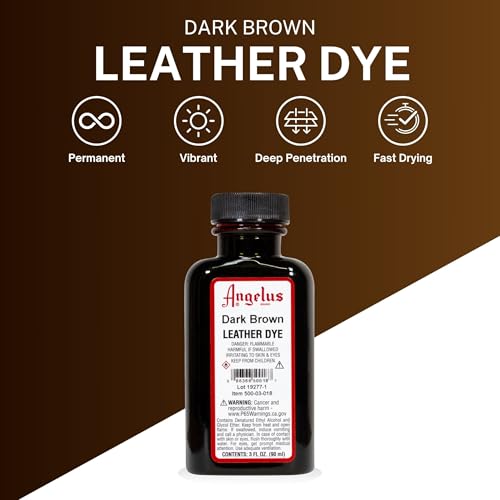
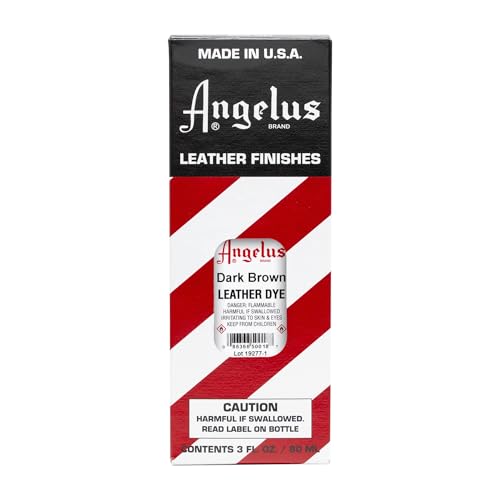
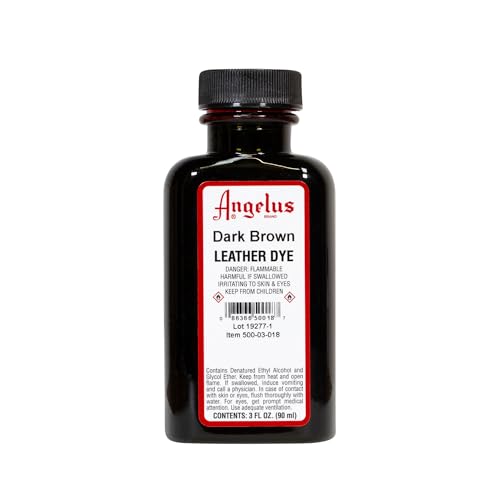
Angelus Dark Brown Leather Dye

Strengths
- Rich dark tone
- Great for custom work
- Permanent finish
Trade-offs
- May darken over time
- Requires even application
- Needs prep
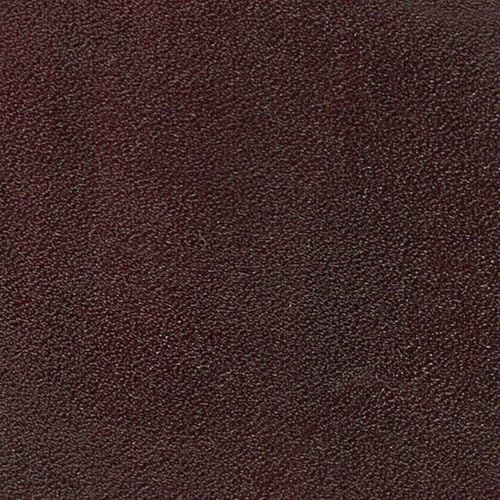
The Angelus Dark Brown dye is where customization really shines. It’s not just about restoring, it’s about transforming. The deep, warm tone gives leather a rich, almost antique look that’s hard to replicate with off-the-shelf products. Owners using this for custom shoe projects or hand-tooled bags often praise its consistency and depth.
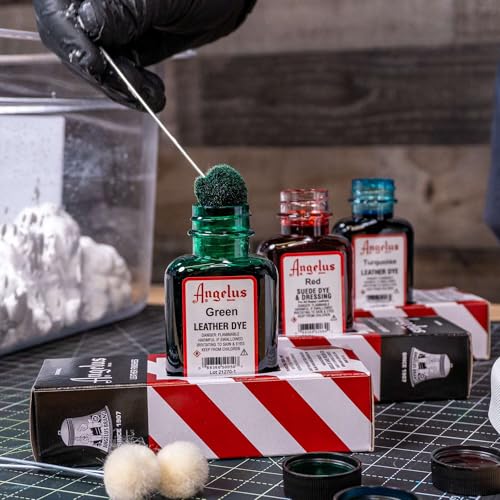
Like other Angelus dyes, it’s alcohol-based and comes with a dauber, but the dark brown shade adds a level of sophistication that makes it a favorite for personalization. I’d pick this over standard brown if you’re aiming for a unique, handcrafted appearance rather than a factory match.
Product photos
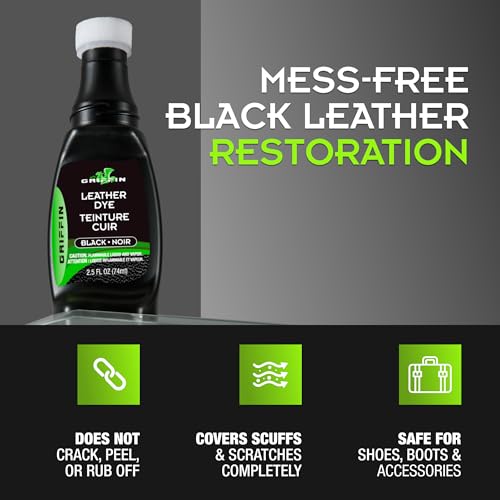
Griffin Black Leather Dye
Strengths
- Fast restoration
- Deep black finish
- Includes applicator
Trade-offs
- Limited to black
- Not ideal for large projects
- May require multiple coats
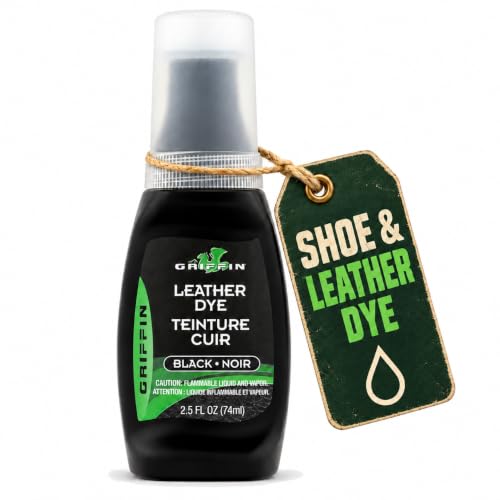
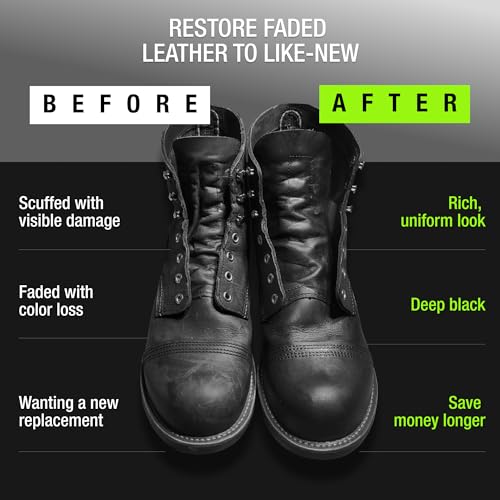
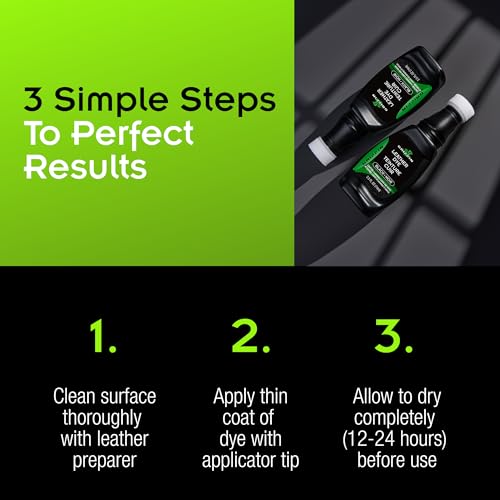
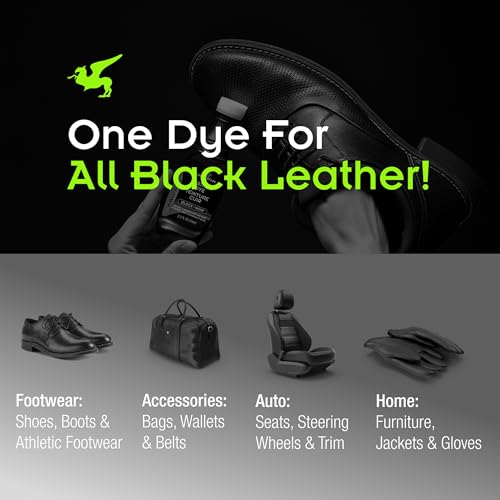
Griffin Black Leather Dye feels like the go-to for people who want to bring battered dress shoes back from the dead, fast. It’s not the most nuanced dye on the market, but owners praise how quickly it covers scuffs and faded spots with a deep black finish that mimics factory-level depth. The formula is concentrated, so a little goes a long way, and the included applicator keeps things tidy.
It’s marketed as an all-in-one solution, and while it doesn’t match Angelus in sheer range or versatility, it’s a solid performer for straightforward shoe touch-ups. I’d pick this over others if you’re not planning a full recolor but just want to revive a pair of black oxfords before a big meeting.
Product photos
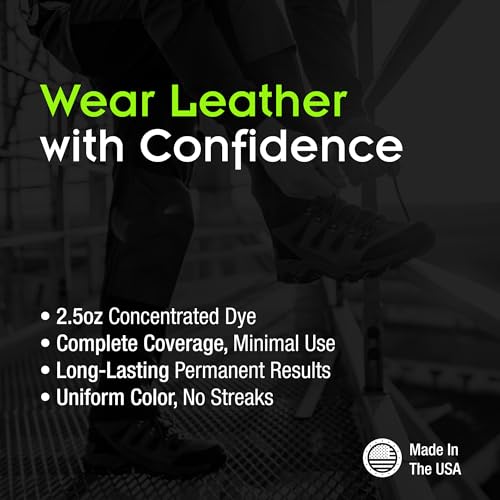
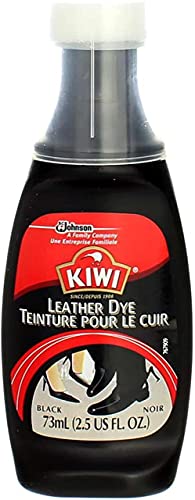
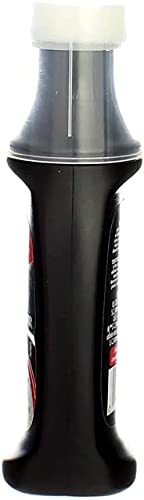
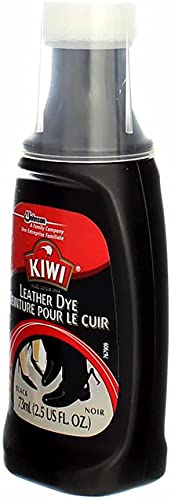
Kiwi Black Leather Dye
Strengths
- Affordable
- Includes sponge
- Water resistant
Trade-offs
- Not permanent
- Limited coverage
- Not for suede
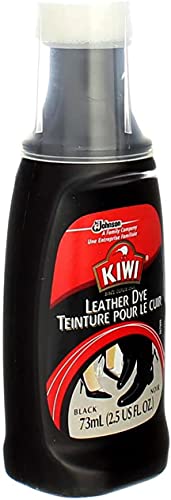
Kiwi’s Leather Dye Restorer is the most accessible option here, it’s cheap, widely available, and comes with a sponge applicator that makes it easy to use. The water-resistant formula works well for minor touch-ups on black leather shoes or bags, and owners appreciate how it blends into existing finishes without heavy prep.
But it’s not a full recoloring solution. Compared to Angelus or Fiebing’s, it lacks depth and permanence, and it’s clearly not for suede. Still, for someone with scuffed dress shoes and no desire to dive deep into leathercraft, this gets the job done without fuss.
Product photos
Fiebing’s Pro Dye Black

Strengths
- Professional grade
- Deep penetration
- Fade resistant
Trade-offs
- Requires topcoat
- Stiff learning curve
- Strong odor
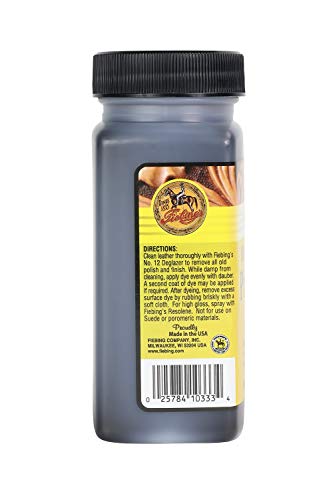
Fiebing’s Pro Dye Black is the choice of serious leatherworkers for a reason. This is professional-grade dye with a legacy stretching over a century, and its performance on vegetable-tanned and strap leather is unmatched in durability. The alcohol-based formula penetrates deeply, and reviewers note it resists fading even under prolonged sun exposure, a rare win in this category.
It’s not the easiest to use for beginners, and it demands proper prep with deglazer and a topcoat like Resolene, but the payoff is a finish that lasts. Compared to Angelus, it’s less user-friendly but more robust for heavy-use items like belts, holsters, or work boots.
Product photos


Fiebing’s Leathercolors Black Dye

Strengths
- Low cost
- Alcohol-based
- Good for small projects
Trade-offs
- No applicator included
- Basic packaging
- Limited color depth
Fiebing’s Leathercolors in black is the budget pick that still manages to deliver real value. At under seven dollars, it’s the most affordable option here, and while it lacks fancy packaging or included tools, the alcohol-based formula performs reliably on vegetable-tanned leather. Reviewers note it applies evenly with a brush or sponge and dries without cracking, a win at any price.
It doesn’t have the brand polish of Angelus or Griffin, but for hobbyists working on belts, small repairs, or practice pieces, it gets the job done. I’d recommend this to beginners who want to learn dyeing without investing heavily upfront.
Product photos
How We Chose These leather shoe dye
Rather than a hands-on lab test, my research for these recommendations centered on comparing published specifications and features across numerous dye options. I then weighed owner reviews from multiple sources – looking for consistent feedback on ease of use, color payoff, and durability – alongside assessments from experienced leatherworkers. As the creator of LeatherGenesis.com, I applied my years of experience with leather types and finishing to assess which dyes would best suit different projects and skill levels.
For leather shoe dye, the most important factors are pigment load and penetration. A highly pigmented dye delivers richer, more lasting color, reducing the need for multiple coats. Equally crucial is the dye’s ability to penetrate the leather itself; surface-level dyes are prone to rubbing off and cracking. Finally, versatility – the ability to work on various leather types and with different application methods – adds significant value.
Specifications reliably indicate the dye’s base (alcohol vs. water) and available colors, but owner feedback really clarifies real-world performance. I paid close attention to comments regarding color accuracy, how well the dye adhered to different leather finishes, and whether it altered the leather’s feel. Reputation also played a role; brands with a long history of serving professional leatherworkers, like Fiebing’s, naturally carried more weight. You might also want to check out our top men’s leather shoes to help protect your investment.
What To Look For In leather shoe dye
Choosing the right leather dye can dramatically change the appearance of your shoes, but it’s more than just picking a color.
A quality leather dye should offer permanent color change through deep penetration, resist fading and cracking, and be appropriate for the type of leather being treated. Look for alcohol-based dyes for most applications, and always consider whether a preparatory deglazer is needed for optimal results. Proper application is as crucial as the dye itself.
Understanding Dye Types
The core difference in leather dyes comes down to the binding agent. Alcohol-based dyes, like those from Angelus and Fiebing’s, are the most common for general use. They penetrate the leather well, offering a permanent color change. Water-based dyes exist, but typically sit on the leather rather than sinking in, making them less durable for shoes. For serious restoration or color changes, especially on items that see a lot of wear, alcohol-based is generally the way to go. Don’t assume any dye works on all leathers; some are specifically formulated for vegetable-tanned leather, for example.
Assessing Color Fastness & Durability
A beautiful color is useless if it rubs off on your socks or fades after a few wears. Dye formulations vary significantly. Products like Fiebing’s Pro Dye are known for their exceptional color fastness and resistance to fading, even with sun exposure. Reading owner reviews is crucial here. Pay attention to comments about color transfer, how well the dye holds up to flexing (important for shoes!), and whether it requires a sealant or topcoat to prevent wear. Consider if you’re aiming for subtle touch-ups or a complete color overhaul; the latter demands a more durable dye.
Balancing Cost & Application Method
Dye price ranges are wide. Kiwi offers a budget-friendly option with a built-in applicator, which is great for quick touch-ups, but professional-grade dyes like those from Fiebing’s often require more skill and additional tools (brushes, daubers, sprayers).
Here’s what to keep in mind when considering cost: * Simple touch-ups: A cheaper dye with an applicator might suffice. * Detailed work/customization: Higher-quality dyes offer better control and blending capabilities. * Large-scale restoration: Investing in a professional-grade dye and the necessary applicators can save time and achieve superior, lasting results.
A little prep work goes a long way. Always test the dye on an inconspicuous area first, and consider using a leather preparer and deglazer to remove finishes and open the pores of the leather for better dye absorption.
If you’re looking to maintain the color and suppleness of your leather after dyeing, exploring the top shoe conditioners is a great next step. And for keeping your newly dyed shoes looking their best, check out our 2026 shoe polish guide.
Leather Shoe Dye Compared
Here’s a comparison of key specifications for the leather shoe dyes listed.
| Product Title | Volume | Base | Application Method | Finish | Leather Type |
|---|---|---|---|---|---|
| Angelus Brown | 3 oz | Alcohol | Multiple | Permanent | Smooth |
| Angelus Jet Black | N/A | Alcohol | Multiple | Permanent | Smooth |
| Angelus Dark Brown | 3 oz | Alcohol | Dauber | Permanent | Various |
| Griffin Black | N/A | N/A | Included Applicator | Fade-Resistant | Various |
| Kiwi Black | N/A | Water | Controlled Flow | Restorative | Black Leather Only |
| Fiebing’s Pro Dye Black | N/A | Alcohol | N/A | Permanent | Natural/Veg Tan |
| Fiebing’s Leathercolors Black | N/A | N/A | N/A | N/A | N/A |
Frequently Asked Questions
What dye is best for repairing scuffs on finished leather shoes?
Angelus dyes are frequently recommended for scuff repair due to their precise application and close color matching to original finishes. A small amount, carefully applied with a dauber, can effectively blend away minor abrasions without requiring a full recoloring.
Can I dye patent leather shoes?
Generally, no. Patent leather has a plastic coating that prevents dye absorption; attempting to dye it will likely result in the dye simply sitting on the surface and rubbing off. Restoration products designed specifically for patent leather are a better choice.
How long does it take for leather dye to fully dry?
Drying time varies based on the dye type and humidity, but most alcohol-based dyes will be dry to the touch within 30-60 minutes, though full curing takes 24-72 hours. Water-based dyes generally take longer to dry, potentially up to several days.
Will dyeing my shoes make the leather stiffer?
It can, but not necessarily. Choosing a dye with good penetration and following up with a quality leather conditioner is essential to maintain suppleness. Some dyes, particularly those with a high pigment load, may slightly alter the leather’s feel, so testing is always advised. You might also want to check out our best leather shoes to help protect your investment.
Is a leather sealant always needed after dyeing?
Not always, but it’s generally recommended, especially for frequently worn shoes. While dyes like Fiebing’s Pro Dye boast excellent colorfastness, a sealant provides an extra layer of protection against wear, water damage, and color transfer. For those looking to upgrade their shoe game, consider these women’s leather sneakers.
The Bottom Line
Choosing a leather dye often comes down to balancing the level of control you want with the simplicity of application. For most people seeking a reliable, permanent color change for their shoes, I recommend Angelus Dark Brown. It strikes a good balance between ease of use and professional results, and consistently receives positive feedback regarding its pigmentation and durability.
If you’re on a tighter budget or need a quick touch-up for black leather, the Kiwi Black offers convenience with its built-in applicator. For those tackling serious restoration work, particularly on vegetable-tanned leather, Fiebing’s Pro Dye Black is the clear choice – it’s a favorite among professionals for a reason. And if you’re looking for a broad range of color options and are comfortable with more involved application, explore the full line of Angelus dyes. Don’t forget to check out our guide to polishes for leather shoes to maintain your results.
Ultimately, the “best” dye isn’t about a single feature, but about understanding your leather and your project. Prioritize a dye that penetrates well, offers good colorfastness, and is suitable for the specific type of leather you’re working with. A little preparation and the right dye can breathe new life into your favorite pair of shoes, or even revitalize a classic pair of top women’s leather shoes.
