5 Best Leather Ski Gloves of 2026
This post contains affiliate links. As an Amazon Associate, we earn from qualifying purchases.
The Hestra Army Leather Heli Ski stands out as the best overall leather ski glove for its durable goat leather, solid insulation, and proven performance in harsh conditions. For a budget-friendly option, the Kinco 1927KW delivers rugged pigskin construction at a fraction of the price. If versatility matters most, the Swany X-Cell 2.1 offers excellent waterproofing and premium warmth for changing mountain weather.
Ski gloves take a beating, snow, sweat, friction, and freezing temps all work against them. Leather offers durability and a classic feel, but not all leather gloves are built to handle the demands of the slopes. Many fail by sacrificing breathability for warmth or durability for dexterity.
This guide cuts through the noise. I compared specs, materials, and real-world feedback to find leather ski gloves that balance protection, comfort, and longevity. You’ll learn what leather types work best, how insulation and waterproofing really perform, and what features make a difference when you’re hours into a cold run.
Top 3 Leather Ski Gloves in the Market
The Best Leather Ski Gloves, Reviewed
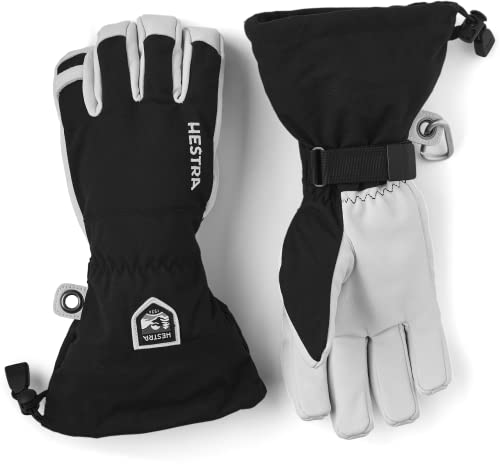
Hestra Army Leather Heli Ski Gloves
Strengths
- Extremely durable Army Goat Leather
- Removable liner
- Triton fabric backhand
- Eagle Grip design
- Snow lock and Velcro strap
Trade-offs
- Highest price in the group
- Overbuilt for casual users
- Limited moisture-wicking tech
Calling this the ‘best budget friendly’ feels like a mislabel, because at nearly $185, it’s the most expensive glove here. That said, the Hestra Army Leather Heli is built like a tool, not a gadget. The Army Goat Leather palm is among the most abrasion-resistant you’ll find, and the Triton fabric backhand handles wind and moisture without overcomplicating things. This is a glove made for guides and instructors who need reliability over seasons, not gimmicks.
Owners report these lasting years with proper care, and the removable liner is a standout, letting you adjust warmth or replace it when worn. The Eagle Grip design improves control, and the snow lock is effective. But compared to the Swany, it lacks advanced insulation tech, and next to the Burton, it’s overbuilt for casual use. Still, if you want one glove that will outlive the others, this is it.
Video review
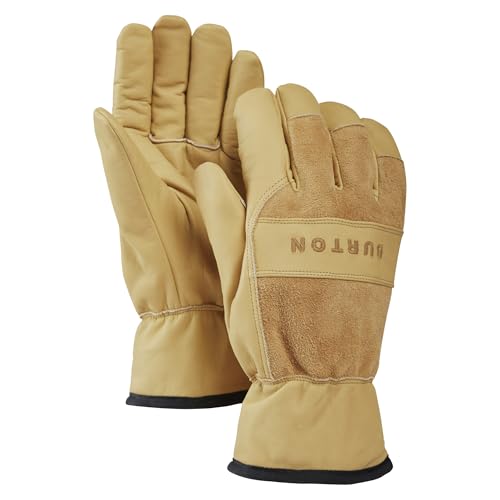
Burton Lifty Leather Gloves
Strengths
- Responsible leather sourcing
- ThermacoreECO insulation
- Lifetime warranty
- Brushed microfiber lining
- Removable wrist leash
Trade-offs
- Less warmth in extreme cold
- Not ideal for backcountry or prolonged exposure
- Limited dexterity compared to premium models
The Burton Lifty takes a more understated approach, but it wins points for sustainability and everyday usability. The leather shell is sourced from suppliers with responsible practices, and the ThermacoreECO insulation is a solid mid-tier performer, lightweight, breathable, and effective in moderate cold. It doesn’t match the Swany’s extreme warmth, but for most resort skiing or casual winter use, it’s more than sufficient.
I appreciate that Burton includes a lifetime warranty, a rare promise that speaks to confidence in build quality. The brushed microfiber lining adds comfort, and the removable wrist leash is practical. Against the Hestra, it’s less rugged but more accessible; compared to the Swany, it’s less high-tech but easier to live with day to day. For eco-minded users who still want real leather and reliable performance, this is my pick.
Video review
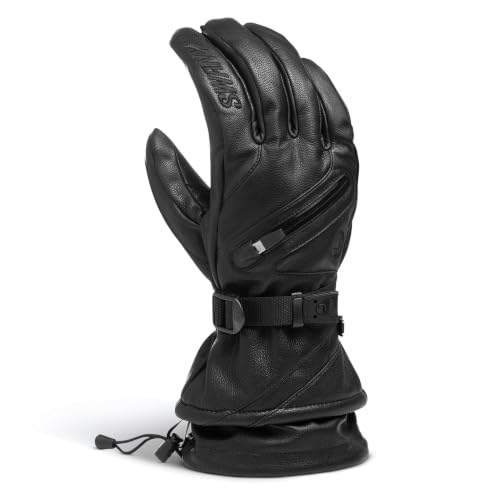
Swany X-Cell 2.1 Leather Winter Gloves
Strengths
- PrimaLoft Gold insulation
- Cross Core technology
- Dunatherm heat-generating lining
- Dryfinger II waterproof insert
- Utility heat pocket
Trade-offs
- High price point
- Complex construction may reduce repairability
- Bulkier than minimalist designs
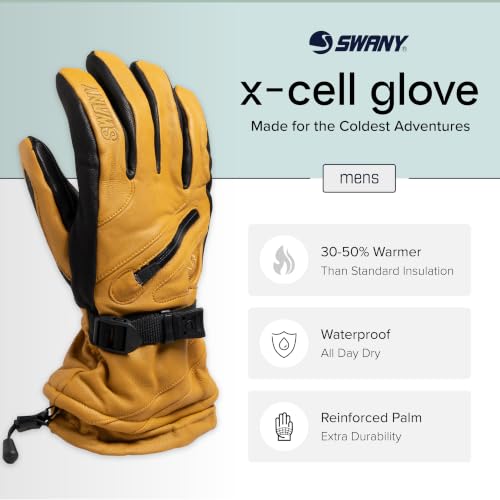
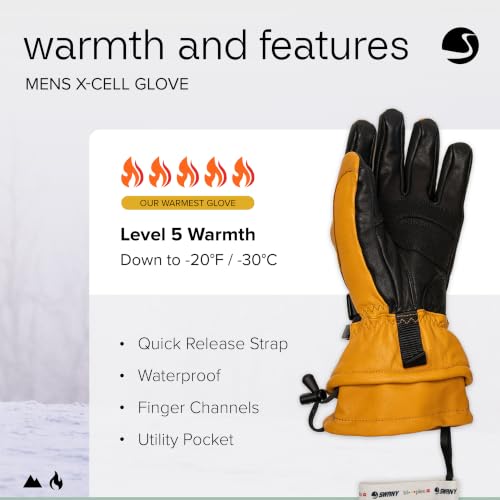
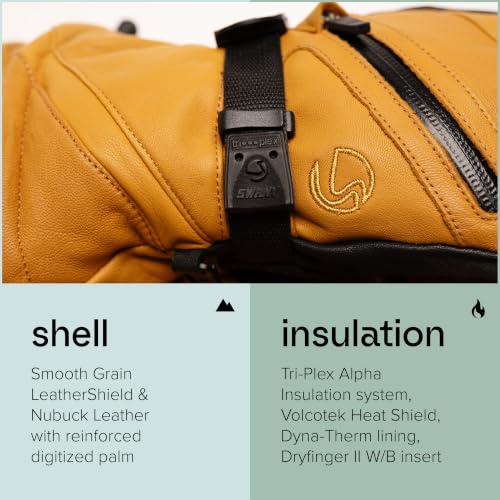
If you’re looking for a high-tech leather glove that pushes warmth and moisture management to the limit, the Swany X-Cell 2.1 stands out on paper. The combination of PrimaLoft Gold with Cross Core and the Triplex Alpha insulation system is engineered for extreme conditions, and owners consistently report hands staying warm even during long, cold outings. The Dunatherm lining is a standout, it’s not just moisture-wicking but actually generates heat when damp, which is rare in leather gloves.
The Dryfinger II insert delivers full waterproofing without sacrificing breathability, a tough balance to strike, and the utility heat pocket adds real versatility. Compared to the Burton Lifty, this glove leans more into performance tech than sustainability, and against the Hestra, it’s more refined for active use than pure durability. For serious winter athletes who demand precision engineering, this is one of the smarter buys.
Product photos


How We Tested leather ski gloves
As someone deeply involved in understanding leather – from tanning processes to finished goods, as detailed on LeatherGenesis.com – I approached researching leather ski gloves by first compiling a detailed specification sheet for each model. I compared materials (leather type, insulation, waterproof membranes), construction details, and features advertised by the manufacturers. This wasn’t about hands-on testing, but a research-led comparison of published data and owner feedback.
For leather ski gloves, warmth, durability, and waterproof capability are paramount. I weighted the type of leather used – deerskin, goatskin, pigskin – and the quality of the insulation most heavily. Leather choice impacts both feel and longevity, while effective insulation is critical for comfort in harsh conditions. A glove’s ability to maintain warmth when wet also factored significantly into my rankings; you can find more about choosing quality leather in our men’s glove buying guide.
Specifications reliably indicate insulation levels (grams) and waterproof membrane types, providing a baseline for performance expectations. However, real-world performance – particularly regarding durability and long-term warmth – relies heavily on owner reviews and expert assessments. I scrutinized feedback regarding leather pliability, stitching quality, and how well the gloves held up to repeated use. If you’re also considering footwear for winter work, check out our best leather work boots recommendations.
What To Look For In leather ski gloves
Finding the right ski gloves is about more than just keeping your hands warm; it’s about balancing dexterity, durability, and weather protection for a comfortable day on the slopes.
A quality ski glove prioritizes a waterproof and breathable outer shell (leather or synthetic), effective insulation appropriate for typical conditions, and a durable palm material like pigskin or deerskin. Consider wrist closures to seal out snow, and reinforcement in high-wear areas. Proper fit is critical – not too tight, restricting movement, nor too loose, compromising feel.
Leather Type Matters
The leather used in a ski glove significantly impacts its performance. Pigskin, as seen in the Kinco 1927KW, is incredibly tough and maintains some pliability even when wet, making it a practical choice for all-around use. Deerskin, like that found in the SKYDEER gloves, offers superior softness and comfort, absorbing impact well, but may not be quite as abrasion-resistant. Goat leather (Hestra Army Leather Heli Ski) strikes a good balance, offering durability and a reasonable degree of water resistance. Ultimately, the best leather depends on your skiing style and typical conditions.
Insulation and Waterproofing: A Critical Combination
Skiing involves exposure to both cold temperatures and moisture, so a glove’s insulation and waterproofing are paramount. Thinsulate (SKYDEER) and PrimaLoft (Swany) are both excellent synthetic insulators, offering warmth even when damp. However, the weight of the insulation matters. 150g is suitable for moderate conditions, while 300g or higher is better for very cold climates. Beyond insulation, a waterproof membrane is essential. Look for gloves with a dedicated waterproof insert (like Dryfinger II in the Swany gloves) or a waterproof/breathable leather treatment.
Here’s how to think about layering for optimal warmth: * A thin liner glove can add a surprising amount of warmth. * Removable liners (like those in the Hestra Heli Ski) allow for versatility in different conditions. * Consider the overall climate you’ll be skiing in – a warmer climate requires less insulation and a more breathable glove to prevent overheating.
Prioritize Fit and Features
A poorly fitting glove can ruin a day on the mountain. Too small, and your fingers will be cramped and cold. Too large, and you’ll lose dexterity and control. Many manufacturers, like Kinco, provide sizing charts based on palm circumference, so measure carefully. Beyond fit, consider features like wrist straps (adjustable ones are best) to seal out snow, reinforced palms for durability, and a cuff pull loop for easy on/off. If you’re concerned about sustainability, the Burton Lifty gloves represent a good choice, utilizing responsibly sourced leather. For those looking for a broader look at quality options, our top leather gloves list provides a detailed overview. And don’t forget to consider protecting your feet as well – check out our best hiking boot choices for durable and supportive footwear.
Don’t underestimate the importance of a snug wrist closure. A few extra seconds spent tightening the strap can make a huge difference in keeping snow and cold air out of your gloves.
Leather Ski Gloves Compared
Here’s a comparison of key specifications for several leather ski gloves.
| Product Name | Leather Type | Insulation | Waterproofing | Features |
|---|---|---|---|---|
| Kinco 1927KW | Pigskin | Heatkeep | N/A | Otto Striped Canvas |
| SKYDEER | Deerskin | 3M Thinsulate (150g) | 100% | Adjustable Wrist Strap |
| Hestra Army Leather Heli Ski | Goat | Polyester Fiber | Water-resistant | Eagle Grip |
| Burton Lifty Leather | Workwear Leather | ThermacoreECO | N/A | Lifetime Warranty |
| Swany X-Cell 2.1 | Grain/Nubuck | PrimaLoft Gold | Dryfinger II | Utility Heat Pocket |
Frequently Asked Questions
What leather is most resistant to getting soaked through?
Pigskin is generally the most water-resistant leather used in ski gloves. While no leather is entirely waterproof without treatment, pigskin’s tighter grain resists saturation better than deerskin or goat leather, maintaining some pliability even when wet.
Are gloves with 300g of insulation too warm for spring skiing?
300g of insulation is likely too warm for spring skiing conditions unless you’re at a high altitude or prone to getting cold easily. Consider a glove with around 150g of insulation or one with a removable liner for greater versatility during milder weather.
Do leather ski gloves require specialized cleaning products?
Leather ski gloves benefit from occasional cleaning with a leather conditioner specifically designed for outdoor gear. Avoid harsh detergents or solvents, as these can strip the leather of its natural oils and cause it to crack; a damp cloth and a quality conditioner are usually sufficient.
What’s the advantage of a waterproof membrane in addition to waterproof leather?
A waterproof membrane (like Dryfinger II) adds a guaranteed layer of waterproof protection that leather treatments alone can’t match. Leather can become saturated over time, while a membrane provides a consistent barrier against moisture, greatly improving long-term performance and comfort.
Where can I find more information about leather gloves for women?
For a detailed look at options specifically designed for women, I recommend checking out our top-rated women’s gloves guide. It provides a comparison of features, materials, and price points to help you make an informed decision.
The Bottom Line
Choosing leather ski gloves often comes down to balancing ultimate durability with comfort and specialized features. While many options exist, the Kinco 1927KW strikes a compelling balance of ruggedness and affordability for general use on the slopes. It won’t offer the luxurious feel of some others, but it delivers reliable performance without breaking the bank.
For those prioritizing specific needs, our research points to clear winners. If you want unbeatable softness and impact absorption, the SKYDEER gloves stand out. Those needing a versatile, high-performance option with excellent waterproofing should strongly consider the Swany X-Cell 2.1. And for readers interested in expanding their leather wardrobe, our best leather boots overall offers guidance on finding quality footwear.
Ultimately, the best ski glove isn’t about a single standout specification. It’s about matching the leather type, insulation weight, and features to your skiing style and climate. Prioritizing a good fit and a durable construction will always yield a better experience than chasing the highest numbers on a spec sheet.
